


Secondary sourceBook1500
Liber pestilentialis
1500
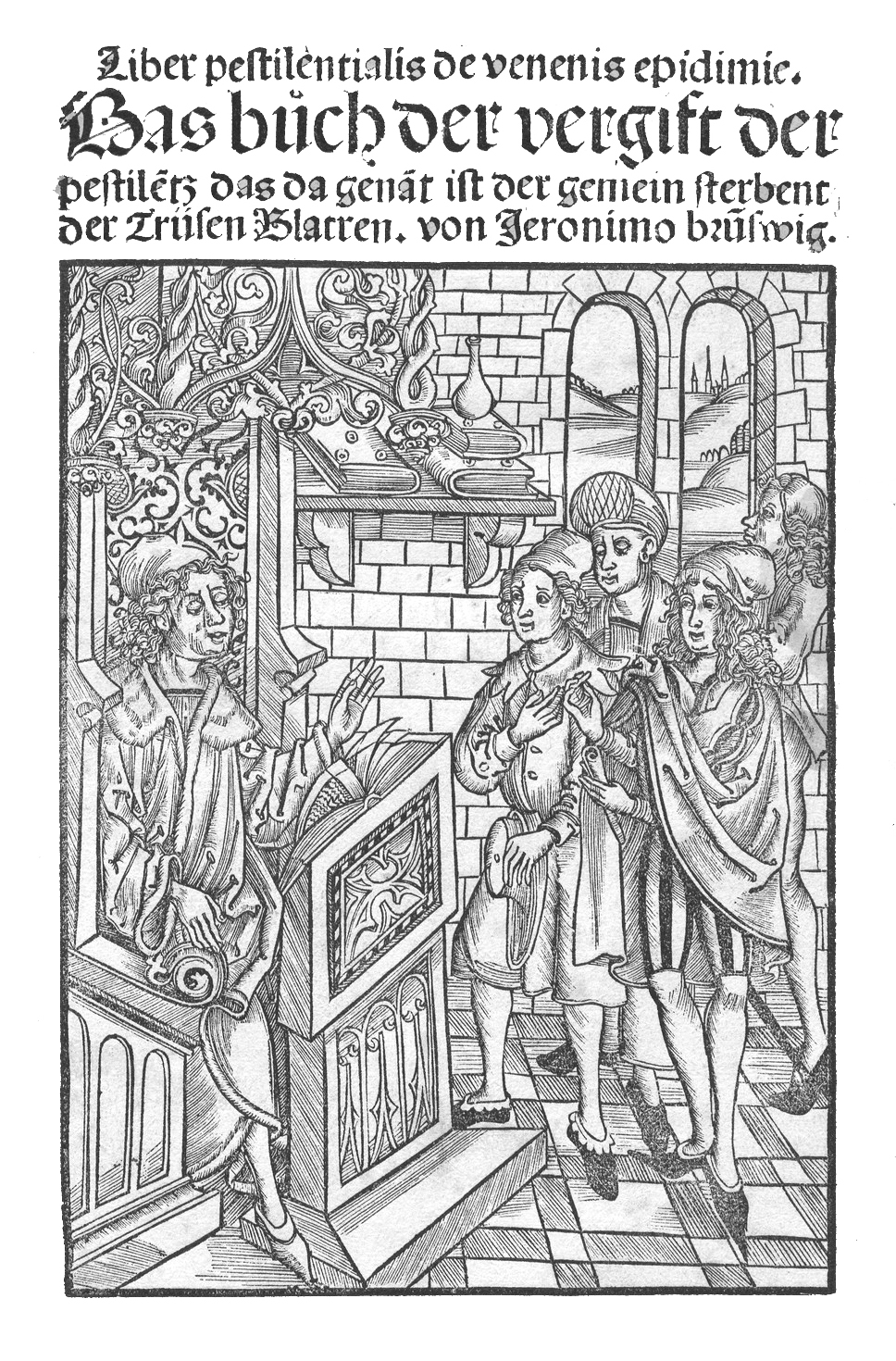
Title woodcut of a printed plague-medicine book, showing how advice for treating plague reached a wider readership through print.
Shows how medical responses to plague, sparked by the Black Death, continued to develop and spread through print long after 1348.
About this source
What it is
This is the title page of a printed plague-medicine book, illustrated with a woodcut. The woodcut shows a man reading at a lectern, surrounded by other men in period dress, in a room with an arched window and a shelf of books and a flask.
Why it matters
This book was part of a wave of printed medical advice that followed earlier outbreaks of plague in Europe. It shows how knowledge about the disease, and ideas (right or wrong) about how to treat it, spread once printing made books cheaper and more common.
Look closer
- What does the scene in the woodcut suggest about who read medical books like this?
- Why might a printed book reach more people than a handwritten manuscript?
- What does the title tell you about what the author believed caused plague?
This book is part of the curated material that grounds the AI version of The Black Death on Humy.ai — when students ask about related events, the AI can quote it and cite it.
More The Black Death sources
Meet the AI The Black Death →Secondary source
The Decameron
Giovanni Boccaccio · 1351
Primary source
Statute of Labourers 1351
1351
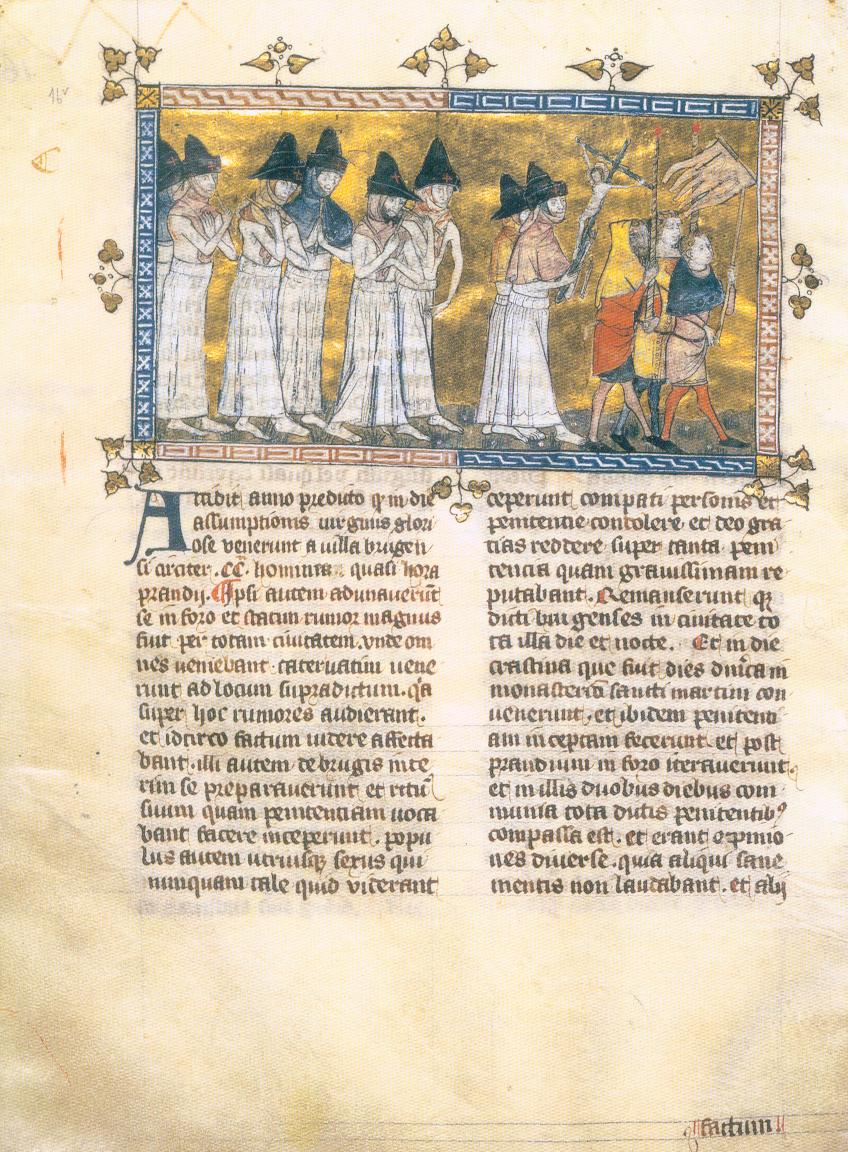 Painting
Primary source
Depiction of the Flagellant Processions
Pierart dou Tielt · c. 1350
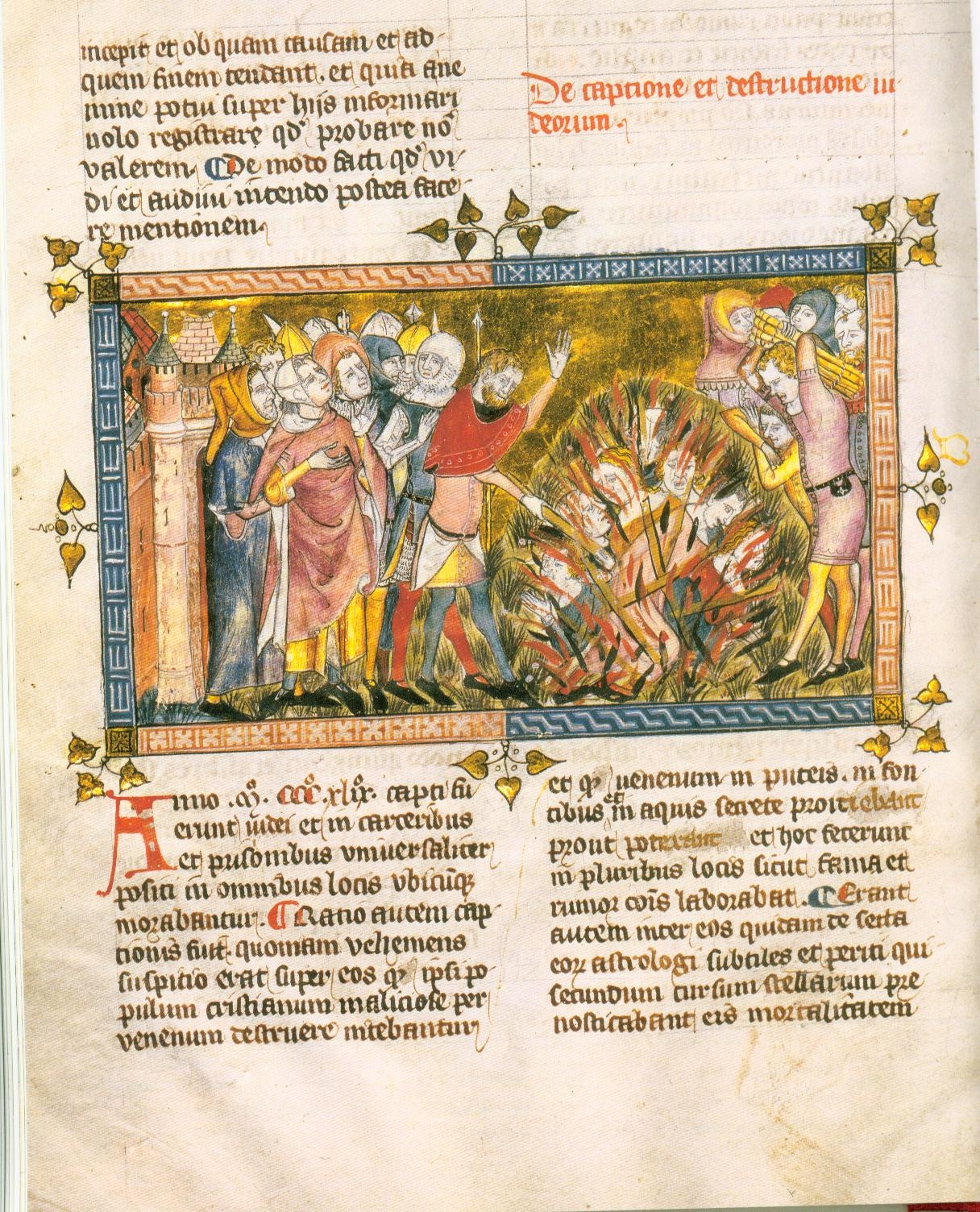 Painting
Primary source
Execution of Jews
c. 1350
 Book
Primary source
The Annals of Ireland by Friar John Clyn
John Clyn · 1348-1349
Ready when you are
Start chatting with The Black Death now.
20 messages free · No credit card · Available in 50+ languages.