


Primary sourceBookc. 1520
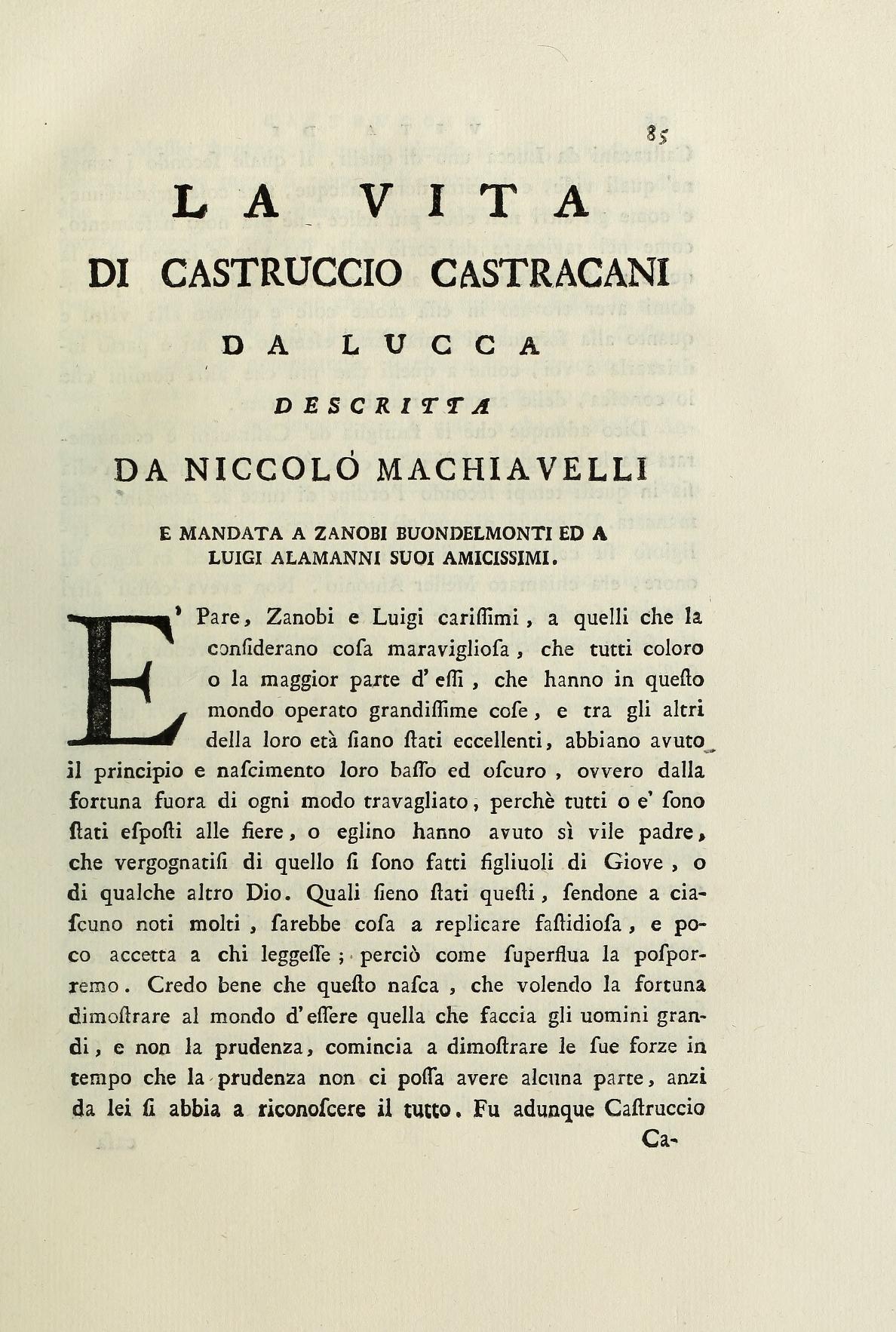
Life of Castruccio Castracani
Niccolò Machiavelli · c. 1520
Machiavelli's idealised biography of a medieval Tuscan military leader, partly invented to illustrate his political ideas.
Machiavelli wrote this biography himself, using it to express his own ideas about leadership and fortune.
About this source
What it is
The Life of Castruccio Castracani is a short biographical work by Niccolò Machiavelli about the medieval condottiere Castruccio Castracani, who ruled Lucca. It was likely written during a visit to Lucca in 1520 and dedicated to Zanobi Buondelmonti and Luigi Alamanni, friends from the Orti Oricellari circle.
Why it matters
Though written as a biography, many of Castracani's sayings in the text are considered to have been invented by Machiavelli, drawn from classical Roman and Greek sources. This shows how Machiavelli used history loosely, shaping a leader's life story to illustrate his own ideas about fortune, leadership, and failed Italian unity, themes also found in The Prince.
Look closer
- Why might Machiavelli present invented sayings as if they were a real leader's own words?
- What does his comparison of Castracani to Philip of Macedon and Scipio of Rome suggest about his own values?
- How does knowing a biography is partly fabricated change the way you read it?
This book is part of the curated material that grounds the AI version of Niccolo Machiavelli on Humy.ai — when students ask about related events, the AI can quote it and cite it.
More Niccolo Machiavelli sources
Meet the AI Niccolo Machiavelli →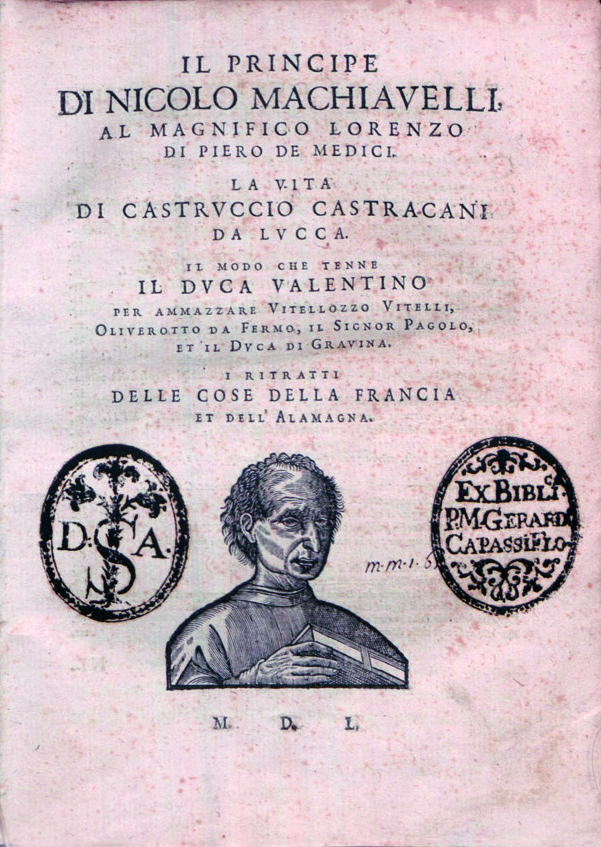 Book
Primary source
The Prince
Niccolò Machiavelli · 1513
Primary source
Letter to Francesco Vettori
Niccolò Machiavelli · 10 December 1513
 Book
Primary source
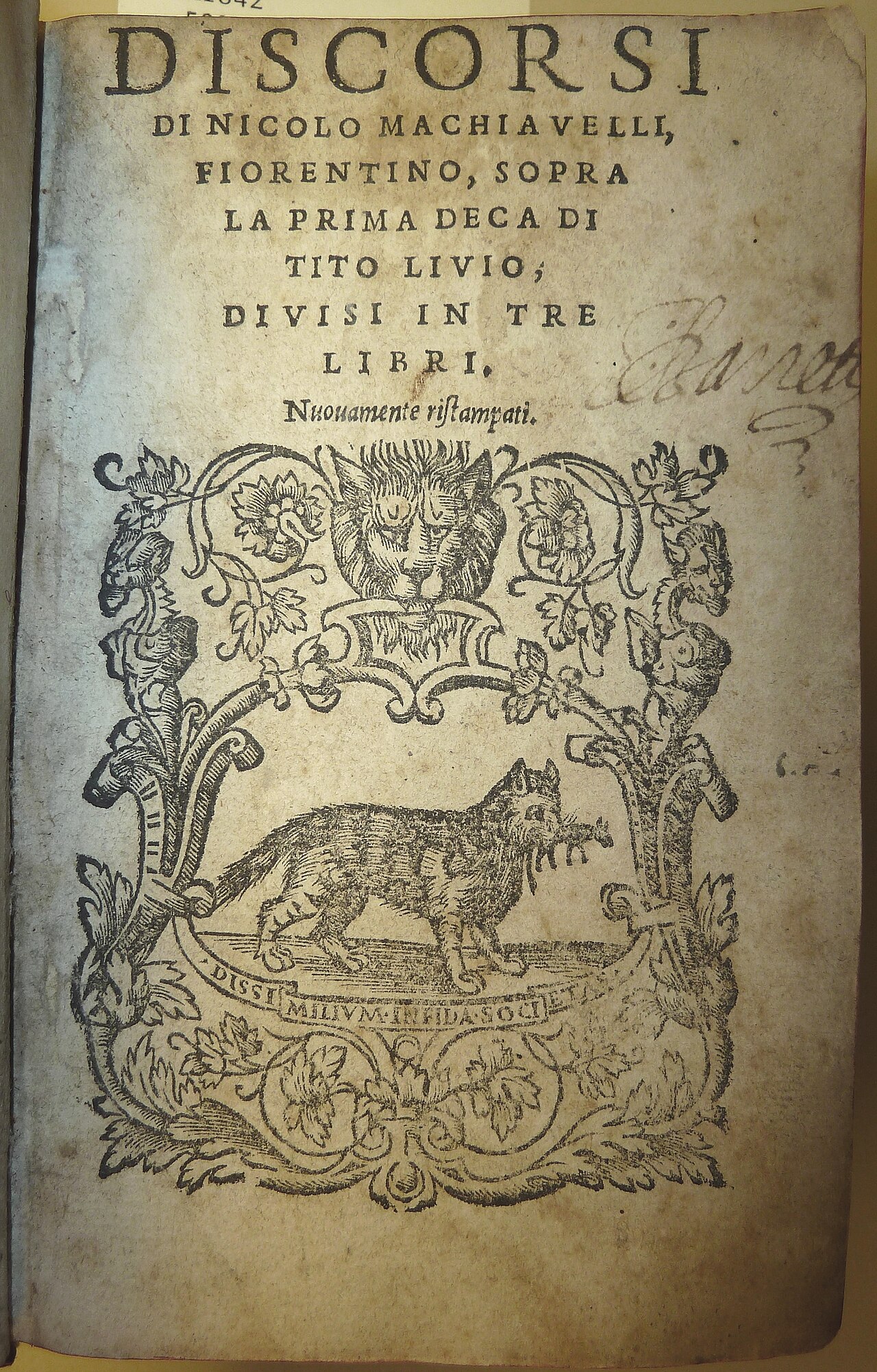
Discourses on Livy
Niccolò Machiavelli · c. 1517, published 1531
 Painting
Secondary source
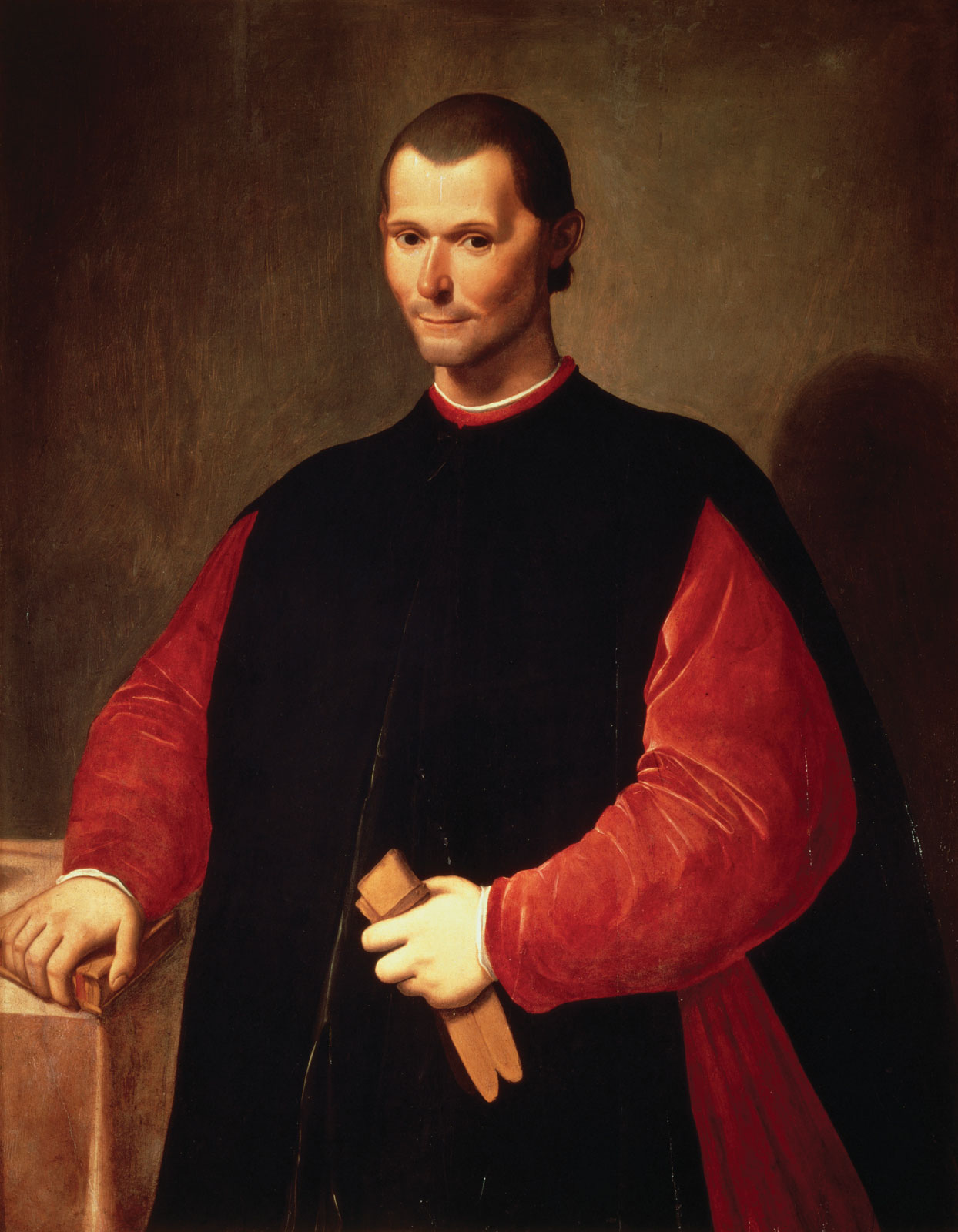
Portrait of Niccolò Machiavelli
Santi di Tito · late 16th century
 Book
Primary source
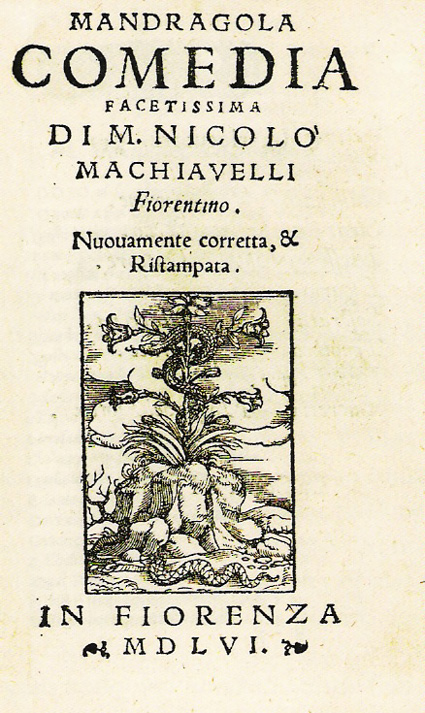
The Mandrake
Niccolò Machiavelli · 1524
Ready when you are
Start chatting with Niccolo Machiavelli now.
20 messages free · No credit card · Available in 50+ languages.