


Secondary sourceArtifact1376
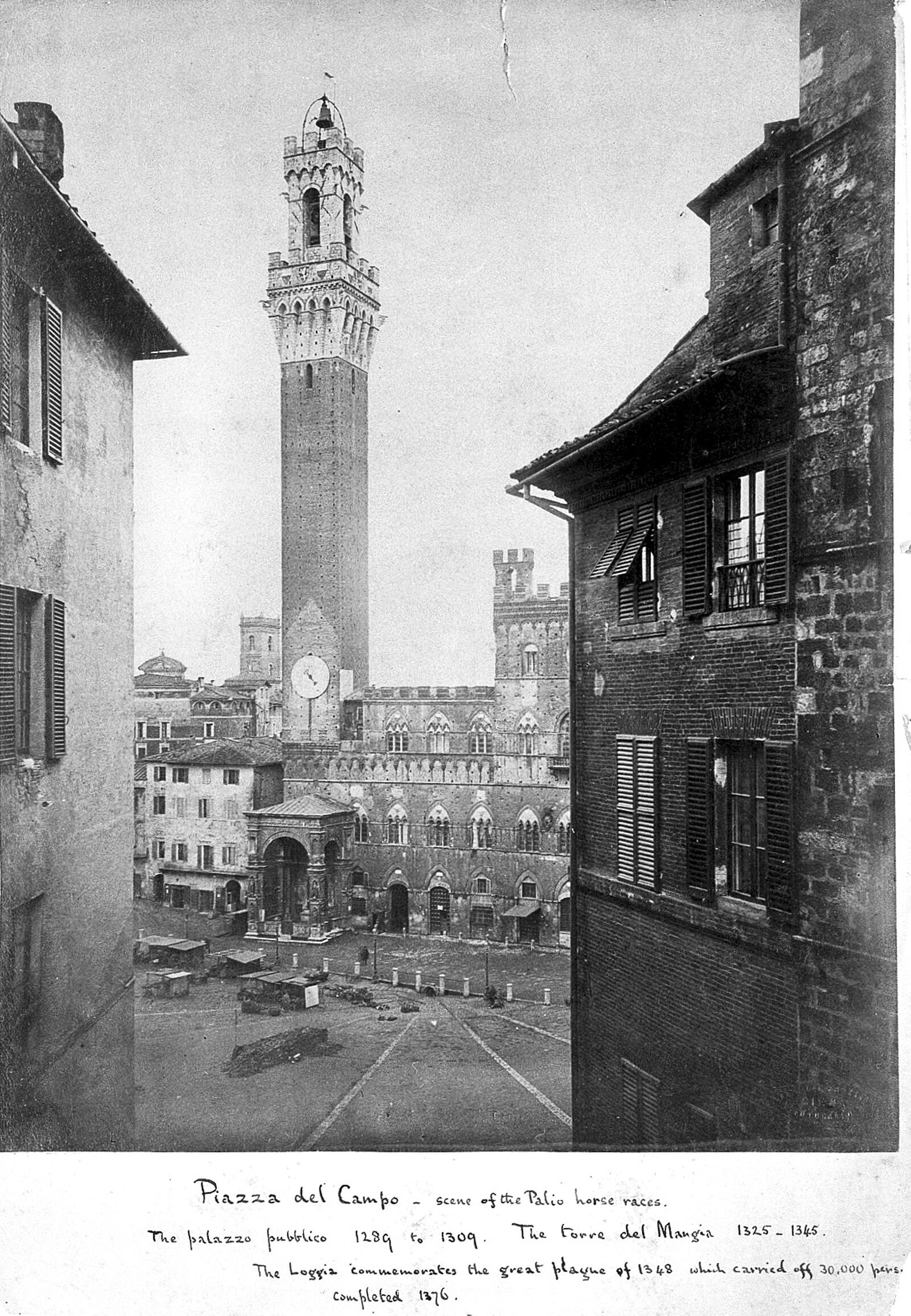
Loggia of the Piazza del Campo, Siena
1376
A loggia in Siena's main square, completed in 1376 to commemorate the 1348 Black Death, which the record says killed about 30,000 people.
A later memorial in Siena that commemorates the 1348 Black Death, showing how one city chose to remember the plague.
About this source
What it is
This is a small loggia, or open-sided structure, at the Piazza del Campo in Siena, Italy. The Wellcome Collection's record says it commemorates the plague, the Black Death of 1348, which carried off 30,000 people. It was completed in 1376. The photograph in the archive is a black-and-white view of the square, showing the Torre del Mangia and the Palazzo Pubblico, with a handwritten caption below that lists dates and mentions the 1348 plague.
Why it matters
Communities sometimes built monuments to remember disasters that had killed many of their people. This loggia was built nearly thirty years after the plague, so it shows how Siena chose to remember the Black Death in public space. It is a later memorial, not a record made by someone who lived through the plague.
Look closer
- What details in the photograph show the setting, and how does the small loggia sit within the larger square?
- Why might a city build a memorial decades after a disaster?
- What does a building like this leave out about the people who died?
This artifact is part of the curated material that grounds the AI version of The Black Death on Humy.ai — when students ask about related events, the AI can quote it and cite it.
More The Black Death sources
Meet the AI The Black Death →Secondary source
The Decameron
Giovanni Boccaccio · 1351
Primary source
Statute of Labourers 1351
1351
 Painting
Primary source
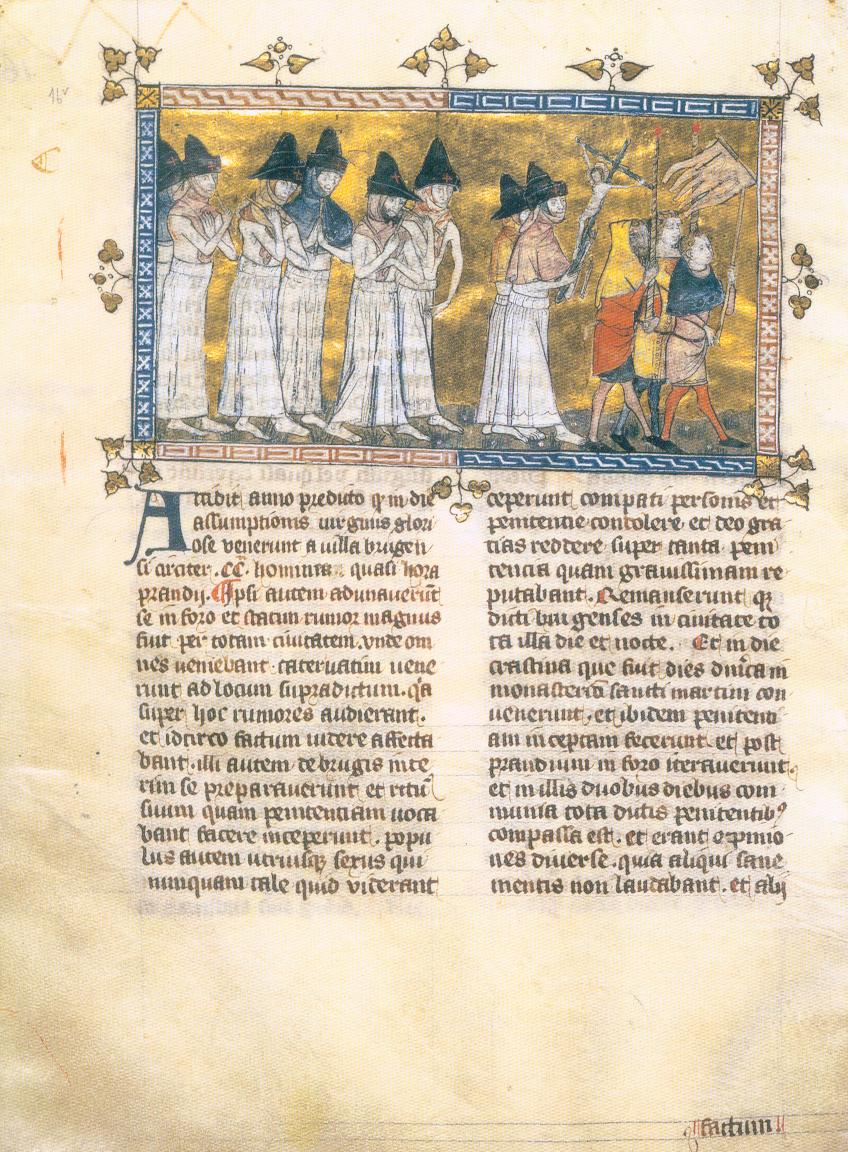
Depiction of the Flagellant Processions
Pierart dou Tielt · c. 1350
 Painting
Primary source
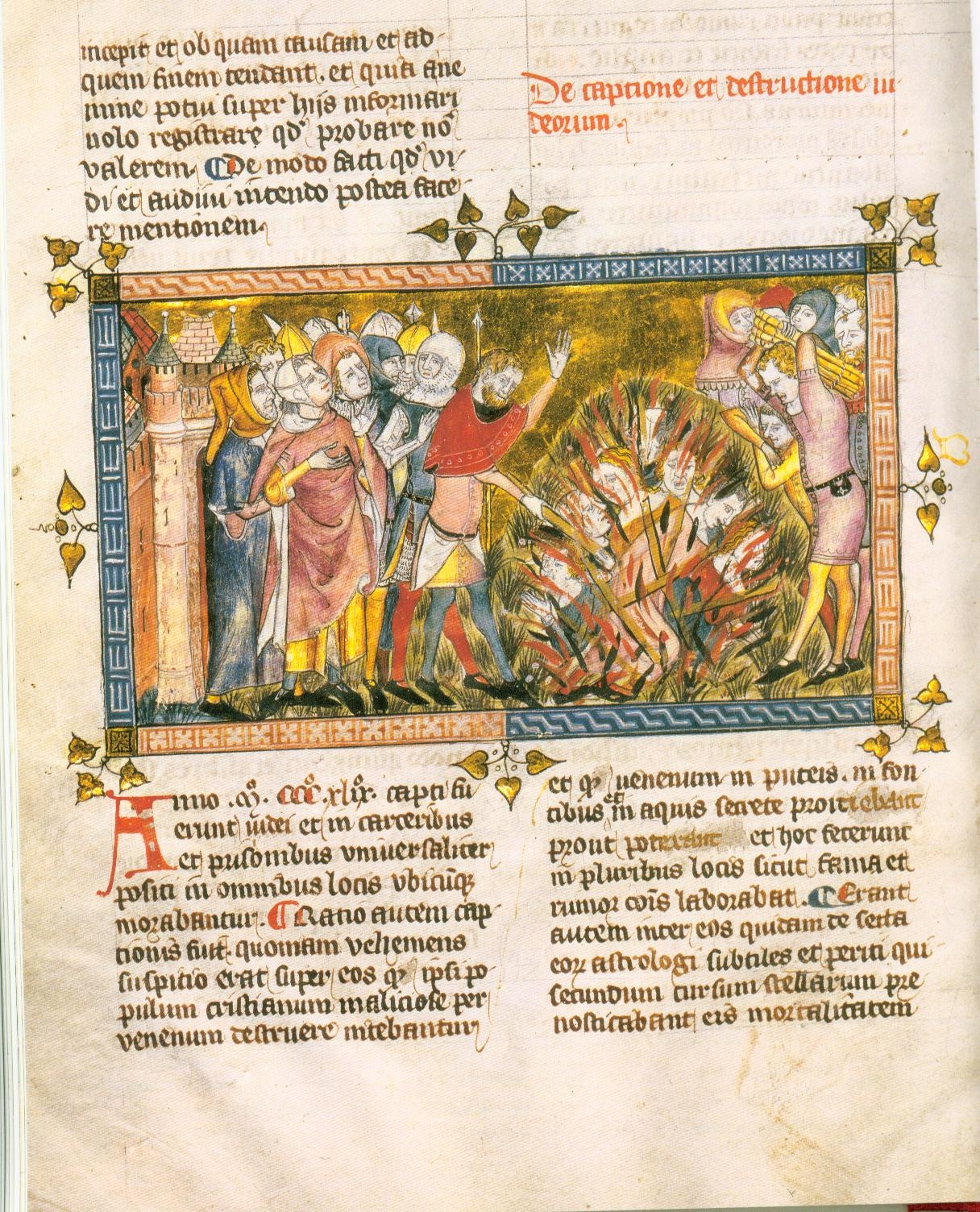
Execution of Jews
c. 1350
 Book
Primary source
The Annals of Ireland by Friar John Clyn
John Clyn · 1348-1349
Ready when you are
Start chatting with The Black Death now.
20 messages free · No credit card · Available in 50+ languages.