


Secondary sourcePaintingc. 230-250 CE
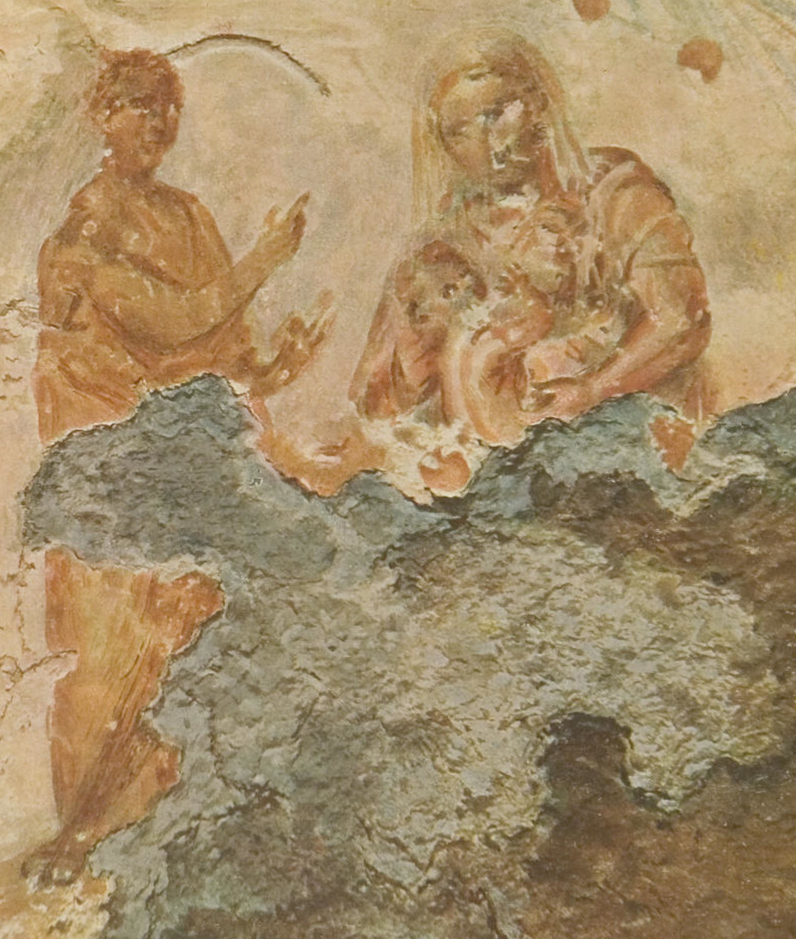
Madonna fresco in the Catacomb of Priscilla
Unknown Roman painter · c. 230-250 CE
Often considered the earliest surviving image of Mary nursing the infant Jesus, painted in the Roman catacombs by an unknown artist.
This fresco is considered the earliest surviving image of Mary, shown nursing the infant Jesus.
About this source
What it is
This fresco, painted by an unknown Roman artist around 230–250 CE, survives in the Catacomb of Priscilla in Rome. It shows a seated woman nursing an infant, with a standing figure beside her pointing toward a star.
Why it matters
This is often cited as the earliest known image of Mary and the infant Jesus, made independently of scenes showing the Magi. The figure pointing to the star may represent the prophet Balaam, referencing a biblical prophecy about a star, showing how early Christians connected Mary and Jesus to older Jewish scripture through art, long before elaborate Marian imagery became common.
Look closer
- What does the choice to paint this scene in an underground burial place tell us about how early Christians worshipped?
- Why might the artist have included a figure pointing to a star rather than showing the Magi directly?
- How does the damaged condition of the fresco affect what we can know about the original image?
This painting is part of the curated material that grounds the AI version of Mary, mother of Jesus on Humy.ai — when students ask about related events, the AI can quote it and cite it.
More Mary, mother of Jesus sources
Browse all 85 →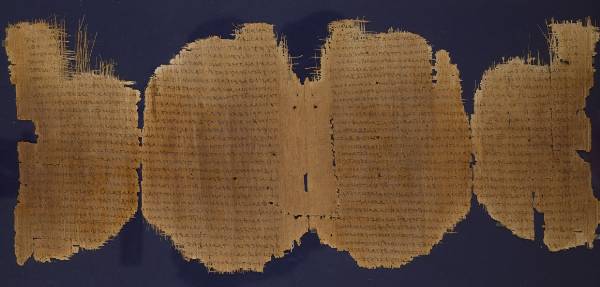 Book
Secondary source
Gospel of Luke
Luke the Evangelist · c. AD 85
 Book
Secondary source
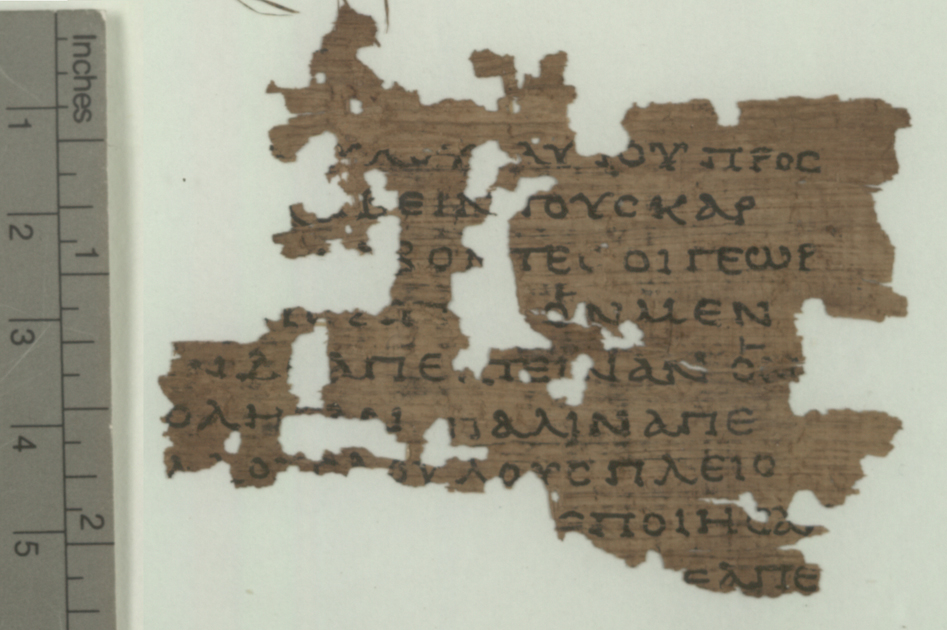
Gospel of Matthew
Matthew the Apostle · late 1st century AD
 Speech
Secondary source
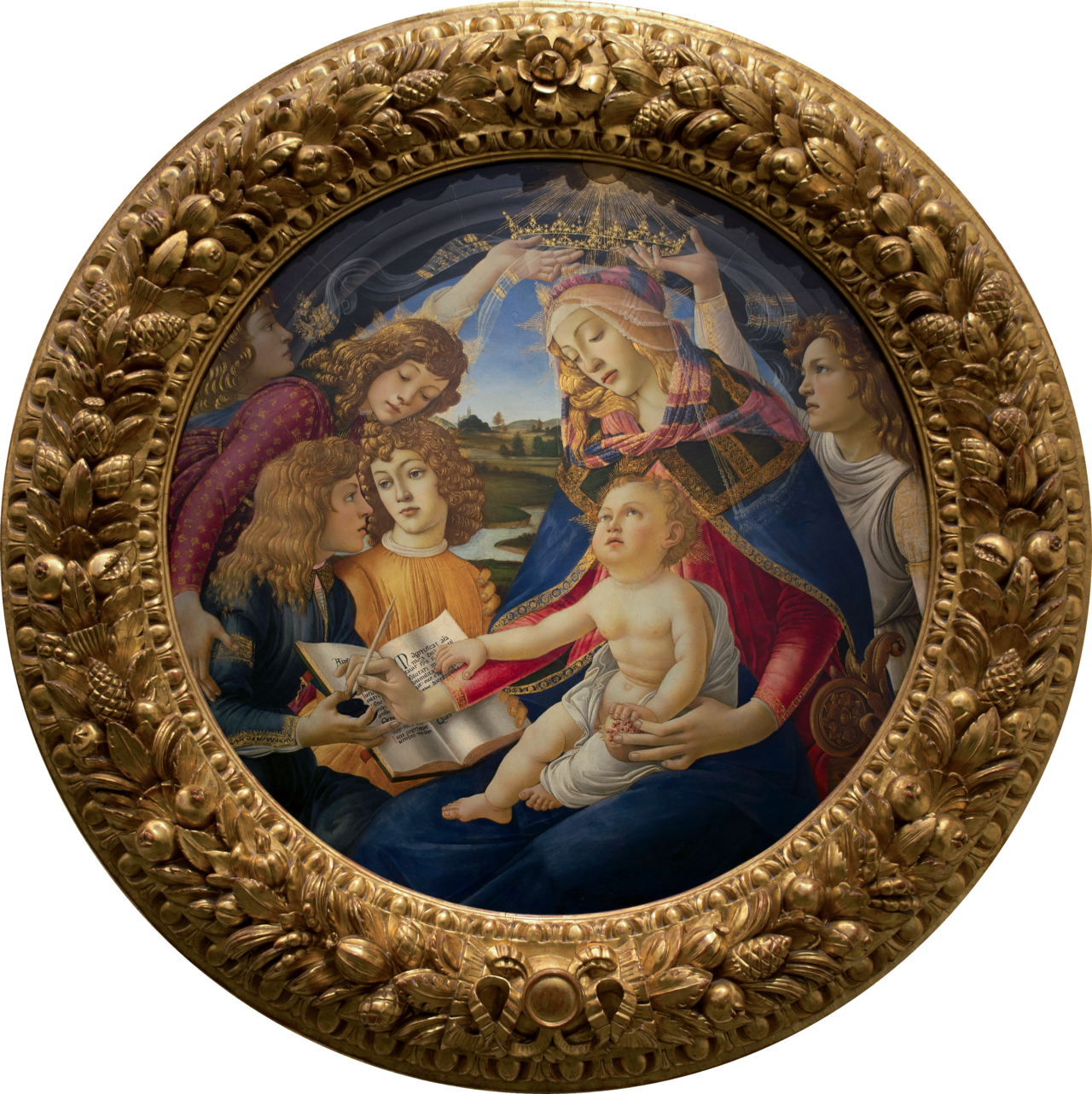
Magnificat
1st century CE
 Book
Secondary source
Gospel of John
John the Evangelist · c. AD 90-100
Free account
Read every Mary, mother of Jesus source
Sign up free →
Ready when you are
Start chatting with Mary, mother of Jesus now.
20 messages free · No credit card · Available in 50+ languages.