


Secondary sourcePaintingc. 1410-1412
Marco Polo Arrives at Hormuz
Unknown · c. 1410-1412
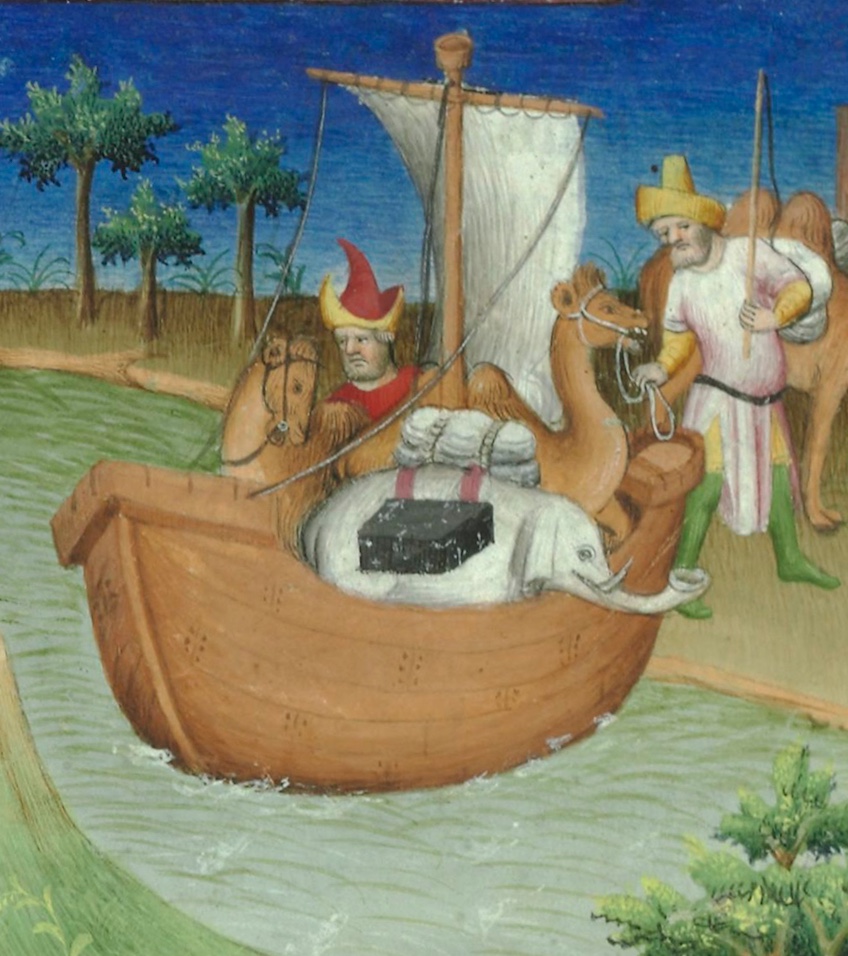
An early 15th-century manuscript painting showing Marco Polo arriving at Hormuz on the Persian Gulf with elephants and camels.
This miniature shows Marco Polo's arrival at Hormuz, a stop on his return journey described in his book.
About this source
What it is
This miniature detail, from the Livre des Merveilles du Monde (c. 1410-1412), shows Marco Polo arriving at the port city of Hormuz on the Persian Gulf after traveling from India, accompanied by a caravan including an elephant and camels.
Why it matters
The image reflects the exotic animals and distant lands that fascinated European readers of Polo's account. It later became well-known enough to be used on the cover of a modern book about Marco Polo and the Silk Road, showing his lasting fame as a symbol of cross-continental trade and travel.
Look closer
- What does the inclusion of elephants and camels suggest about the goods and animals traded along these routes?
- Why might this image have been chosen centuries later for a book cover?
- How does the artist's style tell you this was made in medieval Europe rather than Asia?
This painting is part of the curated material that grounds the AI version of Marco Polo on Humy.ai — when students ask about related events, the AI can quote it and cite it.
More Marco Polo sources
Meet the AI Marco Polo →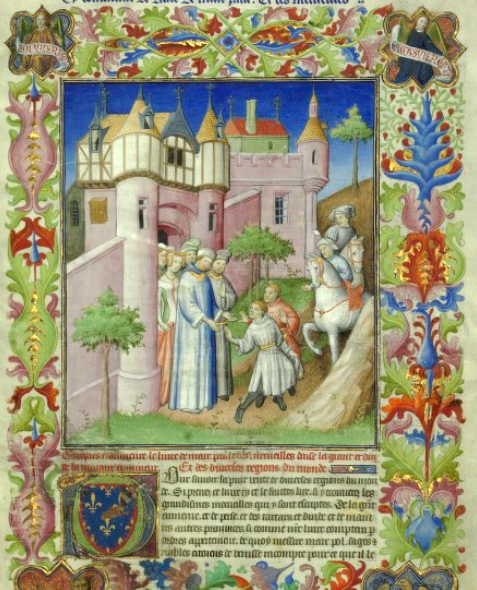 Book
Secondary source
The Travels of Marco Polo
Rustichello da Pisa · 1298
 Document
Primary source
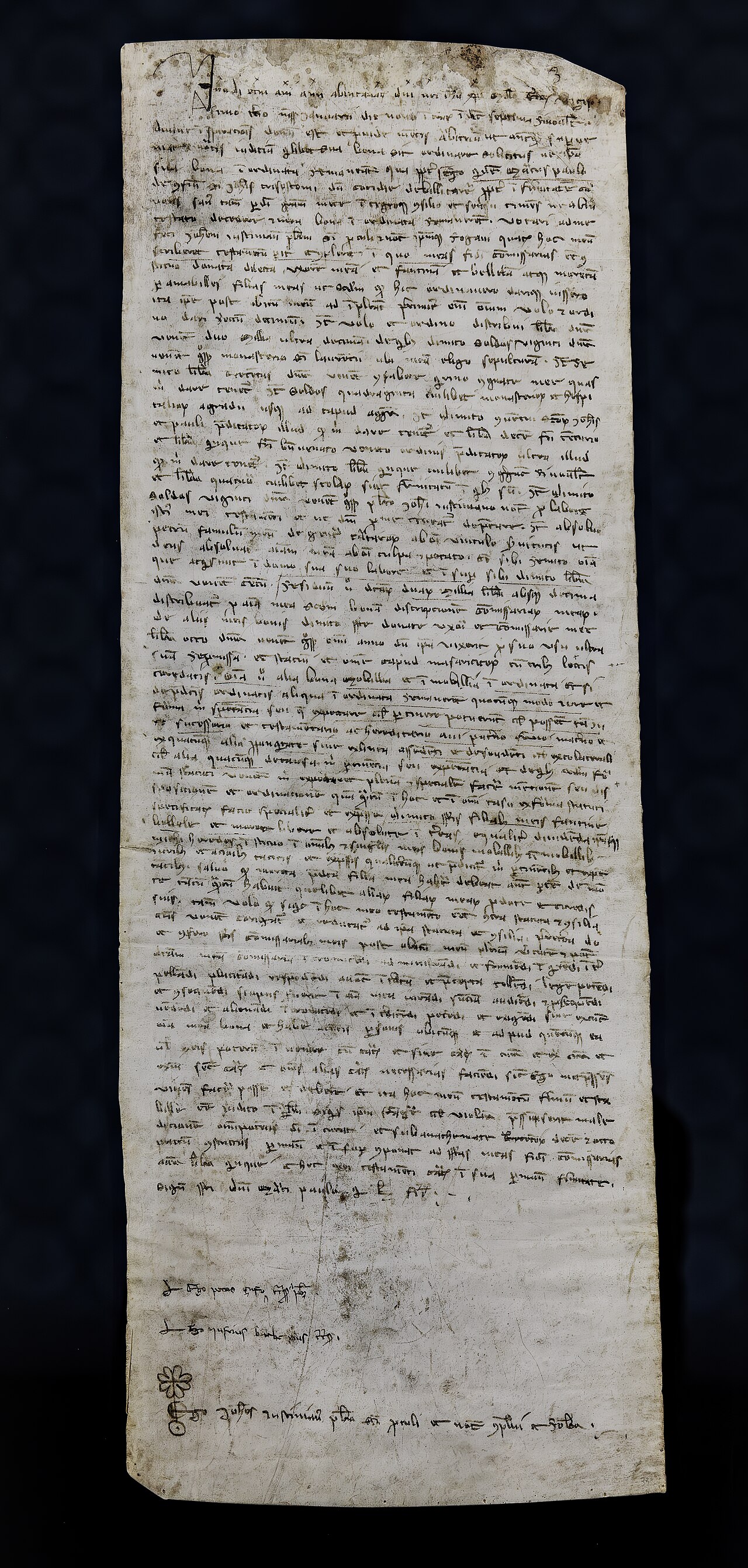
Marco Polo's Will
Marco Polo · 1324
 Painting
Secondary source
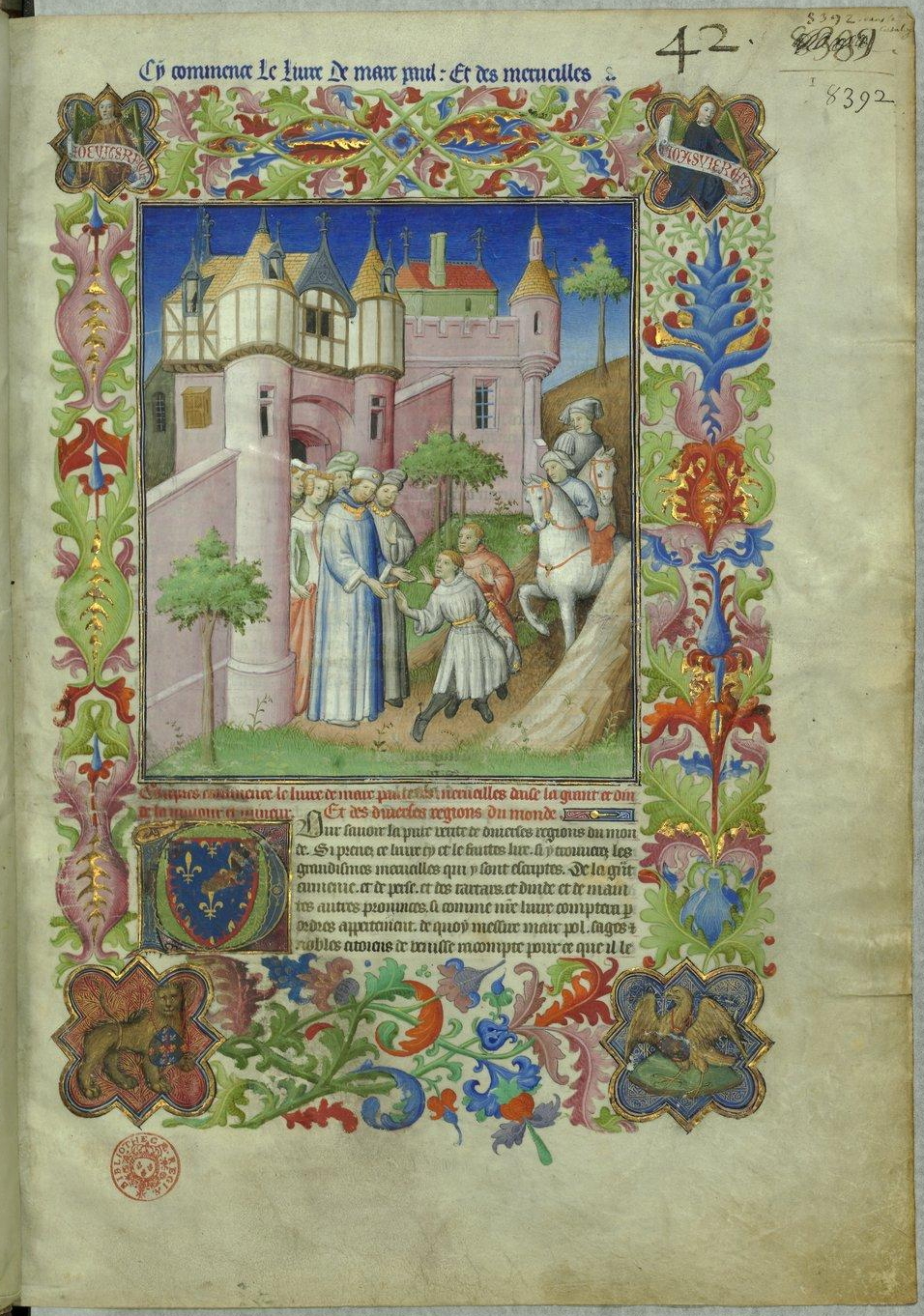
Livre des merveilles
Mazarine Master · c. 1410-1412
 Painting
Secondary source
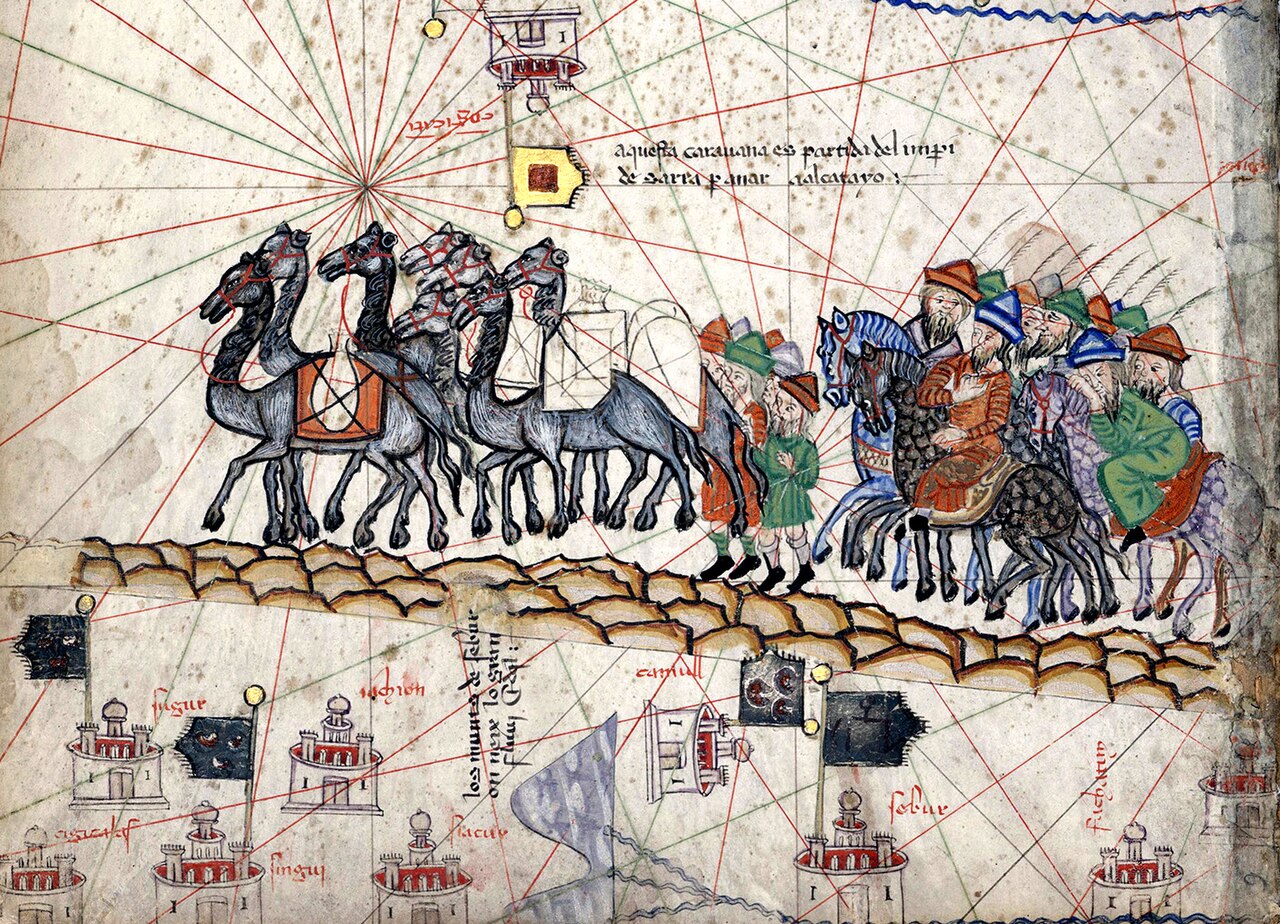
Caravane Marco Polo
Abraham Cresques · c. 1375
 Artifact
Secondary source
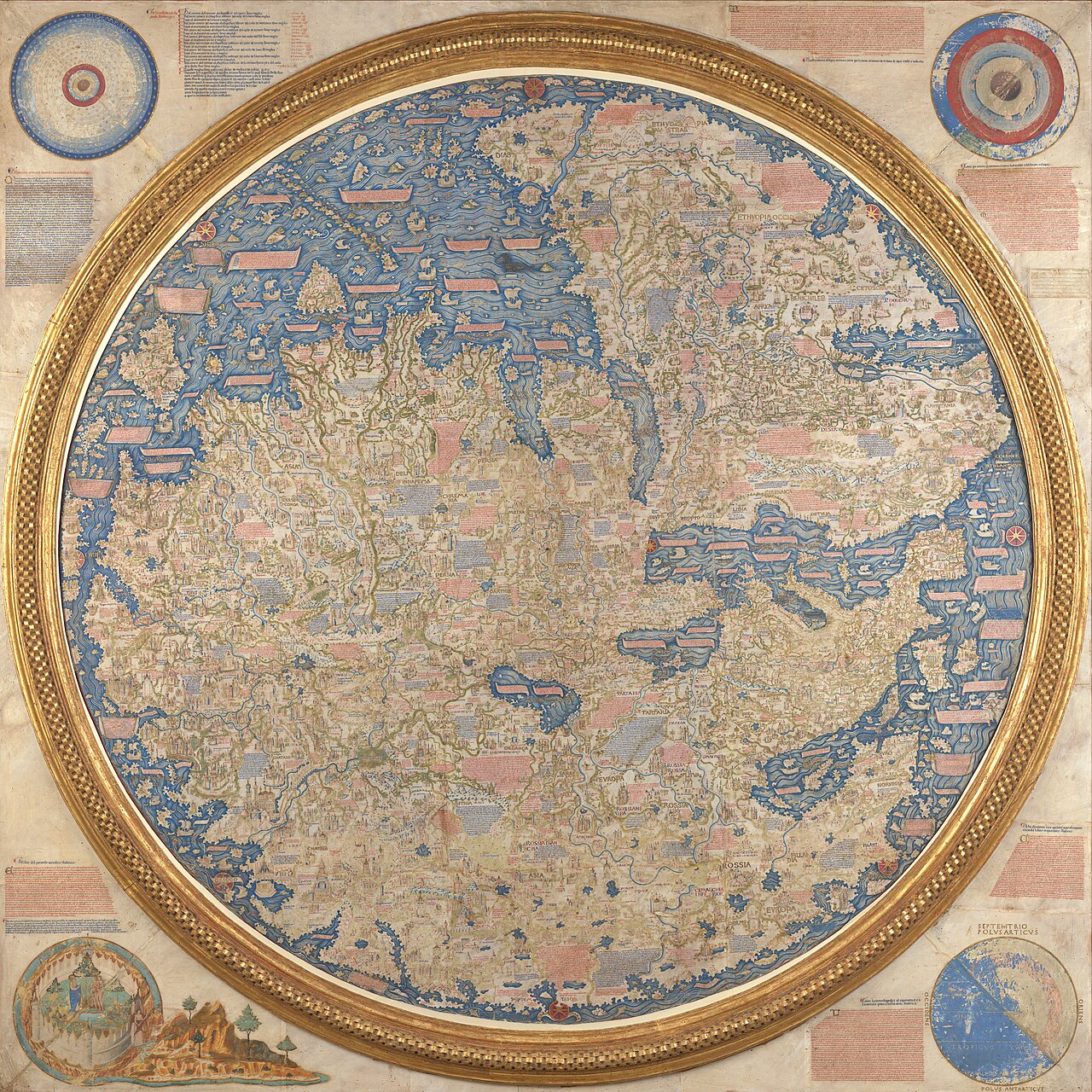
Fra Mauro map
Fra Mauro · c. 1450-1459
Ready when you are
Start chatting with Marco Polo now.
20 messages free · No credit card · Available in 50+ languages.