


Primary sourcePainting1413
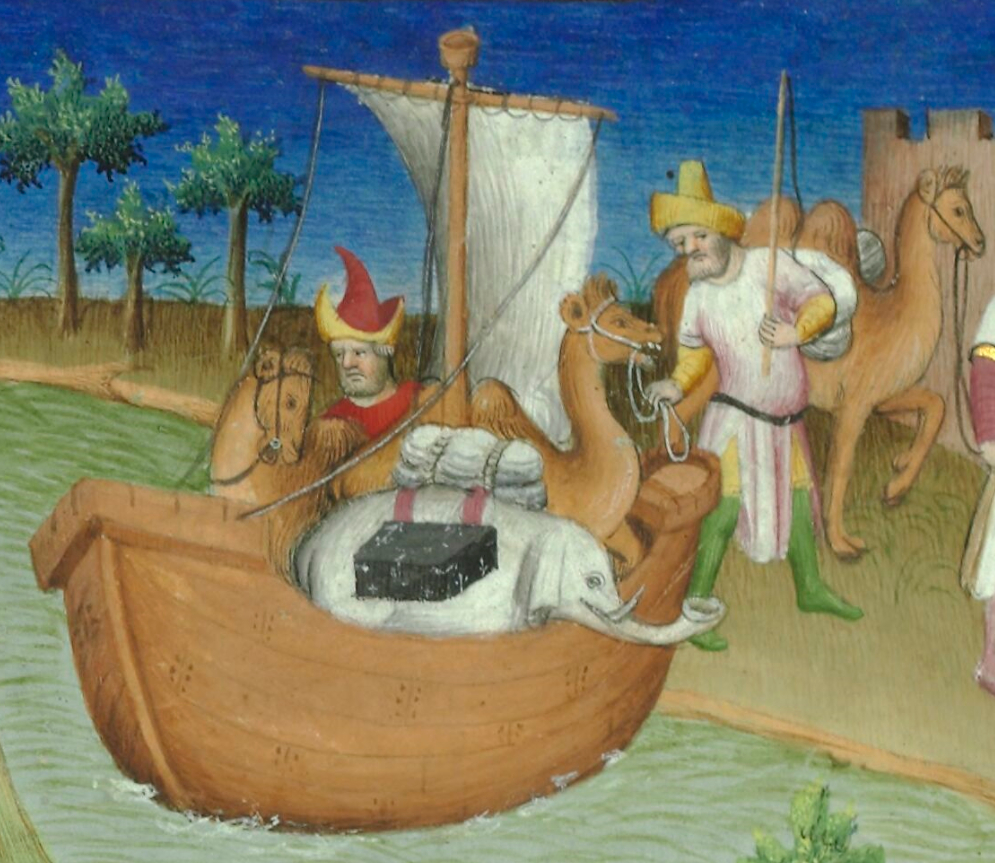
Merchandise Unloaded at Hormos
Miniaturiste du XIVe siècle · 1413
A 14th-century manuscript miniature from Marco Polo's own book, illustrating the unloading of goods at the port of Hormuz.
An illustration from a manuscript of Polo's own book, depicting the port of Hormuz that he described on his travels.
About this source
What it is
This is a miniature from a 14th-century manuscript of Le Livre de Marco Polo, illustrating chapter 36, which describes the port city of Hormuz. It shows a ship unloading bales of goods, a chest, an elephant and a camel, with turbaned men on board and ashore.
Why it matters
Hormuz was a key trading port on the routes Polo travelled and described in his account. This image, made not long after his book was written, shows how medieval readers and artists imagined the busy trade in goods and animals along the routes he followed.
Look closer
- What kinds of goods and animals are being unloaded, and what does this suggest about trade along Polo's route?
- How does the artist show the port as a meeting point of different peoples and cultures?
- What has the illustrator imagined versus what might Polo have actually described in his text?
This painting is part of the curated material that grounds the AI version of Marco Polo on Humy.ai — when students ask about related events, the AI can quote it and cite it.
More Marco Polo sources
Meet the AI Marco Polo →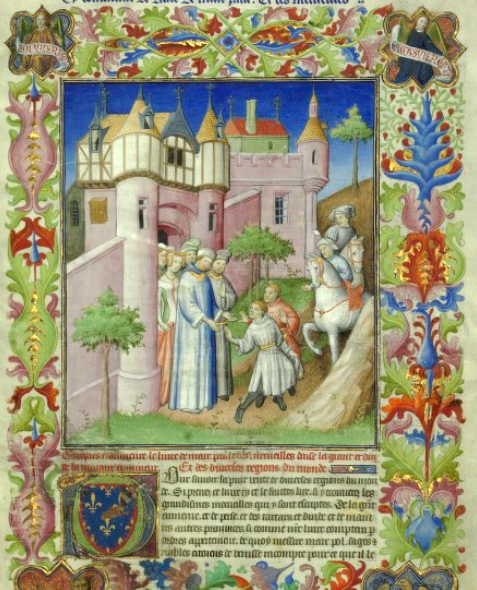 Book
Secondary source
The Travels of Marco Polo
Rustichello da Pisa · 1298
 Document
Primary source
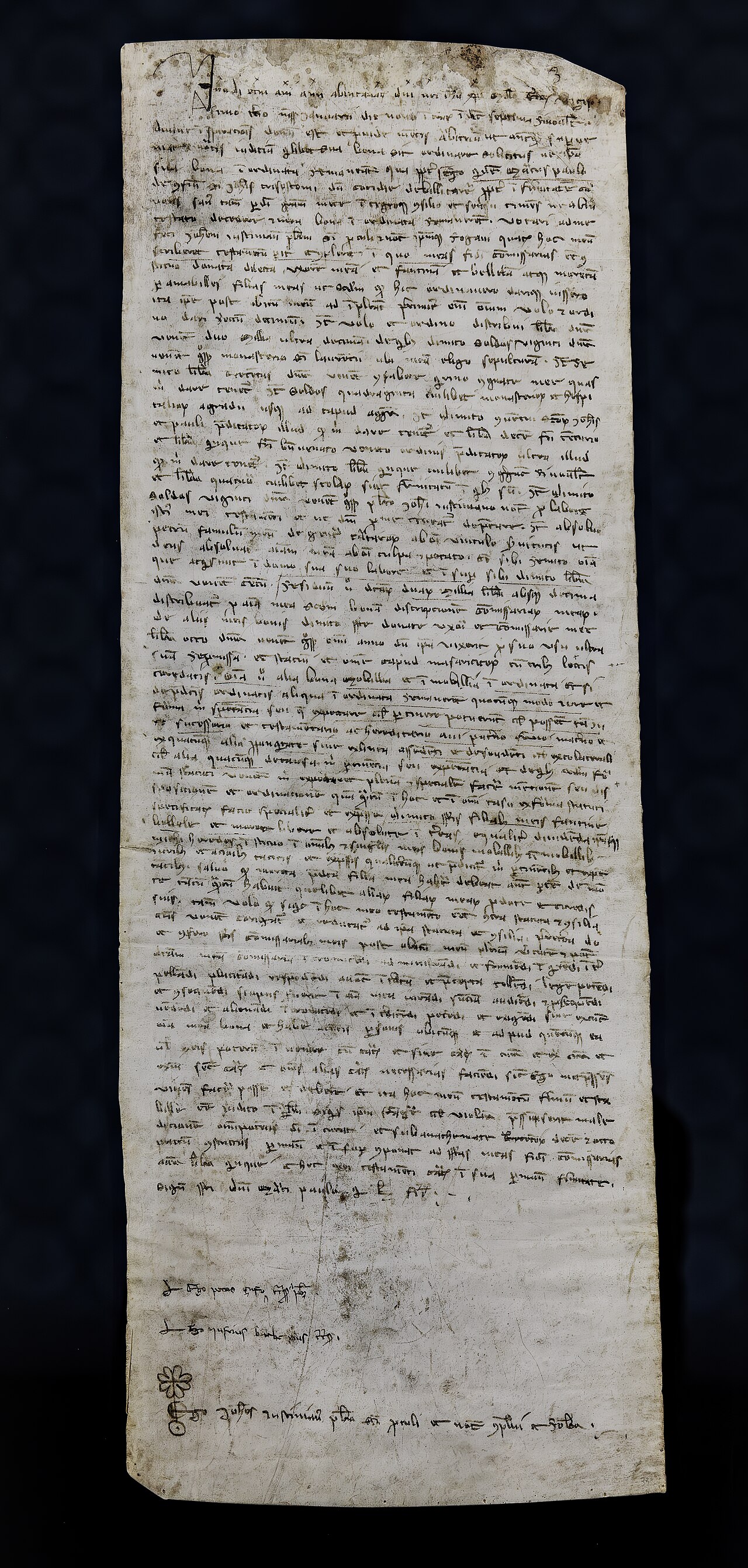
Marco Polo's Will
Marco Polo · 1324
 Painting
Secondary source
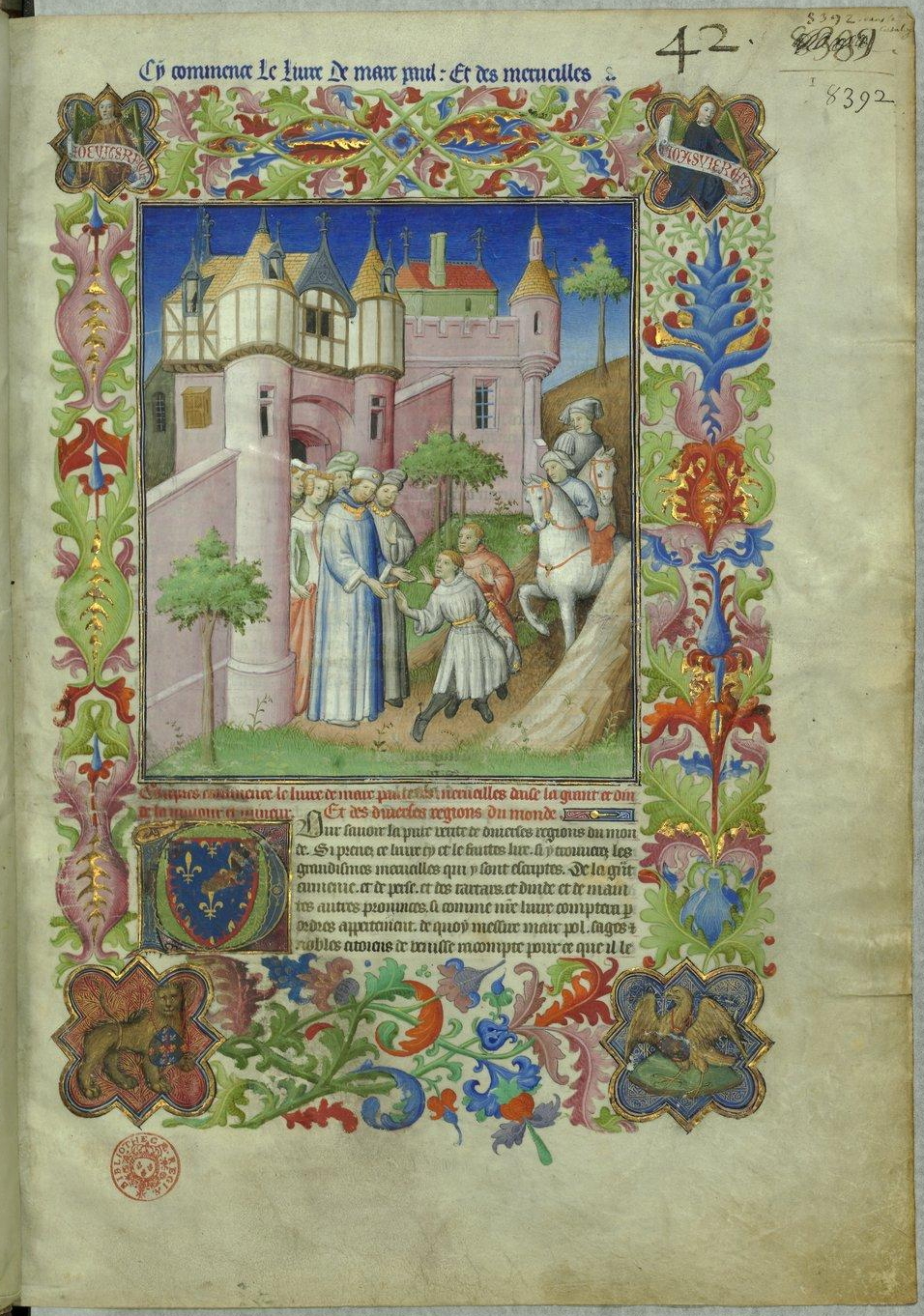
Livre des merveilles
Mazarine Master · c. 1410-1412
 Painting
Secondary source
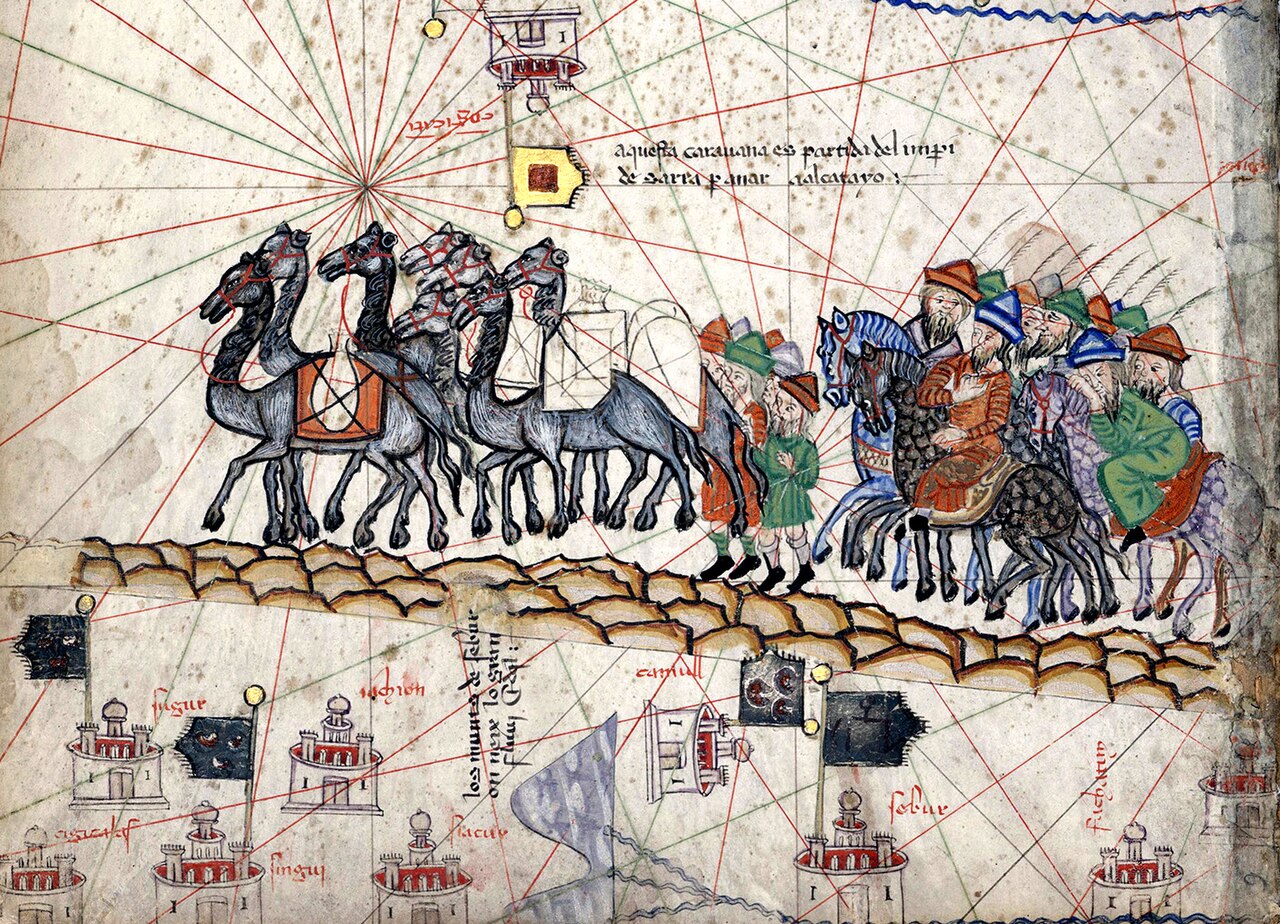
Caravane Marco Polo
Abraham Cresques · c. 1375
 Artifact
Secondary source
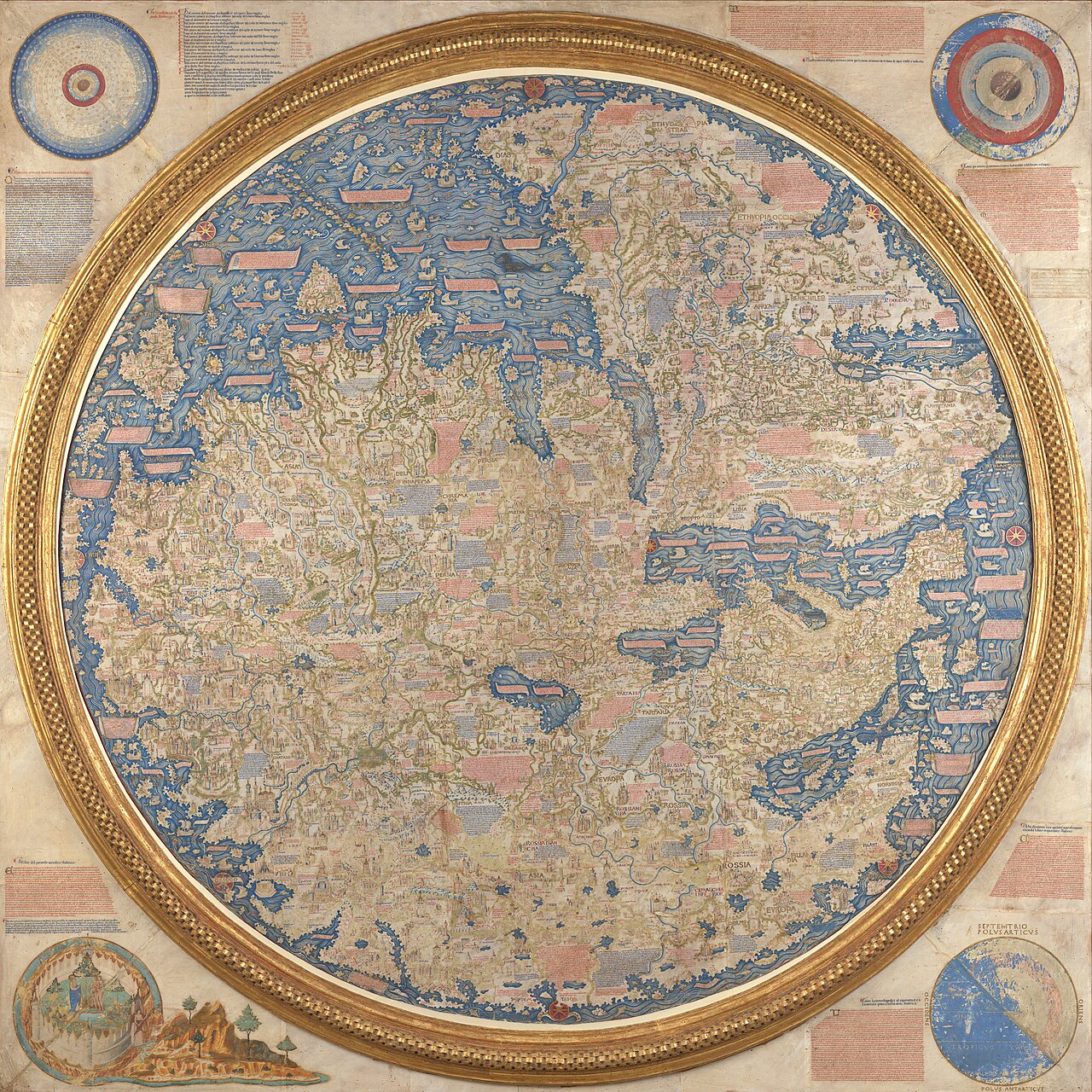
Fra Mauro map
Fra Mauro · c. 1450-1459
Ready when you are
Start chatting with Marco Polo now.
20 messages free · No credit card · Available in 50+ languages.