


Primary sourceBook1864
Notes from Underground
Fyodor Dostoyevsky · 1864
A bitter, isolated former civil servant's first-person confession, Dostoevsky's attack on rationalist utopian philosophy.
His polemical novella against rationalist utopianism, a key founding text of his mature philosophical fiction.
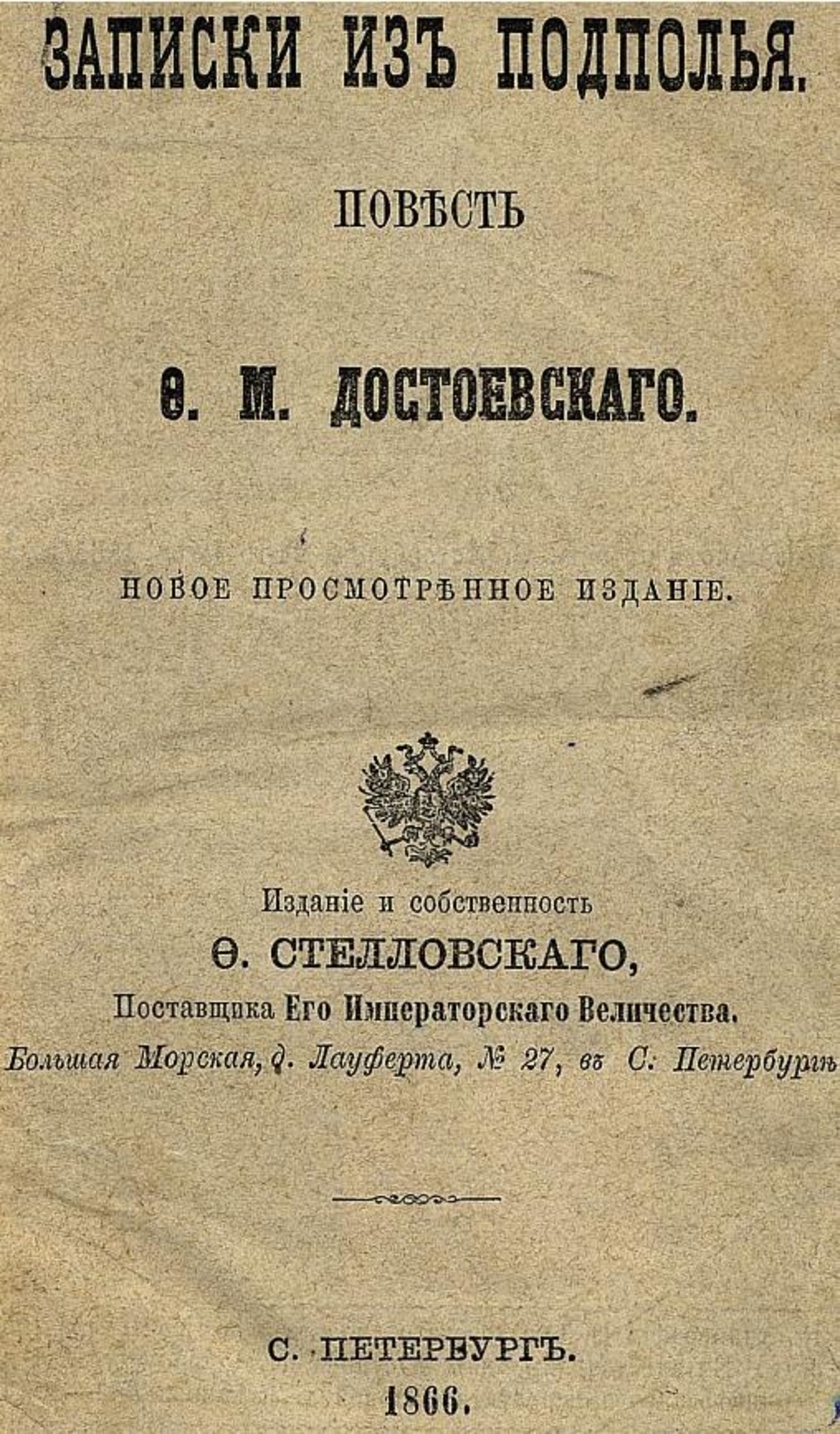
About this source
What it is
Notes from Underground is a novella by Fyodor Dostoevsky, first published in the journal Epoch in 1864. It is written as the confession of an unnamed, embittered narrator known as the Underground Man, a retired civil servant living in St Petersburg.
Why it matters
The novella attacks the rational egoism of contemporary thinkers like Nikolay Chernyshevsky, arguing that human beings will always act against their own interests simply to assert their freedom. It is widely seen as a founding text of existentialist thought, showing how Dostoevsky used fiction to argue with the ideas of his time.
Look closer
- Why might Dostoevsky choose an unnamed, unlikeable narrator to make his philosophical argument?
- What does the narrator's attack on logic and mathematics ('two times two makes four') suggest about his view of human nature?
- How does the double-headed eagle on the title page connect this book to the Russian state of its time?
This book is part of the curated material that grounds the AI version of Fyodor Dostoevsky on Humy.ai — when students ask about related events, the AI can quote it and cite it.
More Fyodor Dostoevsky sources
Meet the AI Fyodor Dostoevsky →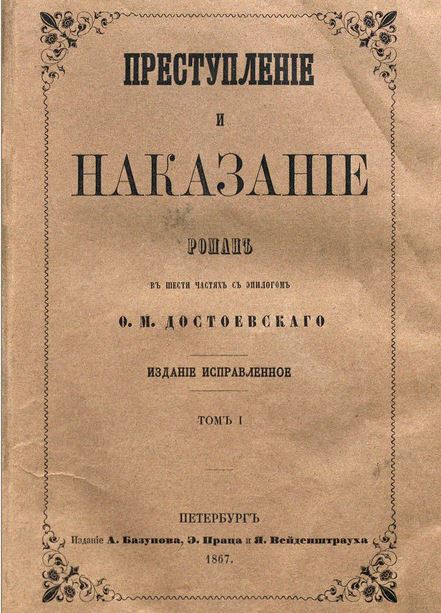 Book
Primary source
Crime and Punishment
Fyodor Dostoyevsky · 1866
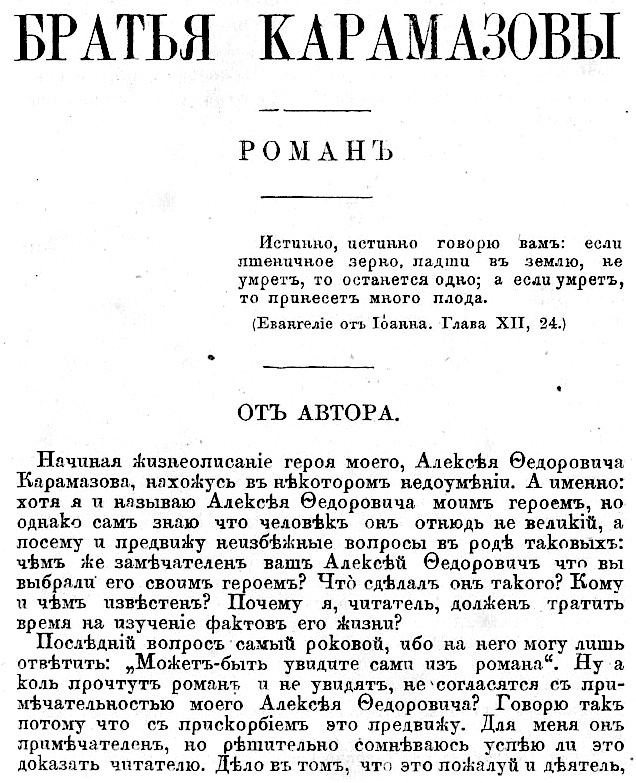 Book
Primary source
The Brothers Karamazov
Fyodor Dostoyevsky · 1879-1880
Primary source
The Grand Inquisitor
Fyodor Dostoyevsky · 1879
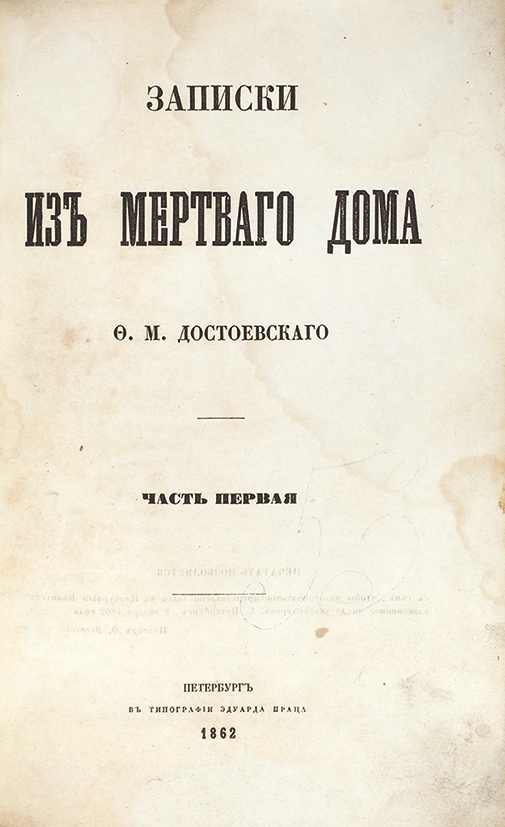 Book
Primary source
The House of the Dead
Fyodor Dostoyevsky · 1860-1862
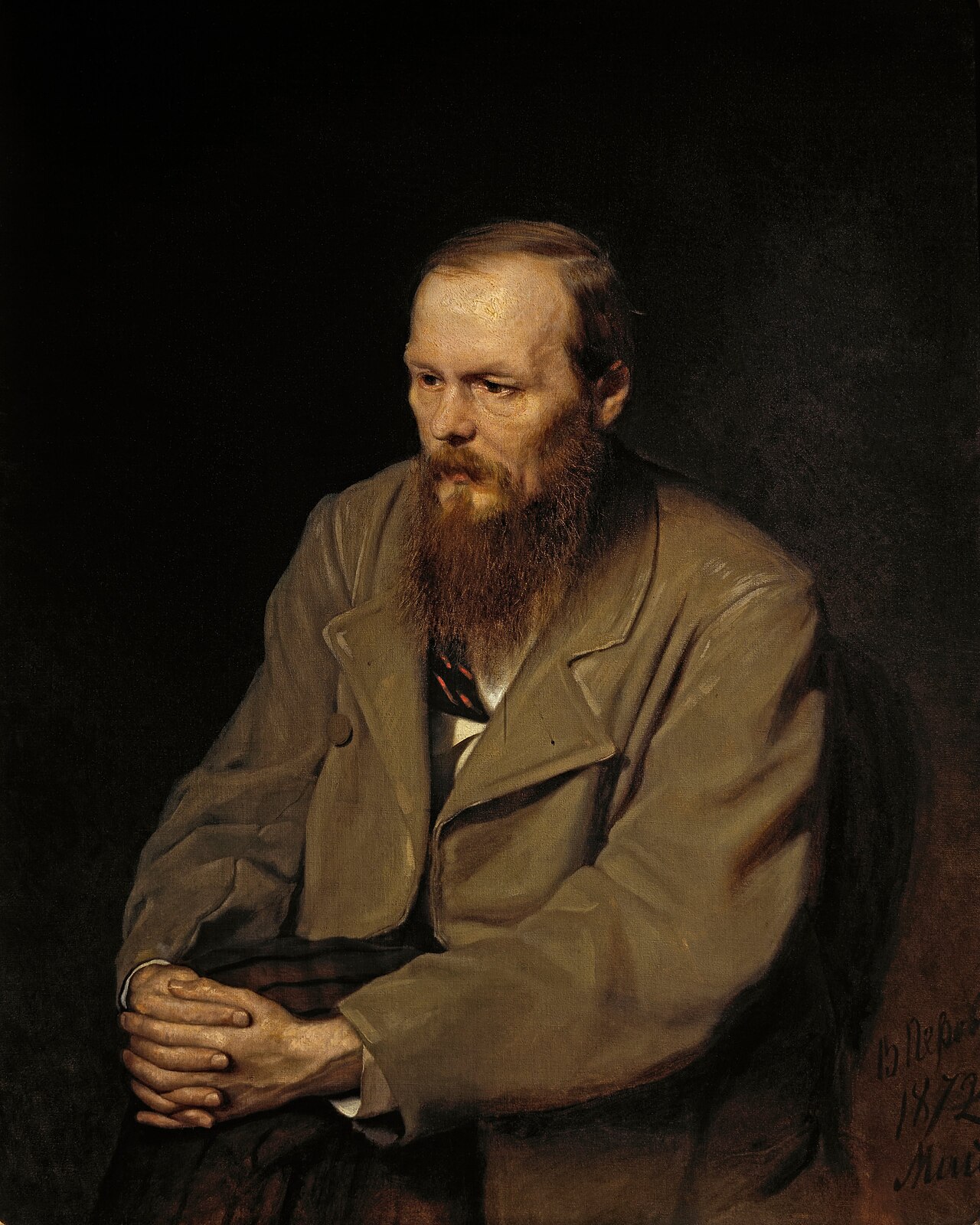 Painting
Primary source
Portrait of Fyodor Dostoyevsky
Vasily Perov · 1872
Ready when you are
Start chatting with Fyodor Dostoevsky now.
20 messages free · No credit card · Available in 50+ languages.