


Primary sourceSculpture1894
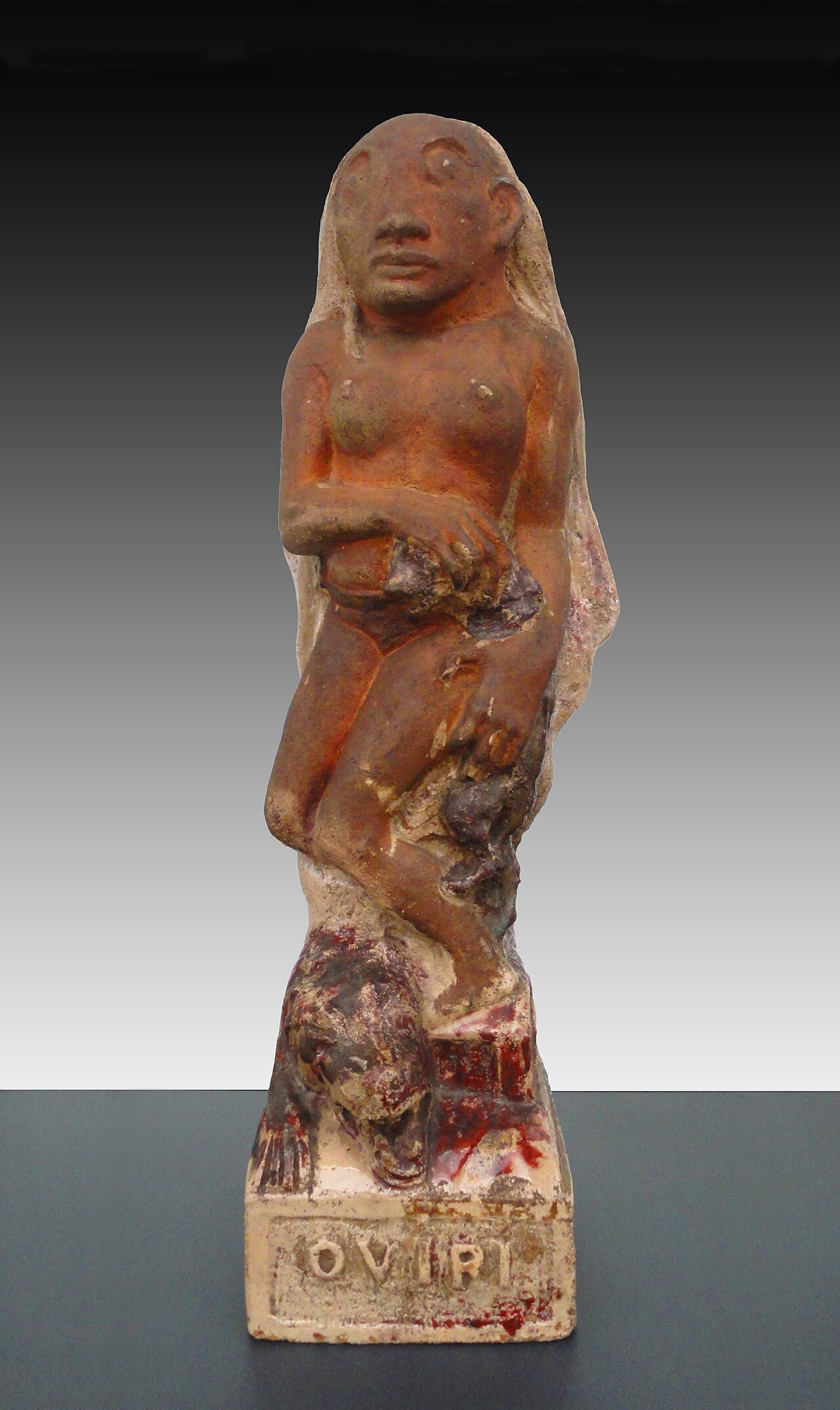
Oviri
Paul Gauguin · 1894
Gauguin's 1894 ceramic sculpture of a 'savage' Tahitian goddess of mourning, which he wanted placed on his own grave.
A sculpture made by Gauguin himself, showing his work beyond painting and the mythic self-image he cultivated.
About this source
What it is
Oviri is a ceramic sculpture made by Paul Gauguin in 1894, during his return from Tahiti. The original cast, in partially glazed stoneware, is held by the Musée d'Orsay in Paris.
It shows a figure based on a Tahitian goddess of mourning, with long pale hair, holding a wolf cub while standing over another animal.
Why it matters
Gauguin worked in ceramics as well as painting, having learned the craft from sculptor Ernest Chaplet. Oviri drew on varied sources, including ancient Assyrian reliefs and Southeast Asian figures, as Gauguin imagined a mythic, ancient Pacific past. He called the figure 'The Murderess' and referenced it in letters and drawings, and asked for a cast to be placed on his own grave, where a bronze version was eventually erected.
The sculpture later influenced other artists, including Pablo Picasso, who drew on it for Les Demoiselles d'Avignon, showing its lasting importance in the history of modern art.
Look closer
- Why might Gauguin have wanted this particular figure on his own grave?
- What feelings does the pose of the figure, holding one animal while standing over another, suggest to you?
- Why do you think Gauguin drew on images from many different ancient cultures to create a 'Tahitian' goddess?
This sculpture is part of the curated material that grounds the AI version of Paul Gauguin on Humy.ai — when students ask about related events, the AI can quote it and cite it.
More Paul Gauguin sources
Browse all 97 →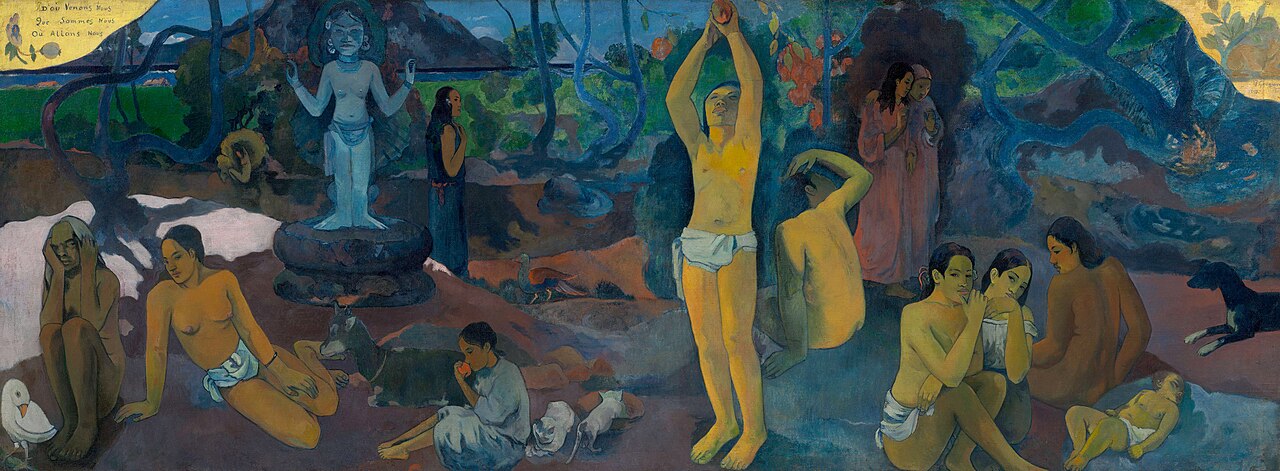 Painting
Primary source
Where Do We Come From? What Are We? Where Are We Going?
Paul Gauguin · 1897-98
 Painting
Primary source
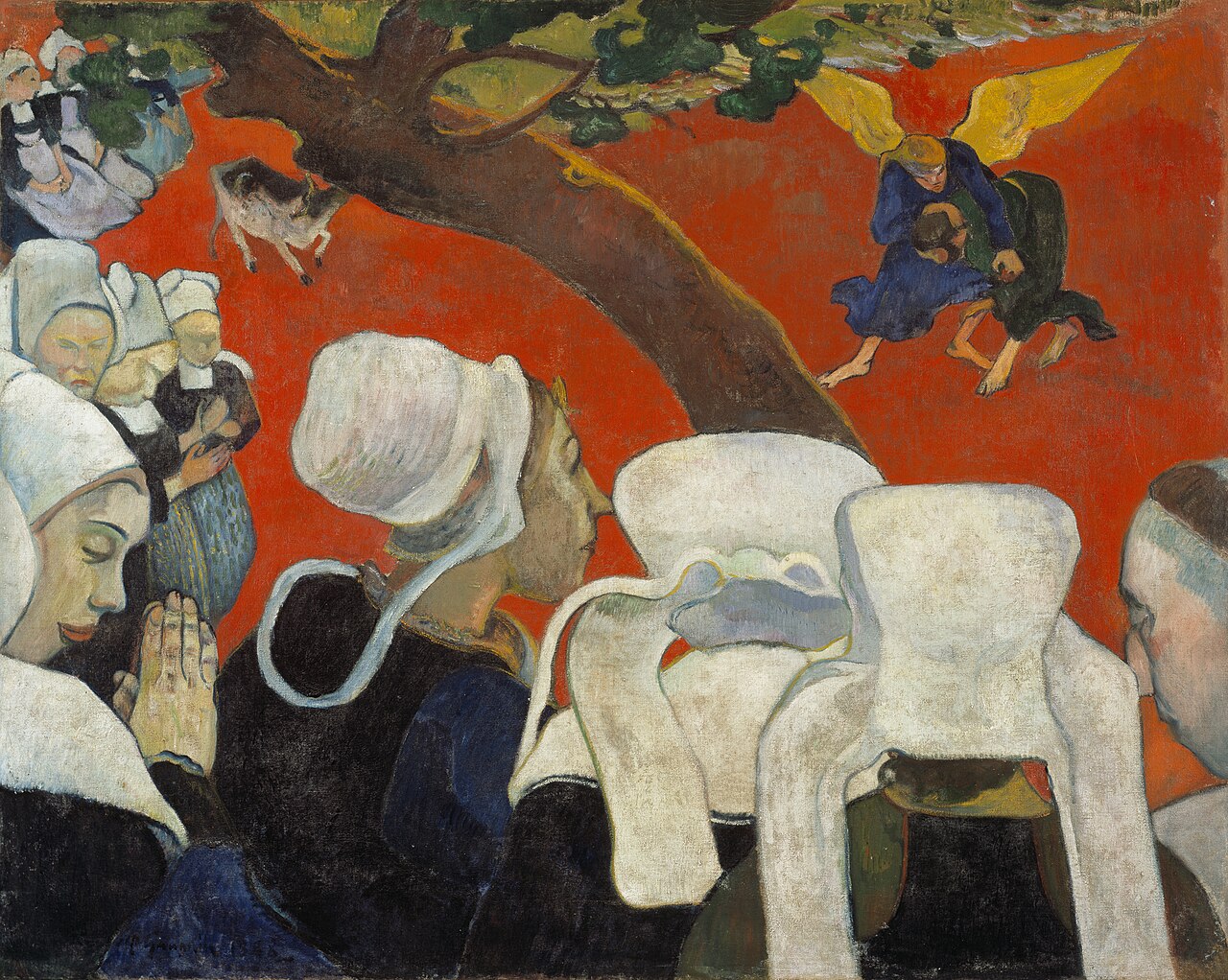
Vision After the Sermon
Paul Gauguin · 1888
 Painting
Primary source
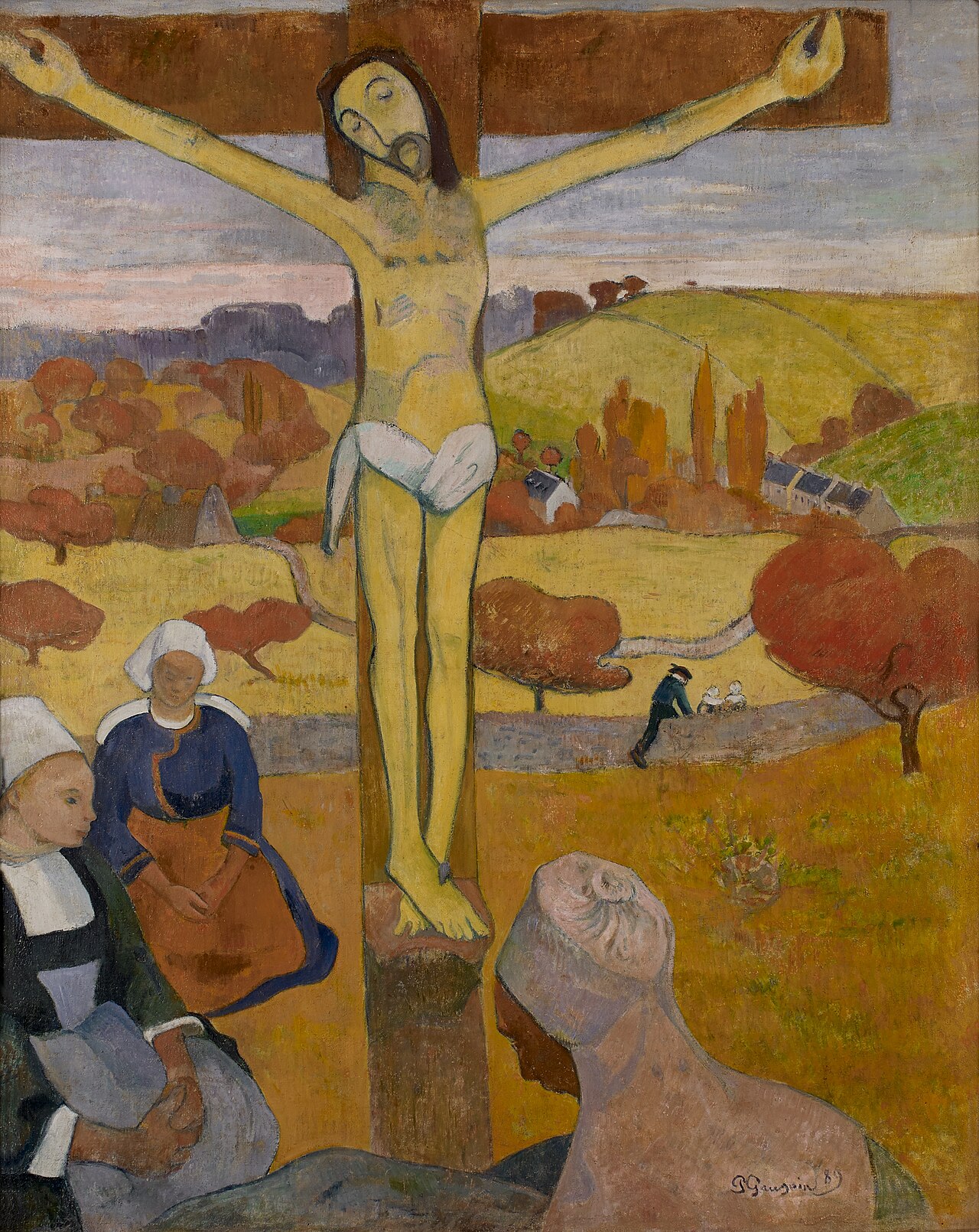
The Yellow Christ
Paul Gauguin · 1889
 Painting
Primary source
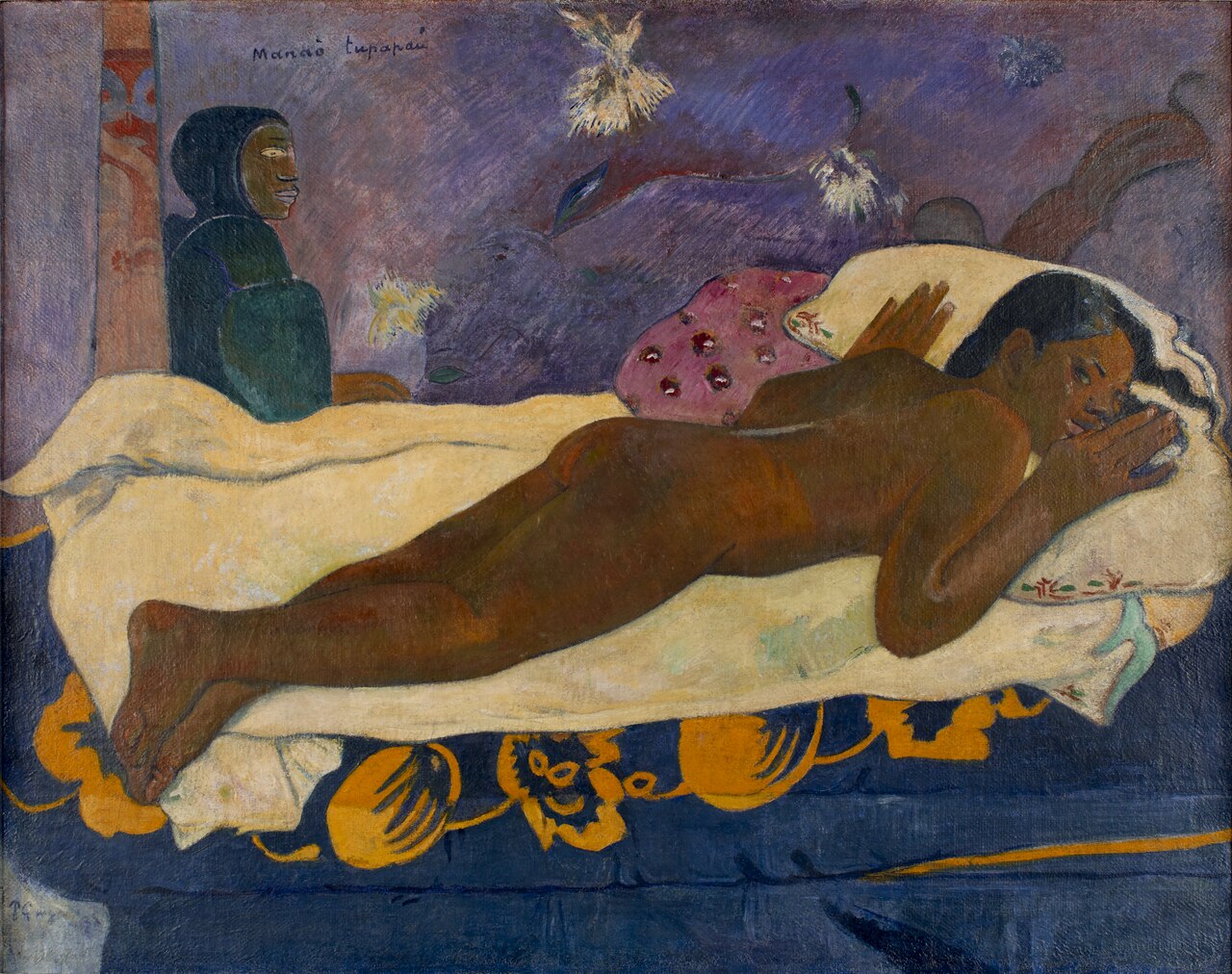
Manaò tupapaú
Paul Gauguin · 1892
Free account
Read every Paul Gauguin source
Sign up free →
Ready when you are
Start chatting with Paul Gauguin now.
20 messages free · No credit card · Available in 50+ languages.