


Primary sourcePainting1888
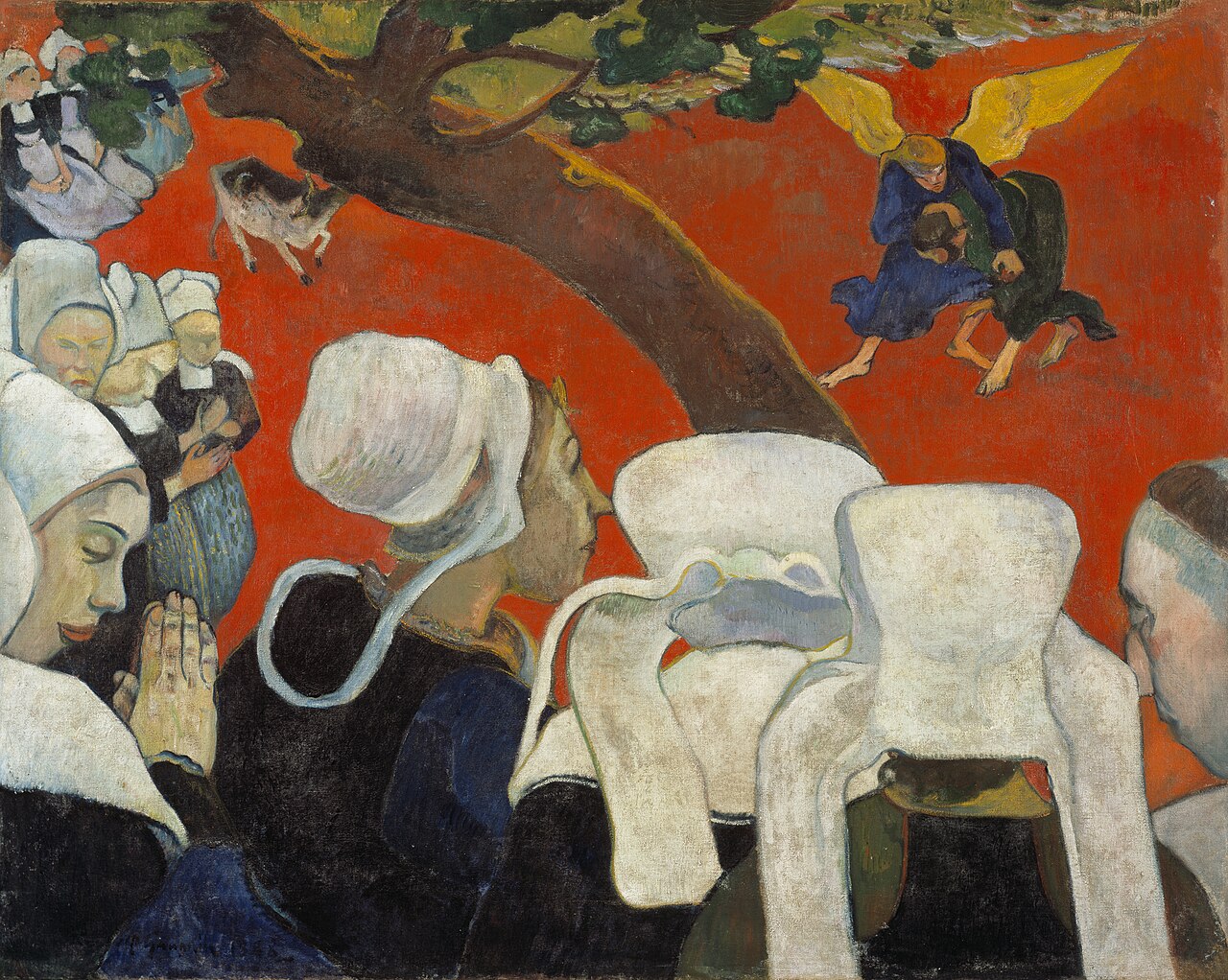
Vision After the Sermon
Paul Gauguin · 1888
Gauguin's 1888 painting of Breton women envisioning Jacob wrestling the angel, marking his break from Impressionism toward Symbolist Synthetism.
A key breakthrough work by Gauguin, marking his development of the Synthetist style.
About this source
What it is
This oil painting was made by Paul Gauguin in 1888 while he was staying at the artists' colony of Pont-Aven in Brittany, France. It is now in the Scottish National Gallery in Edinburgh.
It shows Breton women imagining a biblical vision of Jacob wrestling an angel, after hearing a church sermon.
Why it matters
Gauguin painted this after growing dissatisfied with Impressionism. Working alongside the young artist Émile Bernard, who introduced him to the flat, bold style of Japanese prints, Gauguin developed a new approach called Synthetism, using flat colour, strong outlines and symbolic subjects rather than realistic depiction.
The painting shows how Gauguin blended local Breton folk religion with influences from Japanese art to create something entirely new in European painting.
Look closer
- Why do you think Gauguin used such unnatural colours, like the red ground?
- How does the composition separate the real women from their vision?
- What does the painting suggest about the women's beliefs, and whose viewpoint are we seeing?
This painting is part of the curated material that grounds the AI version of Paul Gauguin on Humy.ai — when students ask about related events, the AI can quote it and cite it.
More Paul Gauguin sources
Browse all 97 →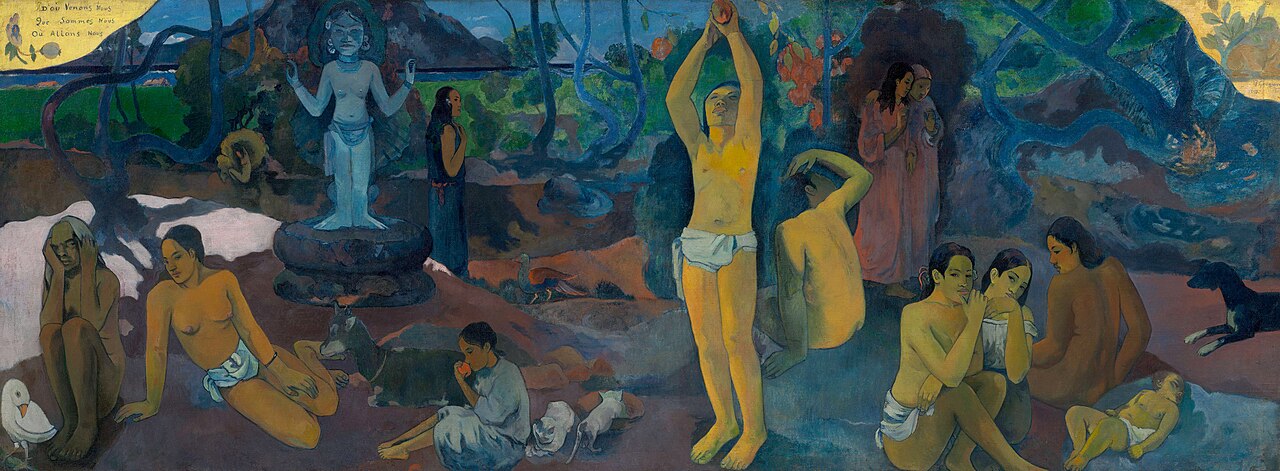 Painting
Primary source
Where Do We Come From? What Are We? Where Are We Going?
Paul Gauguin · 1897-98
 Painting
Primary source
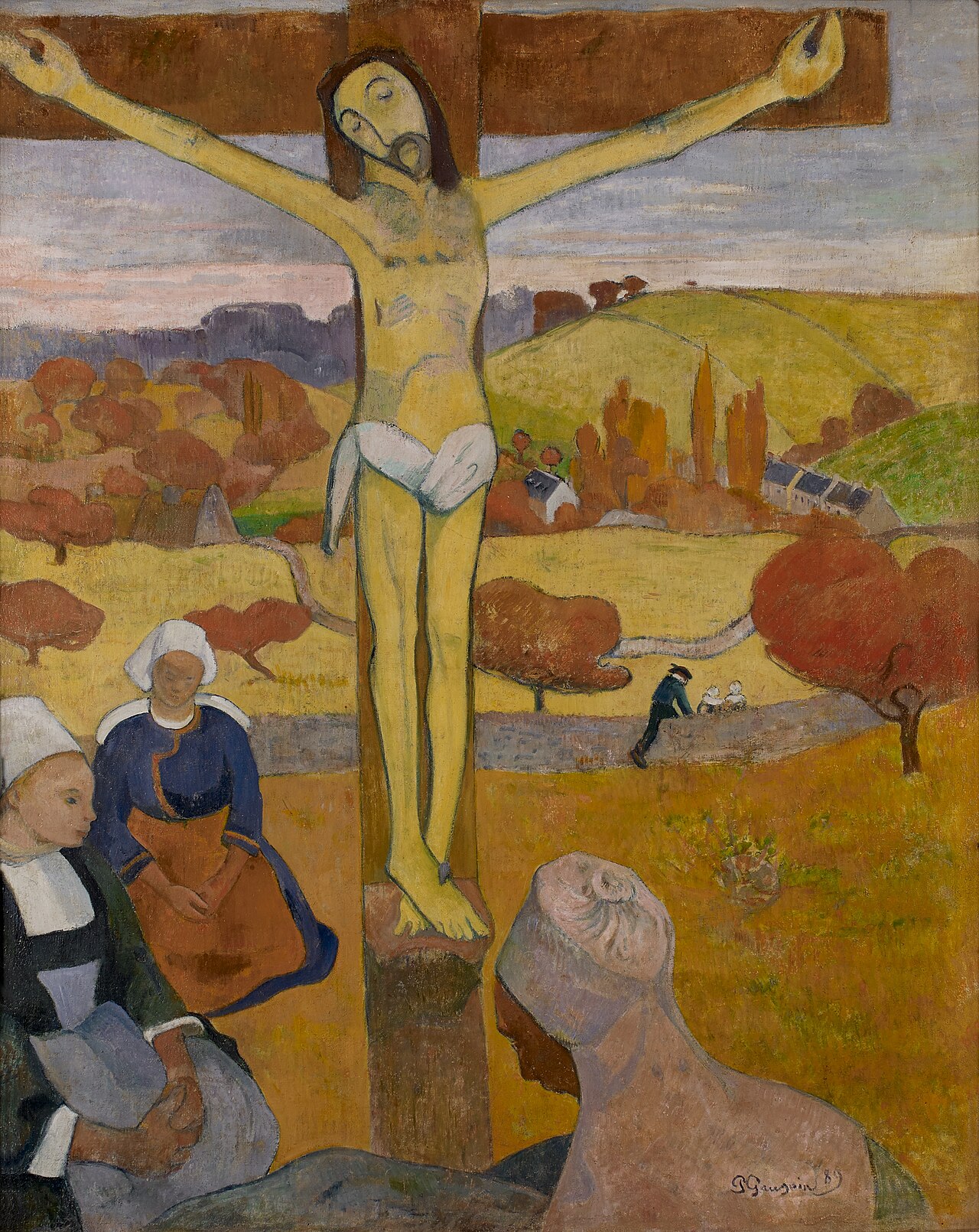
The Yellow Christ
Paul Gauguin · 1889
 Painting
Primary source
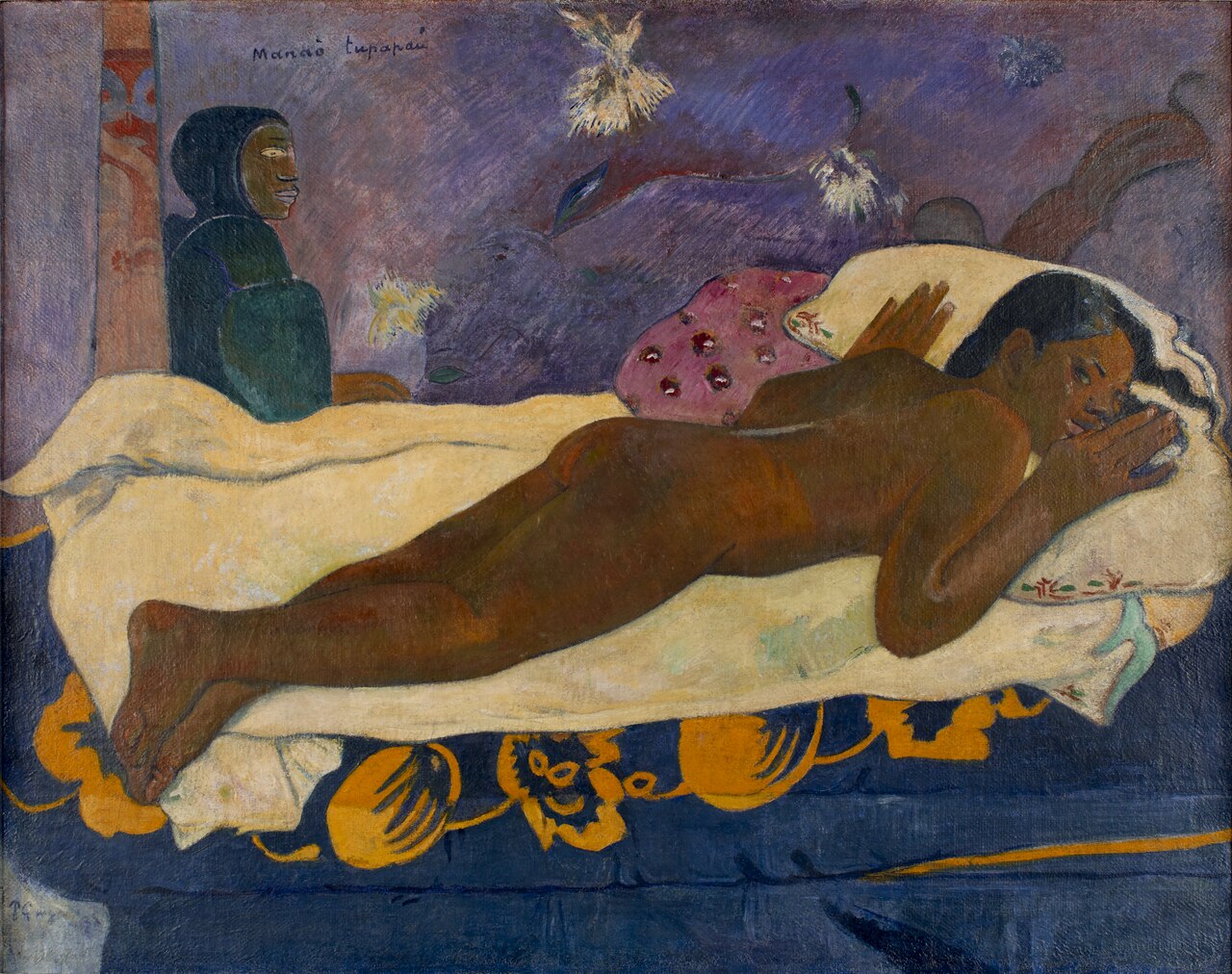
Manaò tupapaú
Paul Gauguin · 1892
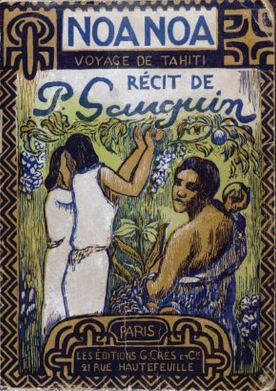 Book
Primary source
Noa Noa
Paul Gauguin · 1891
Free account
Read every Paul Gauguin source
Sign up free →
Ready when you are
Start chatting with Paul Gauguin now.
20 messages free · No credit card · Available in 50+ languages.