


Primary sourcePaintingc. 1303-1305
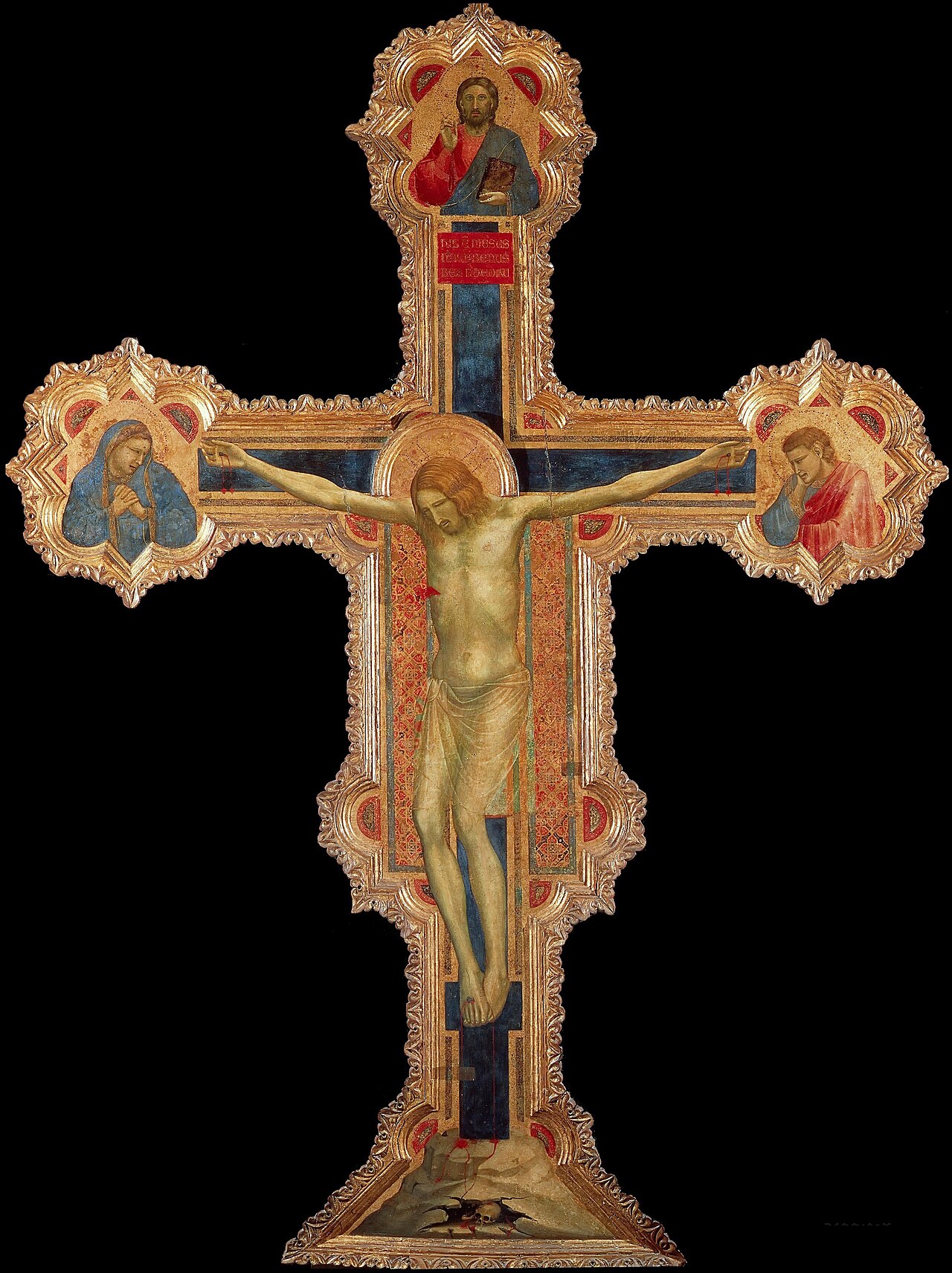
Padua Crucifix
Giotto · c. 1303-1305
A painted crucifix by Giotto originally hung above the iconostasis in the Scrovegni Chapel he decorated with frescoes.
Painted by Giotto for his own Scrovegni Chapel, complementing his famous frescoes there.
About this source
What it is
This painted wooden crucifix was made by Giotto around 1303–1305 for the Scrovegni Chapel in Padua, where it hung above the chapel's screen. Christ's body is at the center, with the Virgin Mary and Saint John in medallions on the arms, and a skull at the base. It is now held in the Civic Museums of Padua.
Why it matters
The attribution to Giotto was first made in 1864 and contested for years until restoration confirmed it. The crucifix likely dates from the same period as his famous Scrovegni Chapel frescoes, showing how he combined painted panels with fresco decoration in a single religious space.
Look closer
- Why might art historians have doubted this was Giotto's work before restoration?
- What do the small figures of Mary and John add to the meaning of the crucifix?
- What might the skull at the base symbolize?
This painting is part of the curated material that grounds the AI version of Giotto on Humy.ai — when students ask about related events, the AI can quote it and cite it.
More Giotto sources
Browse all 94 →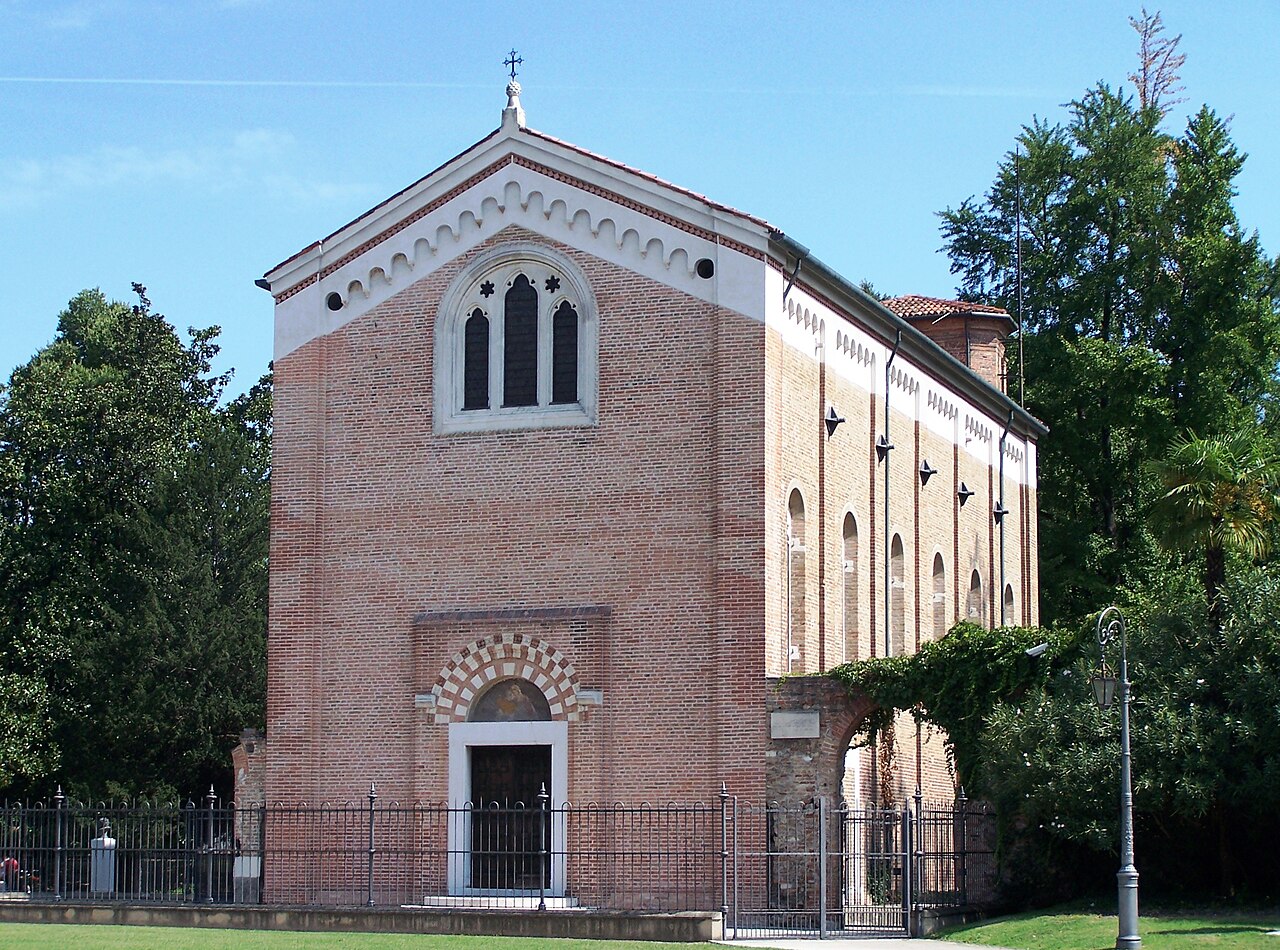 Artifact
Primary source
Scrovegni Chapel
Giotto di Bondone · c. 1305
 Painting
Primary source
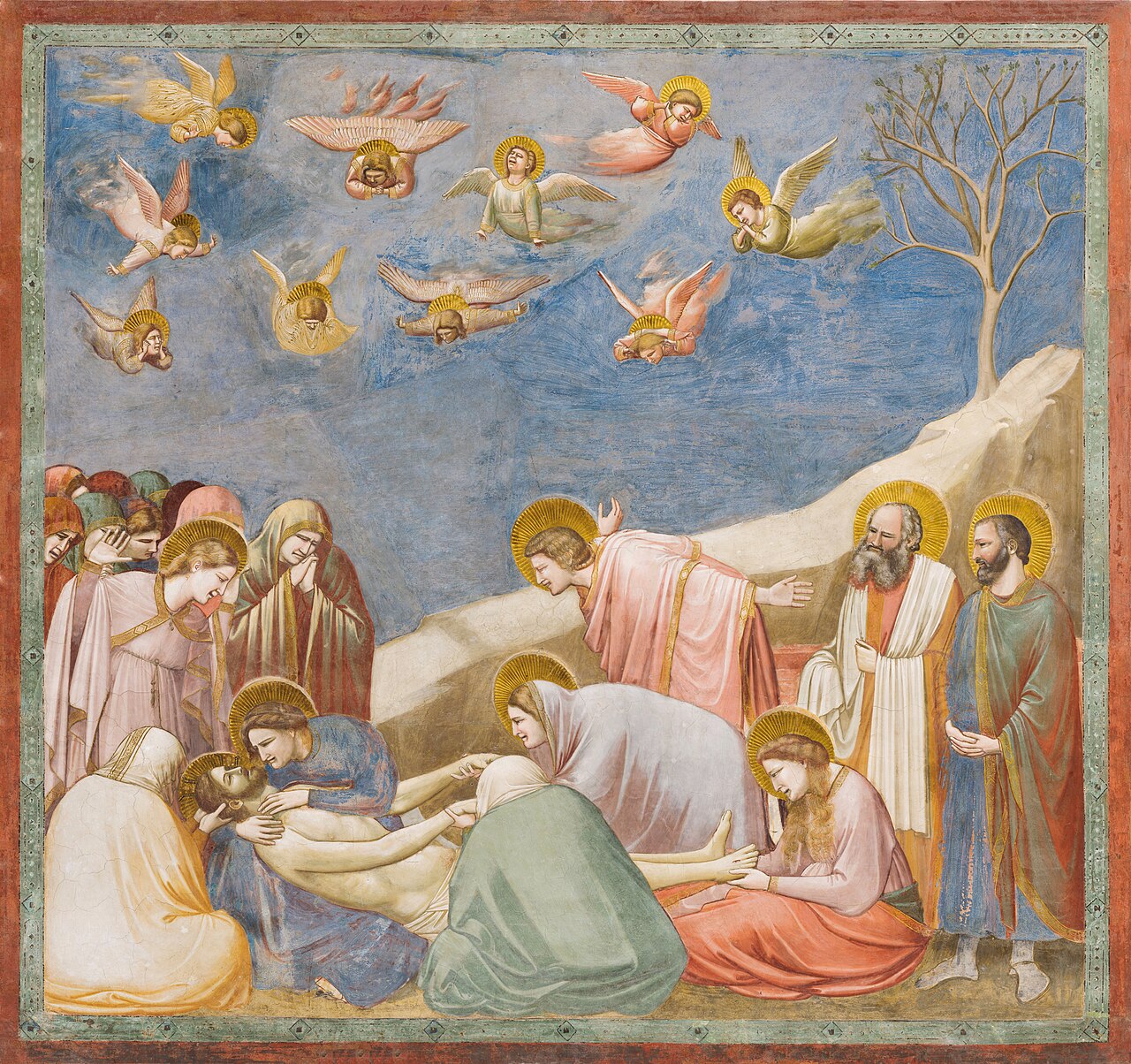
Lamentation
Giotto di Bondone · c. 1305
 Painting
Primary source
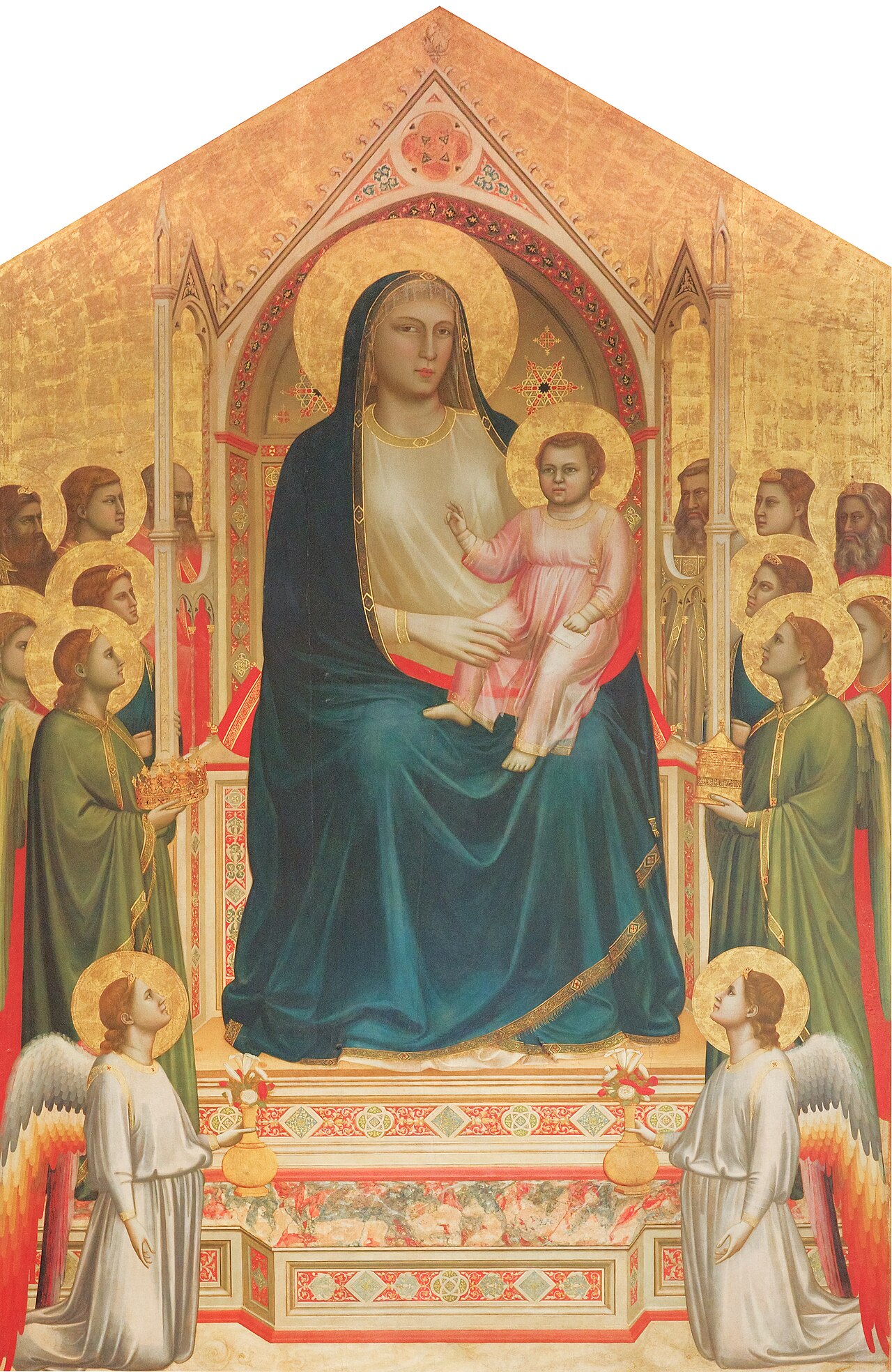
Madonna Enthroned
Giotto di Bondone · c. 1300-1310
 Artifact
Primary source
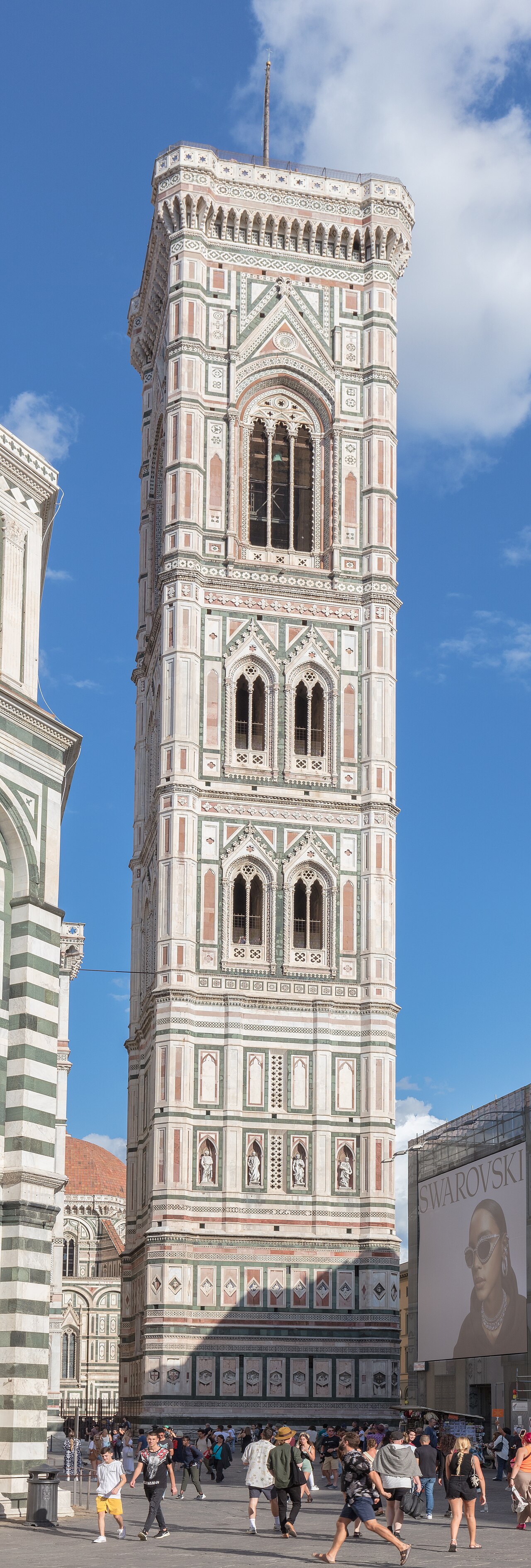
Giotto's Campanile
Giotto di Bondone · designed 1334
Free account
Read every Giotto source
Sign up free →
Ready when you are
Start chatting with Giotto now.
20 messages free · No credit card · Available in 50+ languages.