


Secondary sourceBook1598
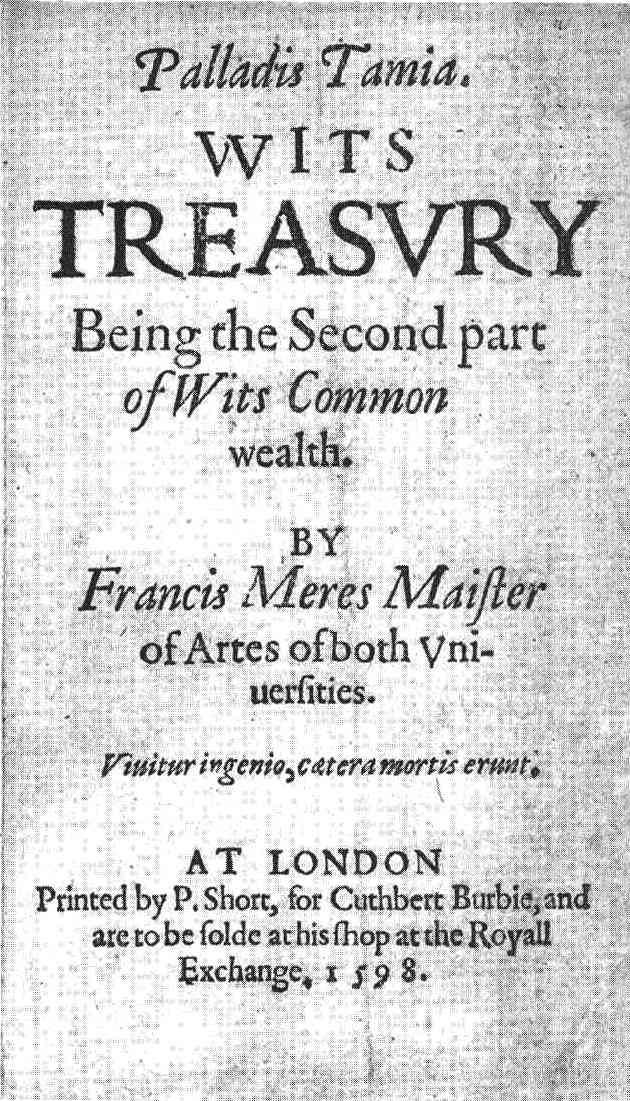
Palladis Tamia
Francis Meres · 1598
A 1598 commonplace book by Francis Meres that lists a dozen of Shakespeare's plays and praises his 'sugred Sonnets', an important early account of his work.
This early critical work names Shakespeare's plays and sonnets, providing crucial evidence of his reputation by 1598.
About this source
What it is
Palladis Tamia: Wits Treasury is a 1598 book written by the minister Francis Meres. Within it, a section called 'A Comparative Discourse of our English Poets' names twelve of William Shakespeare's plays and praises his sonnets, comparing him to classical authors. It also discusses other English writers, including a reference to the death of Christopher Marlowe.
Why it matters
This is the first critical account of Shakespeare's early plays and poems to survive, making it crucial evidence for dating his works. It shows that by 1598 Shakespeare was already ranked among the finest English writers of his time by his contemporaries.
Look closer
- Why might a list like this be used by historians to figure out when plays were written?
- What does it suggest that Meres compares English writers to Greek, Latin and Italian poets?
- What might be missing from this list, and why might that matter for later scholars?
This book is part of the curated material that grounds the AI version of William Shakespeare on Humy.ai — when students ask about related events, the AI can quote it and cite it.
More William Shakespeare sources
Meet the AI William Shakespeare →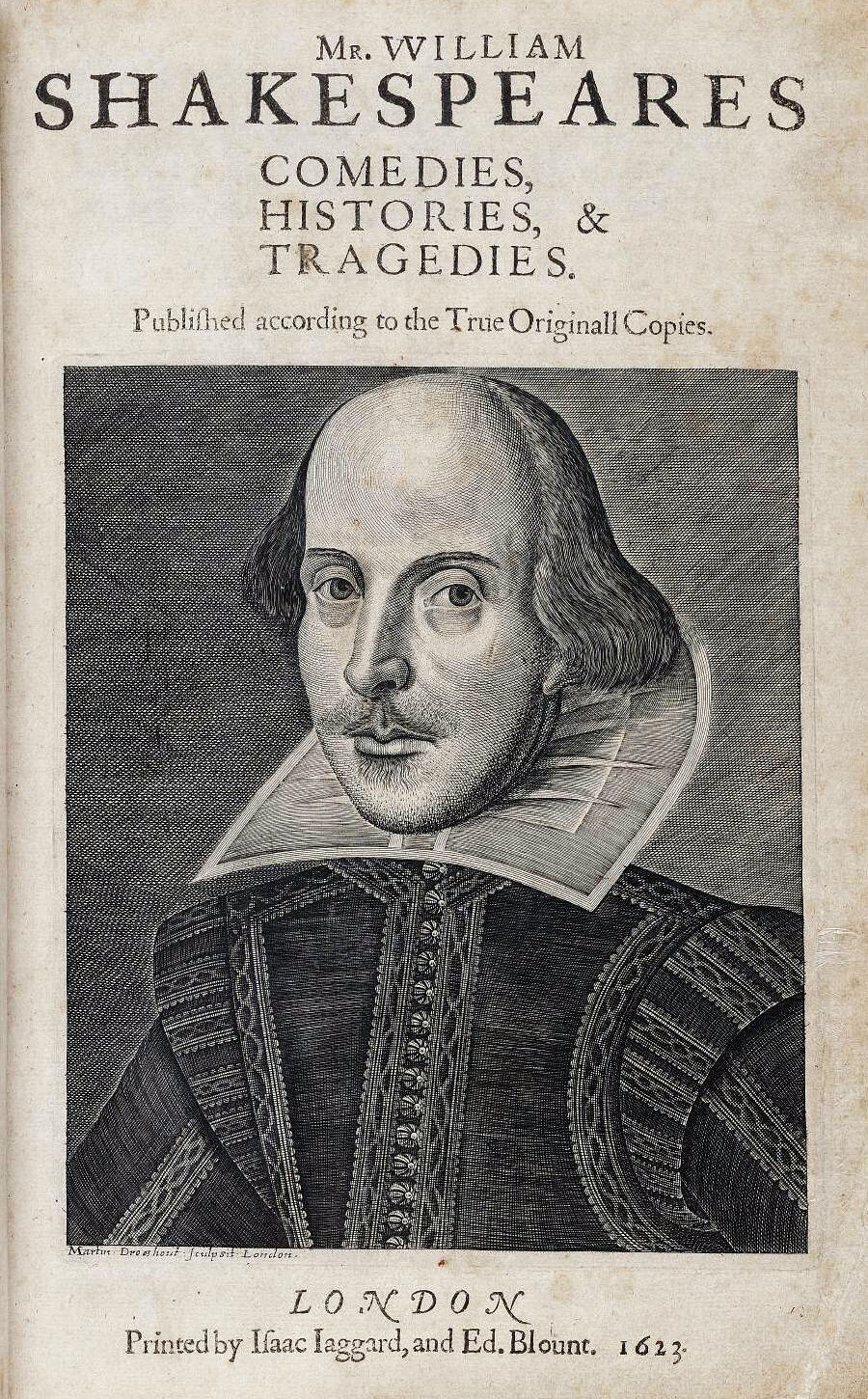 Book
Primary source
First Folio
William Shakespeare · 1623
 Painting
Secondary source
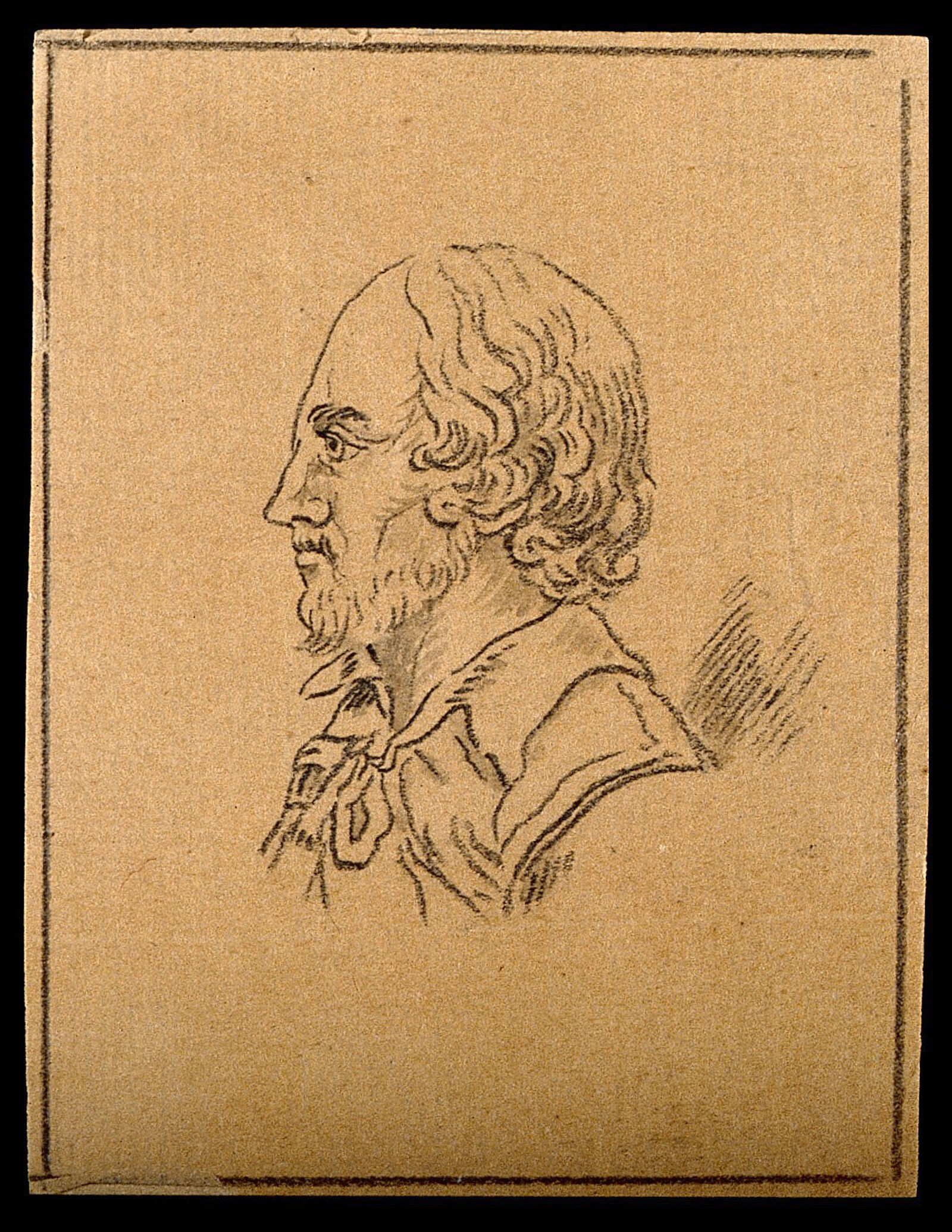
Profile Drawing of William Shakespeare
Johann Kaspar Lavater · c. 1793
 Painting
Secondary source
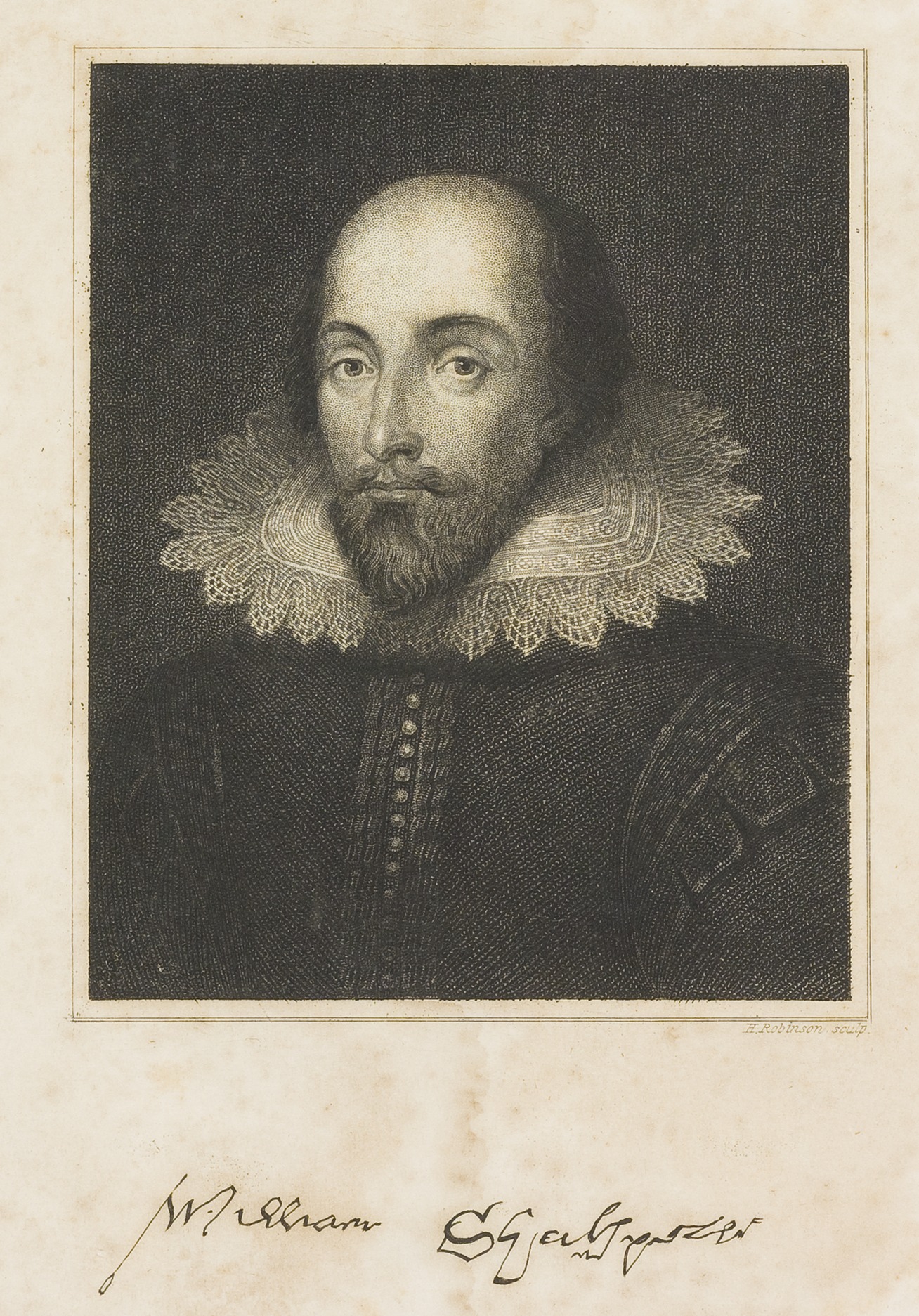
William Shakespeare engraving by John Henry Robinson
John Henry Robinson · 30 November 1827
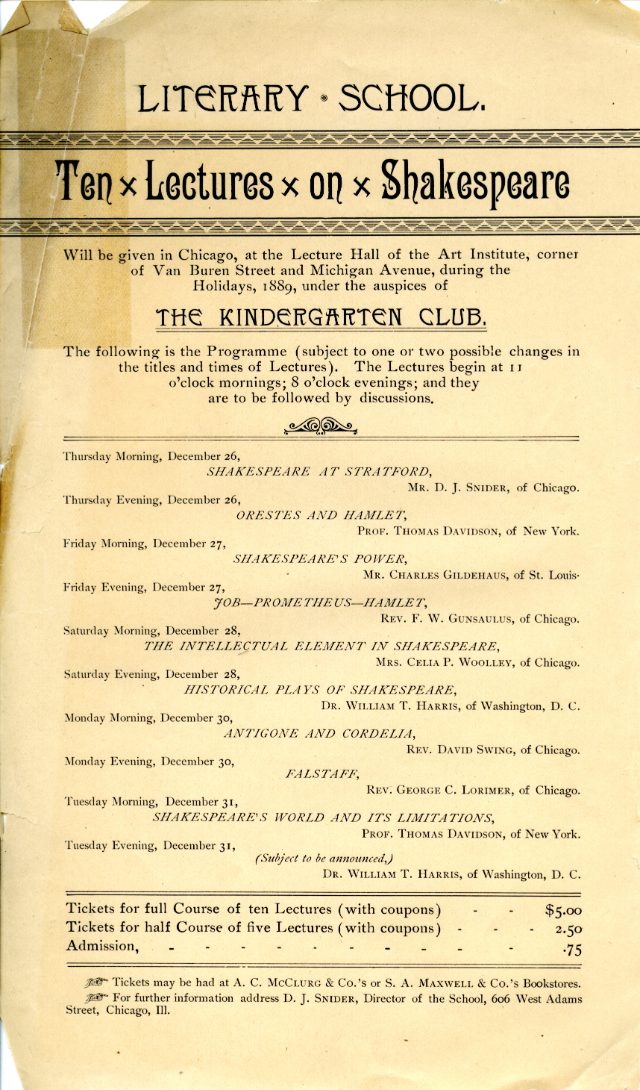 Document
Primary source
Ten Lectures on Shakespeare
Literary School · 1889
Primary source
Macbeth
William Shakespeare · c. 1606
Ready when you are
Start chatting with William Shakespeare now.
20 messages free · No credit card · Available in 50+ languages.