


Primary sourceDocument
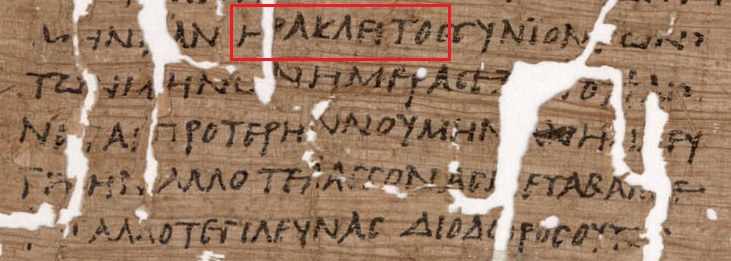
Papyrus Oxyrhynchus 3710, Fragment of Heraclitus on the Moon
An ancient Greek papyrus fragment quoting Heraclitus's own words describing the changing phases of the moon.
This ancient papyrus preserves Heraclitus's own words on the moon, a direct physical trace of his teaching surviving from antiquity.
About this source
What it is
This is a fragment of papyrus from Oxyrhynchus in Egypt, inscribed in Ancient Greek, preserving a quotation attributed to Heraclitus of Ephesus about how the moon's appearance changes with the months. The author of the papyrus itself is unknown.
Why it matters
This papyrus is a rare physical, ancient witness to Heraclitus's own words, found centuries after he lived, copied by someone in antiquity who thought his ideas worth preserving. It shows how fragments of Heraclitus's thought survived by being quoted and recopied long after his lifetime, giving us direct evidence rather than only later retellings.
Look closer
- Why do you think this fragment survived while so much other ancient writing was lost?
- What does the damage and repair to the papyrus tell you about its age and fragility?
- Why might someone in antiquity have chosen to copy out this particular saying about the moon?
This document is part of the curated material that grounds the AI version of Heraclitus on Humy.ai — when students ask about related events, the AI can quote it and cite it.
More Heraclitus sources
Browse all 88 →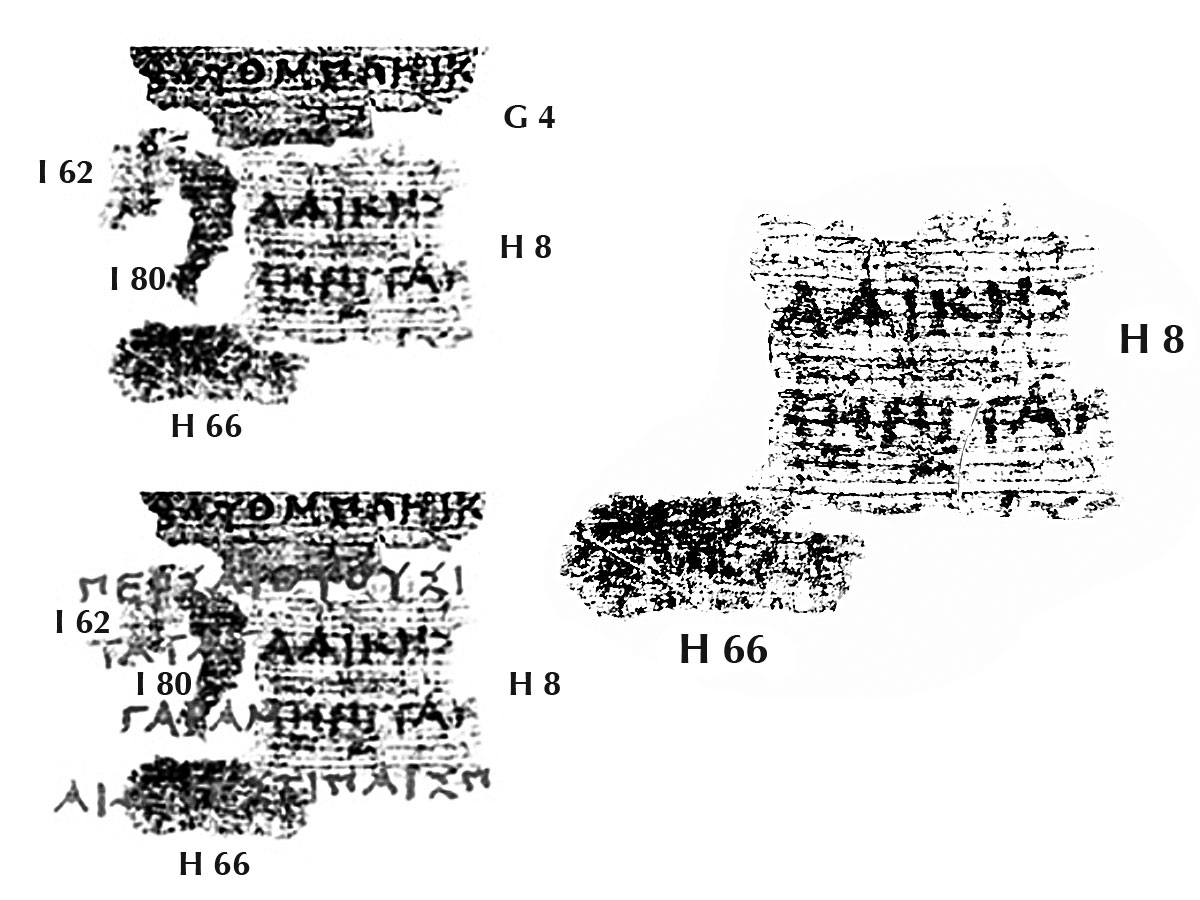 Document
Primary source
Derveni Papyrus, Column IV
Unknown author · 4th century BC
 Book
Secondary source
Lives and Opinions of Eminent Philosophers, Book V (Life of Aristotle)
Diogenes Laërtius · c. 3rd century CE
Primary source
Cratylus
Plato
 Book
Secondary source
Metaphysics
Aristotle · c. 400 BCE
Free account
Read every Heraclitus source
Sign up free →
Ready when you are
Start chatting with Heraclitus now.
20 messages free · No credit card · Available in 50+ languages.