


Primary sourcePhotograph1920s
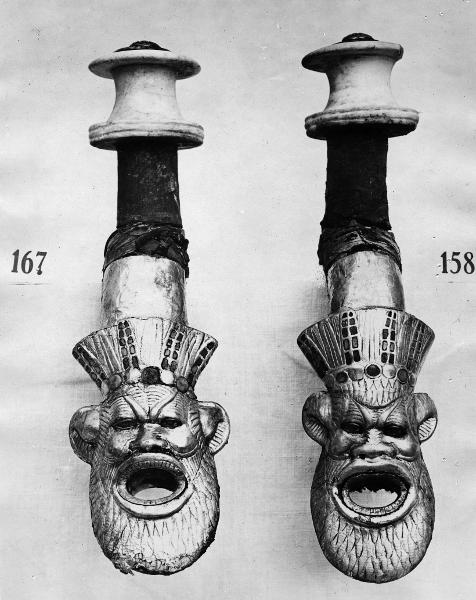
Photograph of Gold Bes-Head Harness Saddles from a Royal Chariot
Harry Burton · 1920s
An excavation photograph of gilded harness saddles decorated with heads of the god Bes, from a chariot buried with Tutankhamun.
These gilded saddles, buried with Tutankhamun's chariots, show the wealth placed in his tomb for the afterlife.
About this source
What it is
This photograph by Harry Burton, taken during Howard Carter's excavation, shows a pair of gold harness saddles from the breast harness of one of Tutankhamun's royal chariots. They are decorated with heads of the god Bes in sheet gold with silver mouths, and jewelled arragonite reels. It is held by the Museum of Mediterranean and Near Eastern Antiquities, Sweden.
Why it matters
The richness of these objects, buried for use by the king's chariots, shows the wealth and craftsmanship devoted to royal possessions in ancient Egypt. As part of the excavation record, the photograph helped document the scale and detail of grave goods found in Tutankhamun's tomb.
Look closer
- What details of the Bes-head decoration can you identify in the photograph?
- Why might a king be buried with chariot equipment rather than just personal items?
- What does the careful craftsmanship of these objects suggest about Egyptian goldwork?
This photograph is part of the curated material that grounds the AI version of Tutankhamun on Humy.ai — when students ask about related events, the AI can quote it and cite it.
More Tutankhamun sources
Browse all 82 → Artifact
Primary source
Mask of Tutankhamun
c. 1333 BCE
 Photograph
Primary source
Photograph of Tutankhamun's Shawabti Figure
Harry Burton · 1920s
 Artifact
Primary source
Tomb of Tutankhamun
14th century BCE
 Photograph
Primary source
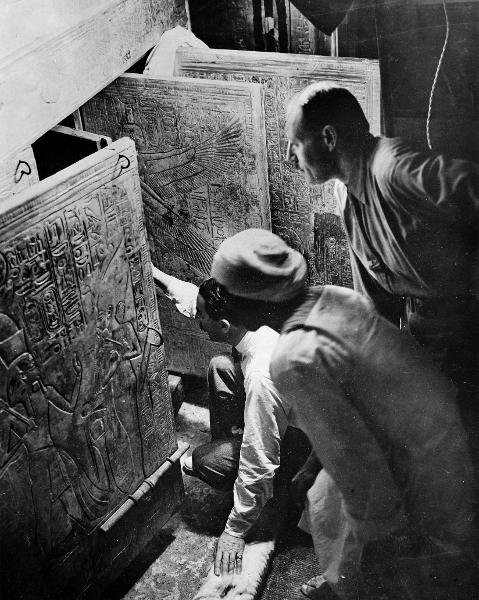
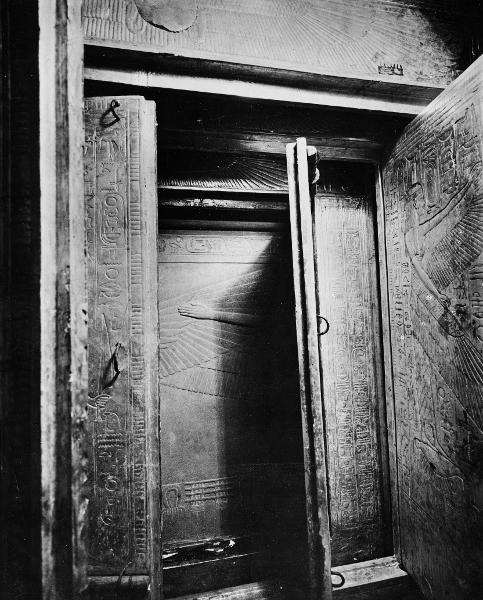
Opening the Doors of the Fourth Shrine in Tutankhamun's Tomb
Harry Burton · 1920s
Free account
Read every Tutankhamun source
Sign up free →
Ready when you are
Start chatting with Tutankhamun now.
20 messages free · No credit card · Available in 50+ languages.