


Primary sourceArtifactc. 1333 BCE
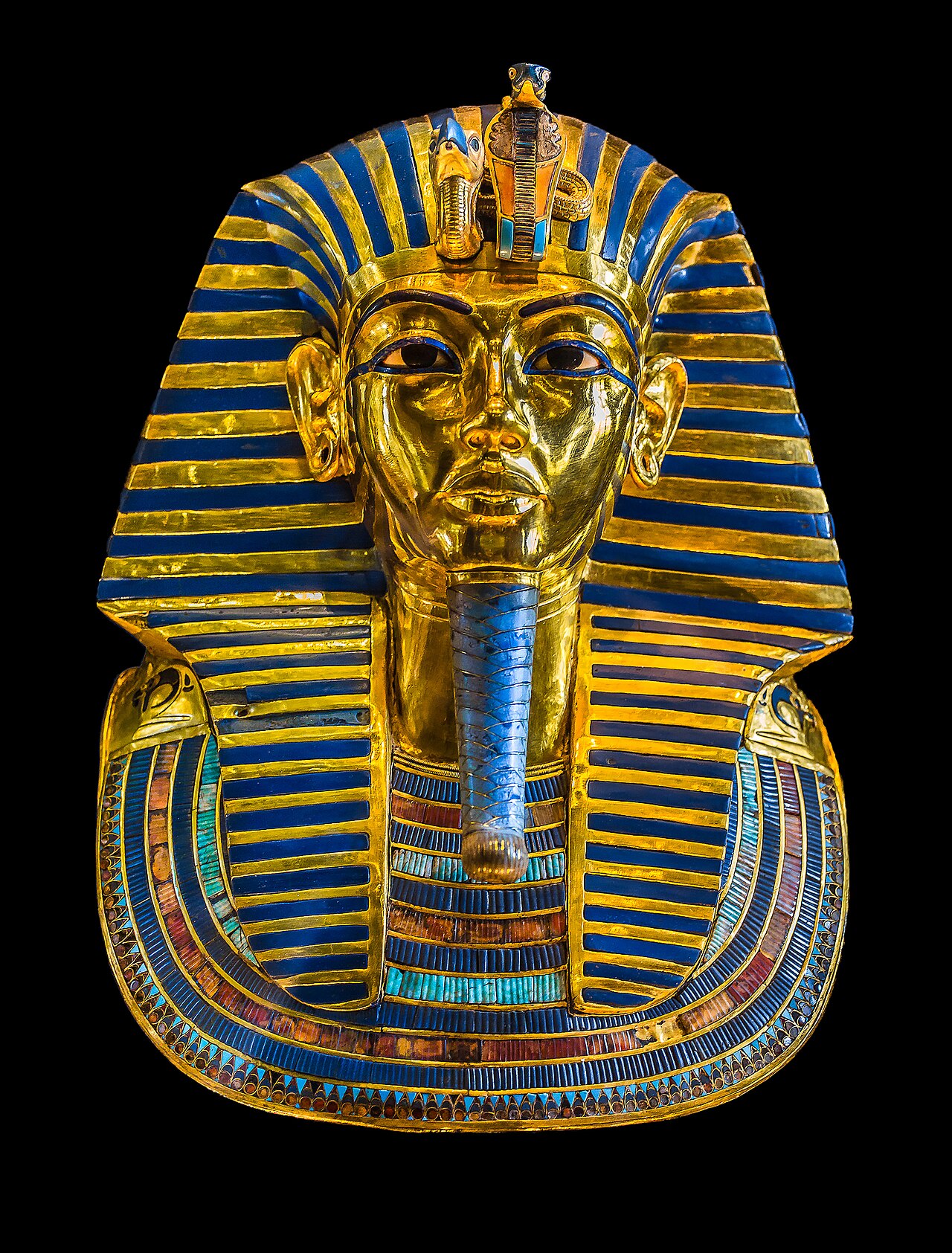
Mask of Tutankhamun
c. 1333 BCE
The gold-and-lapis funerary mask placed on Tutankhamun's mummy, one of the most famous images of ancient Egypt.
The mask was made for Tutankhamun's own mummy and shows his idealised face as king of the afterlife.
About this source
What it is
This gold funerary mask was made for Tutankhamun's mummy around 1333 BCE. It was found in 1922-1925 by Howard Carter's team in the king's tomb in the Valley of the Kings and is now in Cairo.
The mask is made of two layers of gold inlaid with lapis lazuli, quartz, obsidian, carnelian, turquoise and glass. It shows the king's face wearing the royal nemes headcloth with a cobra and vulture, the symbols of Upper and Lower Egypt, plus a plaited false beard. A protective spell is inscribed in hieroglyphs on the shoulders.
Why it matters
The mask is an idealised royal portrait meant to help the king live forever as Osiris, god of the afterlife. Some Egyptologists think it may originally have been made for another ruler and reused for Tutankhamun, showing how royal workshops recycled costly objects.
Look closer
- What does the choice of materials tell you about how important this burial was?
- Why might the mask show an idealised face rather than a realistic one?
- What does the possibility of reuse suggest about how we should read ancient objects?
This artifact is part of the curated material that grounds the AI version of Tutankhamun and Queen Nefereti on Humy.ai — when students ask about related events, the AI can quote it and cite it.
More Tutankhamun sources
Meet the AI Tutankhamun →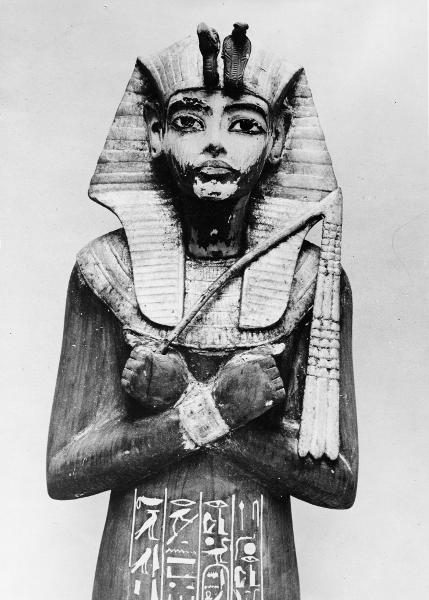 Photograph
Primary source
Photograph of Tutankhamun's Shawabti Figure
Harry Burton · 1920s
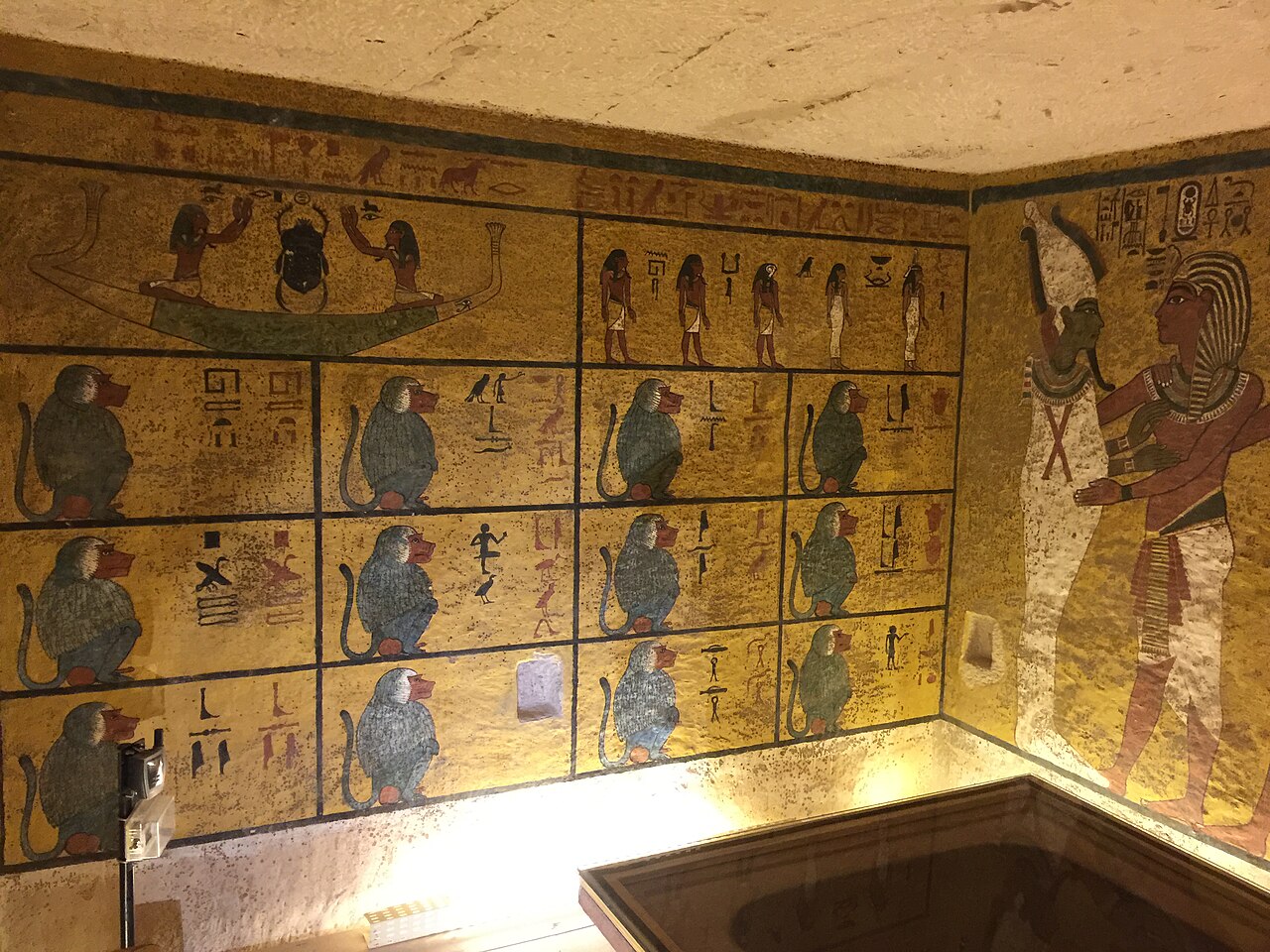 Artifact
Primary source
Tomb of Tutankhamun
14th century BCE
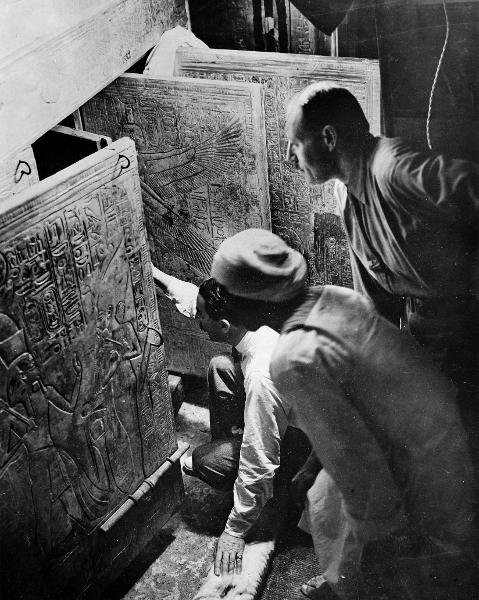 Photograph
Primary source
Opening the Doors of the Fourth Shrine in Tutankhamun's Tomb
Harry Burton · 1920s
 Document
Primary source
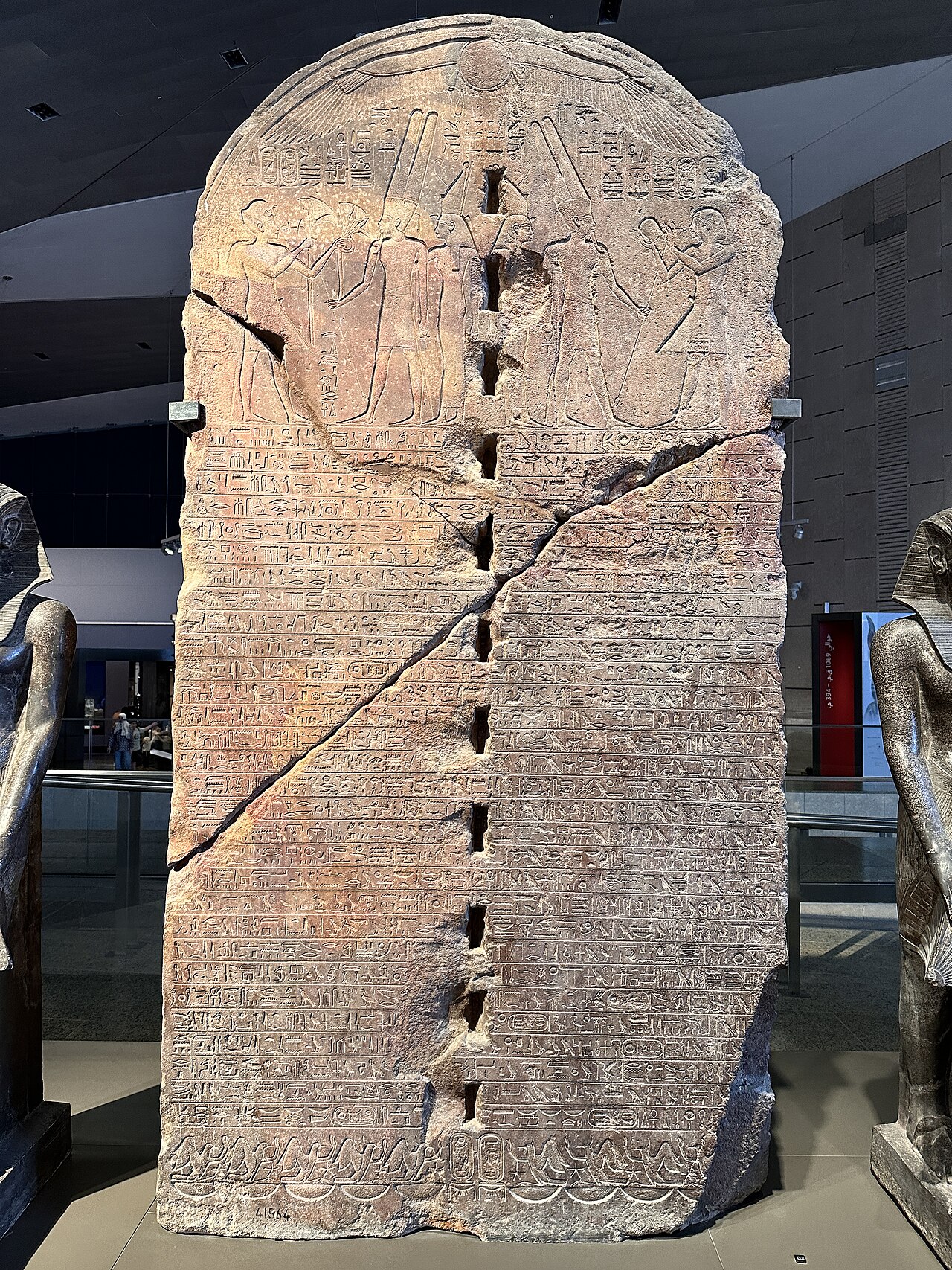
Restoration Stela
Tutankhamun · c. 1326 BCE
 Photograph
Primary source
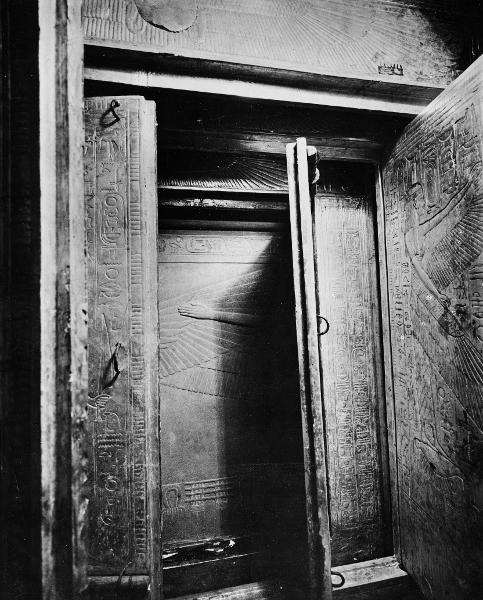
First Published View of Tutankhamun's Sarcophagus Between the Shrine Doors
Harry Burton · 1920s
Ready when you are
Start chatting with Tutankhamun now.
20 messages free · No credit card · Available in 50+ languages.