


Secondary sourceBookc. 1370
Piers Plowman
William Langland · c. 1370
A Middle English allegorical poem by William Langland that reflects on labour, sin and the pestilences that struck England.
Langland's poem reflects on labour unrest and divine punishment themes tied to the plague's aftermath in England.
About this source
What it is
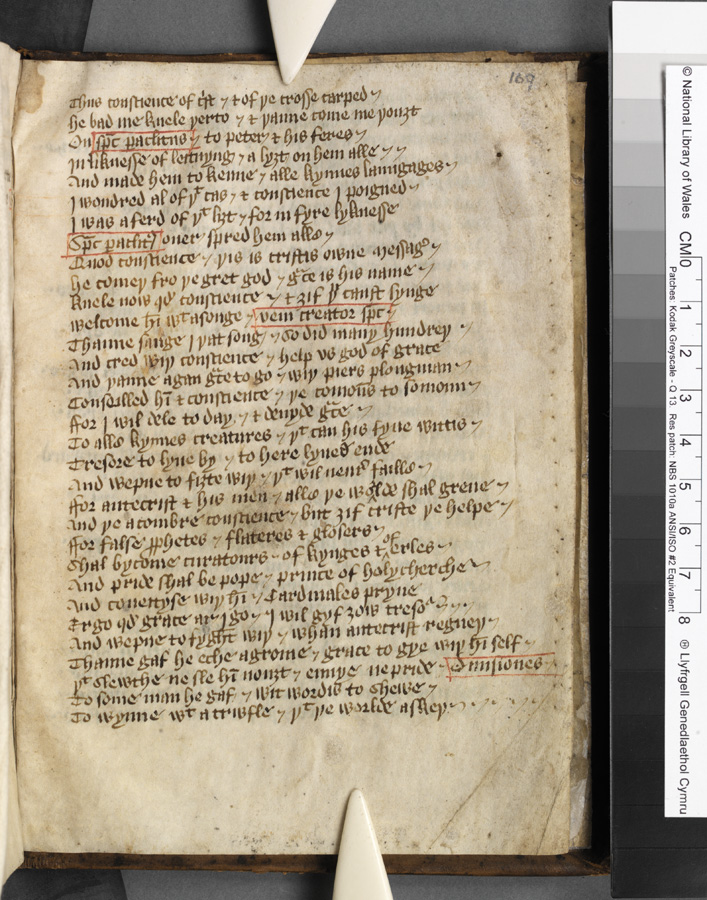
Piers Plowman is a long allegorical poem written by William Langland, around the late fourteenth century. It survives in several versions and follows a dreamer named Will through visions searching for the true Christian life. The manuscript page shown is written in Middle English verse with red rubrics.
Why it matters
Langland wrote in the decades after the Black Death had swept through England, and his poem shows labourers refusing low wages and treats repeated outbreaks of pestilence as divine punishment for sin. This gives historians a literary window into how people made sense of plague, social unrest and the changing value of labour in its aftermath.
Look closer
- Why might workers refusing low wages appear in a poem about sin and salvation?
- What does it suggest that writers linked disease to punishment from God?
- What is missing from this account of plague's effects on society?
This book is part of the curated material that grounds the AI version of The Black Death on Humy.ai — when students ask about related events, the AI can quote it and cite it.
More The Black Death sources
Meet the AI The Black Death →Secondary source
The Decameron
Giovanni Boccaccio · 1351
Primary source
Statute of Labourers 1351
1351
 Painting
Primary source
Depiction of the Flagellant Processions
Pierart dou Tielt · c. 1350
 Painting
Primary source
Execution of Jews
c. 1350
 Book
Primary source
The Annals of Ireland by Friar John Clyn
John Clyn · 1348-1349
Ready when you are
Start chatting with The Black Death now.
20 messages free · No credit card · Available in 50+ languages.