


Secondary sourceArtifact984-985 AD
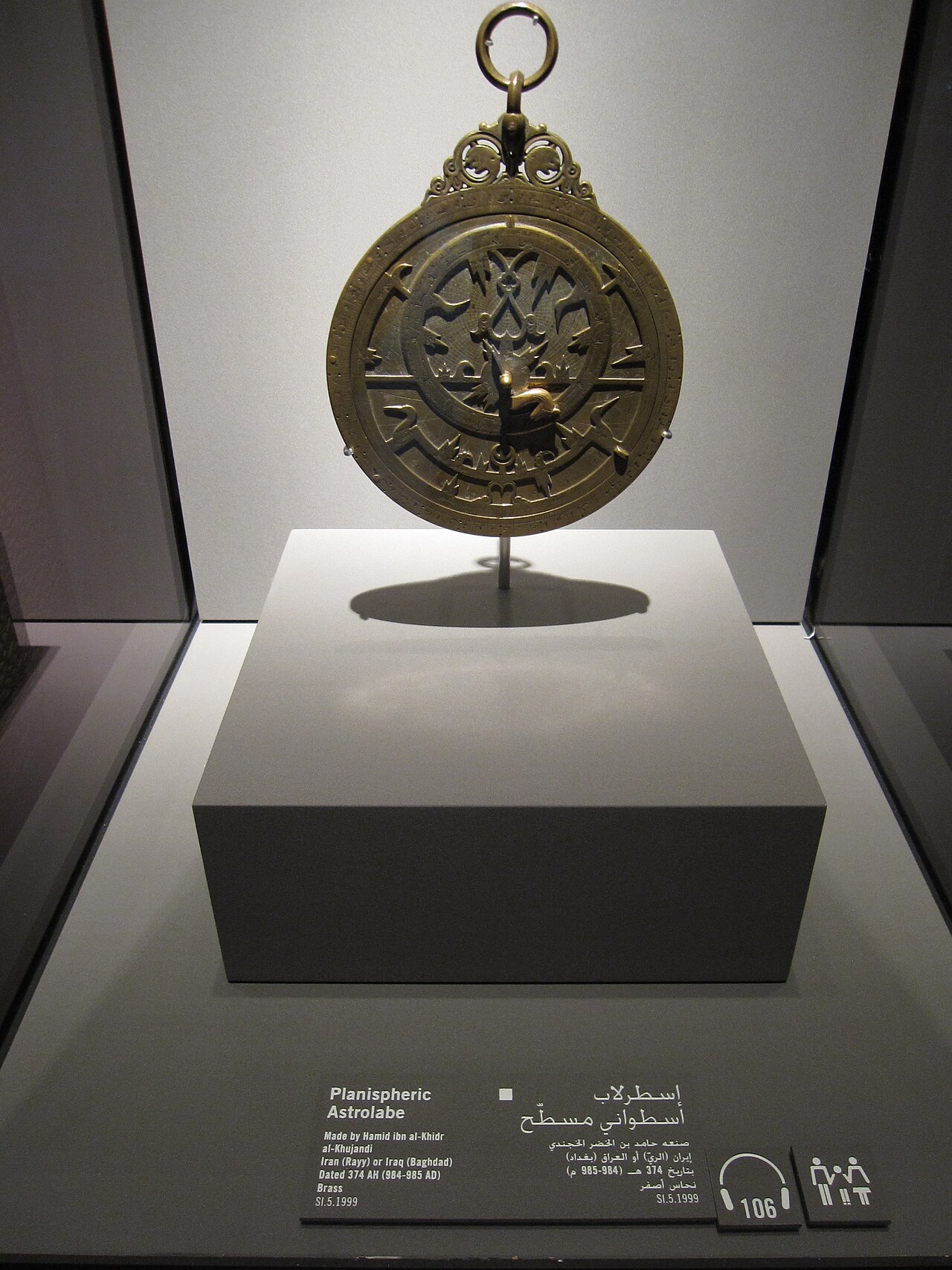
Planispheric Astrolabe, Iran, 984 AD
Hamid ibn al-Khidr al-Khujandi · 984-985 AD
A brass astrolabe made in Iran or Iraq in 984 AD, an instrument of the kind used in the astronomy Farabi studied and wrote about.
This astrolabe represents the kind of astronomical instrument connected to the scientific tradition Farabi wrote about.
About this source
What it is
This is a brass planispheric astrolabe made by Hamid ibn al-Khidr al-Khujandi in Iran or Iraq, dated to 984–985 AD. It has intricate openwork and engraved star pointers, and is now displayed in a museum case.
Why it matters
Astrolabes like this one were essential tools for astronomers and scholars in the Islamic world, used to track stars, tell time, and solve astronomical problems. Farabi wrote about astronomy and the sciences, and instruments of this kind represent the practical tools connected to the intellectual tradition he was part of, even though this particular astrolabe was made after his death.
Look closer
- What skills would a craftsman need to make such a precise instrument by hand?
- Why might an astronomer or scholar have needed a tool like this?
- What does the survival of such a finely made object tell us about how science was valued in this period?
This artifact is part of the curated material that grounds the AI version of Al-Farabi on Humy.ai — when students ask about related events, the AI can quote it and cite it.
More Al-Farabi sources
Meet the AI Al-Farabi →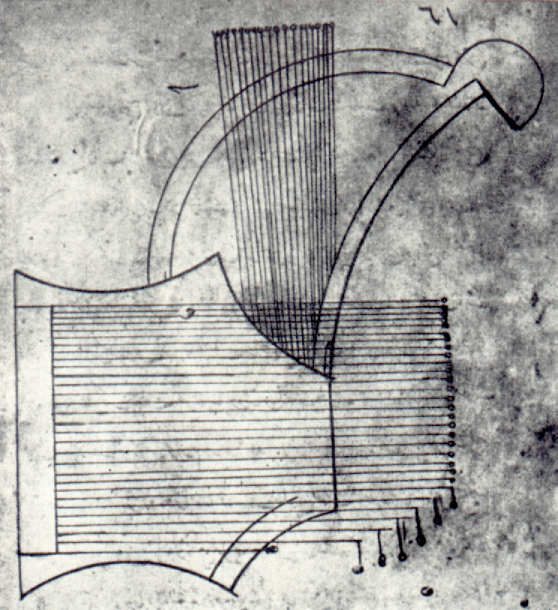 Book
Primary source
Kitab al-Musiqa al-Kabir
Farabi · 10th century
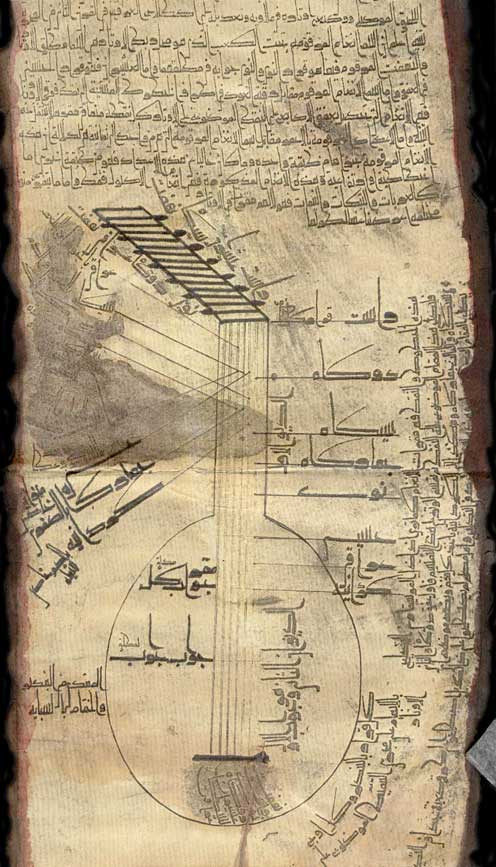 Artifact
Primary source
Lute Diagram with Seven Courses
Farabi · 10th century
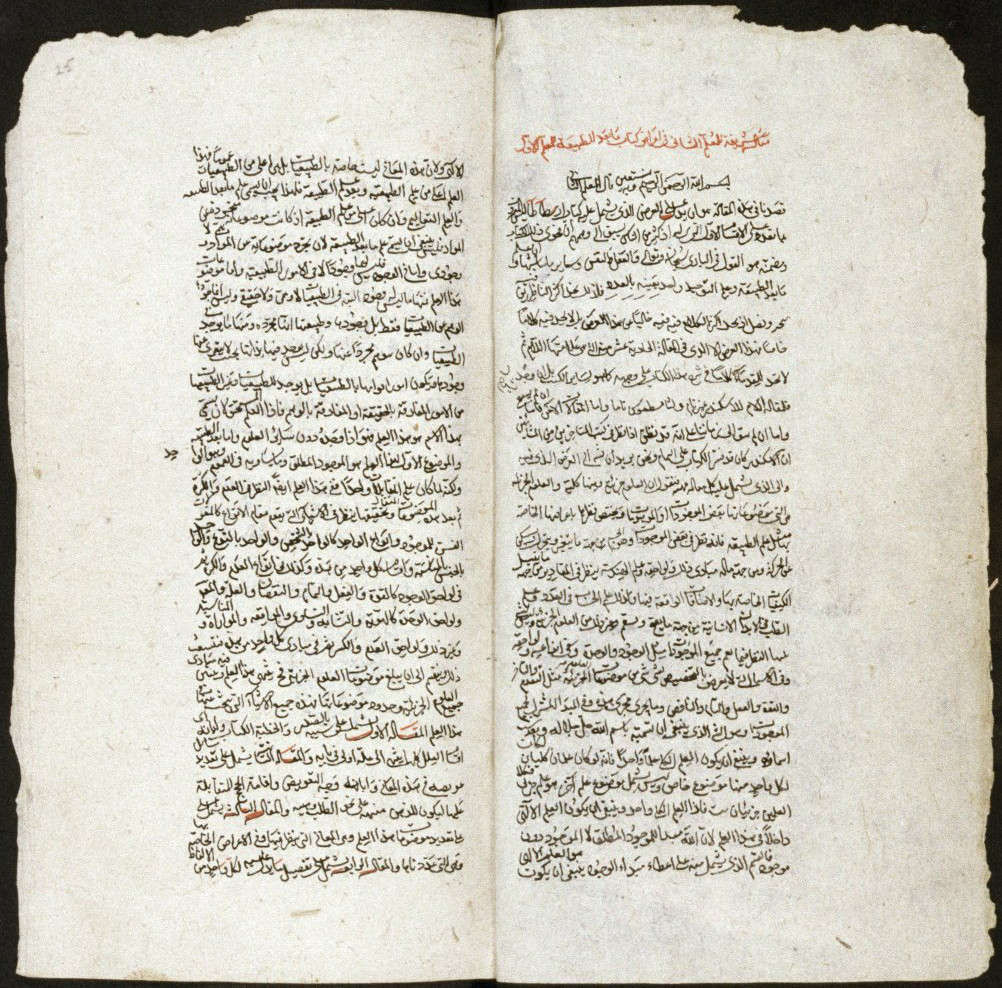 Book
Primary source
On the Scope of Aristotle's Metaphysics
Farabi · 10th century
 Book
Primary source
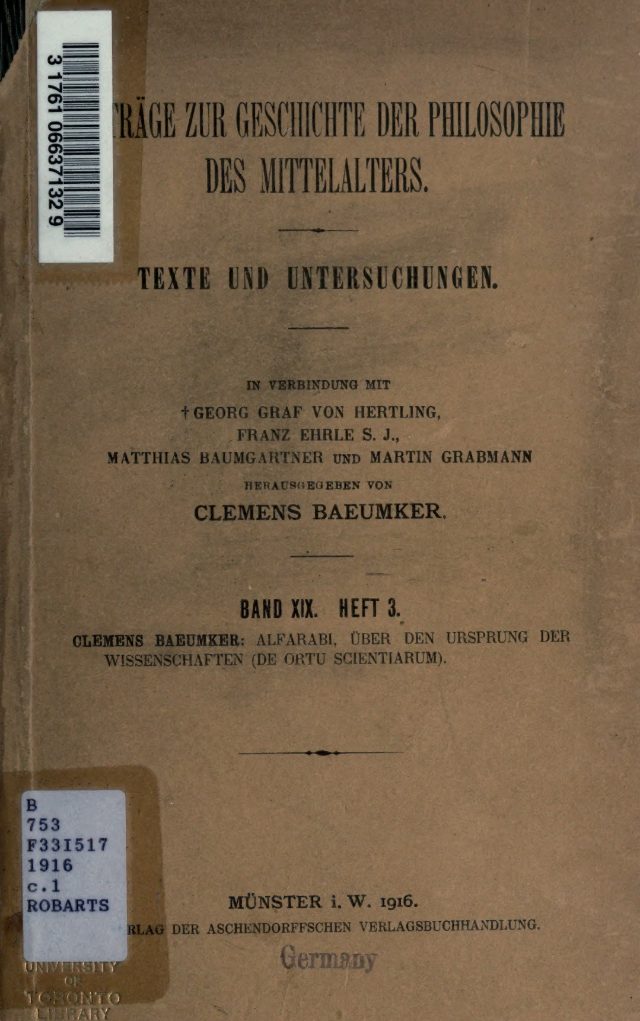
Über den Ursprung der Wissenschaften
Farabi · 1916 (edition of the original treatise)
PaintingPrimary source
Drawing of the Shahrud from the Great Book of Music
Farabi · 10th century
Ready when you are
Start chatting with Al-Farabi now.
20 messages free · No credit card · Available in 50+ languages.