


Secondary sourcePainting1901
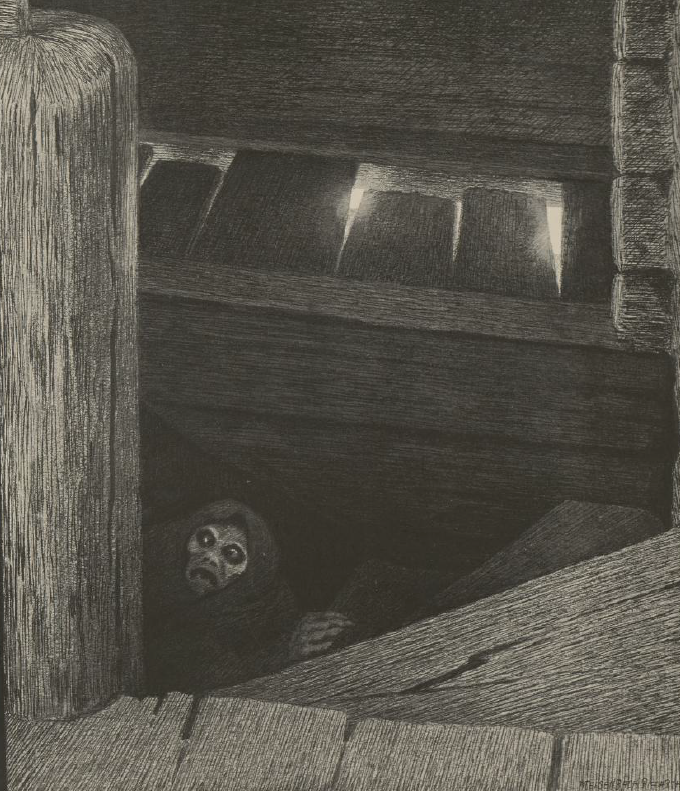
Plate Pesta12 from Svartedauen
Theodor Kittelsen · 1901
A haunting illustration by Theodor Kittelsen from his 1901 book Svartedauen, showing a frightened face hiding in a dark interior during the Black Death.
A later artistic depiction of fear and hiding during the Black Death, imagined centuries after the pandemic.
About this source
What it is
This print, created by Norwegian artist Theodor Kittelsen in 1901 for his book Svartedauen, shows a pale, frightened face peering from a shadowy corner beneath wooden floorboards, with light streaming through gaps above.
Why it matters
Kittelsen's imagined scenes of the Black Death, made centuries after the pandemic, reflect how people in his own time pictured the terror of a disease that killed enormous numbers across Europe and Norway. The frightened face gives a human face to fear and hiding, themes associated with plague outbreaks.
Look closer
- What emotion does the frightened face convey, and how does the artist achieve this?
- Why might someone hide, according to this image?
- How does light and shadow affect the feeling of the scene?
This painting is part of the curated material that grounds the AI version of The Black Death on Humy.ai — when students ask about related events, the AI can quote it and cite it.
More The Black Death sources
Meet the AI The Black Death →Secondary source
The Decameron
Giovanni Boccaccio · 1351
Primary source
Statute of Labourers 1351
1351
 Painting
Primary source
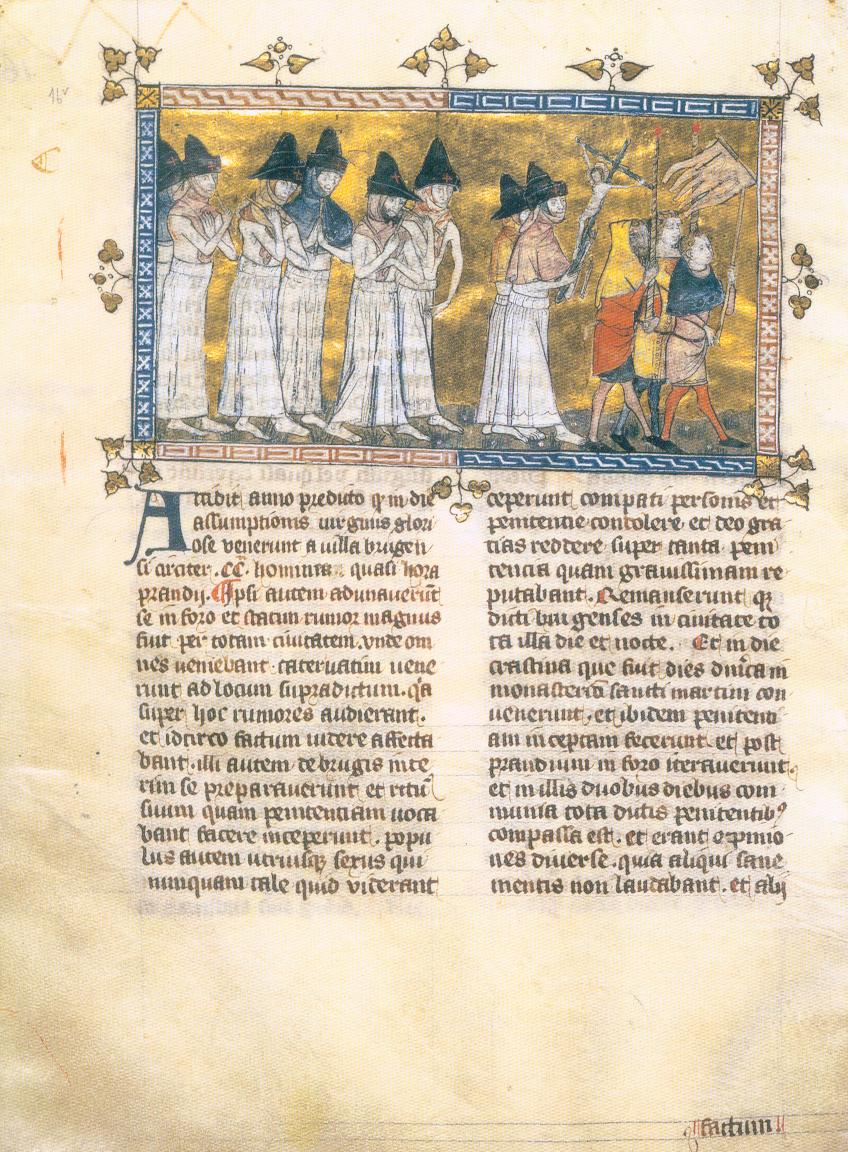
Depiction of the Flagellant Processions
Pierart dou Tielt · c. 1350
 Painting
Primary source
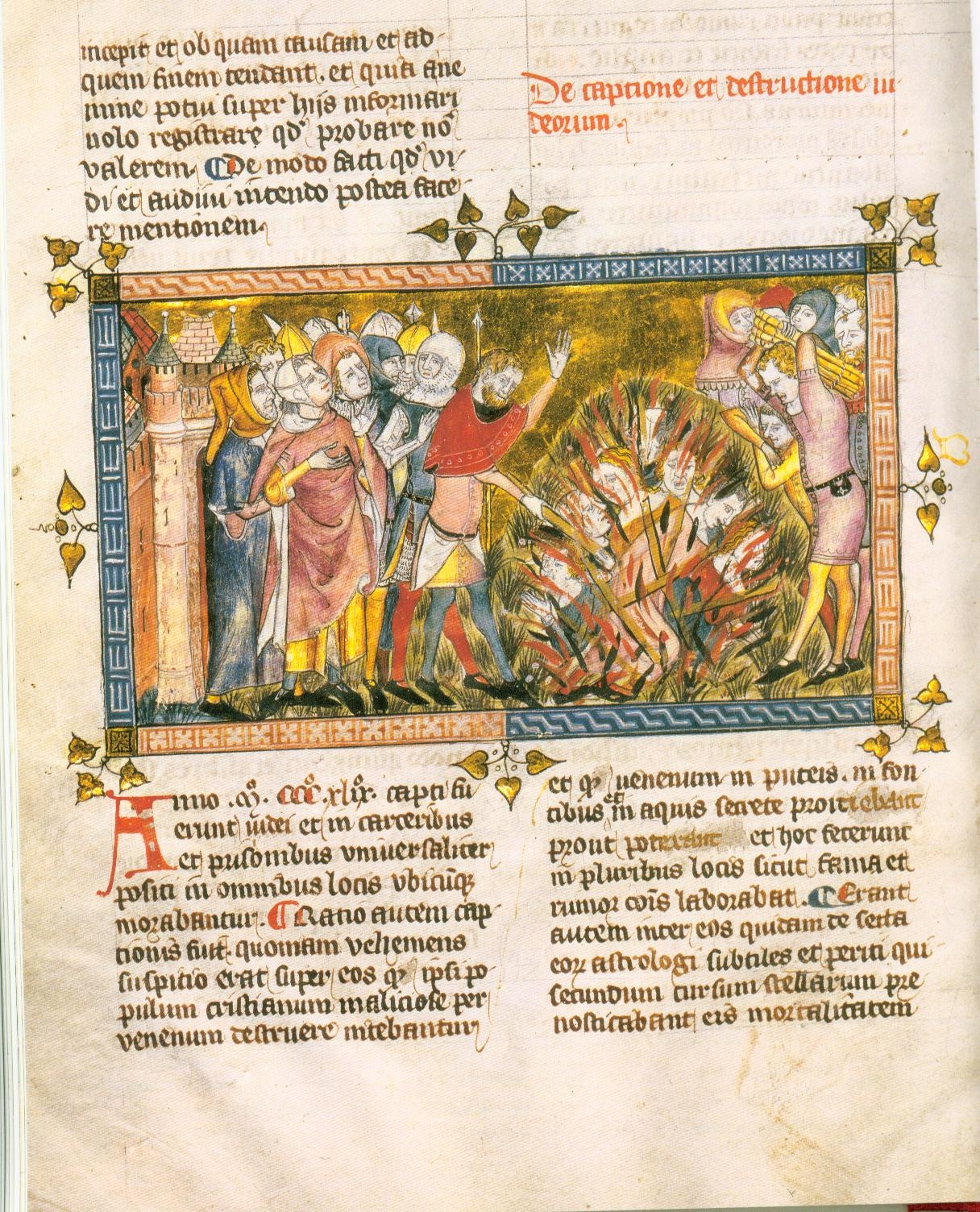
Execution of Jews
c. 1350
 Book
Primary source
The Annals of Ireland by Friar John Clyn
John Clyn · 1348-1349
Ready when you are
Start chatting with The Black Death now.
20 messages free · No credit card · Available in 50+ languages.