


Secondary sourcePainting1901
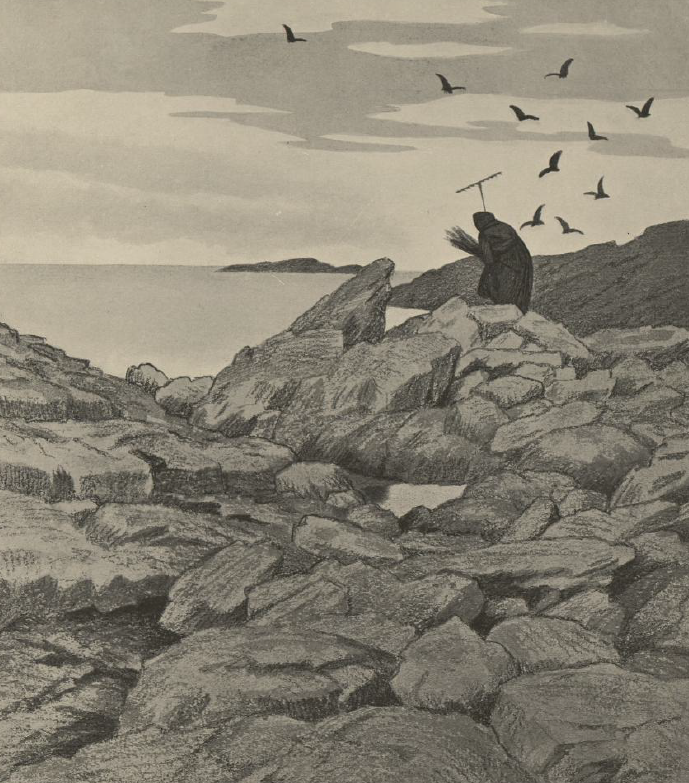
Plate Pestya8 from Svartedauen
Theodor Kittelsen · 1901
An illustration by Theodor Kittelsen from his 1901 book Svartedauen, personifying the plague as a hooded figure on a rocky coastline.
A symbolic, later depiction personifying the Black Death as a traveling hooded figure.
About this source
What it is
This print by Norwegian artist Theodor Kittelsen, made in 1901 for his book Svartedauen, shows a cloaked, hooded figure standing on a boulder along a rocky coastline, holding a staff topped with a cross-like shape, with birds flying overhead and the sea beyond.
Why it matters
Kittelsen often personified the Black Death as a hooded figure traveling the land, a common folkloric image used to make the disease's spread feel like the work of an unseen traveler. This reflects how, centuries after the pandemic, people used art and story to process and remember its devastation across Europe and Norway.
Look closer
- Why might the artist choose to show the plague as a traveling figure rather than showing illness directly?
- What might the cross-topped staff symbolize?
- How does the calm landscape contrast with the idea of the plague's destructive power?
This painting is part of the curated material that grounds the AI version of The Black Death on Humy.ai — when students ask about related events, the AI can quote it and cite it.
More The Black Death sources
Meet the AI The Black Death →Secondary source
The Decameron
Giovanni Boccaccio · 1351
Primary source
Statute of Labourers 1351
1351
 Painting
Primary source
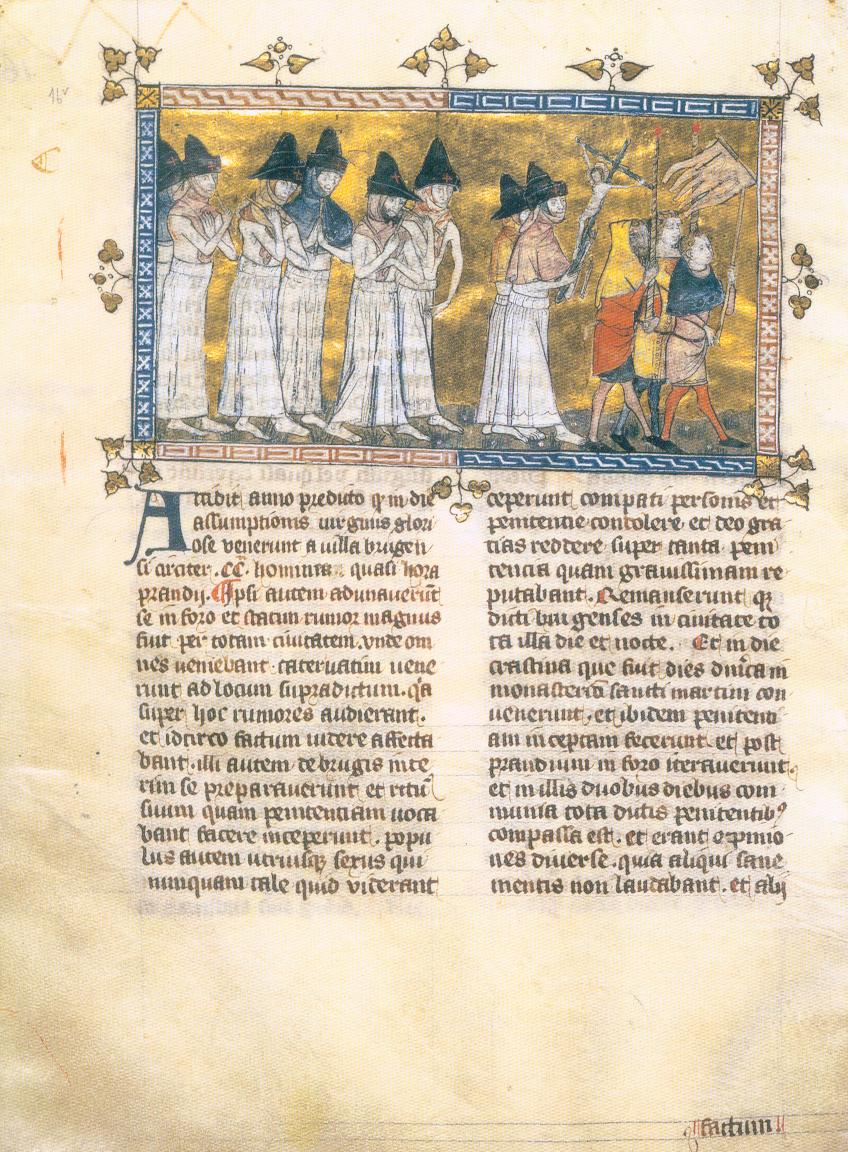
Depiction of the Flagellant Processions
Pierart dou Tielt · c. 1350
 Painting
Primary source
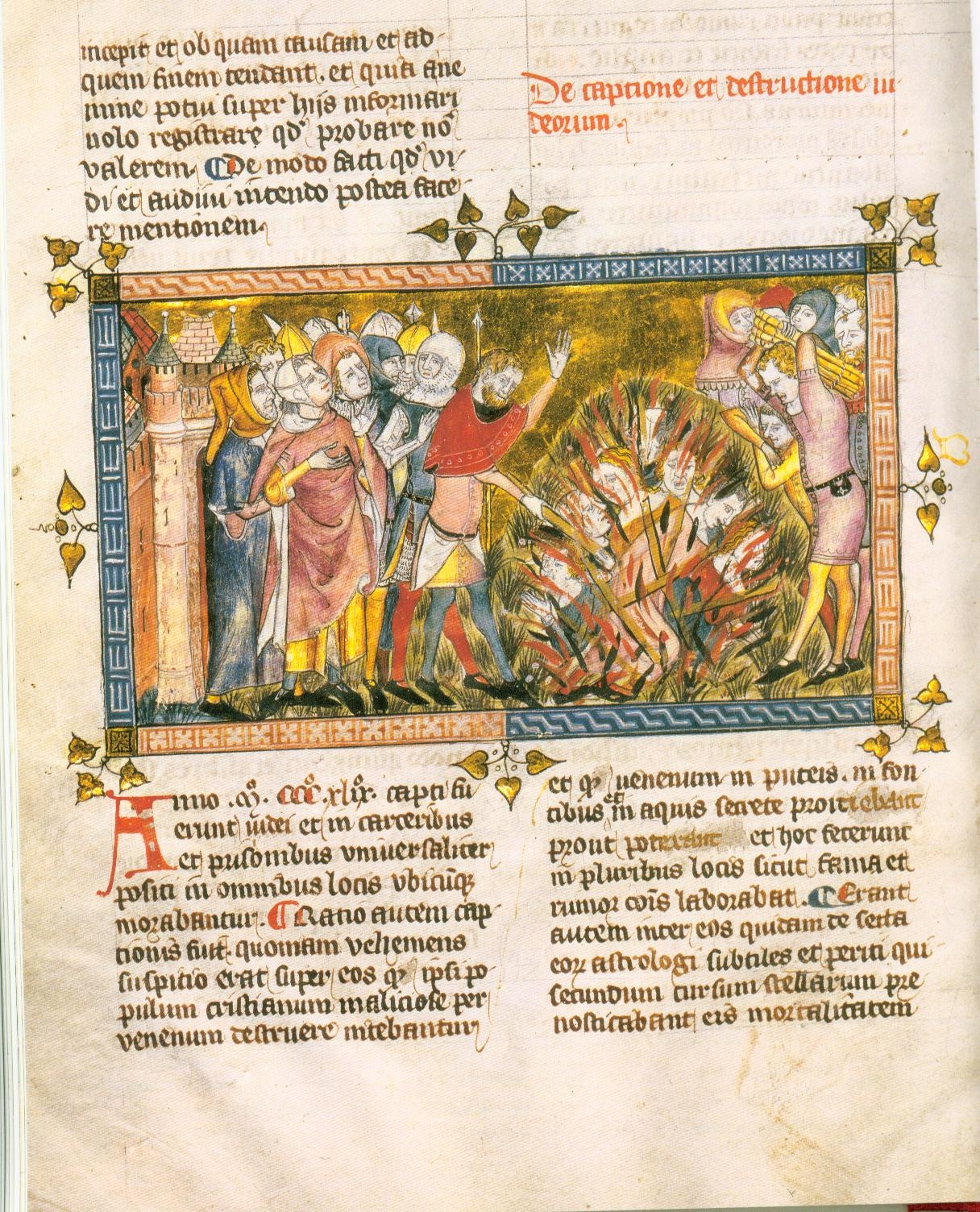
Execution of Jews
c. 1350
 Book
Primary source
The Annals of Ireland by Friar John Clyn
John Clyn · 1348-1349
Ready when you are
Start chatting with The Black Death now.
20 messages free · No credit card · Available in 50+ languages.