


Secondary sourceArtifact
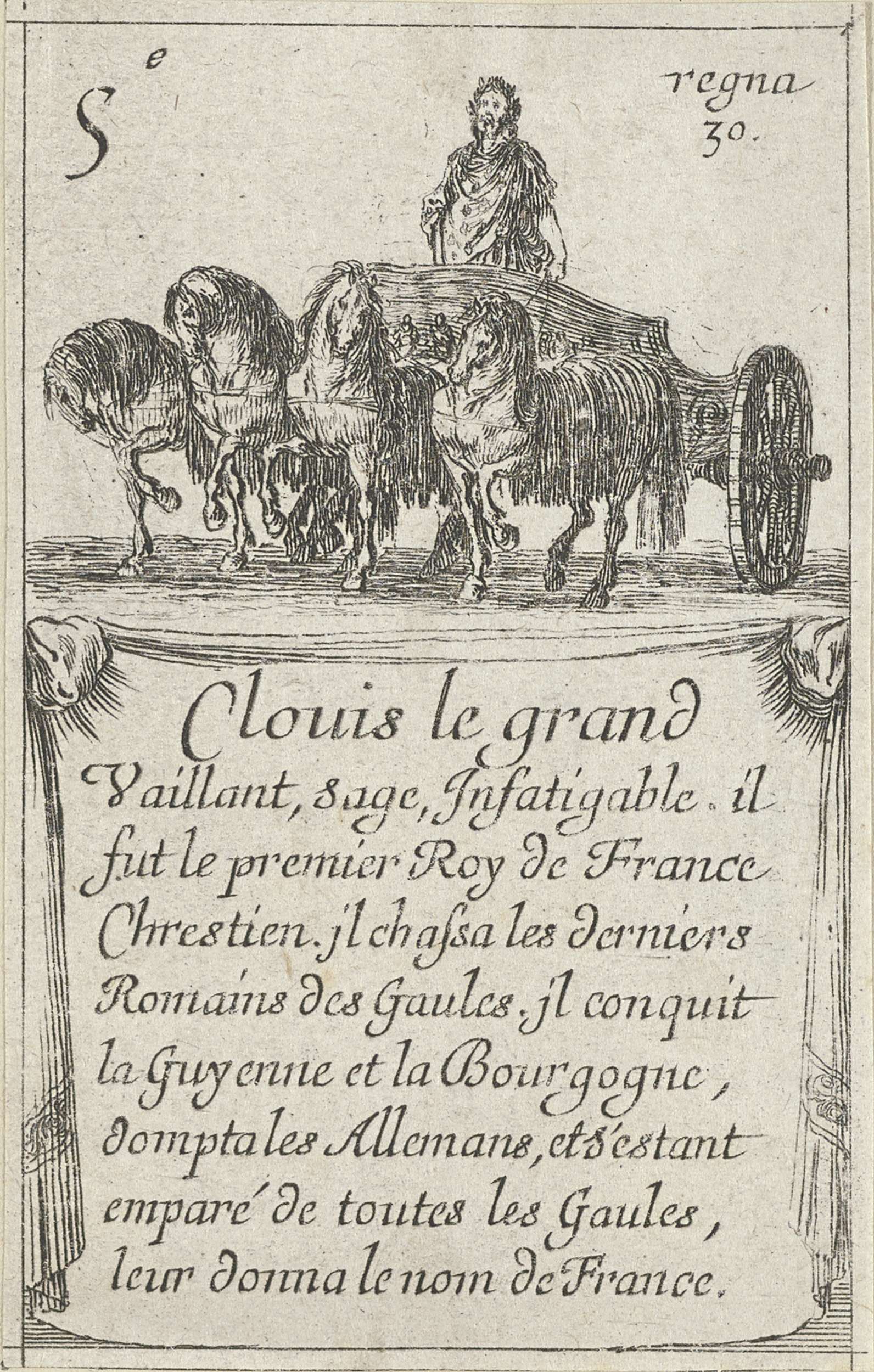
Playing card showing Clovis I
A printed playing card picturing Clovis I riding a chariot, with French text printed beneath the image. It shows how the king was popularly imagined in later centuries.
Shows how Clovis was popularly pictured in later centuries as a triumphant king, not as he was during his own reign.
About this source
What it is
This is an etched, card-like print from the Rijksmuseum in the Netherlands. It is titled 'Clouis le grand' and shows a figure in a laurel wreath and robe riding a four-horse chariot, with a wheel visible at the right. A block of French cursive text sits below the picture, and the top corners carry the marks 'Se' and 'regna 30'. The museum's record describes it as a playing card.
Why it matters
Clovis I ruled the Franks from about 466 to 511 and is remembered as the first king to unite many Frankish groups under one rule. A playing card is not a record from his time. It shows how later makers chose to present him, here as a heroic, triumphant ruler. Studying it tells us about the people who designed and bought such cards, not only about the king.
Look closer
- What details of the chariot and the wreath suggest the figure is a hero or a conqueror?
- Who would have bought or played with a card like this, and why might they have wanted to see a king in this way?
- What does the card leave out about Clovis's actual life and reign?
This artifact is part of the curated material that grounds the AI version of Clovis I on Humy.ai — when students ask about related events, the AI can quote it and cite it.

Ready when you are
Start chatting with Clovis I now.
20 messages free · No credit card · Available in 50+ languages.