


Secondary sourcePainting1557
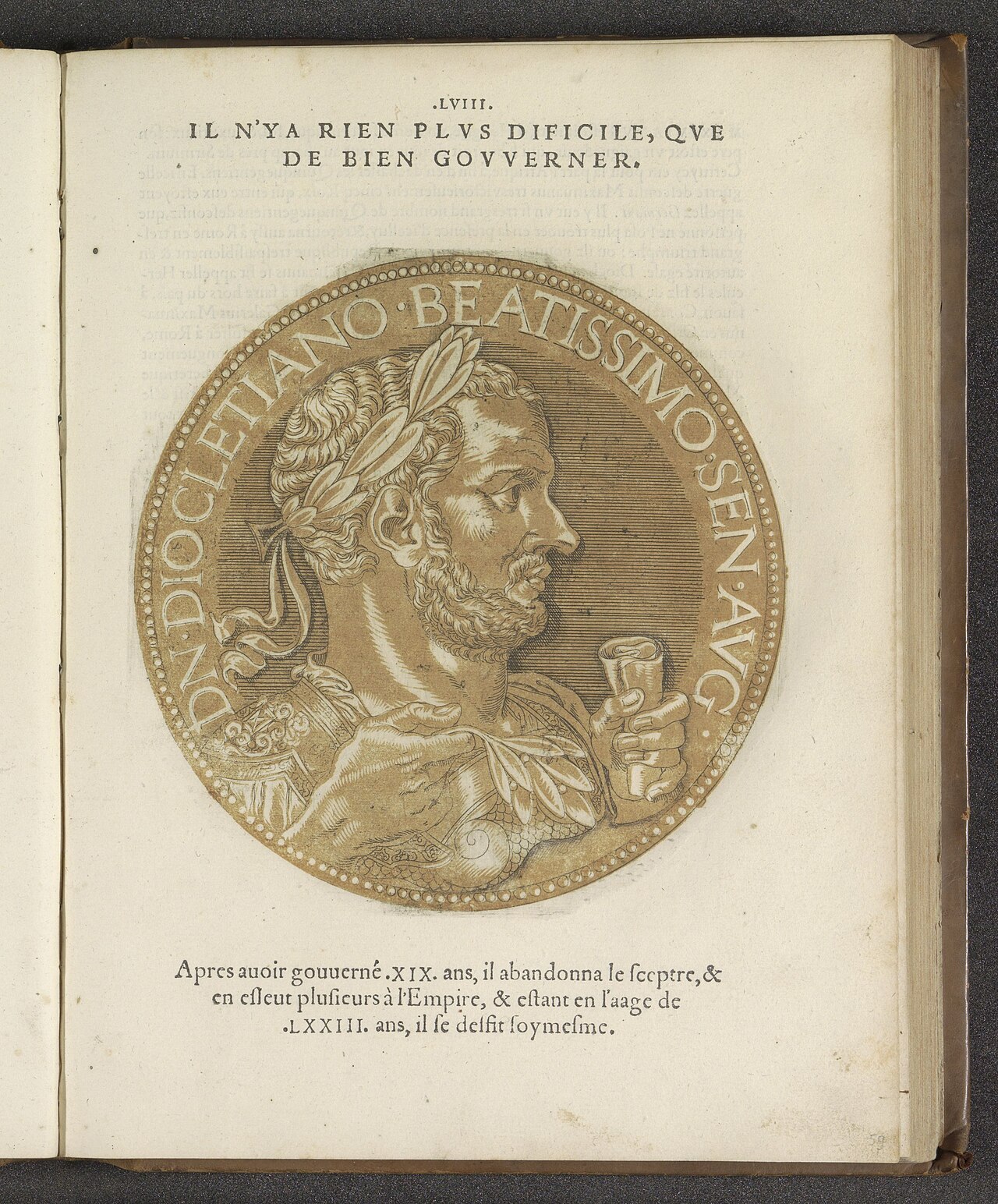
Portrait of Emperor Diocletian from Les images presque de tous les empereurs
Hubert Goltzius · 1557
A 1557 Antwerp print of Diocletian as a coin-style medallion, part of a book of emperor portraits. It is a later imagined likeness, not a contemporary image of him.
Shows how a sixteenth-century Antwerp book imagined Diocletian's face, placing him among a series of Roman emperors.
About this source
What it is
This is a printed book page showing a medallion portrait of the Roman emperor Diocletian in profile facing right. The portrait is framed like a coin, with a Latin inscription around the rim. The page carries a French heading and caption. It is part of a book about the emperors from Julius Caesar to Charles V and his brother Ferdinand. The record credits woodcutter Joos Gietleughen, printmaker Hubert Goltzius, printer Gillis Coppens van Diest and publisher Hubert Goltzius. It was made in Antwerp, dated 1557 and/or 1559, and given to the Rijksmuseum in 2008.
Why it matters
The print is not a record of how Diocletian looked. Goltzius and his team created the likeness centuries after the emperor ruled, drawing on the imagery of ancient coins. It shows how sixteenth-century scholars and printers pictured Roman rulers, and how the past was packaged for readers in Antwerp, a major centre of printing.
Look closer
- What details make this portrait look like an ancient coin, and why might the printers have chosen that style?
- Who was the book written for, and what would its readers have known about Diocletian already?
- What does this image leave out about Diocletian's actual life and reign?
This painting is part of the curated material that grounds the AI version of Diocletian on Humy.ai — when students ask about related events, the AI can quote it and cite it.
More Diocletian sources
Browse all 92 →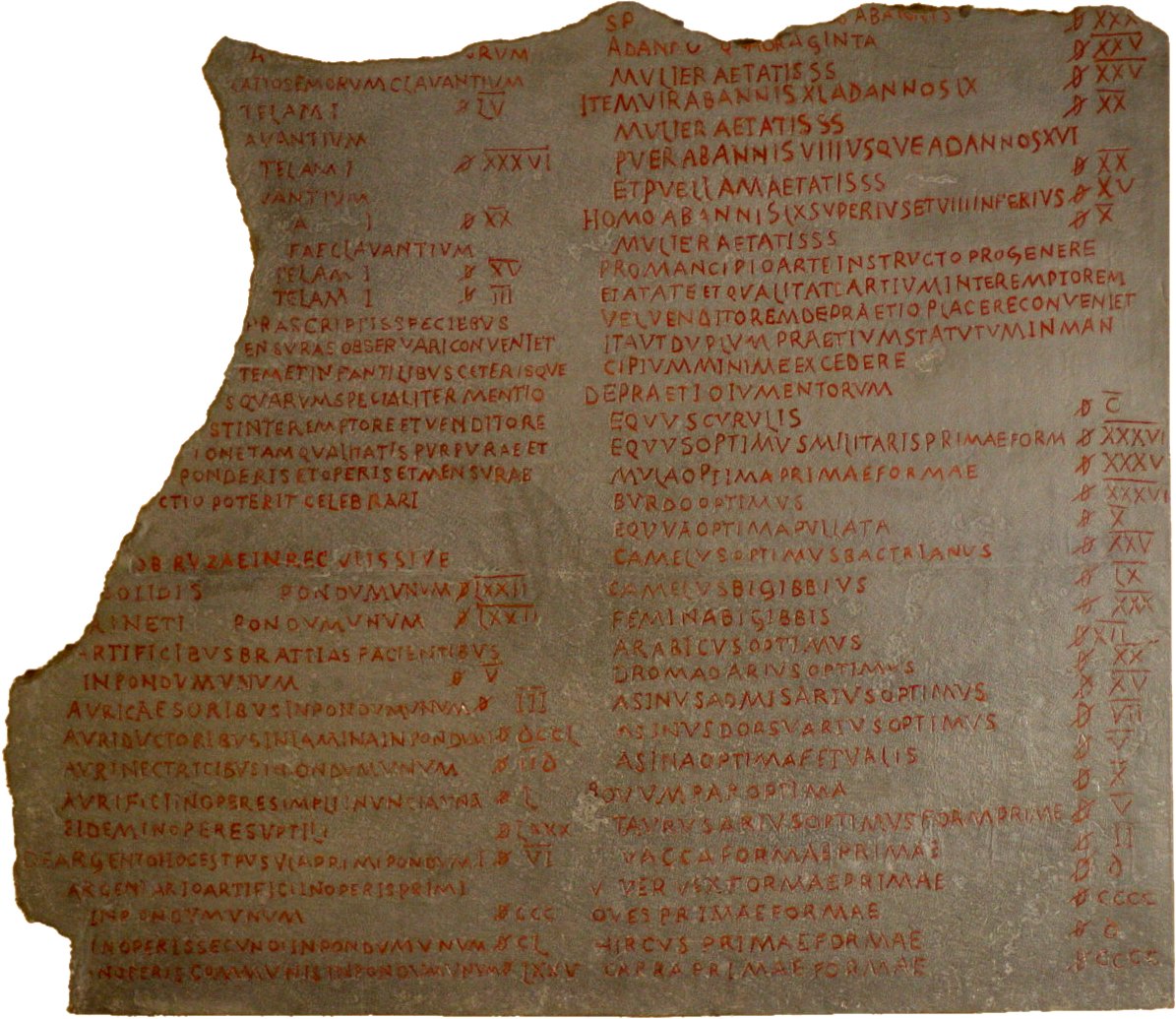 Document
Primary source
Edict on Maximum Prices
Diocletian · 301
 Artifact
Primary source
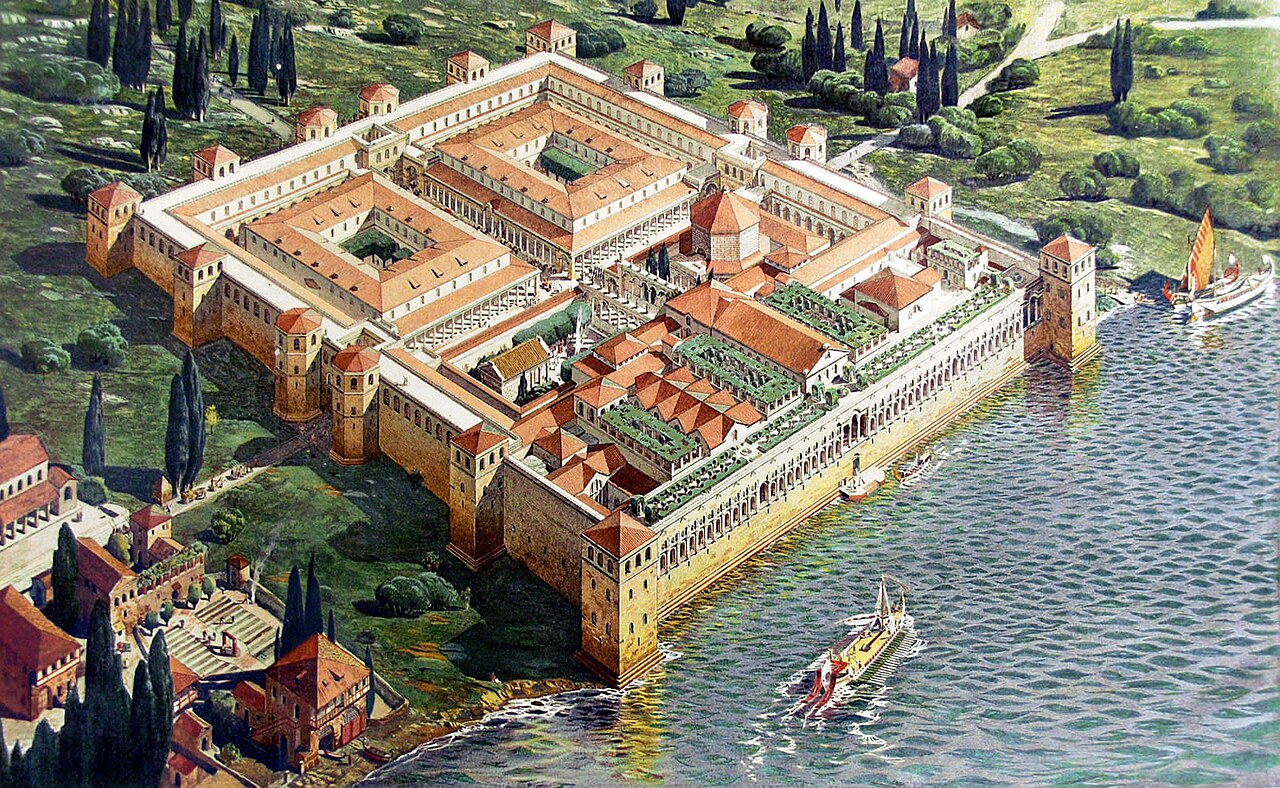
Diocletian's Palace
293
 Book
Secondary source
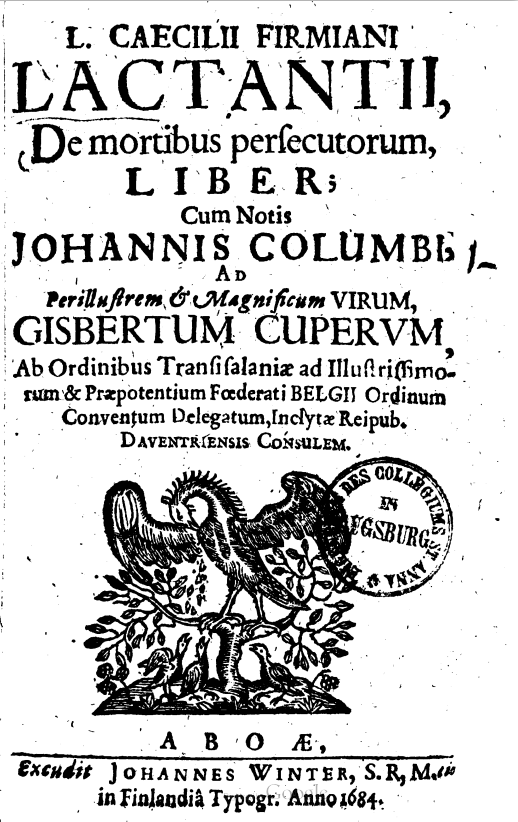
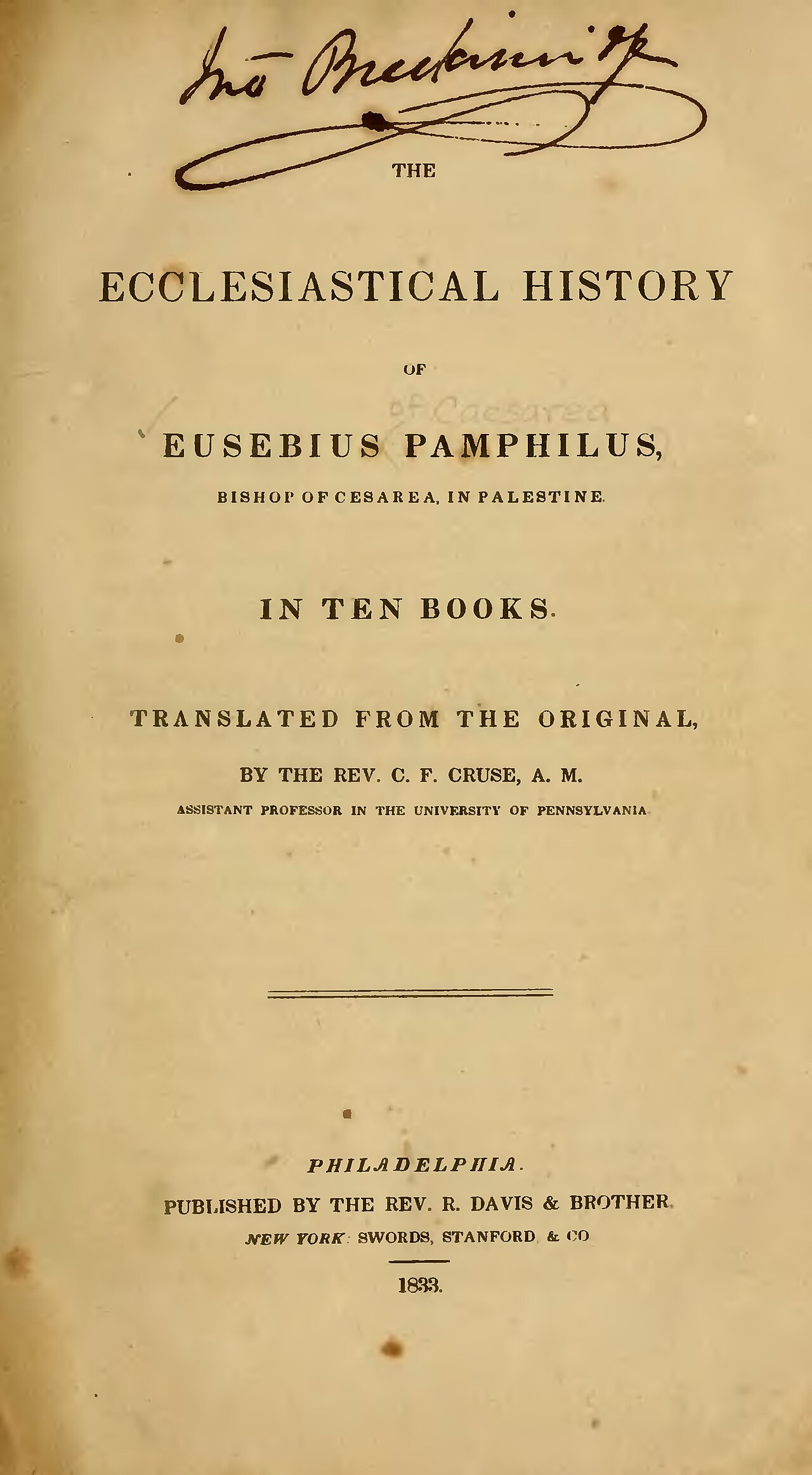
De mortibus persecutorum
Lactantius · after 316
 Sculpture
Primary source
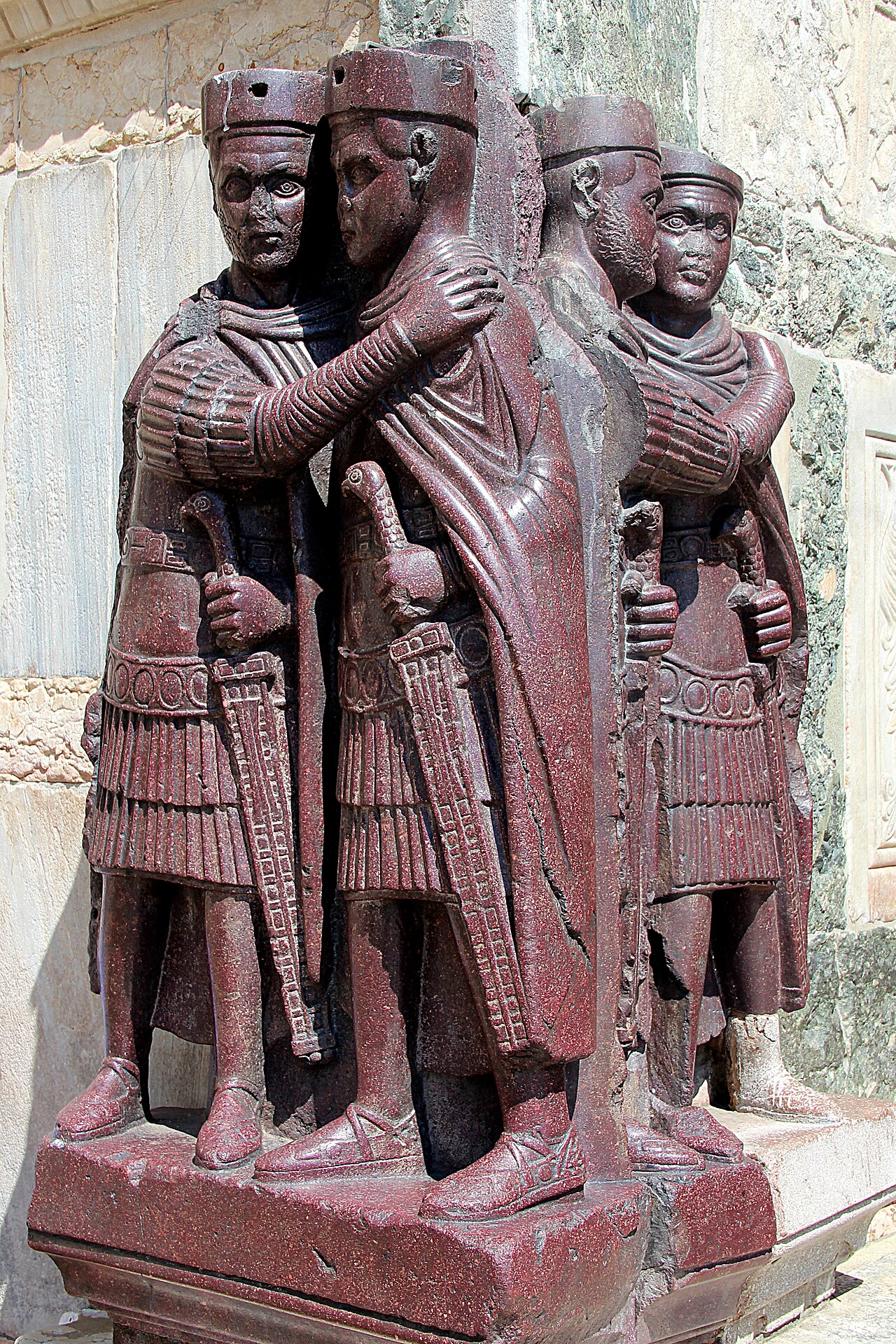
Portrait of the Four Tetrarchs
c. 300 CE
Free account
Read every Diocletian source
Sign up free →
Ready when you are
Start chatting with Diocletian now.
20 messages free · No credit card · Available in 50+ languages.