


Secondary sourcePainting1782
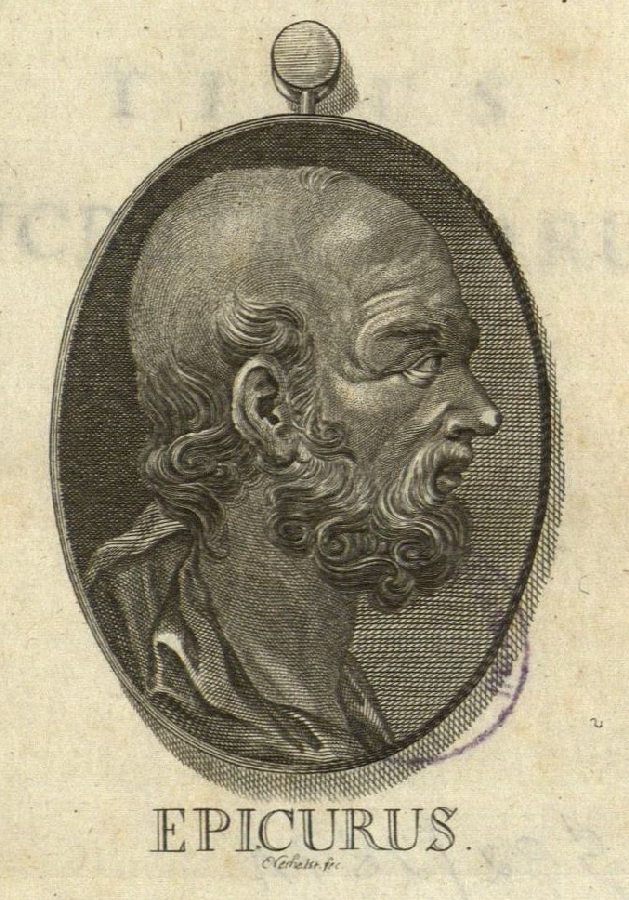
Portrait of Epicurus (Egid Verhelst, 1782)
Egid Verhelst · 1782
A portrait of Epicurus by Egid Verhelst, dated 1782. The curator describes it as imagined, painted more than two thousand years after his death.
Shows how an eighteenth-century artist imagined Epicurus, the ancient Greek philosopher, more than two thousand years after his death.
About this source
What it is
This is a portrait of Epicurus by Egid Verhelst, dated 1782. The Commons record lists it as a painting. Its image shows an oval portrait in profile facing right of a bald, bearded older man with curly hair above the ear and a draped garment at the shoulders, in a dark oval frame with a ring at top. The label below reads EPICURUS, and the title is in German, 'Portrait des Epikur'.
Why it matters
The curator notes that the portrait was painted more than two thousand years after Epicurus died, so it is an imagined likeness. It shows how an eighteenth-century artist chose to picture an ancient Greek philosopher. Its German title also shows it was circulated among German-speaking readers.
Look closer
- The Commons record calls this a painting, but the image is described as an engraved oval portrait. What might explain the difference?
- What qualities does the artist show in the face and the draped garment, and why might those be chosen?
- What would a historian need to know about Verhelst and his audience to understand why this portrait was made?
This painting is part of the curated material that grounds the AI version of Epicurus on Humy.ai — when students ask about related events, the AI can quote it and cite it.
More Epicurus sources
Browse all 84 →Primary source
Letter to Menoeceus
Epicurus · 4th-3rd century BCE
Primary source
Letter to Herodotus
Epicurus · 4th-3rd century BCE
Secondary source
Lives of the Eminent Philosophers, Book X
Diogenes Laërtius · 3rd century CE
 Book
Secondary source
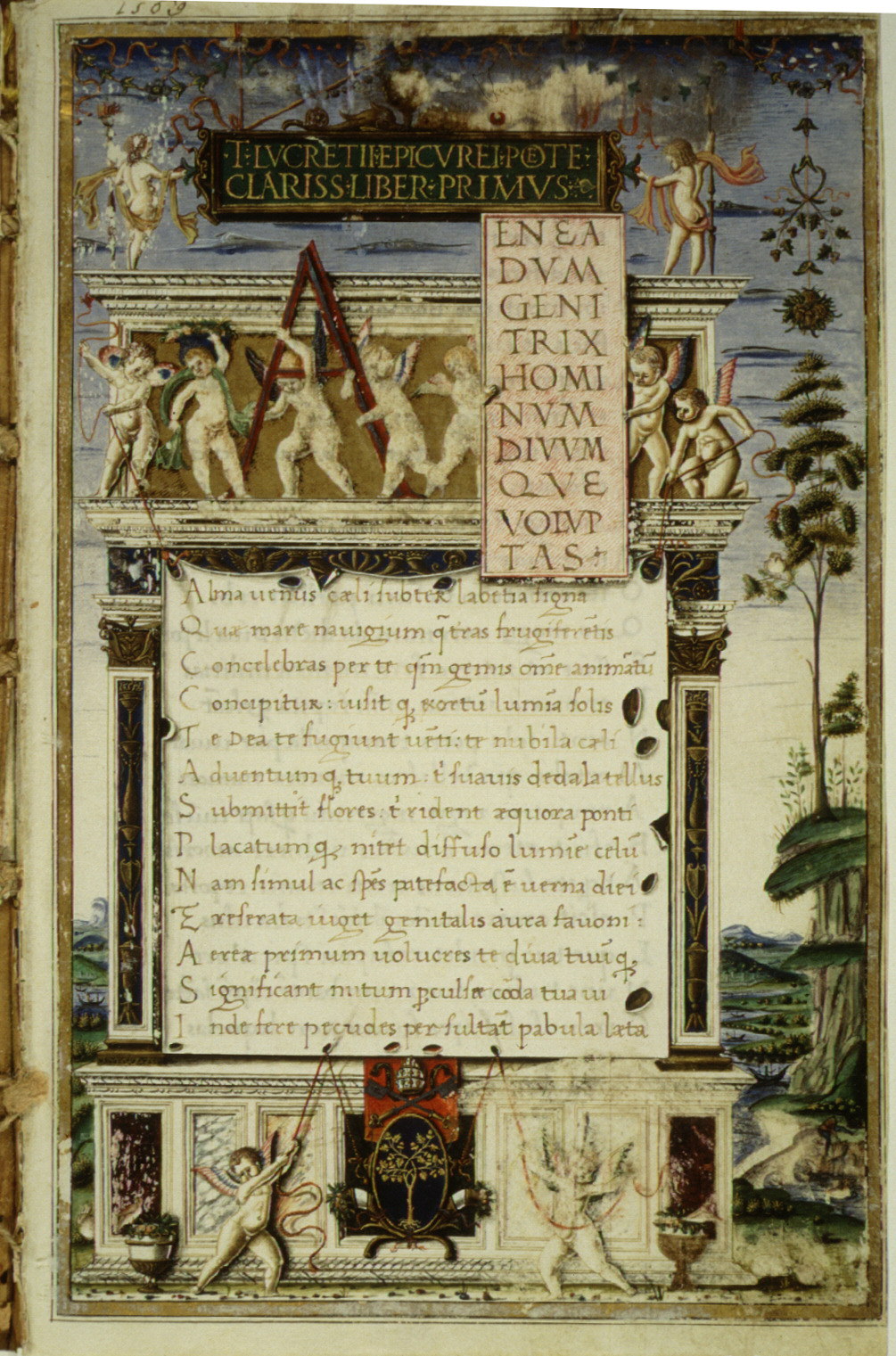
De rerum natura
Lucretius · c. 100 BC
Free account
Read every Epicurus source
Sign up free →
Ready when you are
Start chatting with Epicurus now.
20 messages free · No credit card · Available in 50+ languages.