


Secondary sourceBookc. 100 BC
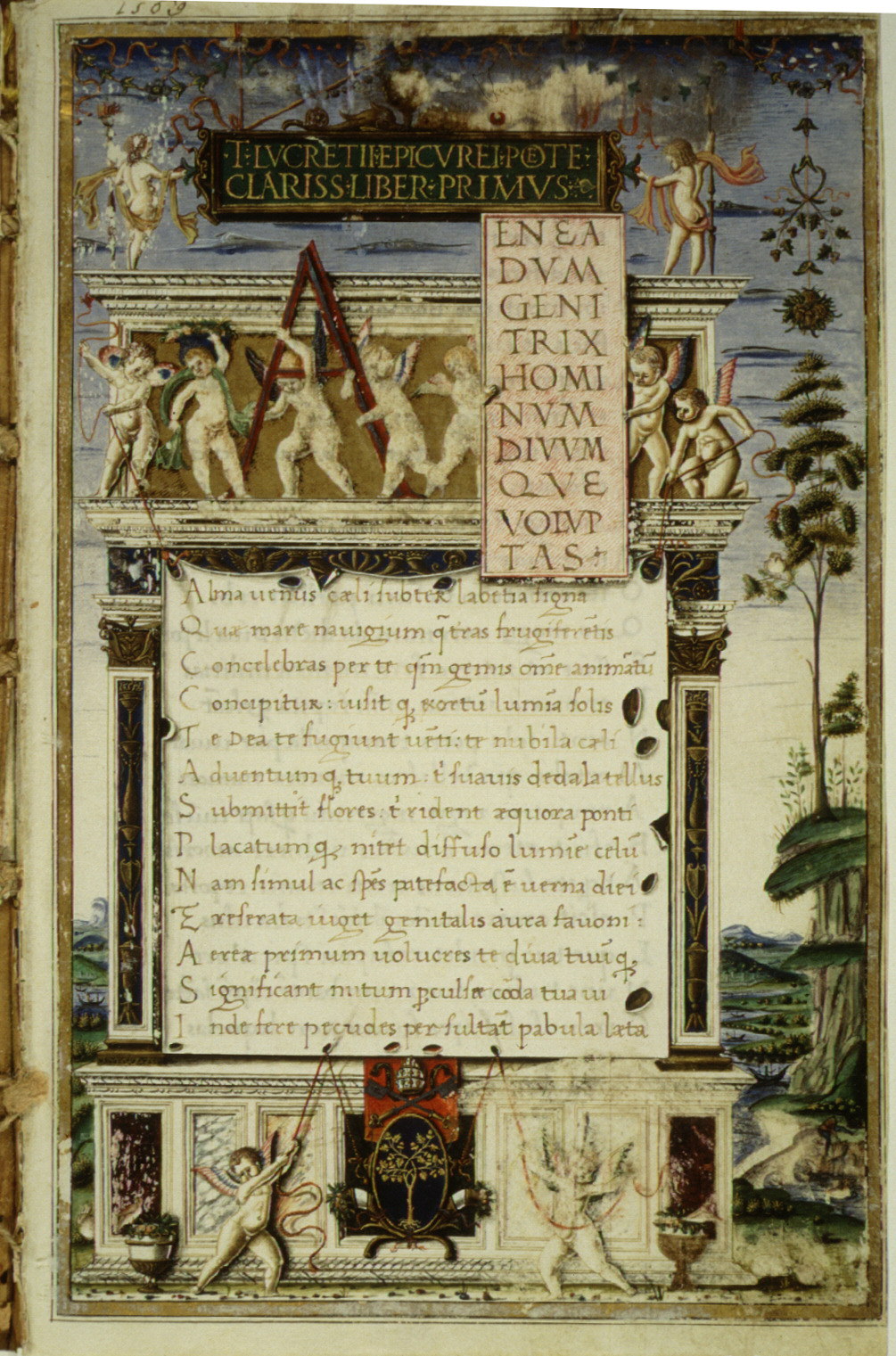
De rerum natura
Lucretius · c. 100 BC
A Latin didactic poem by Lucretius that explains Epicurean atomism to Roman readers and names Democritus as a source of the atomist theory.
Lucretius' poem transmitted Democritus' atomist ideas to later readers, naming him as a founder of the theory.
Free Humy account · No credit card · 120,912 sources to read
About this source
What it is
This is a long poem written in Latin by the Roman poet Lucretius in the first century BC. It explains Epicurean philosophy through poetry, covering atoms, the mind, the senses, and natural phenomena, across six books.
The poem explicitly draws on the atomist tradition founded by Democritus, whom Lucretius names as part of the lineage of ideas he is presenting.
Why it matters
Lucretius' poem became the main channel through which ancient atomist ideas reached Renaissance Europe, after a nearly lost manuscript was rediscovered by the humanist Poggio Bracciolini in the 15th century. Without this poem, Democritus' atomism might have been almost entirely forgotten in the West for centuries.
This shows how ideas can survive not through their original author's own words, but through later admirers who retell and adapt them.
Look closer
- Why might a poem be an effective way to spread philosophical ideas?
- How does naming Democritus connect Lucretius' work to a much older tradition of thought?
- What might change about an idea when it is rewritten in poetry generations later?
This book is part of the curated material that grounds the AI version of Democritus, Epicurus and Michel de Montaigne on Humy.ai — when students ask about related events, the AI can quote it and cite it.
More Democritus sources
Browse all 93 →

Ready when you are
Start chatting with Democritus now.
20 messages free · No credit card · Available in 50+ languages.