


Secondary sourceSculptureMid-3rd century BC Greek original (275-250 BC); Roman copy
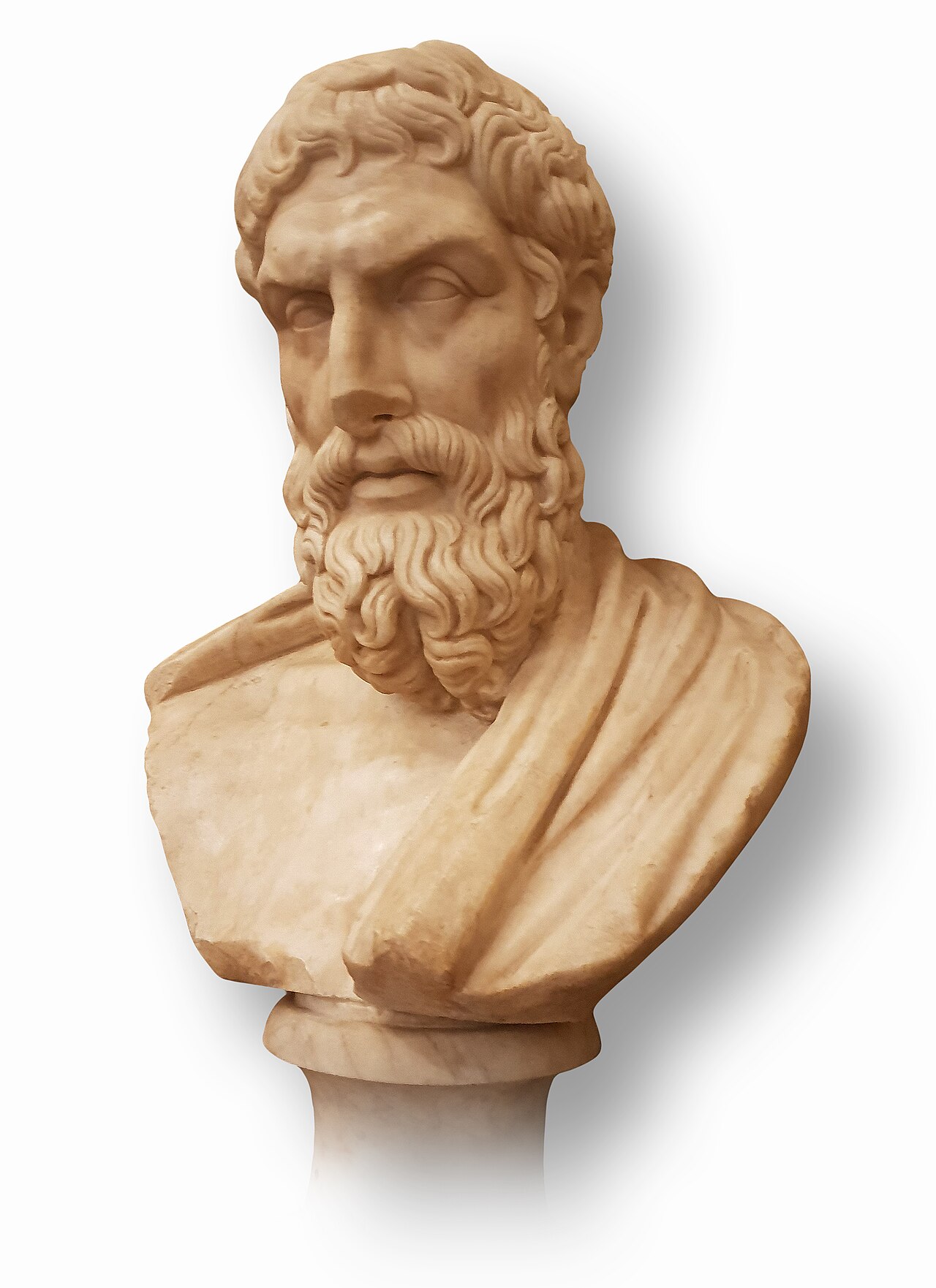
Portrait of Epicurus, Hall of the Philosophers
Mid-3rd century BC Greek original (275-250 BC); Roman copy
A Roman marble copy of a Greek portrait of Epicurus, displayed in the Hall of the Philosophers at the Capitoline Museum. The original Greek work dates from the mid-3rd century BC.
Shows Epicurus displayed among other philosophers in a museum hall, the way later institutions remembered him.
About this source
What it is
This is a marble bust of a bearded man with curly hair and a furrowed brow, shown in a photograph from 21 August 2022. It is a Roman marble copy of a Greek original of the mid-3rd century BC (275-250 BC). It stands in the Hall of the Philosophers in the Palazzo Nuovo of the Capitoline Museum.
Why it matters
The Hall of the Philosophers gathers portraits of ancient thinkers, so visitors see Epicurus in a group of famous Greek and Roman philosophers. Such halls show how later collectors chose to honour these figures. The bust is a copy, so it reflects later ideas about Epicurus as much as his own time.
Look closer
- Why might a museum place Epicurus among other philosophers in one hall?
- What details of the draped garment and the hair suggest the sculptor's choices?
- What might a cut-out photograph leave out, such as the other busts around him?
This sculpture is part of the curated material that grounds the AI version of Epicurus on Humy.ai — when students ask about related events, the AI can quote it and cite it.
More Epicurus sources
Browse all 84 →Primary source
Letter to Menoeceus
Epicurus · 4th-3rd century BCE
Primary source
Letter to Herodotus
Epicurus · 4th-3rd century BCE
Secondary source
Lives of the Eminent Philosophers, Book X
Diogenes Laërtius · 3rd century CE
 Book
Secondary source
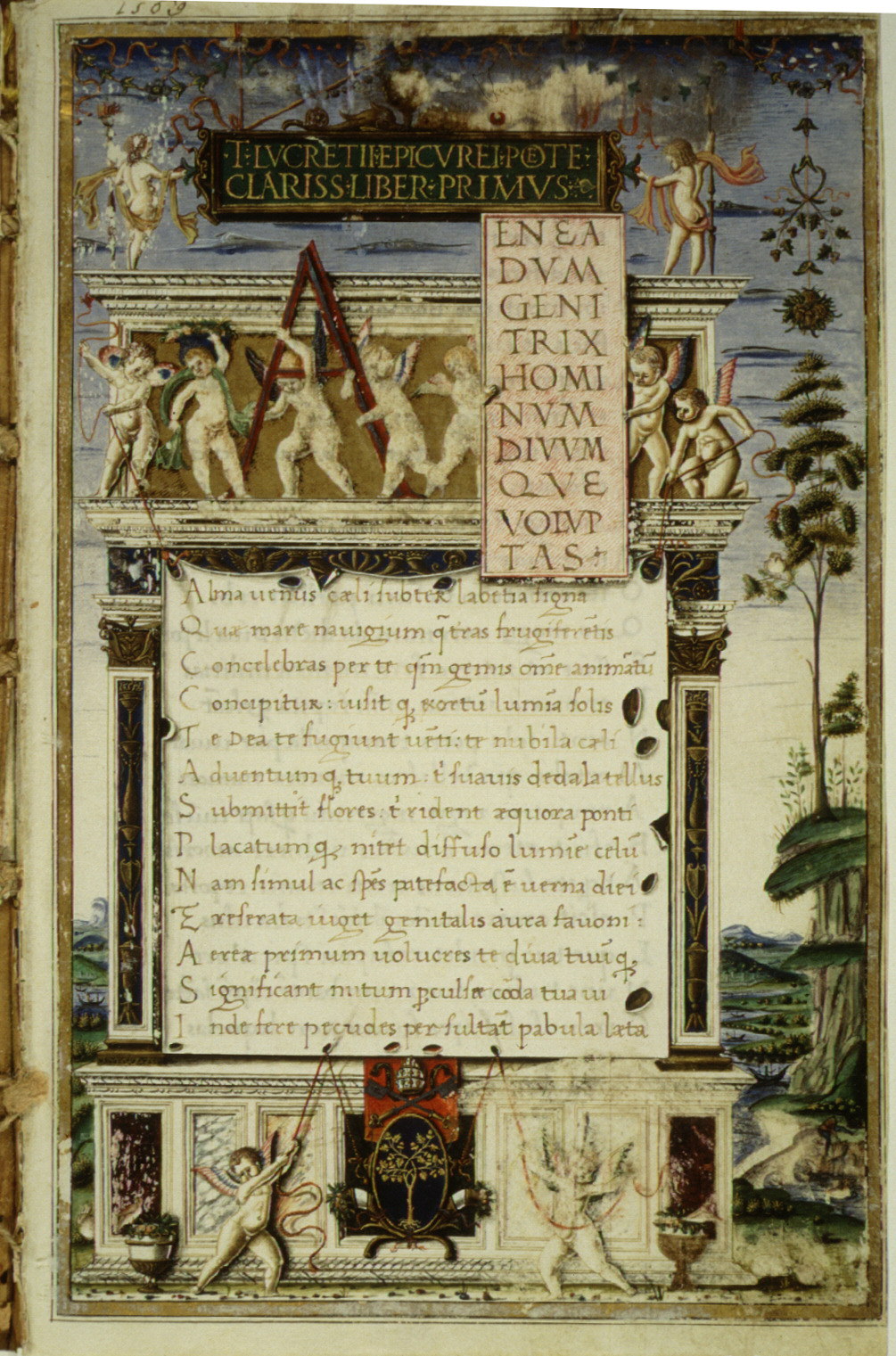
De rerum natura
Lucretius · c. 100 BC
Free account
Read every Epicurus source
Sign up free →
Ready when you are
Start chatting with Epicurus now.
20 messages free · No credit card · Available in 50+ languages.