


Secondary sourcePaintingabout 1474
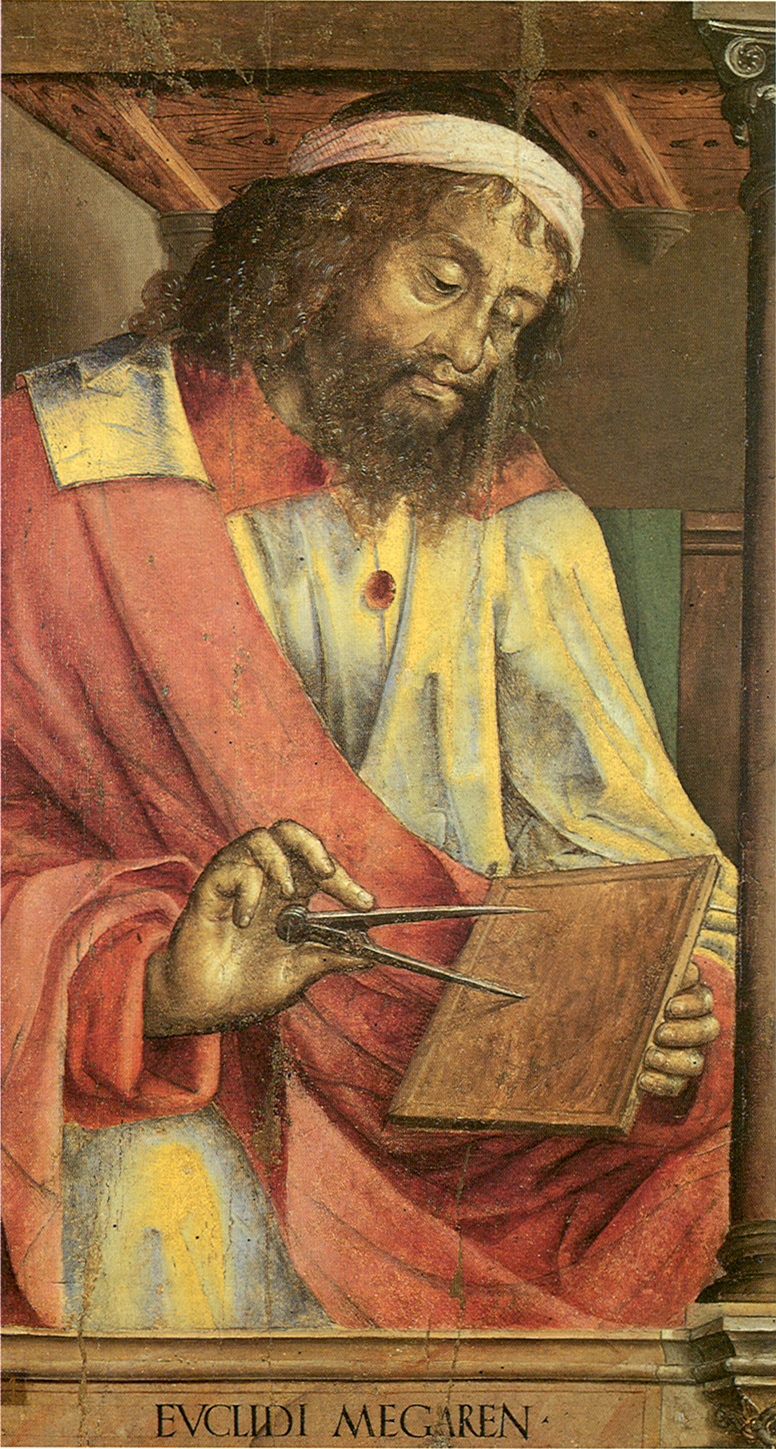
Portrait of Euclid
Justus of Ghent · about 1474
An imaginary Renaissance portrait of Euclid, painted around 1474, used as his standard likeness since no image from his lifetime survives.
This imagined portrait, created centuries after Euclid's death, is the conventional image used to represent him.
About this source
What it is
This panel painting, made around 1474 by Justus of Ghent, is part of a series called 'Famous Men' and is now held in Urbino. It shows a bearded man in a headwrap and robes holding dividers and a tablet, with an inscription identifying him as Euclid.
Why it matters
No portrait of Euclid made during his own lifetime exists, so this imagined Renaissance image has become his standard likeness in later centuries. The painting was originally meant to show Euclid of Alexandria but was mistakenly labelled with the name of a different ancient figure, Euclid of Megara, a mix-up that was common in medieval and Renaissance times.
Look closer
- Since no real image of Euclid survives, what choices did the painter make to show him as a mathematician?
- Why might people in the Renaissance have confused Euclid of Alexandria with Euclid of Megara?
- What does the inscription on the painting tell us about how reliable old labels on artworks can be?
This painting is part of the curated material that grounds the AI version of Euclid on Humy.ai — when students ask about related events, the AI can quote it and cite it.
More Euclid sources
Browse all 73 →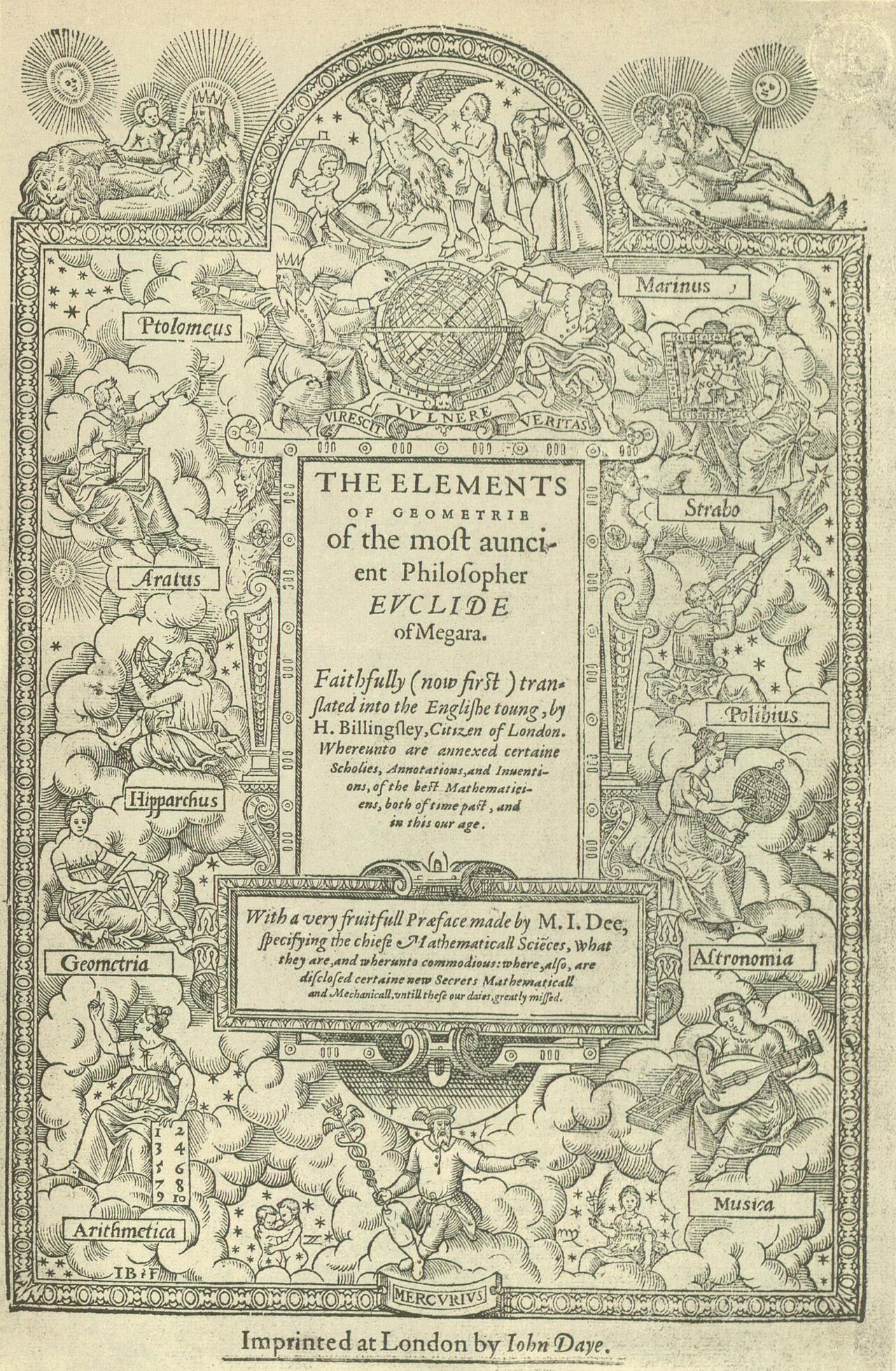 Book
Secondary source
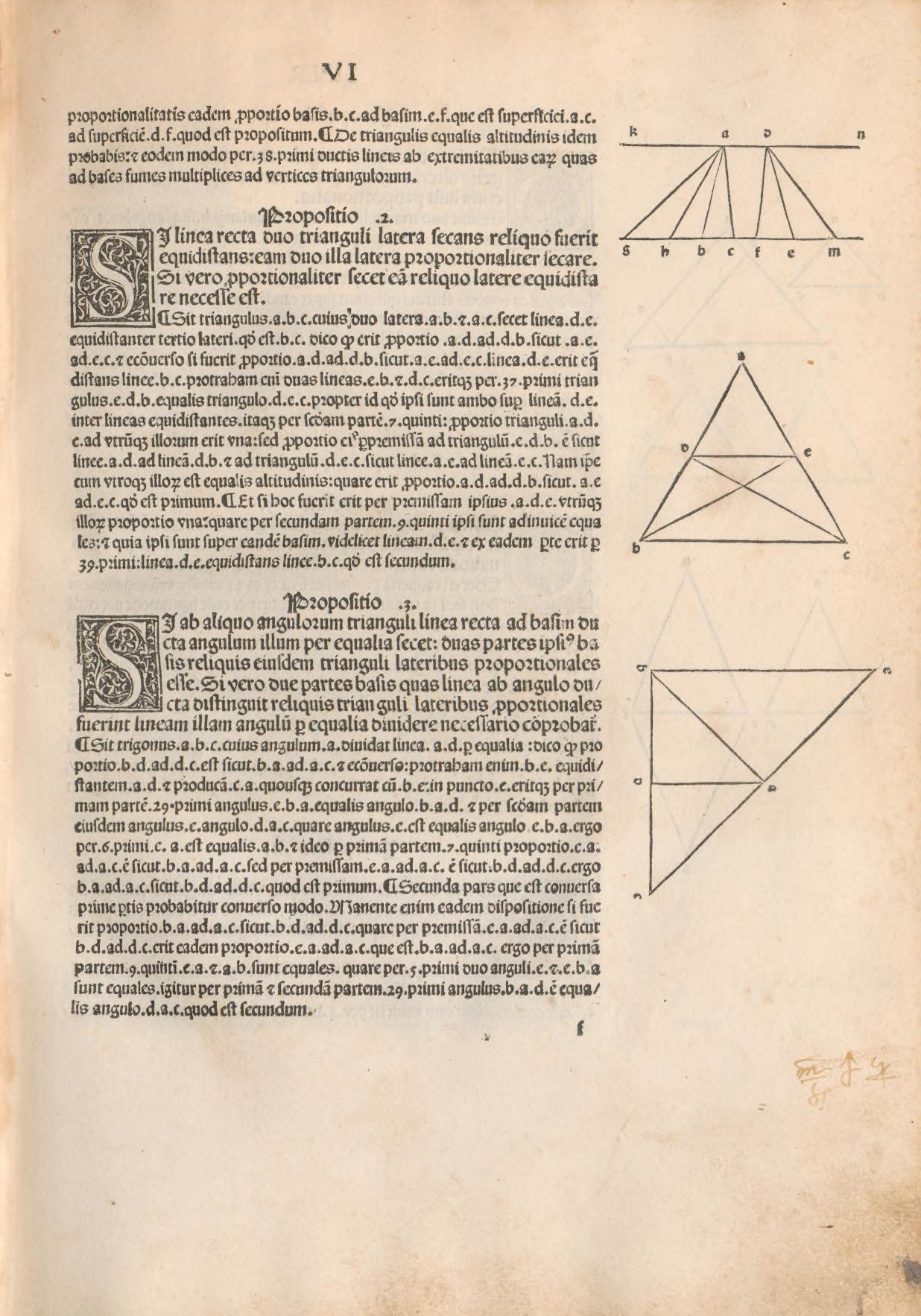
Elements
Euclid · c. 300 BC
 Document
Primary source
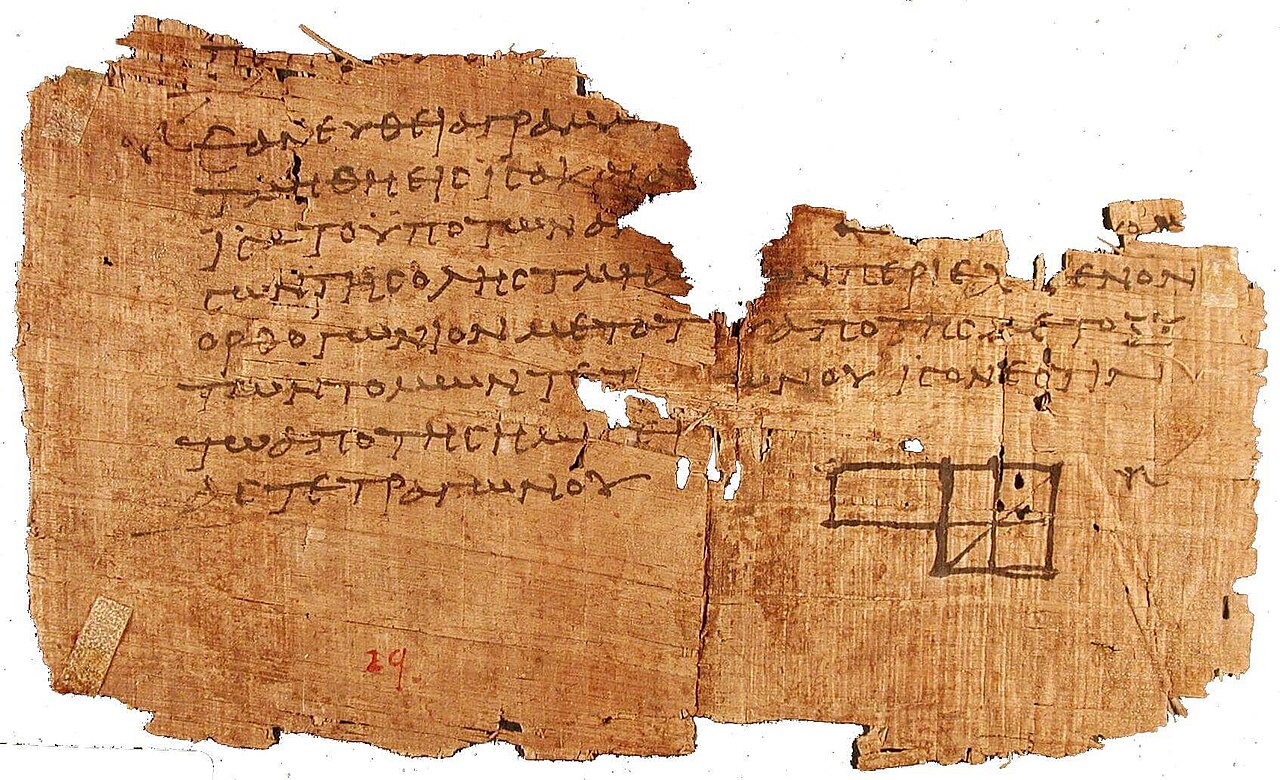
Papyrus Oxyrhynchus 29
Euclid · c. 75-125 AD
Secondary source
Commentary on the First Book of Euclid's Elements
Proclus · 5th century AD
 Document
Primary source
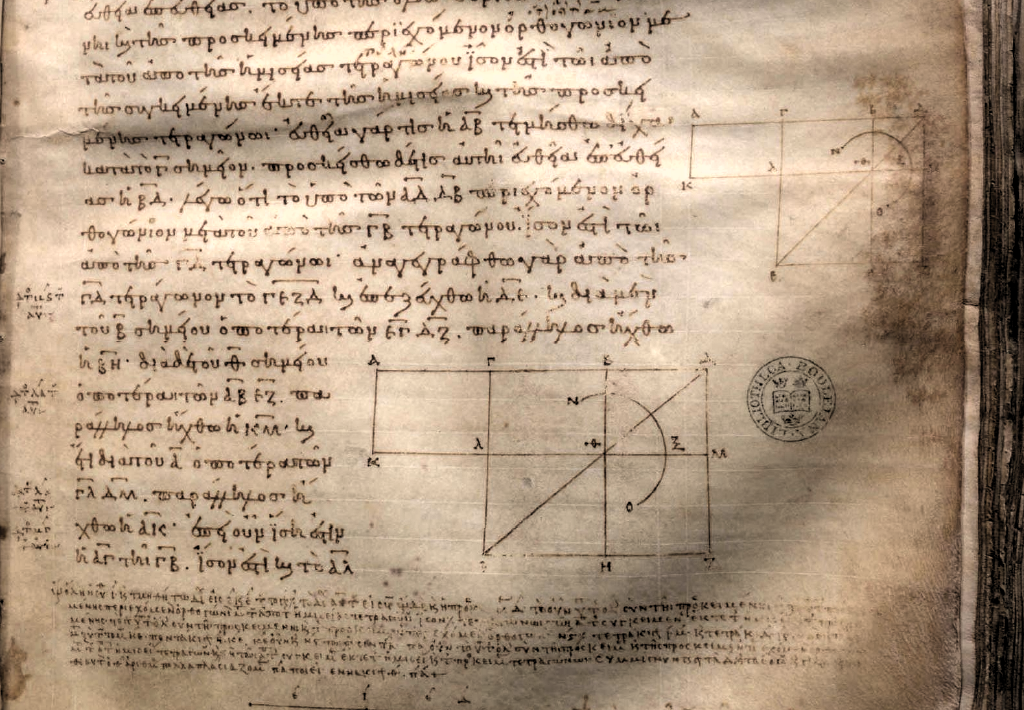
Bodleian Euclid Manuscript, 888 AD
Stephen the Clerk · 888 AD
Free account
Read every Euclid source
Sign up free →
Ready when you are
Start chatting with Euclid now.
20 messages free · No credit card · Available in 50+ languages.