


Secondary sourceArtifact1584
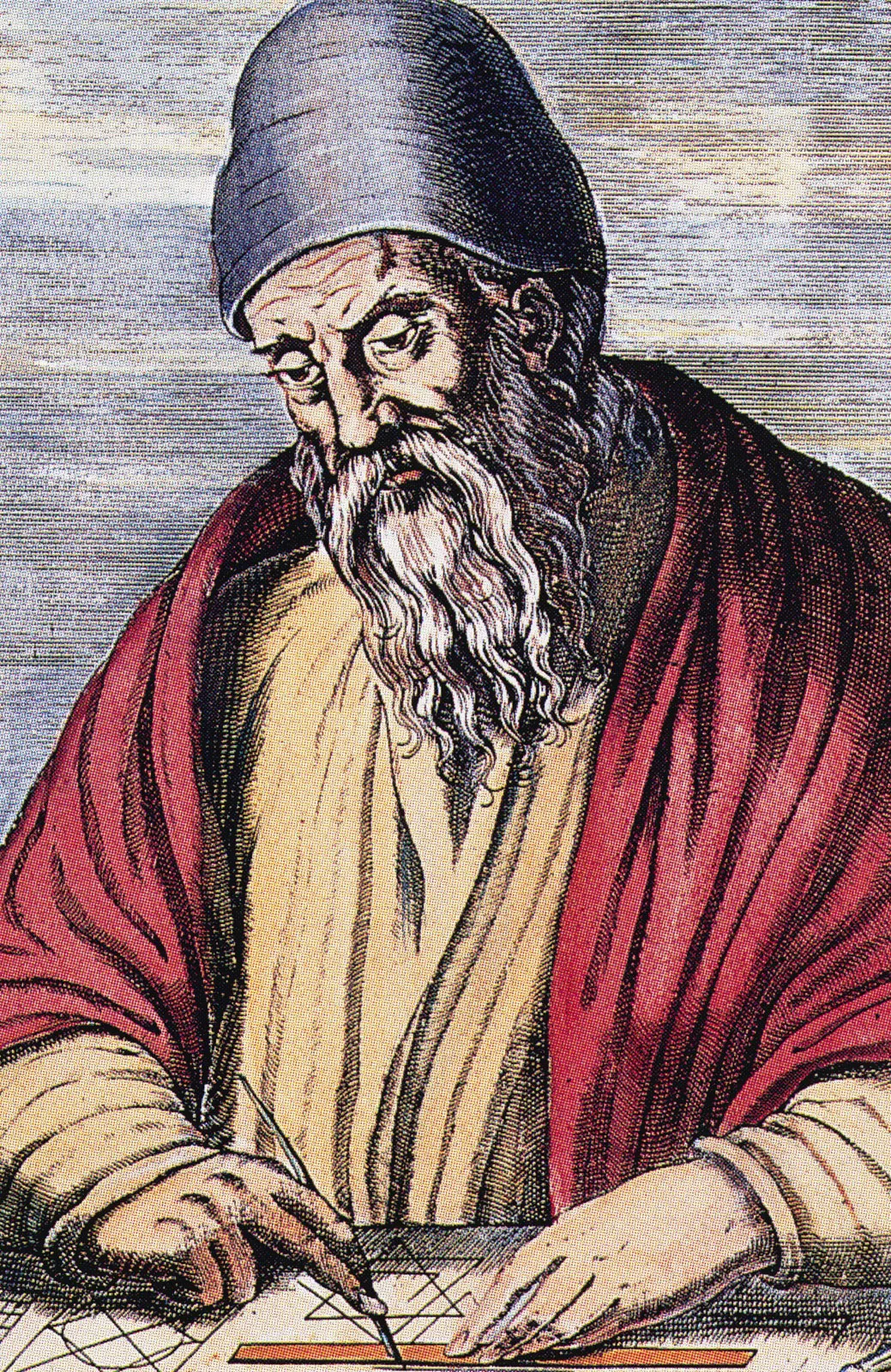
Portrait of Euclid by André Thevet
André Thevet · 1584
A hand-colored 1584 engraving of Euclid drawing with a compass, printed in a book of famous men. It was made long after his lifetime.
An imagined sixteenth-century portrait of Euclid at work with a compass, showing how later printers pictured him.
About this source
What it is
This is a hand-colored engraving by André Thevet, dated 1584. It shows a bearded old man in a grey cap and red cloak over a yellow robe. He leans over a table, drawing with a compass on a diagram, and a red ruler lies below. The Commons record calls it a portrait of Euclid by Thevet.
Why it matters
Euclid lived around 300 BCE, and no portrait of him survives from his lifetime. Thevet's image is an imagined likeness, made in the sixteenth century for a printed collection of famous men. Such engravings show how early modern readers pictured ancient scholars as active workers with compass and ruler, and they helped spread a shared image of learned figures.
Look closer
- What tools does Euclid use, and what do they tell you about his work?
- Why might the engraver have colored the image by hand?
- What does this portrait leave out about how Euclid really looked or lived?
This artifact is part of the curated material that grounds the AI version of Euclid on Humy.ai — when students ask about related events, the AI can quote it and cite it.
More Euclid sources
Browse all 73 →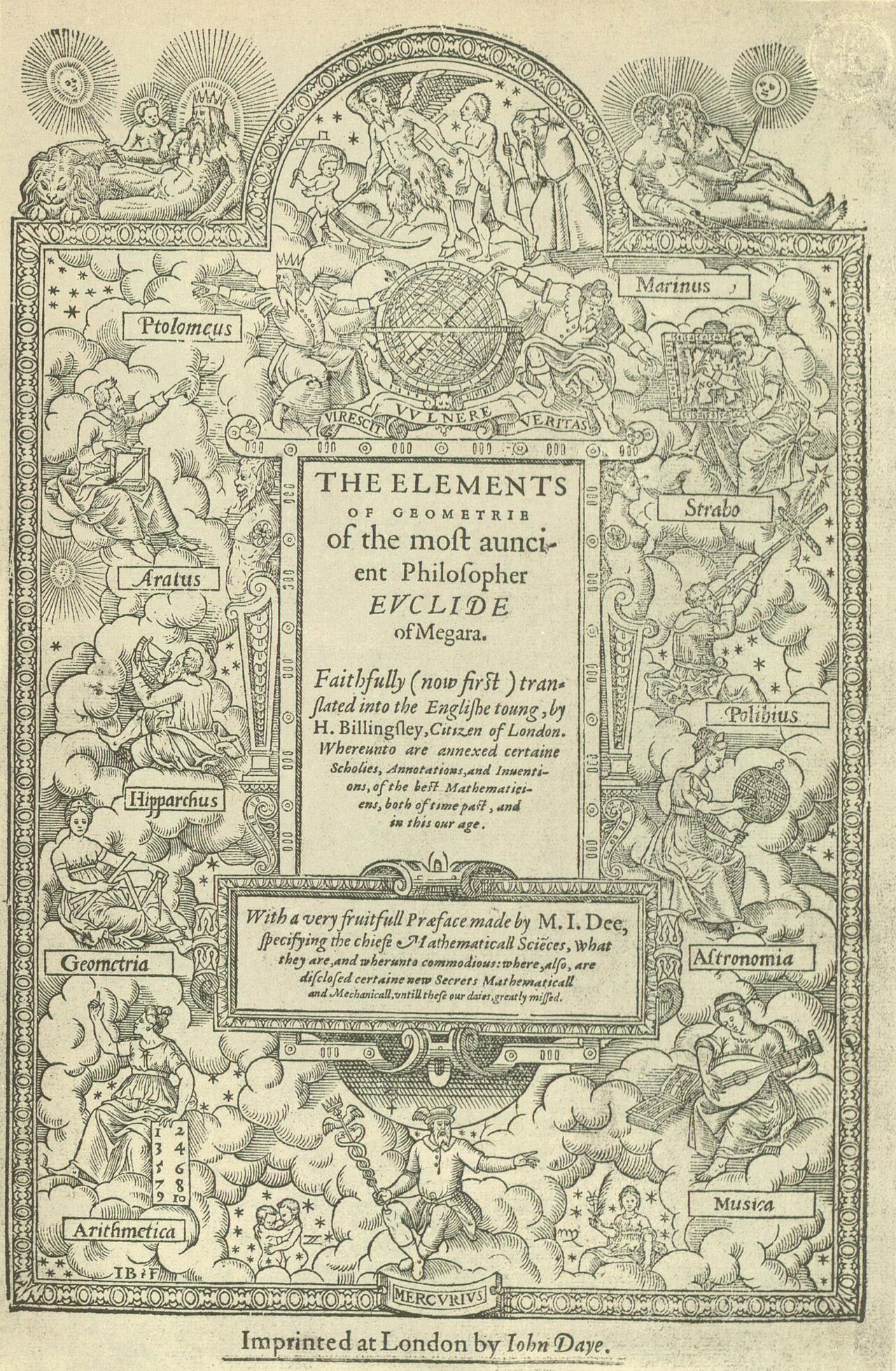 Book
Secondary source
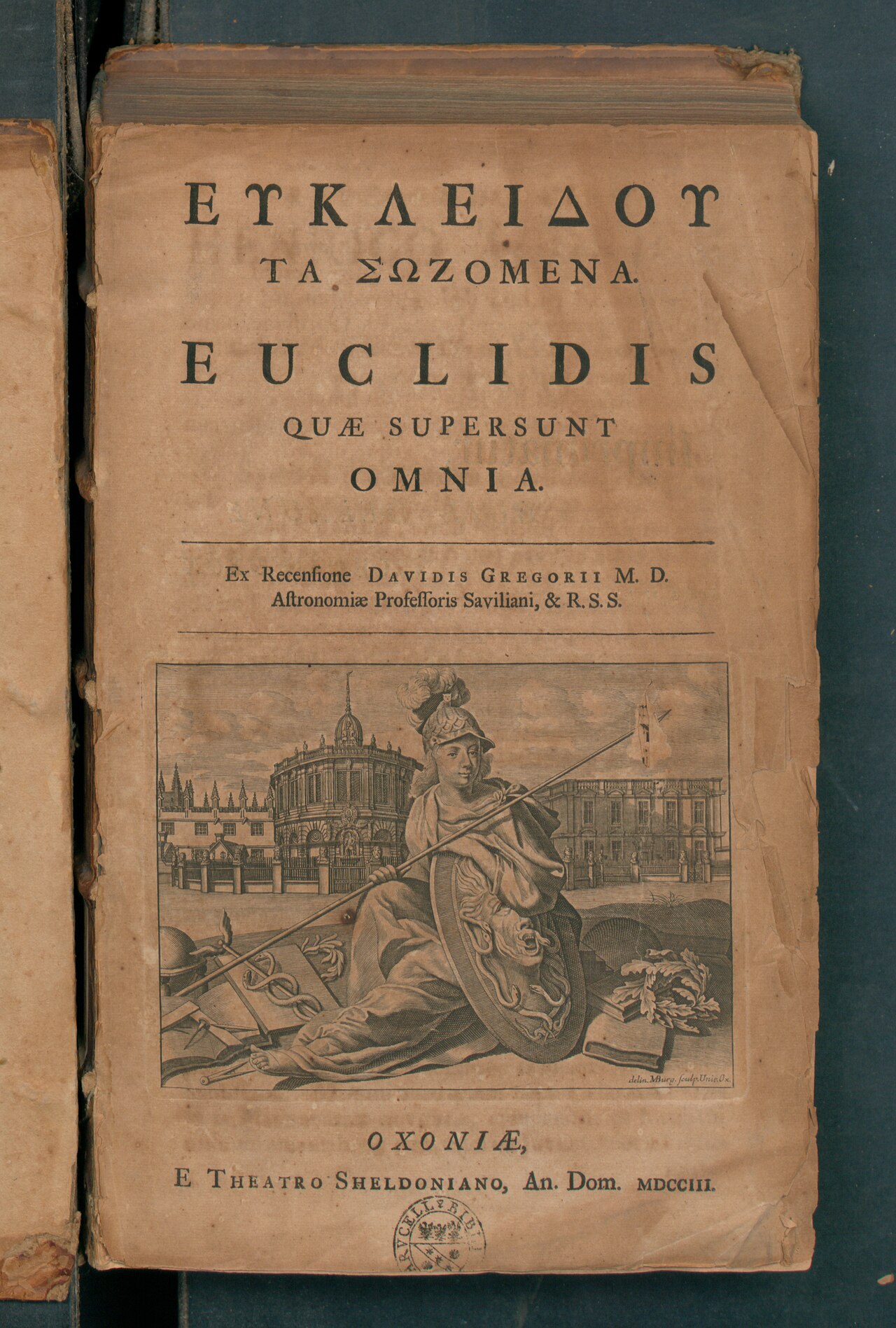
Elements
Euclid · c. 300 BC
 Document
Primary source
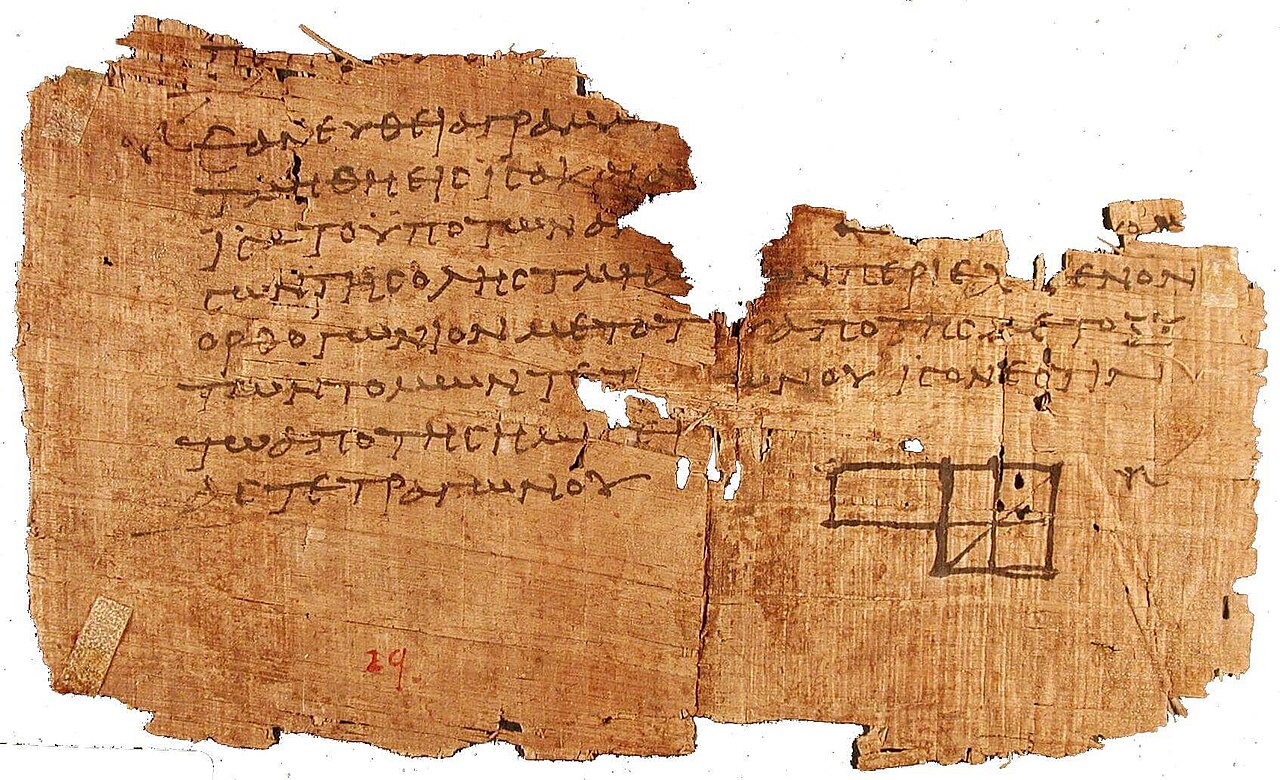
Papyrus Oxyrhynchus 29
Euclid · c. 75-125 AD
Secondary source
Commentary on the First Book of Euclid's Elements
Proclus · 5th century AD
 Document
Primary source
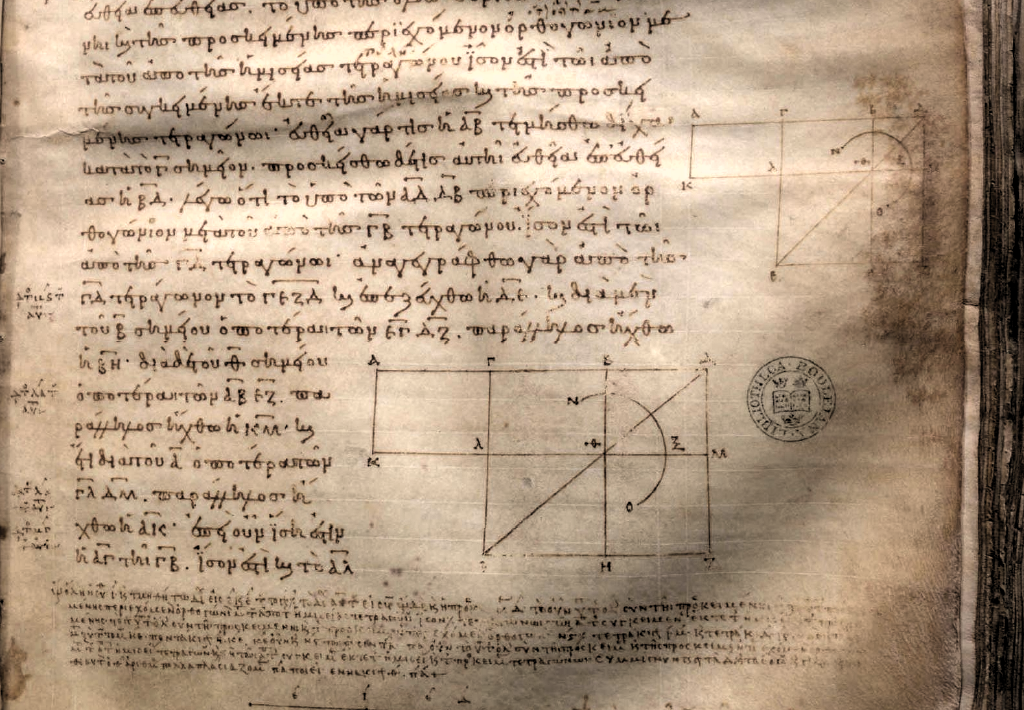
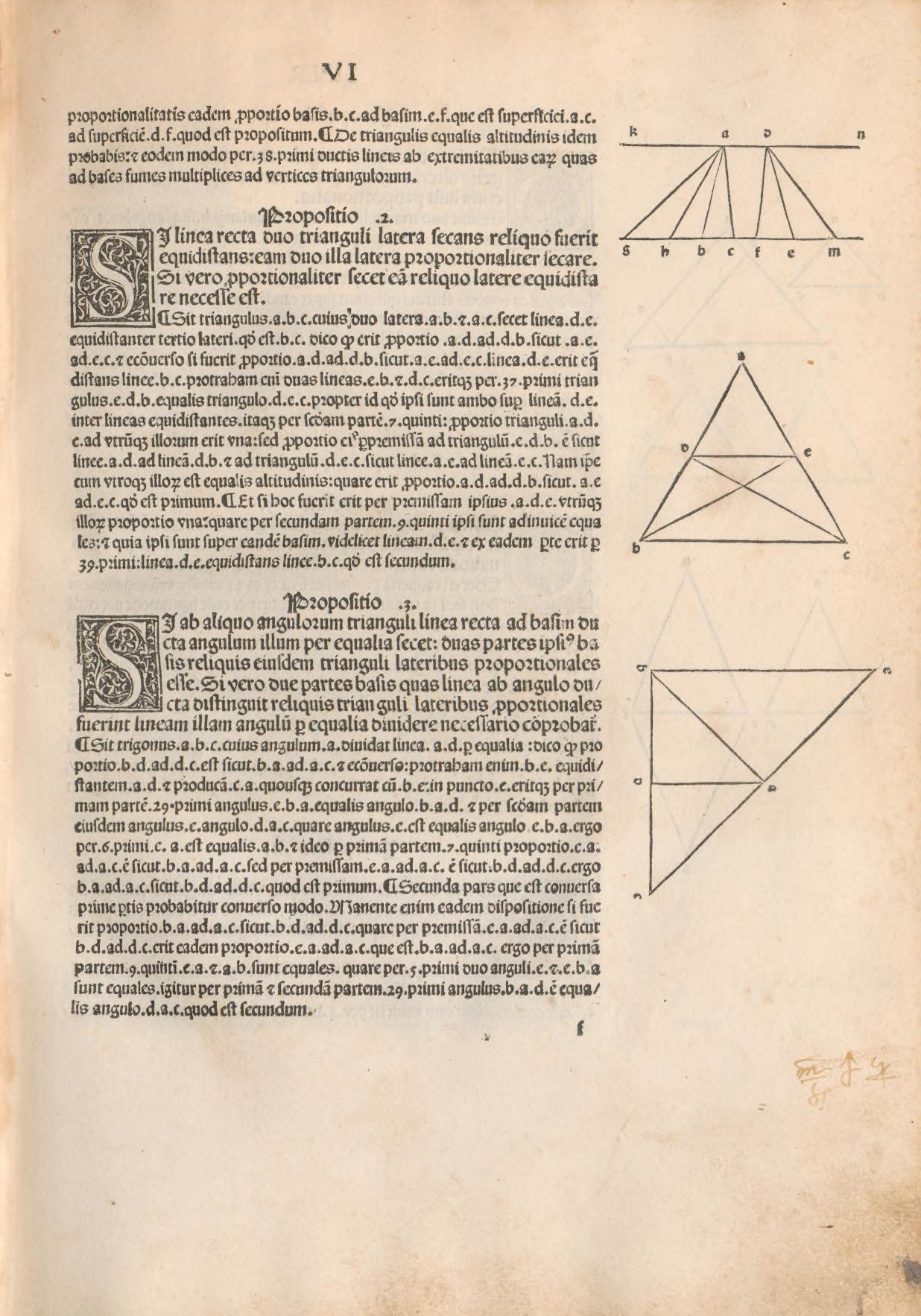
Bodleian Euclid Manuscript, 888 AD
Stephen the Clerk · 888 AD
Free account
Read every Euclid source
Sign up free →
Ready when you are
Start chatting with Euclid now.
20 messages free · No credit card · Available in 50+ languages.