


Tertiary sourcePainting
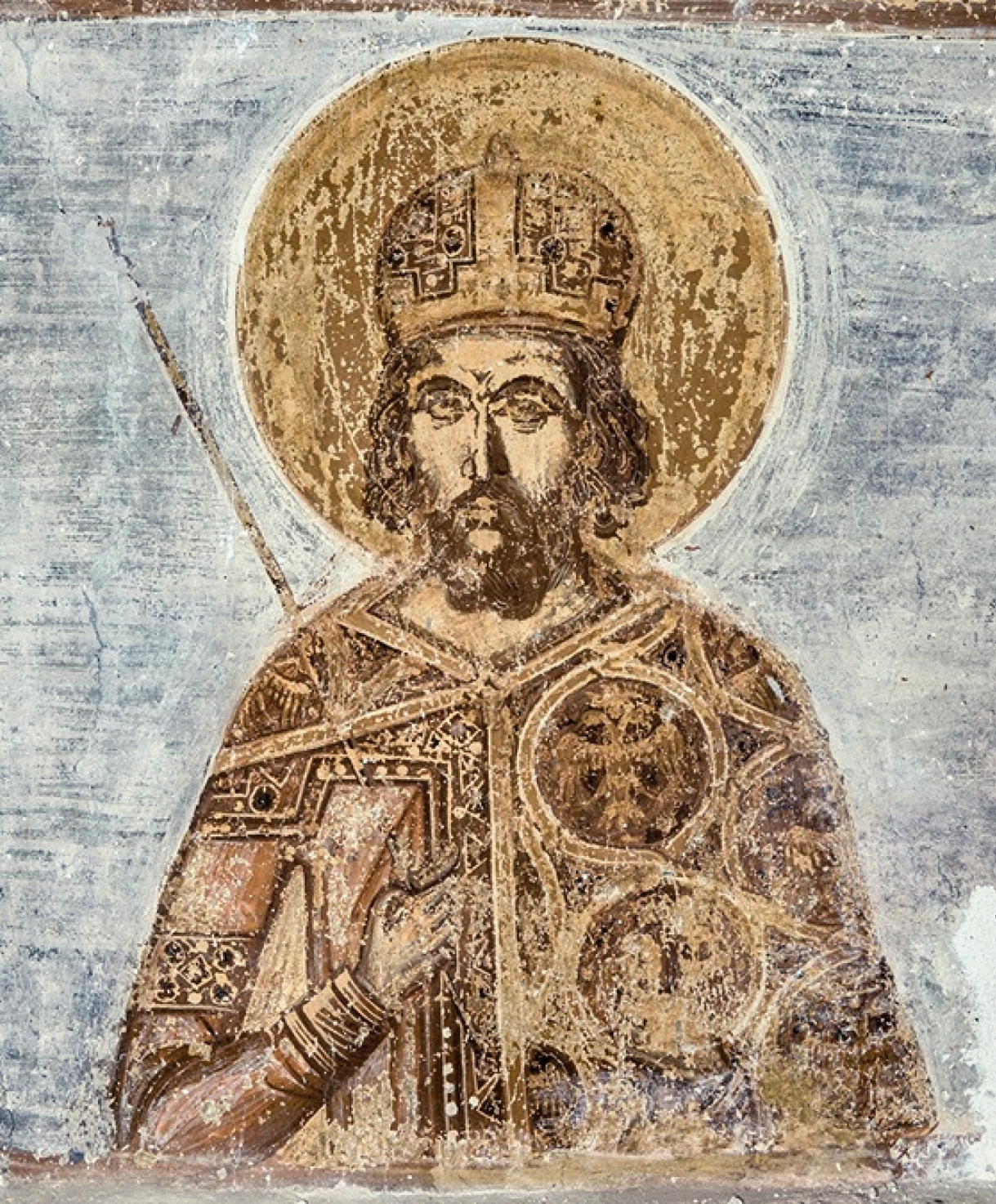
Portrait of Konstantinos XI Palaiologos
A faded Byzantine-style fresco used as the standard image of Constantine XI, though no confirmed lifetime portrait of him survives.
This fresco is used as the standard image representing Constantine XI, though it was not made during his lifetime.
About this source
What it is
This is a fresco-style image showing a bearded, crowned man with a halo, holding a staff, painted in a Byzantine style. It survives at the Catholicon of the Old Monastery of Taxiarches in Aigialeia, Greece. It is used by Wikidata as the portrait of Constantine XI Palaiologos.
Why it matters
No reliable portrait of Constantine XI made during his lifetime survives. Images like this one show how later generations imagined and remembered the last Byzantine emperor, blending religious imagery with imperial symbols such as the crown and halo.
Look closer
- Why might an emperor be shown with a halo, a symbol usually used for saints?
- What does the worn, faded state of the painting tell us about its age and survival?
- Why is it hard to know what Constantine XI really looked like?
This painting is part of the curated material that grounds the AI version of Constantine XI Palaiologos on Humy.ai — when students ask about related events, the AI can quote it and cite it.
More Constantine XI Palaiologos sources
Meet the AI Constantine XI Palaiologos →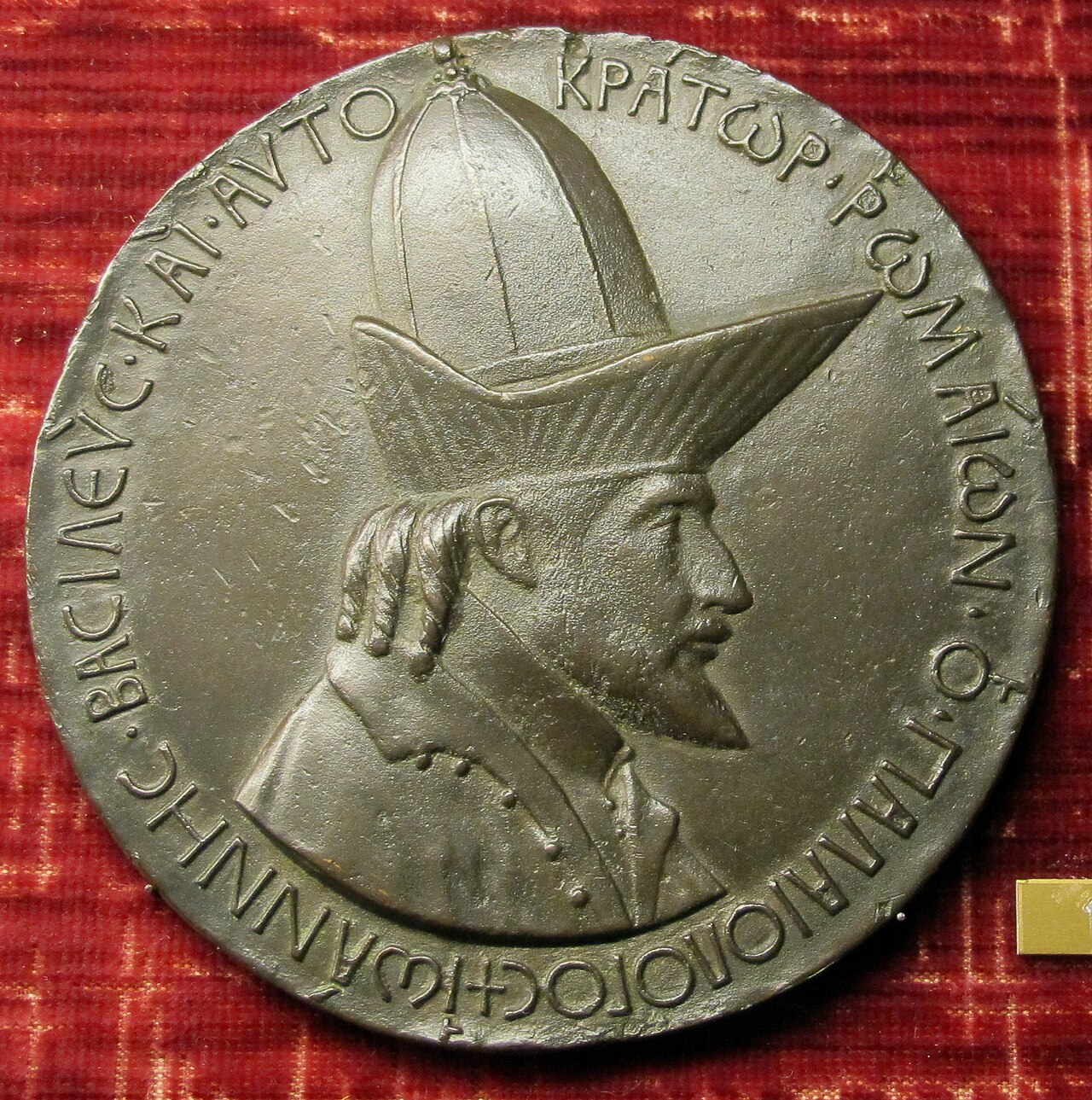 Sculpture
Primary source
Medal of John VIII Palaiologos
Pisanello · 1438-1439
 Painting
Secondary source
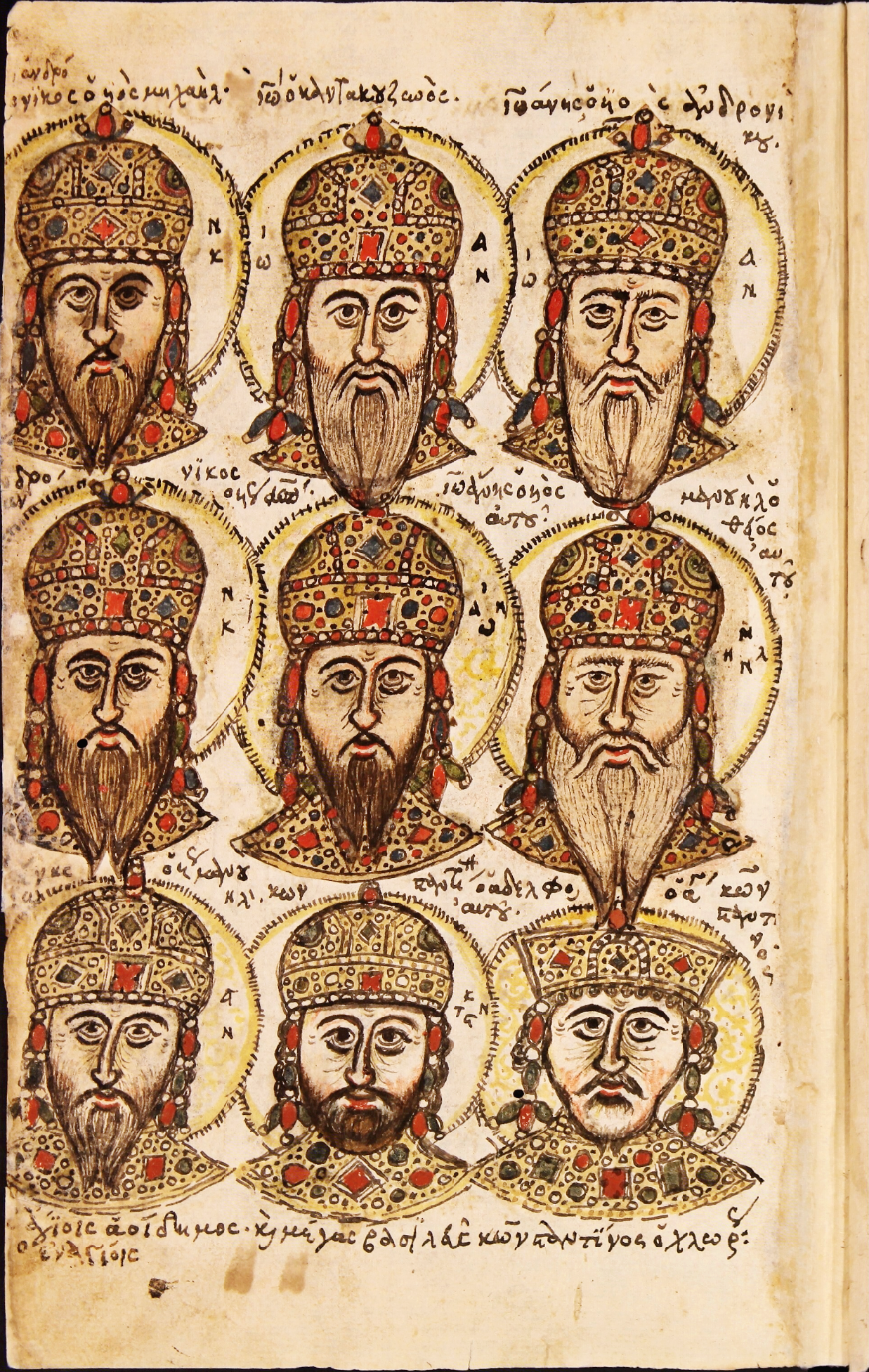
Zonaras Chronicle Portrait Folio
Unknown Byzantine scribes
 Painting
Secondary source
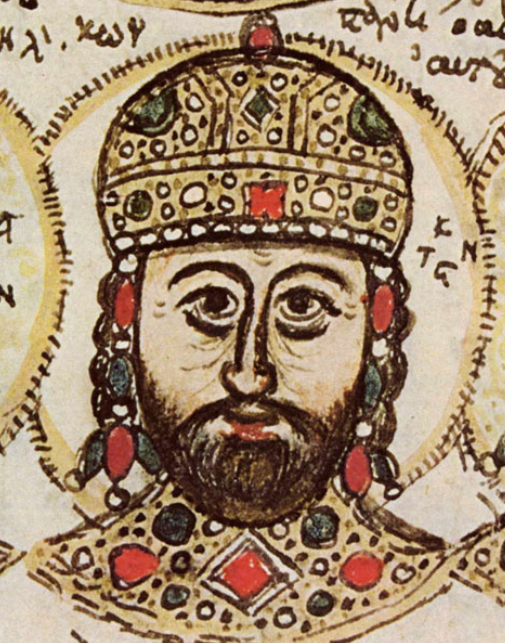
Portrait of Constantine XI Palaiologos in the Mutinensis gr. 122 Codex
Unknown Byzantine artist · 15th century
 Artifact
Primary source
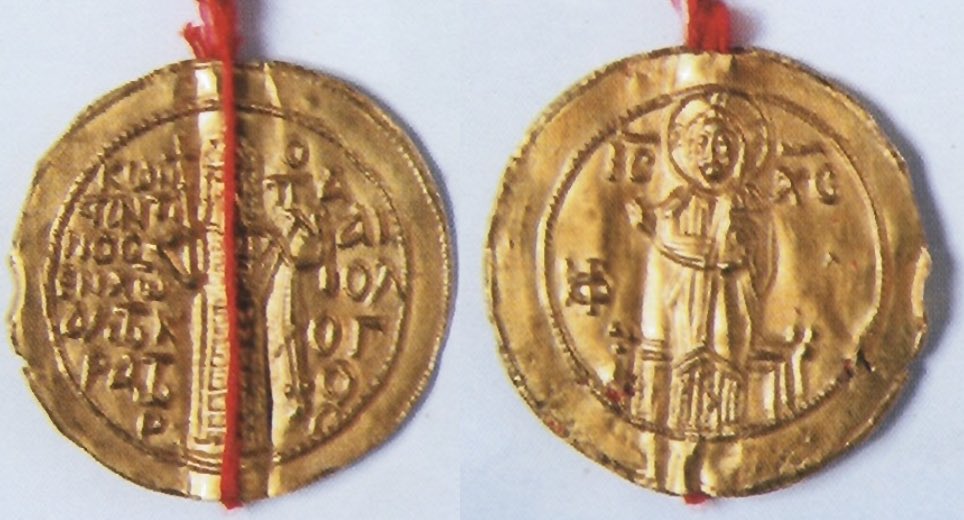
Gold Seal of Constantine XI for Ragusa
1451
 Photograph
Secondary source
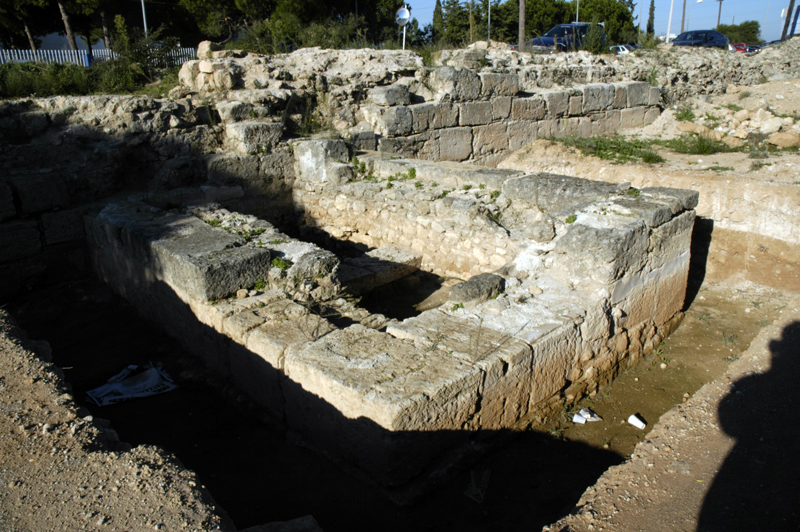
Hexamilion Wall Ruins Across the Corinth Isthmus
Nefasdicere
Ready when you are
Start chatting with Constantine XI Palaiologos now.
20 messages free · No credit card · Available in 50+ languages.