


Secondary sourcePaintingc. 1495-1500
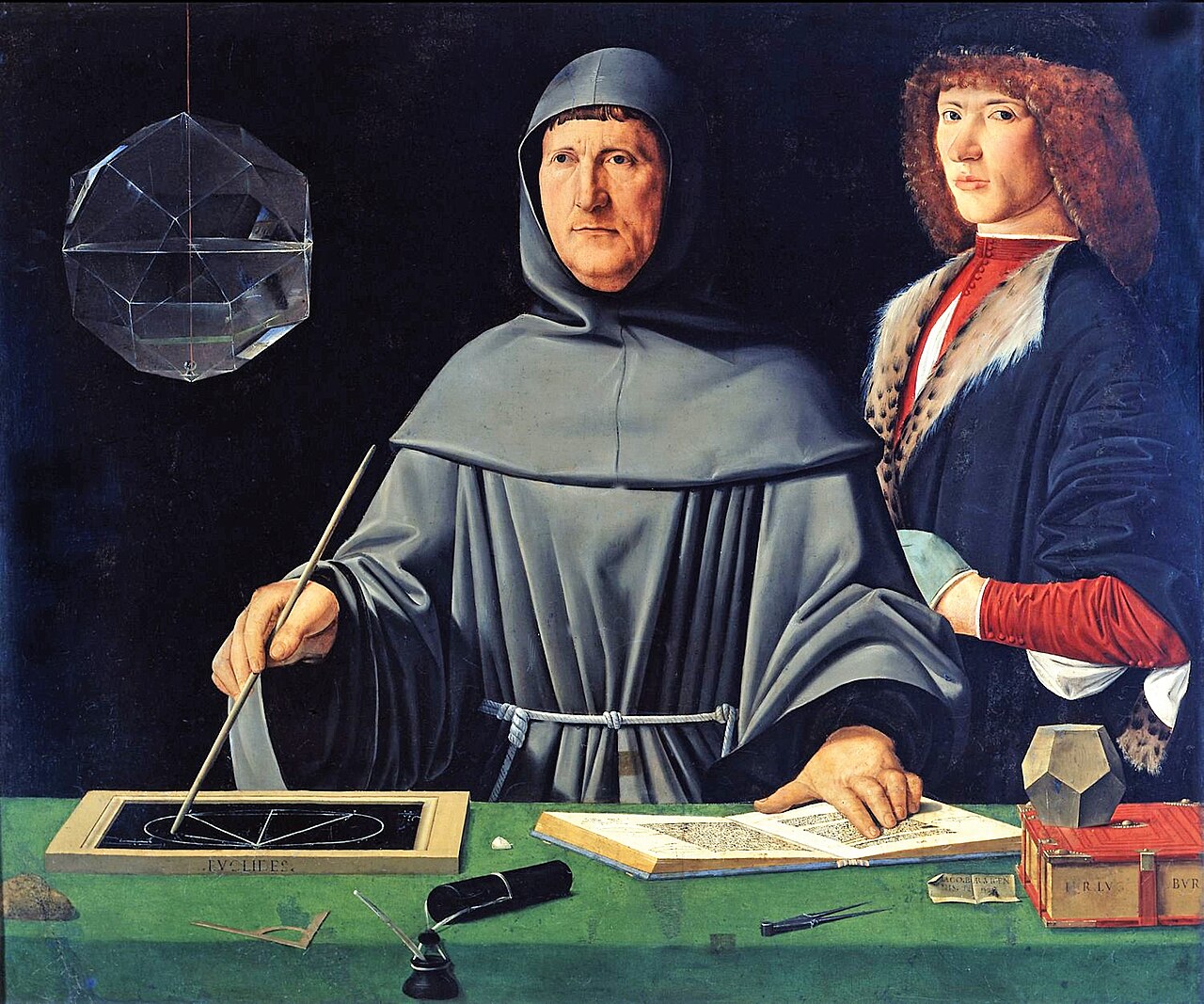
Portrait of Luca Pacioli
Jacopo de' Barbari · c. 1495-1500
A Renaissance painting of mathematician Luca Pacioli demonstrating a theorem from Euclid's Elements, shown open on the table before him.
Shows Euclid's Elements still used as the foundation of mathematical proof over a thousand years after Euclid wrote it.
Free Humy account · No credit card · 120,912 sources to read
About this source
What it is
This painting, attributed to Jacopo de' Barbari and dated around 1495-1500, portrays the friar and mathematician Luca Pacioli. It is held at the Museo di Capodimonte in Naples. Pacioli is shown demonstrating a theorem written in an open book of Euclid's geometry, surrounded by tools such as a compass, slate, a dodecahedron model, and a glass rhombicuboctahedron. A second, unidentified man stands behind him.
Why it matters
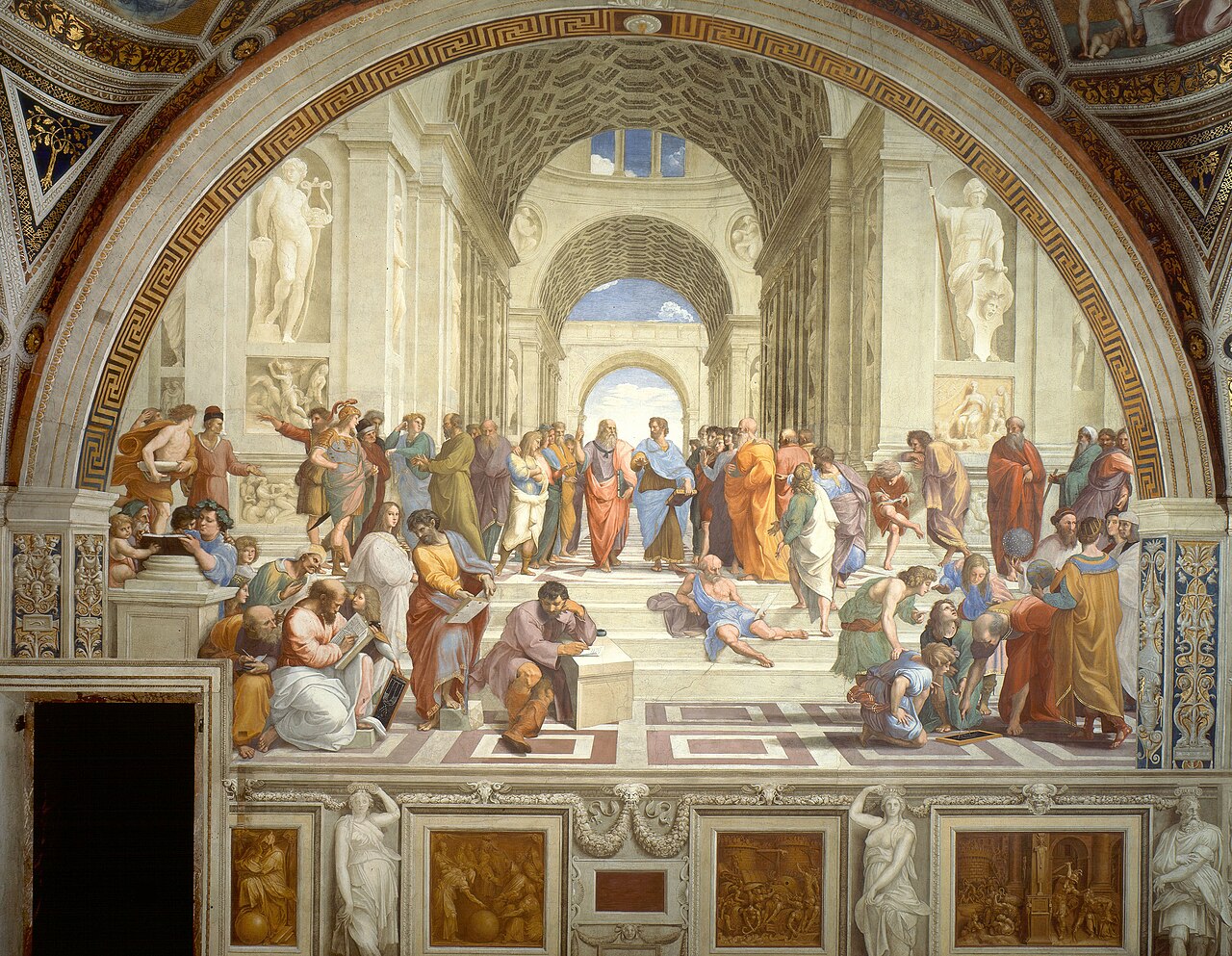
The painting shows how central Euclid's Elements remained to mathematics more than a thousand years after his death. By painting Pacioli actively demonstrating a Euclidean proof, the artist made the ancient textbook the visual centrepiece of Renaissance learning. Possible contributions by Leonardo da Vinci to the geometric solids shown link Euclid's legacy to some of the greatest minds of the Renaissance.
Look closer
- Why would Euclid's book still be the tool used to demonstrate mathematics over a thousand years later?
- What do the objects on the table tell us about Renaissance mathematics?
- Why is the identity of the second man still debated by historians?
This painting is part of the curated material that grounds the AI version of Euclid on Humy.ai — when students ask about related events, the AI can quote it and cite it.
More Euclid sources
Browse all 73 →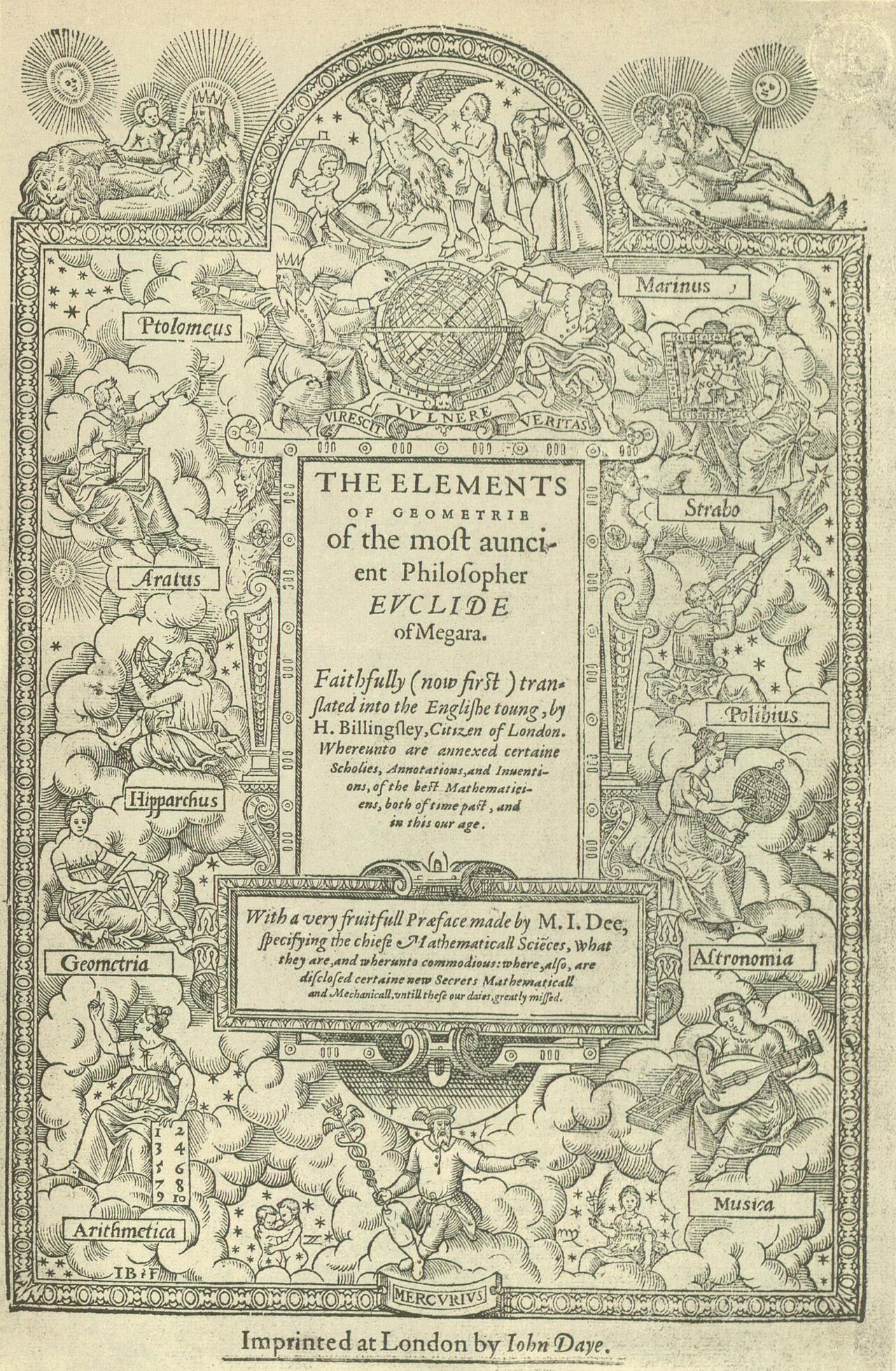 Book
Secondary source
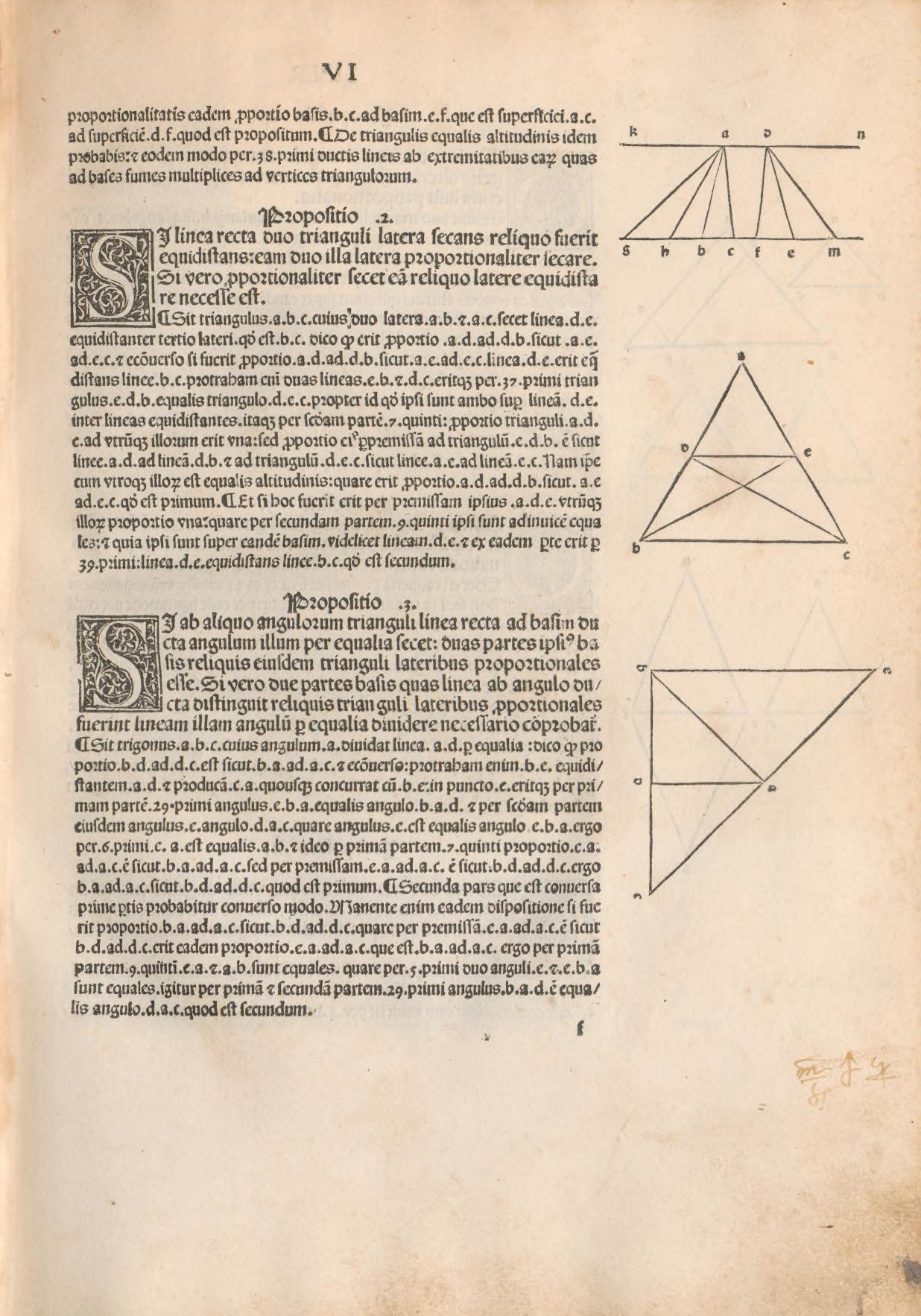
Elements
Euclid · c. 300 BC
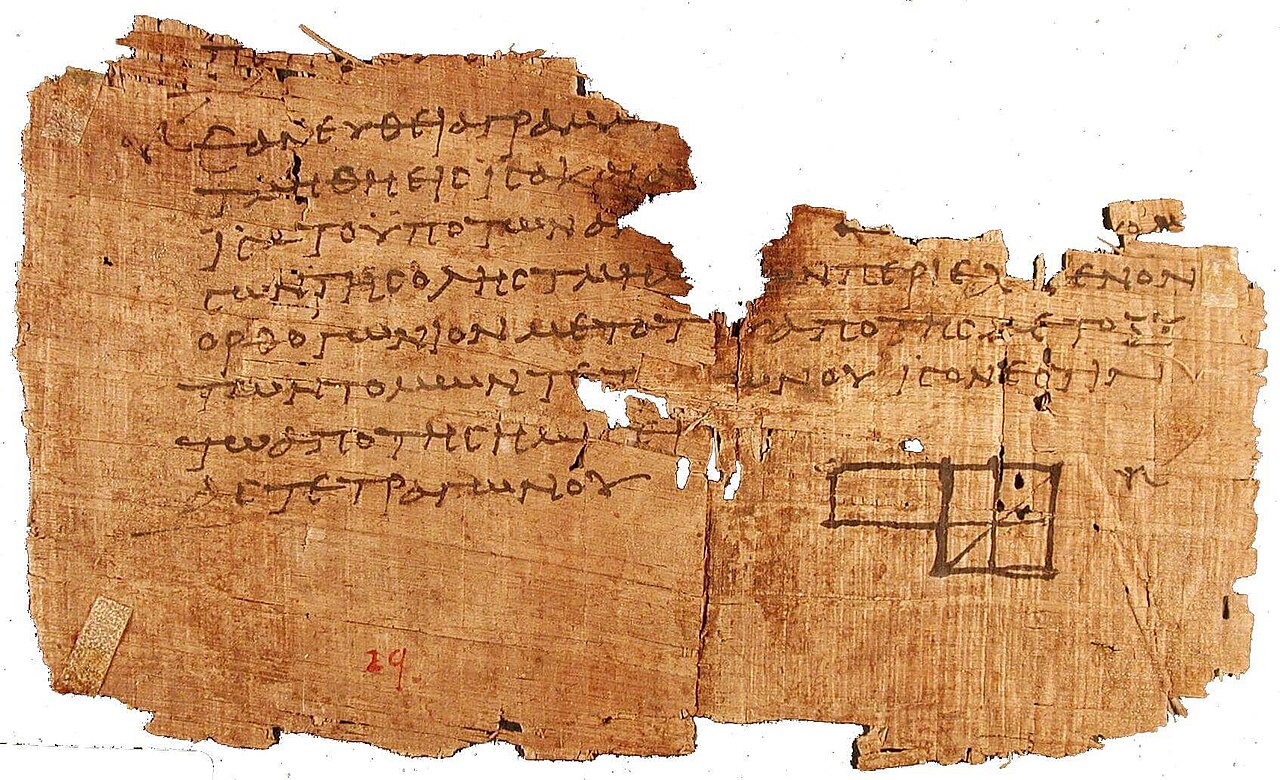 Document
Primary source
Papyrus Oxyrhynchus 29
Euclid · c. 75-125 AD
Secondary source
Commentary on the First Book of Euclid's Elements
Proclus · 5th century AD
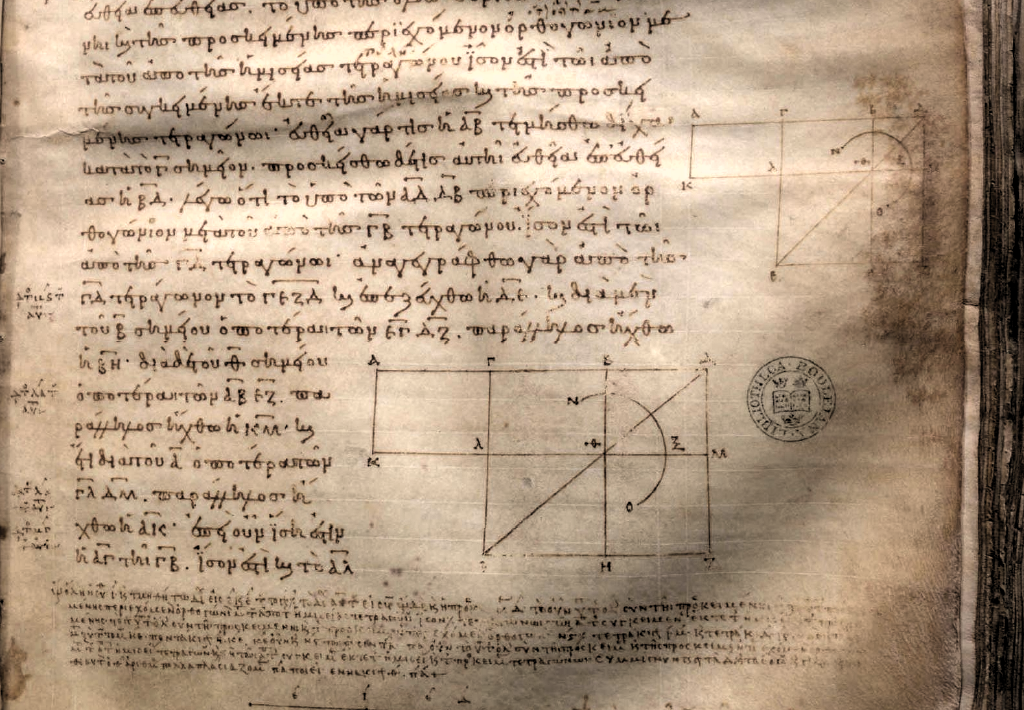 Document
Primary source
Bodleian Euclid Manuscript, 888 AD
Stephen the Clerk · 888 AD
Free account
Read every Euclid source
Sign up free →
Ready when you are
Start chatting with Euclid now.
20 messages free · No credit card · Available in 50+ languages.