


Secondary sourceSculpture2nd-1st century BC (Roman copy)
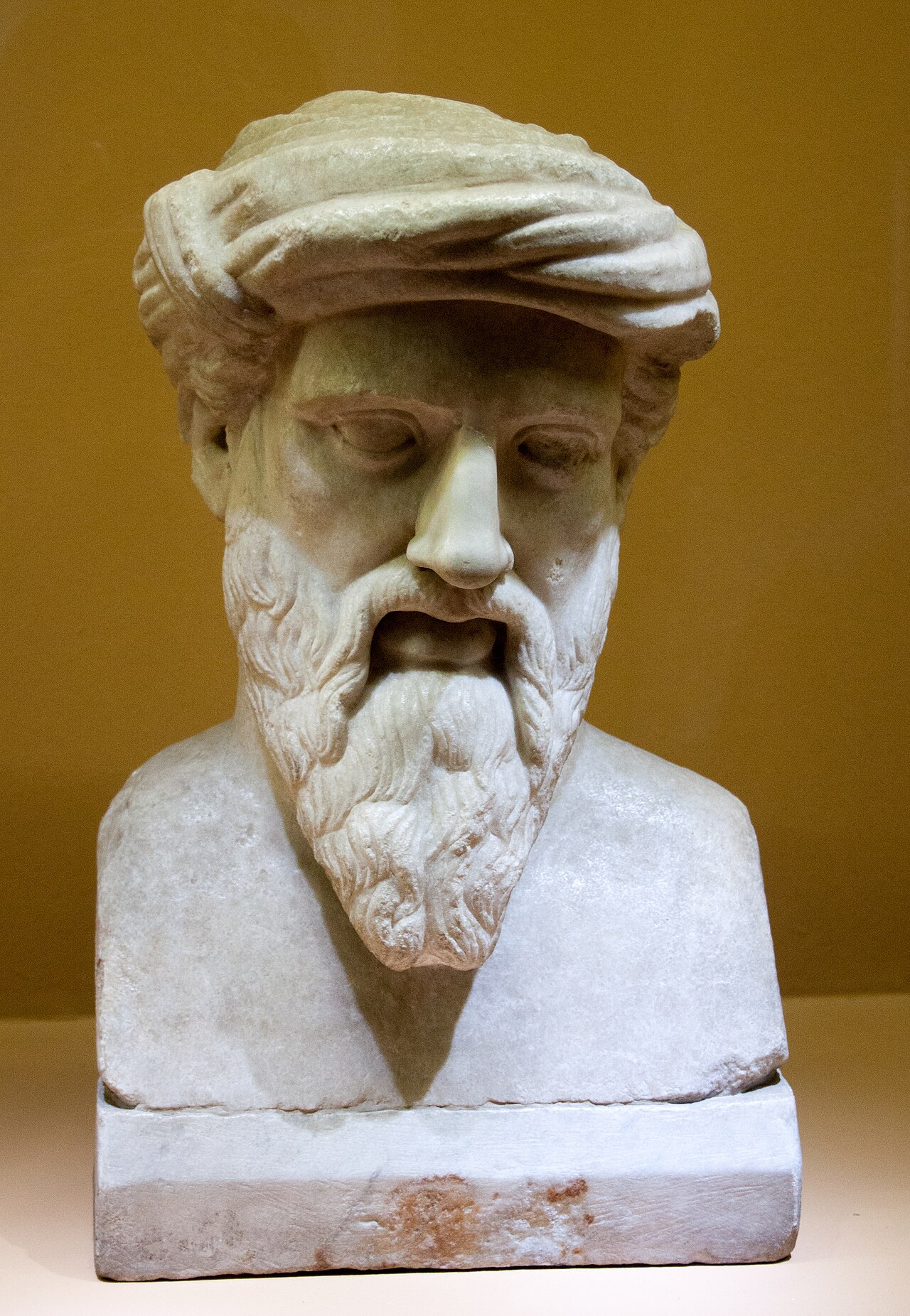
Portrait of Pythagoras
2nd-1st century BC (Roman copy)
A Roman marble bust in the Capitoline Museums representing an ancient Greek portrait type identified as Pythagoras, though not a true likeness made in his lifetime.
This standard ancient portrait type represents how later Greeks and Romans imagined Pythagoras's appearance.
About this source
What it is
This marble bust, held in the Capitoline Museums in Rome, is a Roman copy of a Greek original portrait type dating to the 2nd-1st century BC. It depicts a bearded man wearing a draped head covering, identified in the museum's collection as Pythagoras.
Why it matters
No portrait was made of Pythagoras during his own lifetime, so this bust represents a later Greek and Roman idea of what a wise philosopher should look like rather than his actual appearance. It shows how ancient cultures created and copied standardised images of famous thinkers long after they lived.
Look closer
- If this isn't a true likeness, why do you think ancient sculptors created a specific 'type' for Pythagoras's portrait?
- What details — the beard, the head covering, the expression — suggest the sculptor wanted to show wisdom or authority?
- Why do museums still label and display portraits like this as 'Pythagoras' even though they aren't exact likenesses?
This sculpture is part of the curated material that grounds the AI version of Pythagoras on Humy.ai — when students ask about related events, the AI can quote it and cite it.
More Pythagoras sources
Meet the AI Pythagoras → Book
Secondary source
Lives and Opinions of Eminent Philosophers, Book V (Life of Aristotle)
Diogenes Laërtius · c. 3rd century CE
 Book
Secondary source
Histories
Herodotus · c. 440 BCE
 Book
Secondary source
Metaphysics
Aristotle · c. 400 BCE
 Book
Secondary source
Life of Pythagoras
Porphyry · c. 270 AD
 Painting
Secondary source
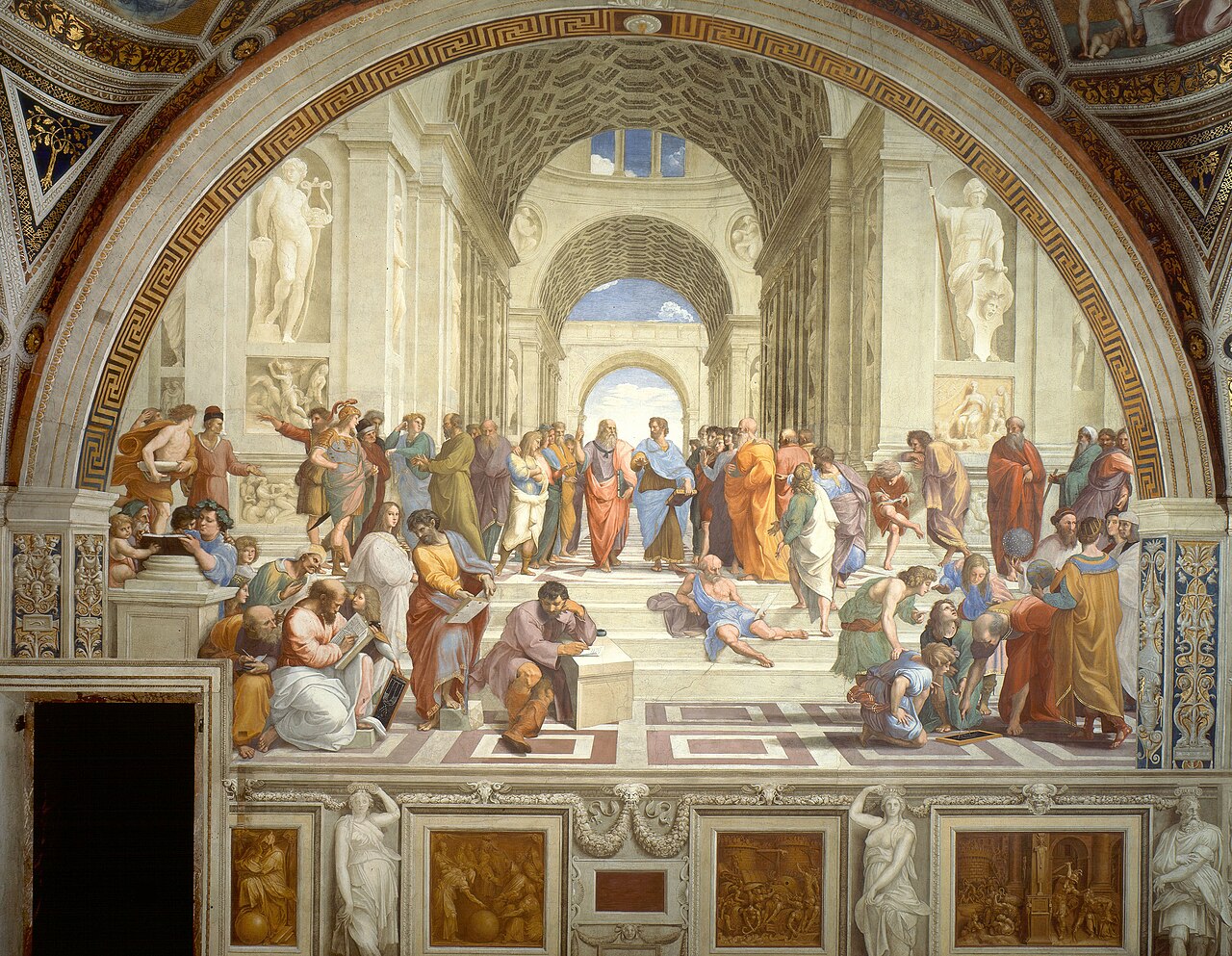
The School of Athens
Raphael · 1509-1511
Ready when you are
Start chatting with Pythagoras now.
20 messages free · No credit card · Available in 50+ languages.