


Primary sourcePainting1890 or 1891
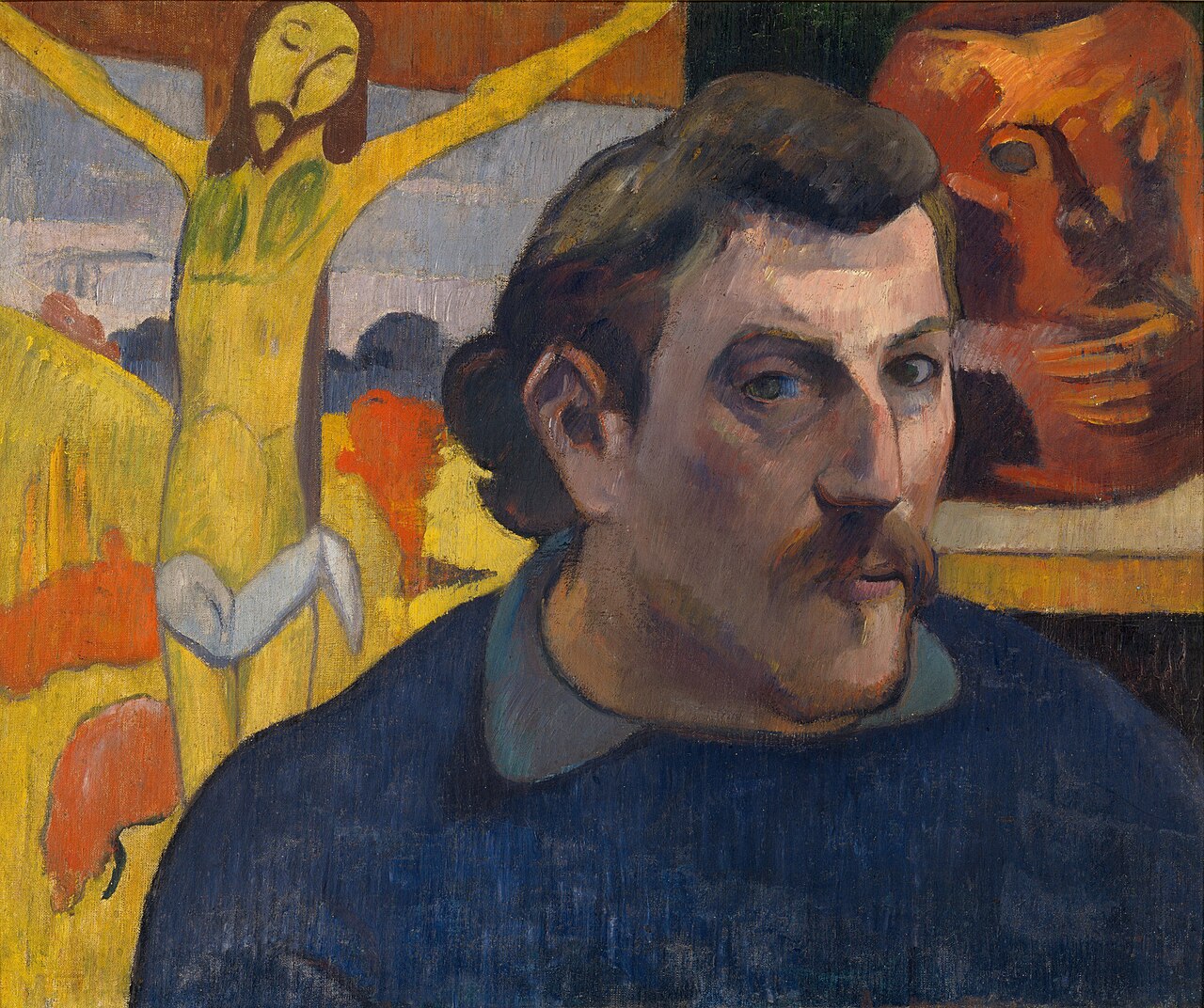
Portrait of the Artist with the Yellow Christ
Paul Gauguin · 1890 or 1891
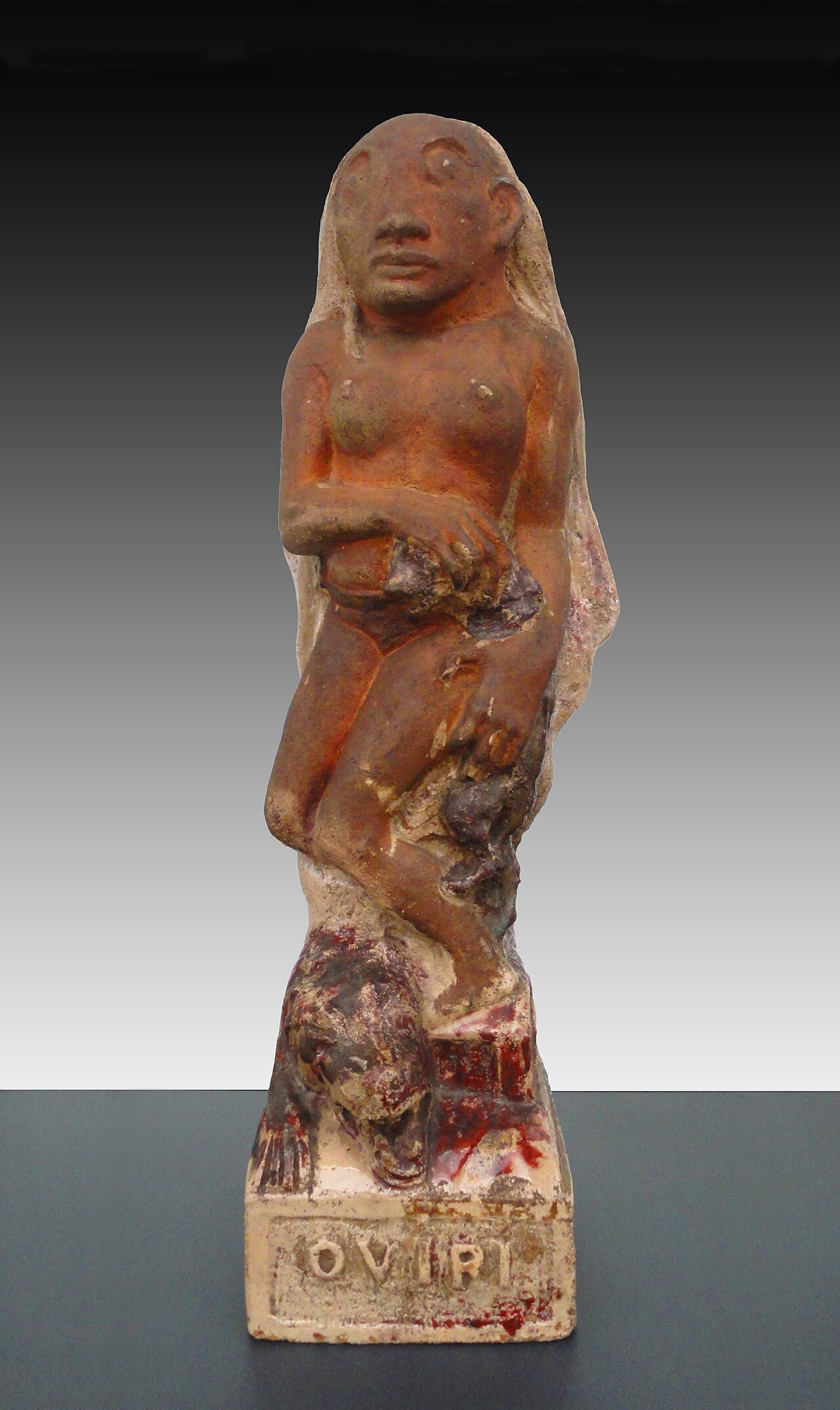
An 1890 self-portrait in which Gauguin places himself between two of his own earlier works, a painted Christ and a ceramic self-portrait jug.
A self-portrait by Gauguin, placing himself between his own earlier works as a statement about his identity as an artist.
About this source
What it is
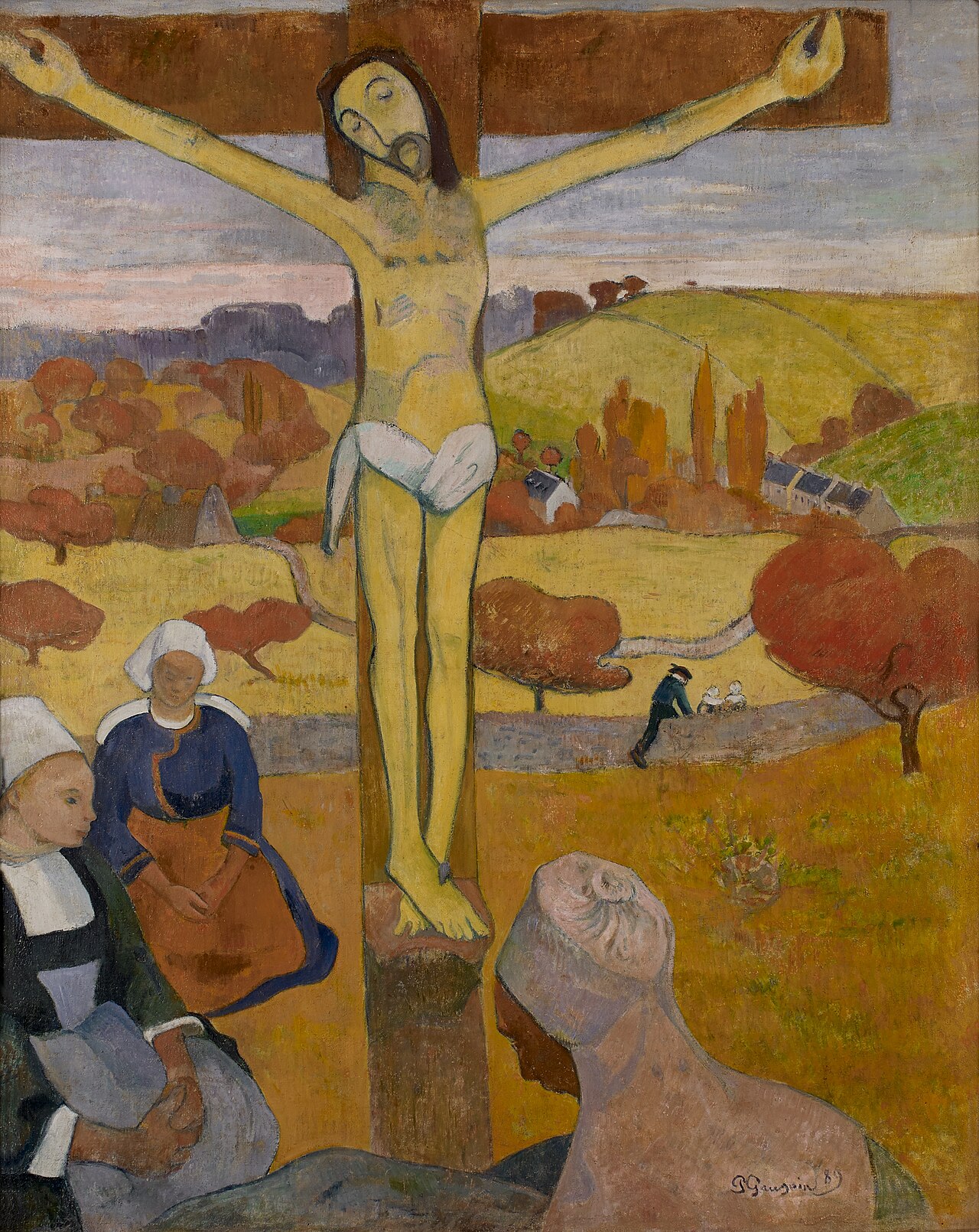
This painting, made by Paul Gauguin around 1890 or 1891 in Pont-Aven, Brittany, shows the artist between two of his own artworks: his painting The Yellow Christ and a grotesque ceramic self-portrait jug. It is now in the Musée d'Orsay in Paris.
Why it matters
Gauguin often used the figure of Christ as a stand-in for himself, so this picture works as a triple self-portrait. Made just before he left for Tahiti, it belongs to a group of religious-themed works and shows him placing himself at the centre of his own art and ideas about suffering and identity. The work later influenced artists exploring colonial and cultural themes.
Look closer
- Why might Gauguin have painted himself alongside his own artworks rather than alone?
- What might the Yellow Christ and the ceramic jug tell us about how Gauguin saw himself?
- What does this self-portrait choose to show, and what does it leave out about his life?
This painting is part of the curated material that grounds the AI version of Paul Gauguin on Humy.ai — when students ask about related events, the AI can quote it and cite it.
More Paul Gauguin sources
Browse all 97 →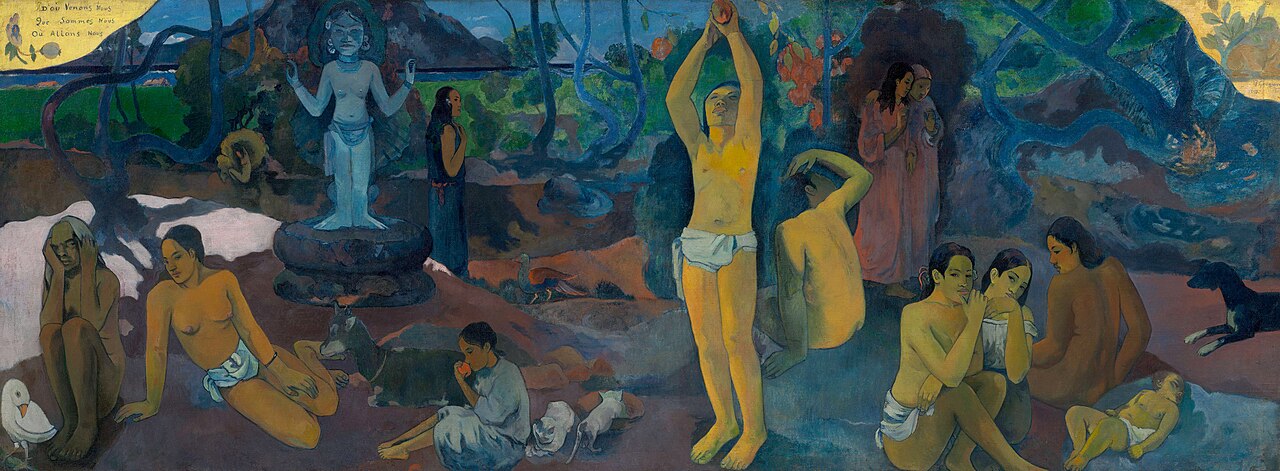 Painting
Primary source
Where Do We Come From? What Are We? Where Are We Going?
Paul Gauguin · 1897-98
 Painting
Primary source
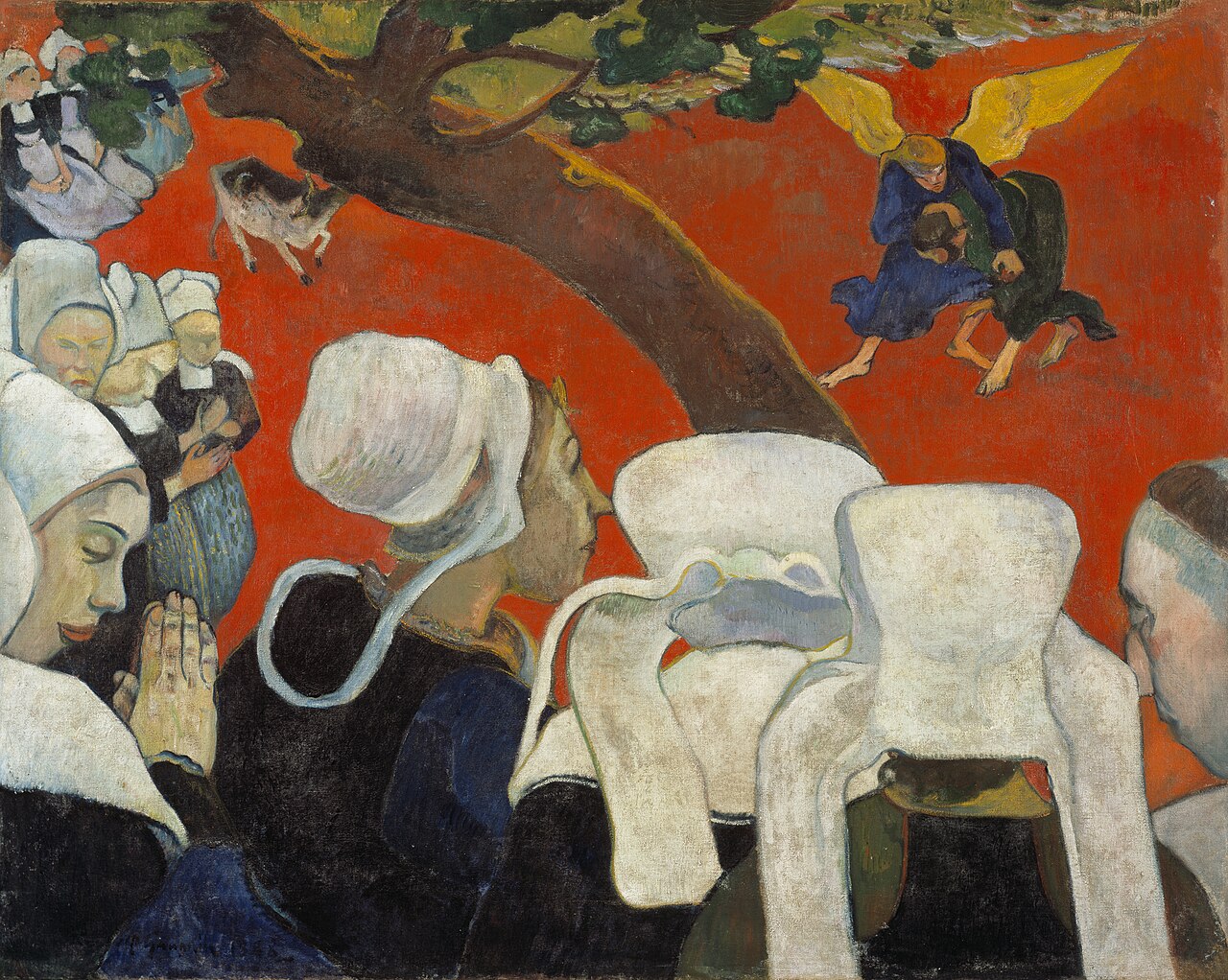
Vision After the Sermon
Paul Gauguin · 1888
 Painting
Primary source
The Yellow Christ
Paul Gauguin · 1889
 Painting
Primary source
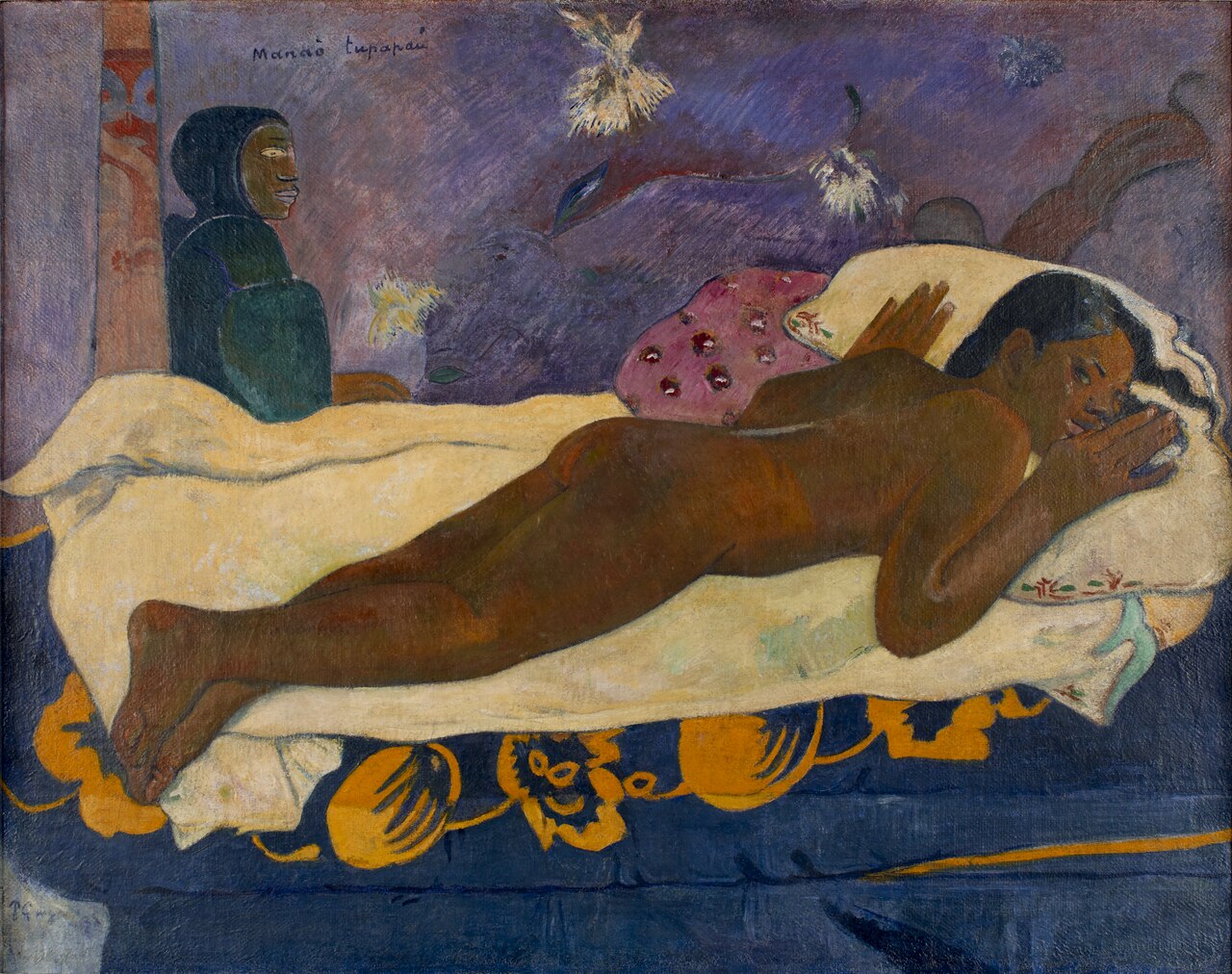
Manaò tupapaú
Paul Gauguin · 1892
Free account
Read every Paul Gauguin source
Sign up free →
Ready when you are
Start chatting with Paul Gauguin now.
20 messages free · No credit card · Available in 50+ languages.