


Primary sourcePaintingsecond half of the 17th century
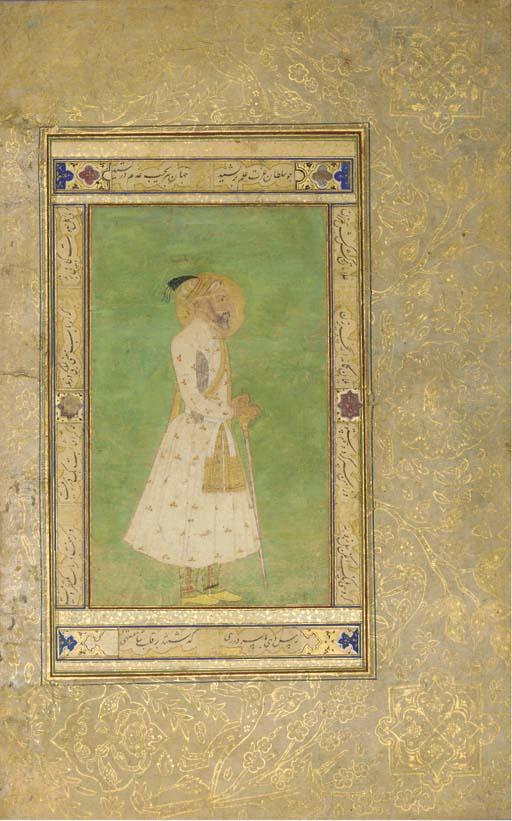
Portrait of the Emperor Aurangzeb
'Abd al-Rashid al-Dailami · second half of the 17th century
A gouache album-leaf portrait of Aurangzeb standing with a sword, made by a Mughal court painter in the late 17th century.
This signed album-leaf portrait depicts Aurangzeb standing with a sword, created by a named Mughal court painter.
About this source
What it is
This is a painted leaf from an album, showing Emperor Aurangzeb standing and holding a sword. It is done in gouache with gold highlights on paper, surrounded by decorated calligraphic borders with animals and birds, and signed by the artist 'Abd al-Rashid al-Dailami.
Why it matters
Album portraits like this were collected and treasured by Mughal elites, showing both the skill of court painters and the way emperors wanted to be remembered. The signature of the artist reminds us that these images were carefully crafted works, not snapshots.
Look closer
- Why might an artist sign a portrait of the emperor rather than leave it anonymous?
- What do the decorative borders and calligraphy add to the meaning of the painting?
- What is emphasised about Aurangzeb's appearance, and what might be left out?
This painting is part of the curated material that grounds the AI version of Aurangzeb on Humy.ai — when students ask about related events, the AI can quote it and cite it.
More Aurangzeb sources
Meet the AI Aurangzeb →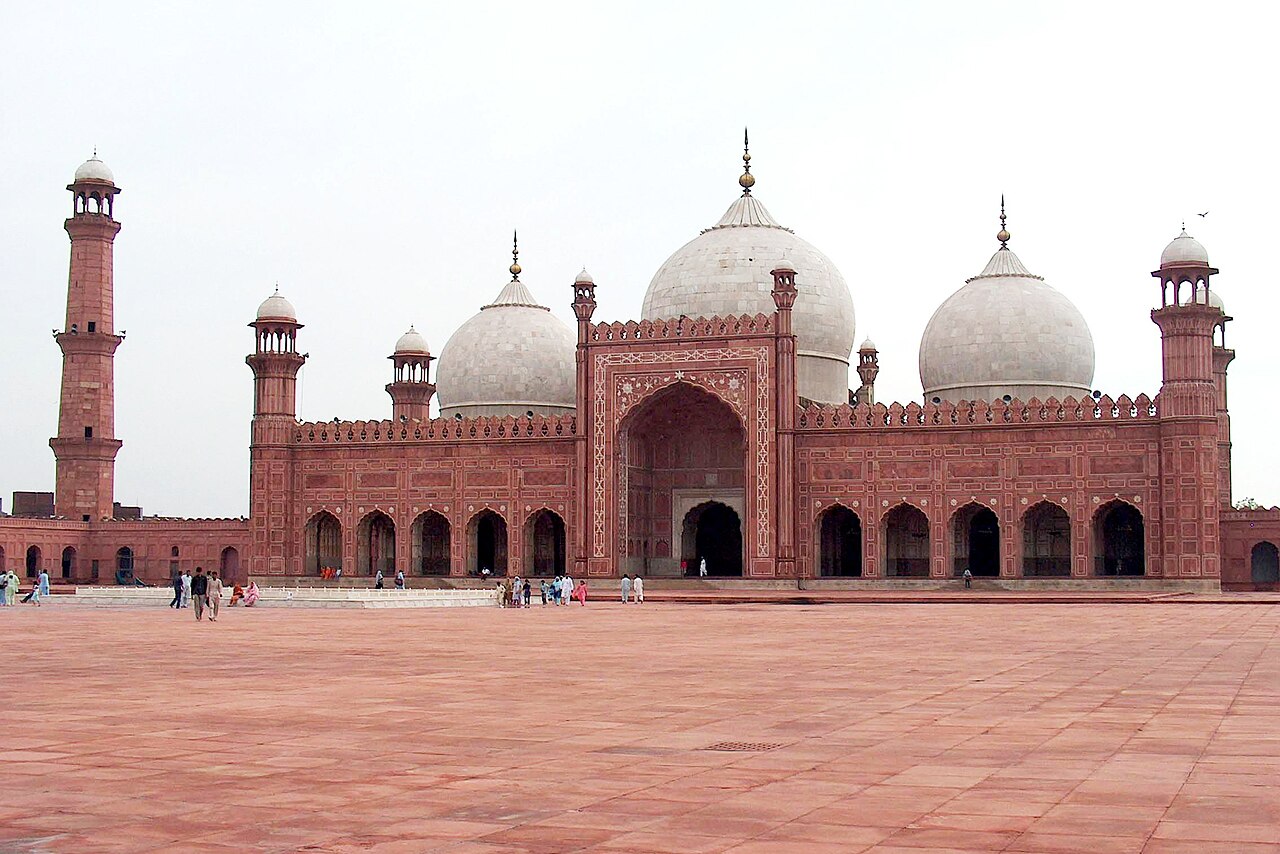 Artifact
Primary source
Badshahi Mosque
1671–1673
 Document
Primary source
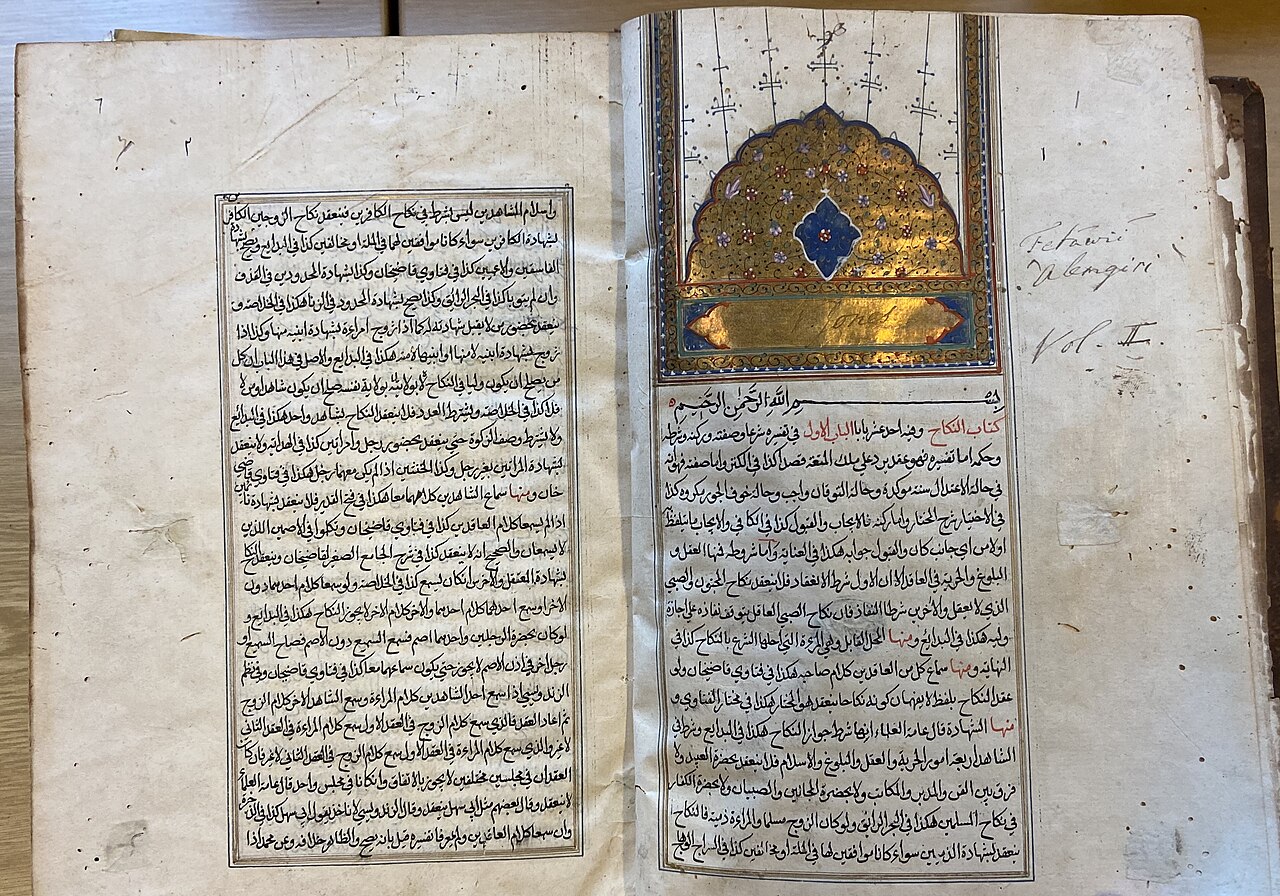
Fatawa-i Alamgiri Manuscript
17th century (this copy later recopied)
 Book
Secondary source
Maasir-i-Alamgiri
Saqi Musta'id Khan · c. 1710 (this copy 1763-1764)
Primary source
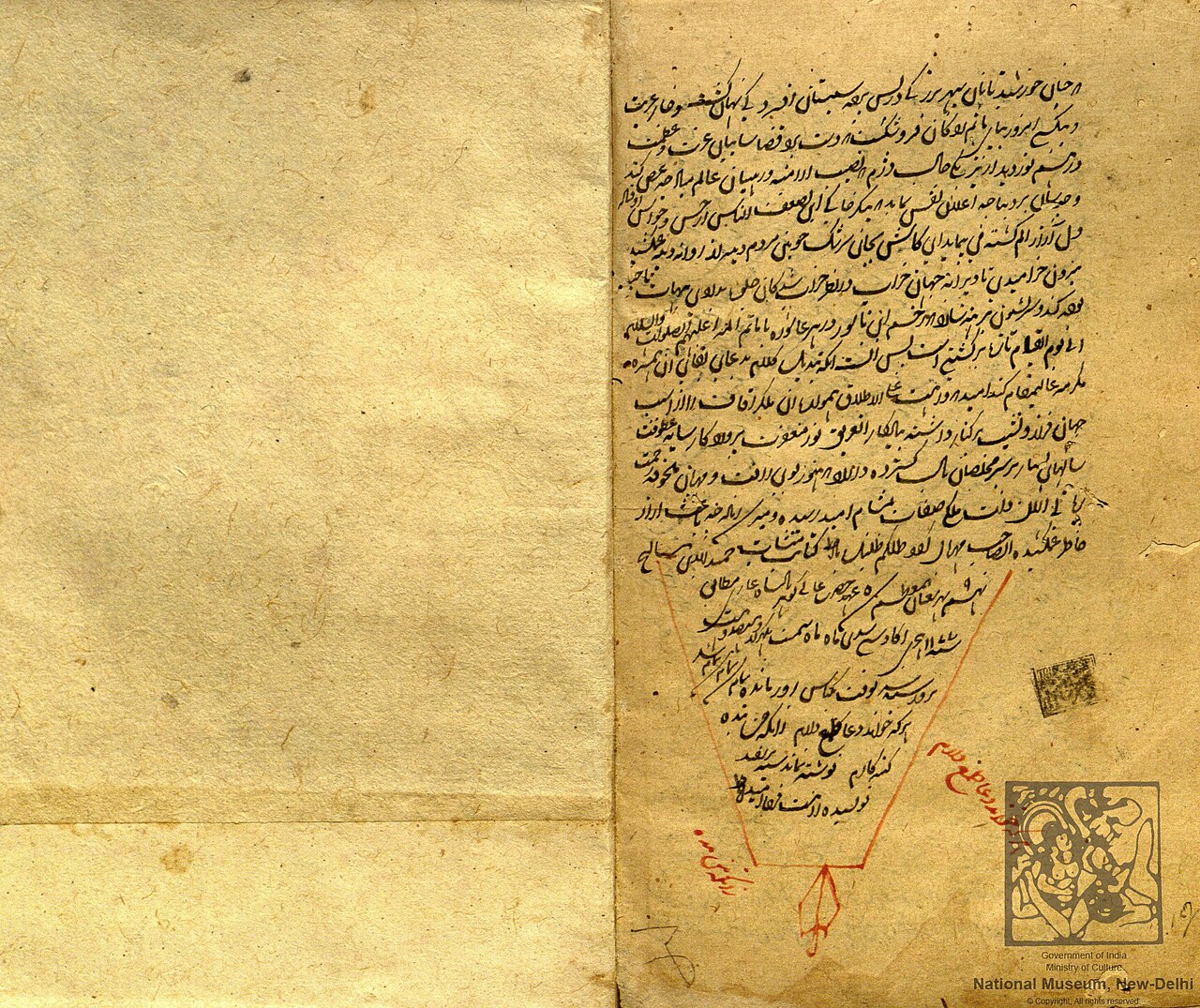
Ruka'at-i-Alamgiri
Aurangzeb · 17th century
 Letter
Primary source
Zafarnamah
Guru Gobind Singh · 1705
Ready when you are
Start chatting with Aurangzeb now.
20 messages free · No credit card · Available in 50+ languages.