


Secondary sourcePaintingc. 1580
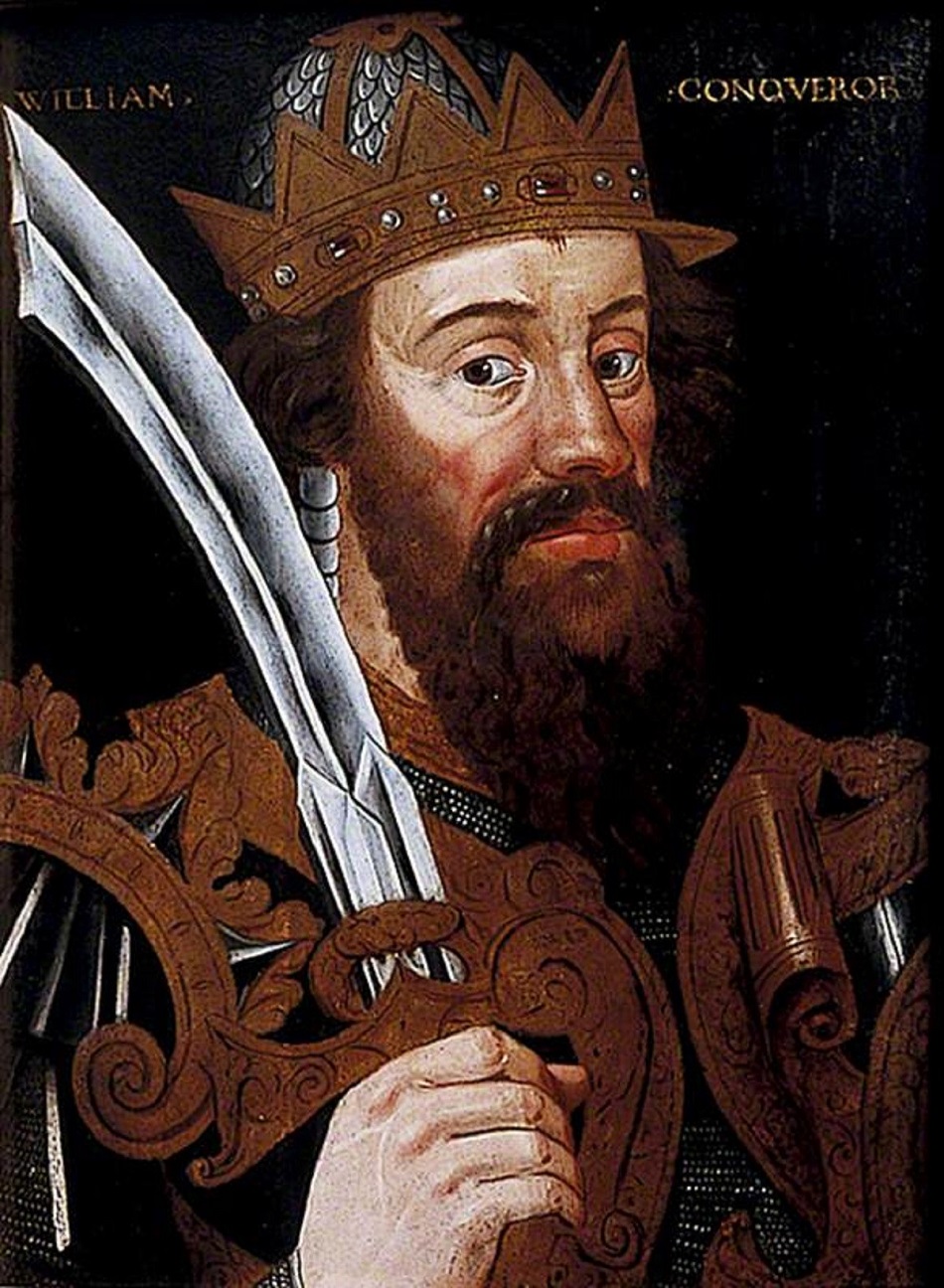
Portrait of William the Conqueror (c. 1580)
c. 1580
A sixteenth-century portrait of William, shown with a gold crown and a sword. It is the original version of a 1620 painting and is a later imagined likeness.
Shows how William's image was constructed for later viewers, rather than a likeness from his lifetime.
About this source
What it is
This is a painted portrait of a bearded man wearing a gold crown set with gems and a metal coif. He holds a silver sword with an ornate gilded hilt, and the labels WILLIAM and CONQUEROR appear at the top against a dark background. The catalogue dates it to about 1580 and describes it as the original version of a popular 1620 painting. The artist is unknown.
Why it matters
This portrait shows how later generations pictured William. He died in 1087, so no portrait of him was painted from life. Images like this one were made to present a king as powerful and to fix his image for later viewers, and the 1620 copy spread that picture further.
Look closer
- Which objects in the painting, such as the crown and sword, signal power to a viewer?
- Why might a painter in about 1580 choose to show William with these symbols?
- What can this portrait not tell us about the real William?
This painting is part of the curated material that grounds the AI version of William the Conqueror on Humy.ai — when students ask about related events, the AI can quote it and cite it.
More William the Conqueror sources
Browse all 89 →


Ready when you are
Start chatting with William the Conqueror now.
20 messages free · No credit card · Available in 50+ languages.