


Primary sourceSpeech8 January 1918
President Woodrow Wilson's 14 Points
Woodrow Wilson · 8 January 1918
Wilson's January 1918 address to Congress proposing fourteen principles for ending World War I and building lasting peace.
Wilson delivered this address himself, making it the clearest statement of his personal vision for peace after World War I.
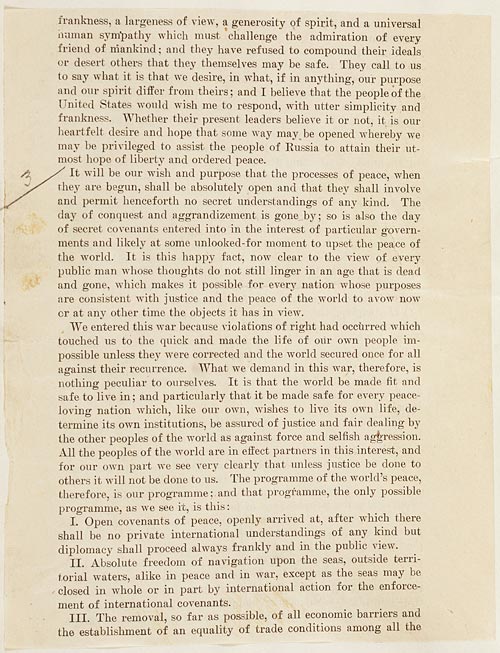
About this source
What it is
This is the printed text of a speech President Woodrow Wilson delivered to Congress on January 8, 1918. In it he laid out fourteen points meant to guide the end of World War I and future peace. It is held by the U.S. National Archives among Senate records.
Why it matters
The speech called for open diplomacy, freedom of the seas, removal of economic barriers, self-determination for peoples, and a league of nations. It became the basis many hoped would guide the peace talks after the war, though Allied leaders later rejected much of it. It shows Wilson's idealistic vision for world order and his belief that America should help reshape international relations.
Look closer
- Why might Wilson have wanted to list his goals so publicly, rather than negotiate secretly?
- Which points seem most idealistic, and which seem most practical?
- What does the gap between this speech and the actual peace treaty tell us about the limits of one leader's vision?
This speech is part of the curated material that grounds the AI version of Woodrow Wilson on Humy.ai — when students ask about related events, the AI can quote it and cite it.
More Woodrow Wilson sources
Meet the AI Woodrow Wilson →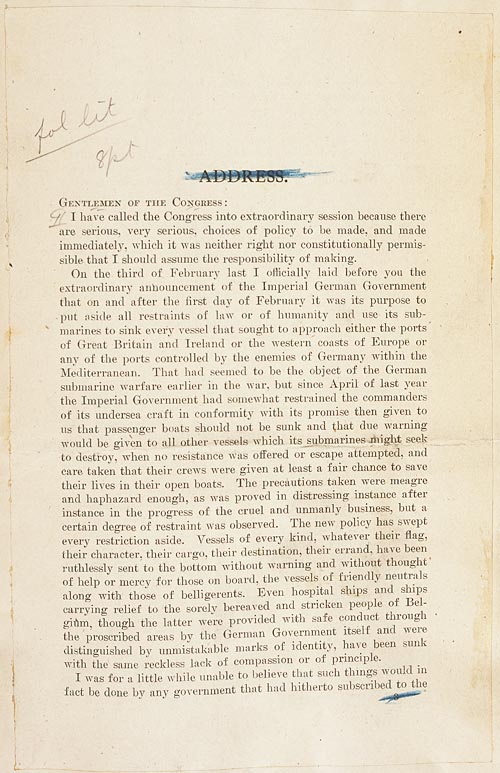 Speech
Primary source
Joint Address to Congress Leading to a Declaration of War Against Germany
Woodrow Wilson · 2 April 1917
Primary source
Covenant of the League of Nations
28 June 1919
 Document
Primary source
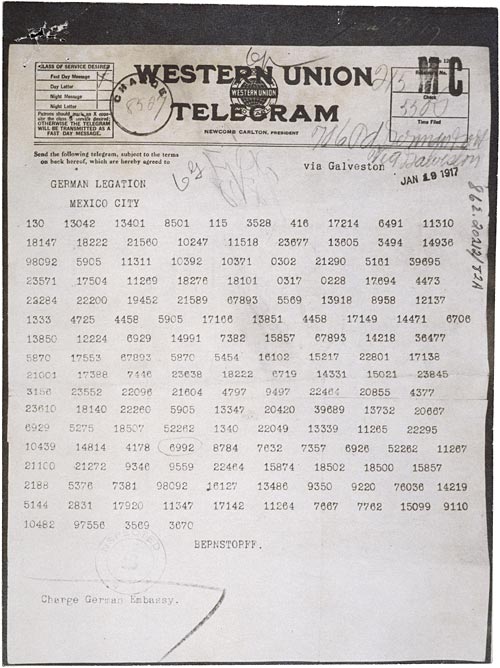
Zimmermann Telegram
Arthur Zimmermann · 1917
Primary source
Recording of the Voice of Woodrow Wilson
Woodrow Wilson · 7 August 1912
Primary source
League of Nations Address at Pueblo
Woodrow Wilson · 25 September 1919
Ready when you are
Start chatting with Woodrow Wilson now.
20 messages free · No credit card · Available in 50+ languages.