


Primary sourceDocument1917
Zimmermann Telegram
Arthur Zimmermann · 1917
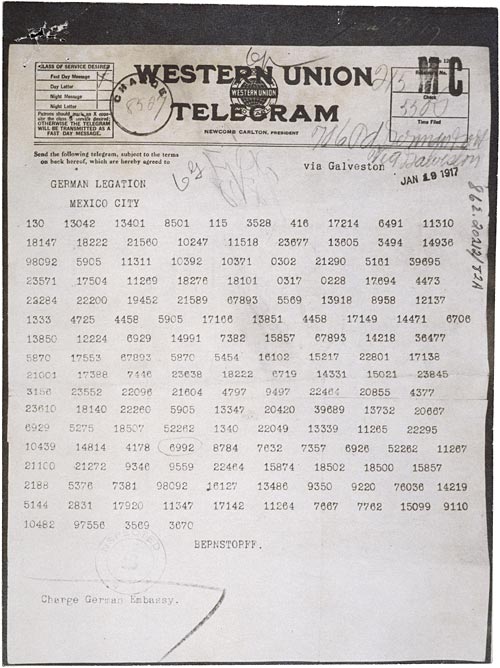
An intercepted 1917 German proposal for a military alliance with Mexico against the United States, which helped push Wilson toward declaring war.
This intercepted telegram, revealed to Wilson in 1917, pushed him and American public opinion toward declaring war on Germany.
About this source
What it is
This is a coded telegram sent in January 1917 by German Foreign Secretary Arthur Zimmermann to the German minister in Mexico, proposing a military alliance against the United States if the U.S. entered World War I. It is held by the U.S. National Archives.
Why it matters
British codebreakers intercepted and decoded the telegram, which was released to President Wilson and published in American newspapers in March 1917. The threat of a German-Mexican alliance against the United States outraged public opinion and helped move Congress toward declaring war on Germany weeks later. The document shows how intelligence and secret diplomacy could shape a president's decisions and a nation's path to war.
Look closer
- Why did the British wait before showing Wilson the telegram?
- How might ordinary Americans have reacted to learning of this proposal?
- What does this episode reveal about the role of secret communications in diplomacy and war?
This document is part of the curated material that grounds the AI version of Woodrow Wilson on Humy.ai — when students ask about related events, the AI can quote it and cite it.
More Woodrow Wilson sources
Meet the AI Woodrow Wilson →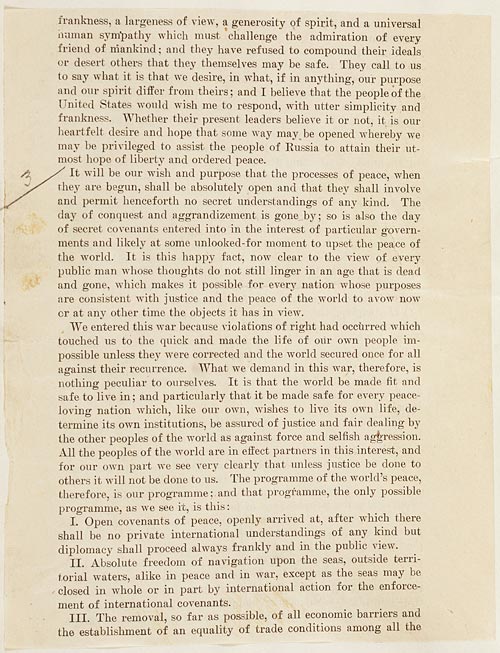 Speech
Primary source
President Woodrow Wilson's 14 Points
Woodrow Wilson · 8 January 1918
 Speech
Primary source
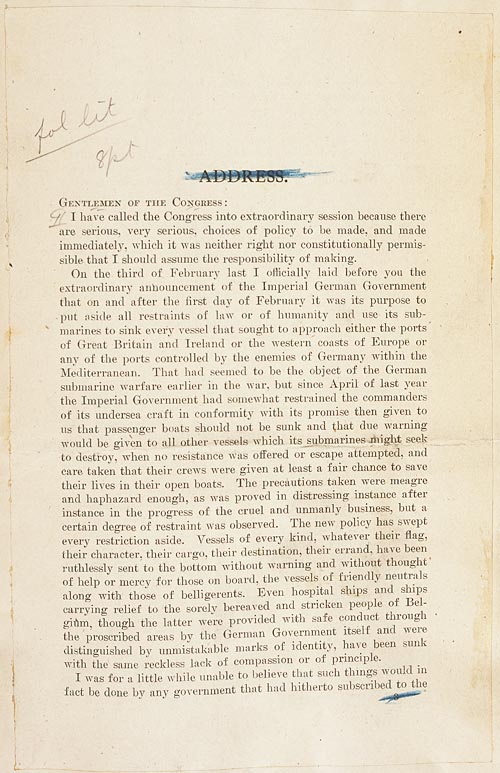
Joint Address to Congress Leading to a Declaration of War Against Germany
Woodrow Wilson · 2 April 1917
Primary source
Covenant of the League of Nations
28 June 1919
Primary source
Recording of the Voice of Woodrow Wilson
Woodrow Wilson · 7 August 1912
Primary source
League of Nations Address at Pueblo
Woodrow Wilson · 25 September 1919
Ready when you are
Start chatting with Woodrow Wilson now.
20 messages free · No credit card · Available in 50+ languages.