


Secondary sourceSculpture
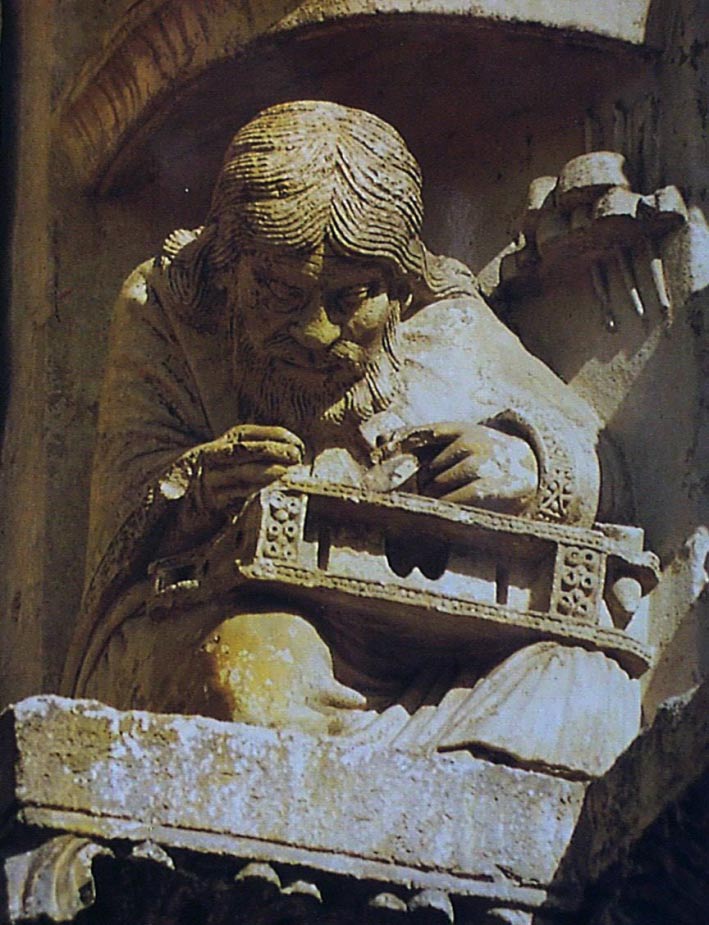
Pythagoras at Chartres Cathedral
Jean-Louis Lascoux
A medieval stone carving at Chartres Cathedral shows Pythagoras personifying Music among the liberal arts.
Depicts Pythagoras as the medieval personification of Music, showing his lasting reputation centuries after his death.
About this source
What it is
This sculpture is part of the Royal Portal of Chartres Cathedral, carved in the 12th century. It shows a bearded man working with both hands on a box-like instrument, representing Pythagoras as the personification of Music, one of the seven liberal arts.
Why it matters
By placing Pythagoras among the liberal arts carved on a cathedral, medieval builders showed how his name had become tied to the study of music and mathematics within Christian education. It reveals how ancient Greek thinkers were absorbed into medieval learning centuries after they lived.
Look closer
- What is Pythagoras doing with his hands in this carving, and what might that represent?
- Why would a cathedral include a figure from ancient Greece among its sculptures?
- What does this tell us about which parts of Pythagoras's reputation survived into the Middle Ages?
This sculpture is part of the curated material that grounds the AI version of Pythagoras on Humy.ai — when students ask about related events, the AI can quote it and cite it.
More Pythagoras sources
Meet the AI Pythagoras → Book
Secondary source
Lives and Opinions of Eminent Philosophers, Book V (Life of Aristotle)
Diogenes Laërtius · c. 3rd century CE
 Book
Secondary source
Histories
Herodotus · c. 440 BCE
 Painting
Secondary source
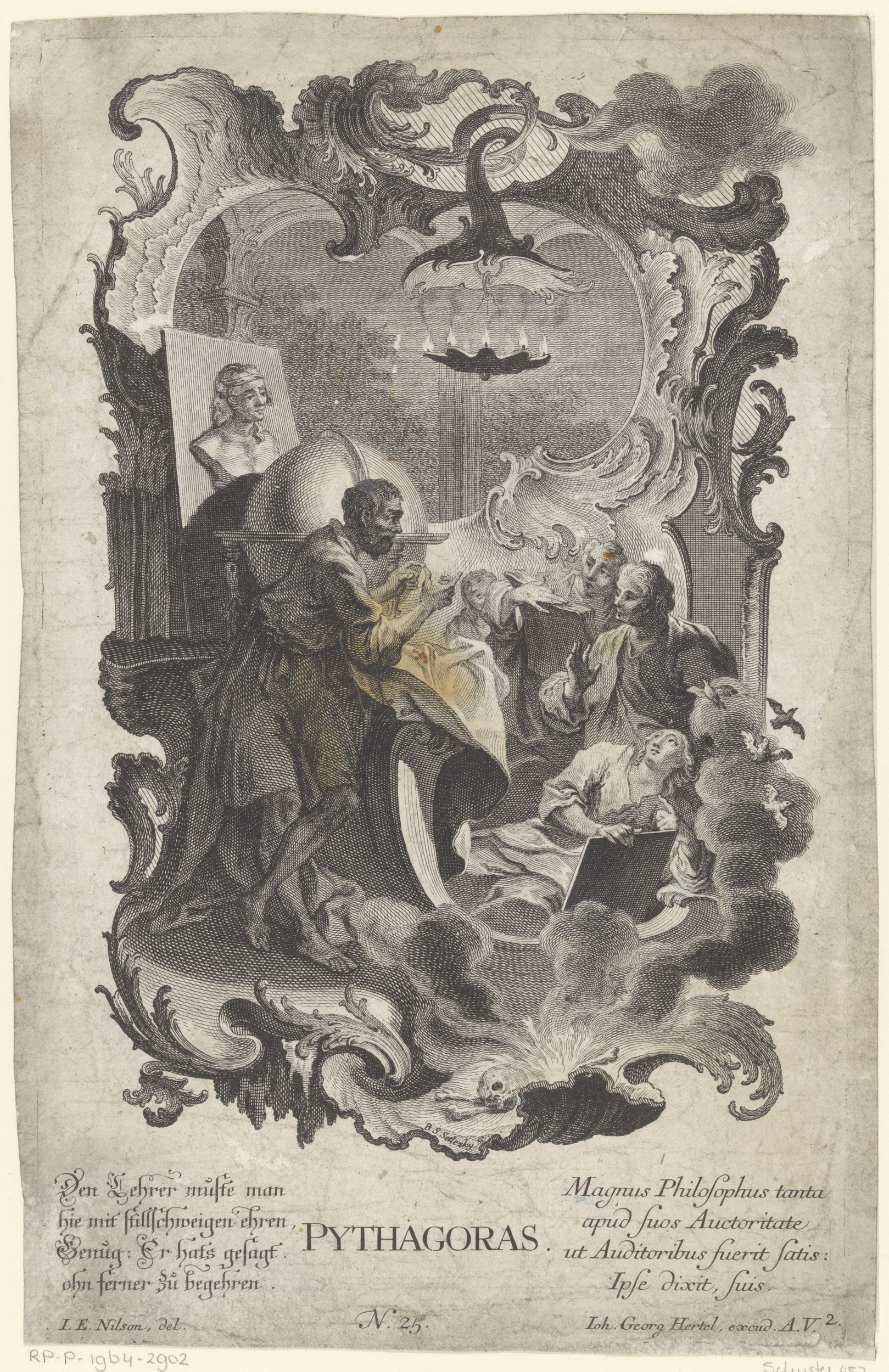
Pythagoras Leaning on a Globe with Four Listeners
 Book
Secondary source
Metaphysics
Aristotle · c. 400 BCE
 Painting
Secondary source
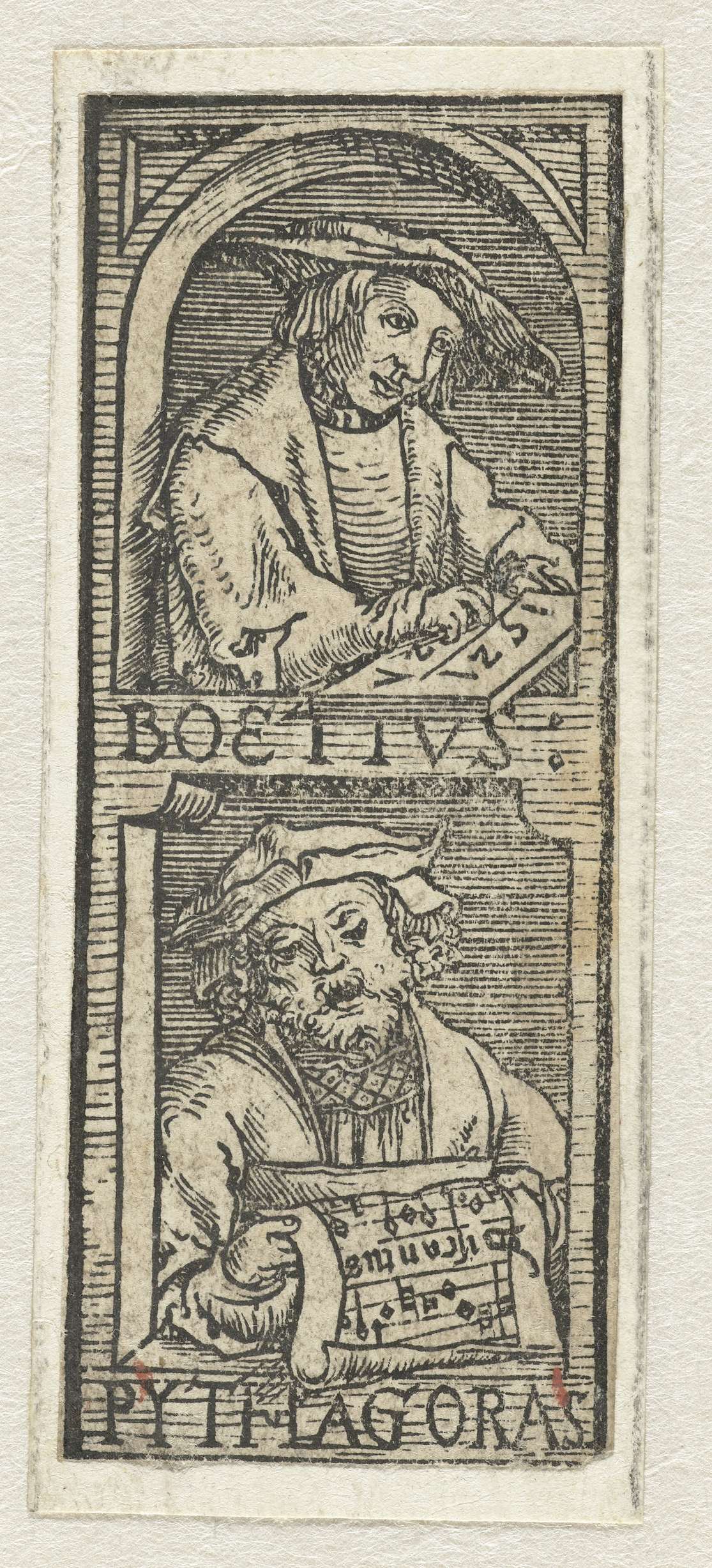
Boethius and Pythagoras
1521
Ready when you are
Start chatting with Pythagoras now.
20 messages free · No credit card · Available in 50+ languages.