


Secondary sourcePainting
Pythagoras etching by Remondini
Remondini
An etched portrait of Pythagoras with Italian verse below. It is a later imagined likeness, not a contemporary portrait.
A later printed portrait of Pythagoras, showing how his image was imagined and reproduced for readers long after his death.
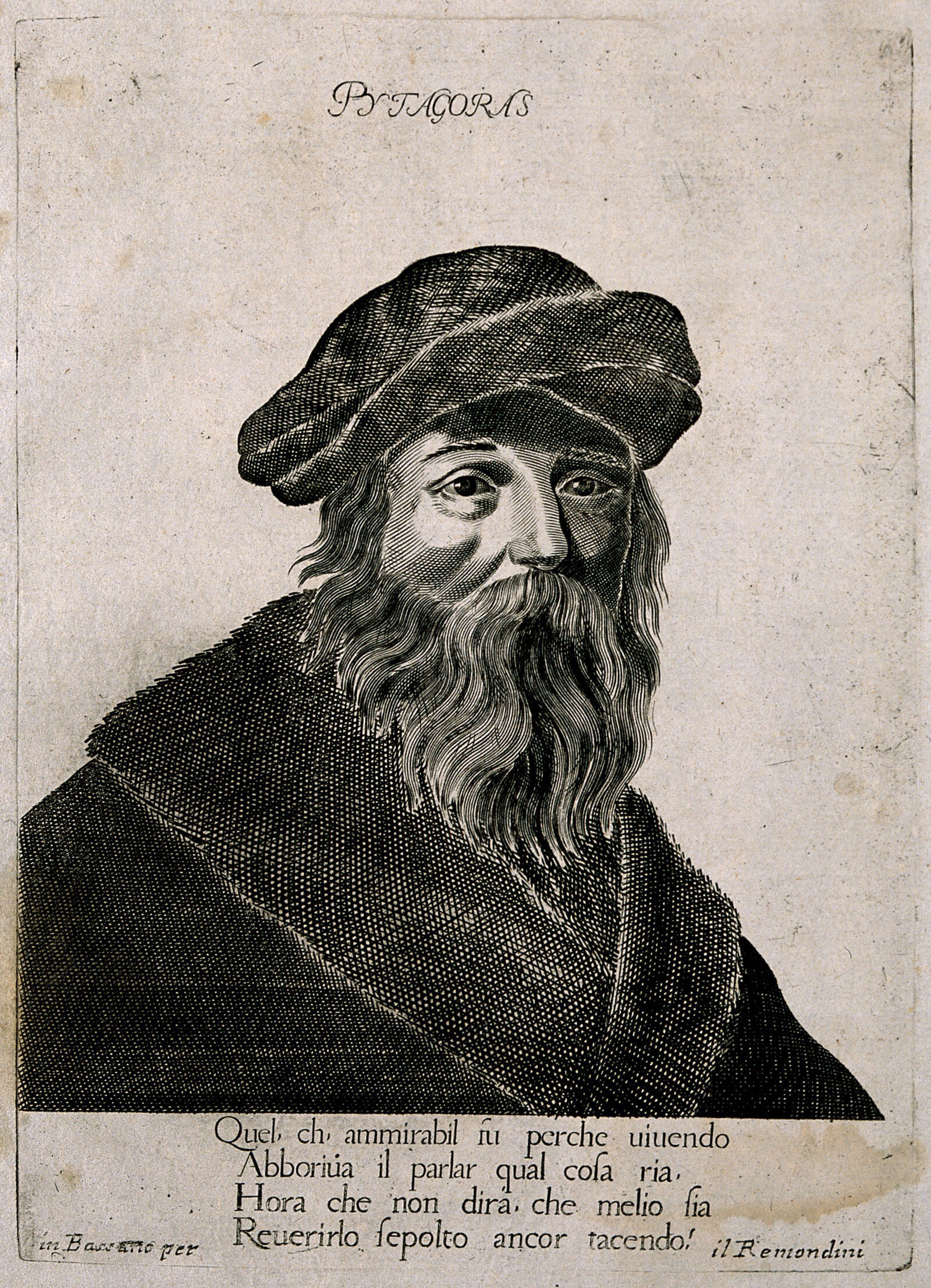
About this source
What it is
This is an engraved portrait print of a bearded man wearing a cap with a wide brim and a heavy cloak, turned three-quarters to the viewer. The word PYTHAGORAS is inscribed above, and four lines of Italian verse appear below, with signatures in the lower corners. The print is an etching by Remondini and is held by the Wellcome Collection in London.
Why it matters
The print is a later artistic imagining of Pythagoras, who lived around 570 to 495 BCE. Curators note that it is not a contemporary likeness. Prints like this one were copied and sold, so they spread a picture of a famous thinker to readers who could never have seen him. The Italian verse shows how the image was framed for a reader of that language.
Look closer
- How does the artist show Pythagoras, through his clothing, pose and expression?
- What might the Italian verse tell us about why this portrait was made and who it was for?
- What can we not know about Pythagoras from an image made so long after his lifetime?
This painting is part of the curated material that grounds the AI version of Pythagoras on Humy.ai — when students ask about related events, the AI can quote it and cite it.
More Pythagoras sources
Meet the AI Pythagoras → Book
Secondary source
Lives and Opinions of Eminent Philosophers, Book V (Life of Aristotle)
Diogenes Laërtius · c. 3rd century CE
 Book
Secondary source
Histories
Herodotus · c. 440 BCE
 Painting
Secondary source
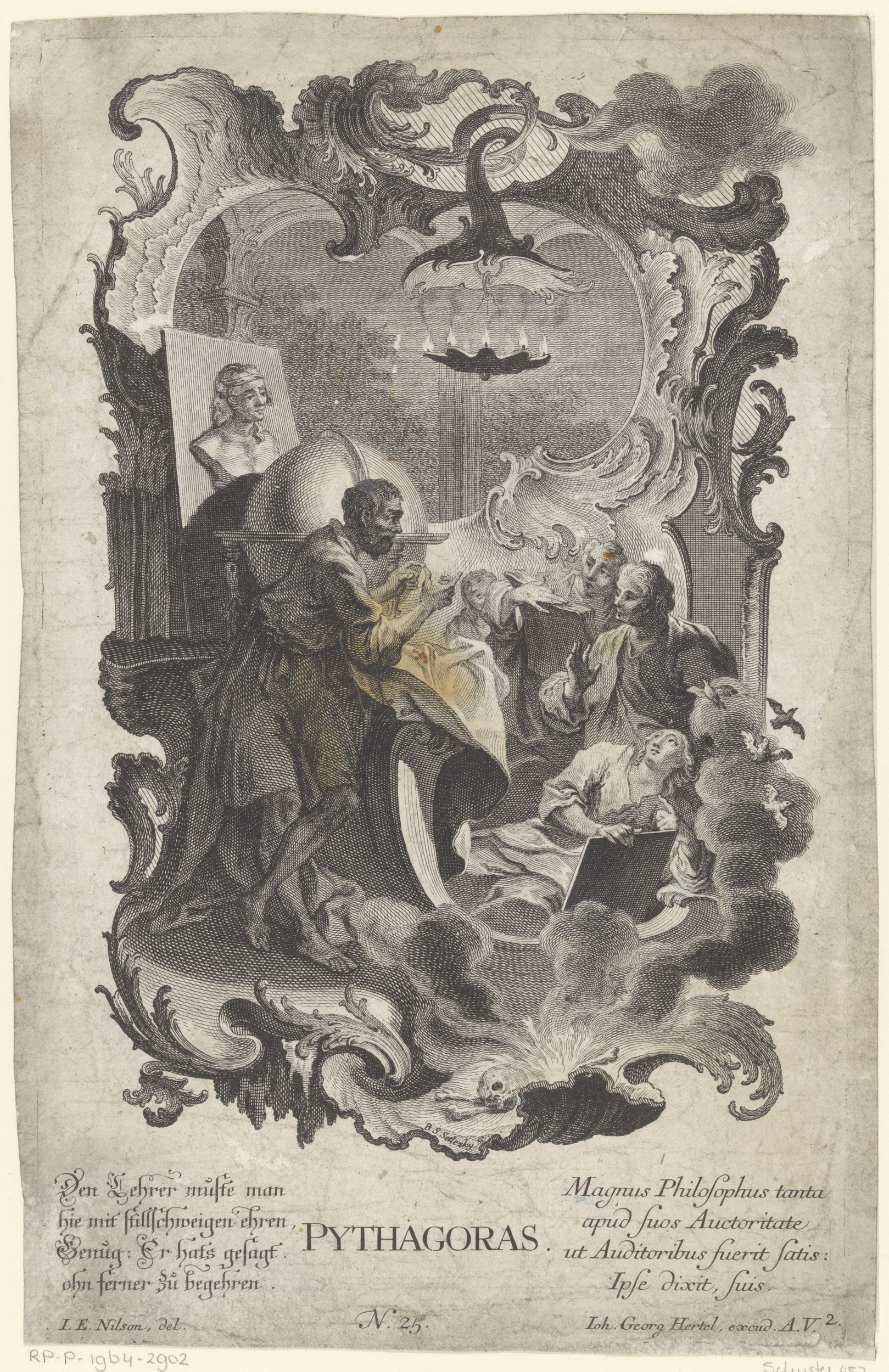
Pythagoras Leaning on a Globe with Four Listeners
 Book
Secondary source
Metaphysics
Aristotle · c. 400 BCE
 Painting
Secondary source
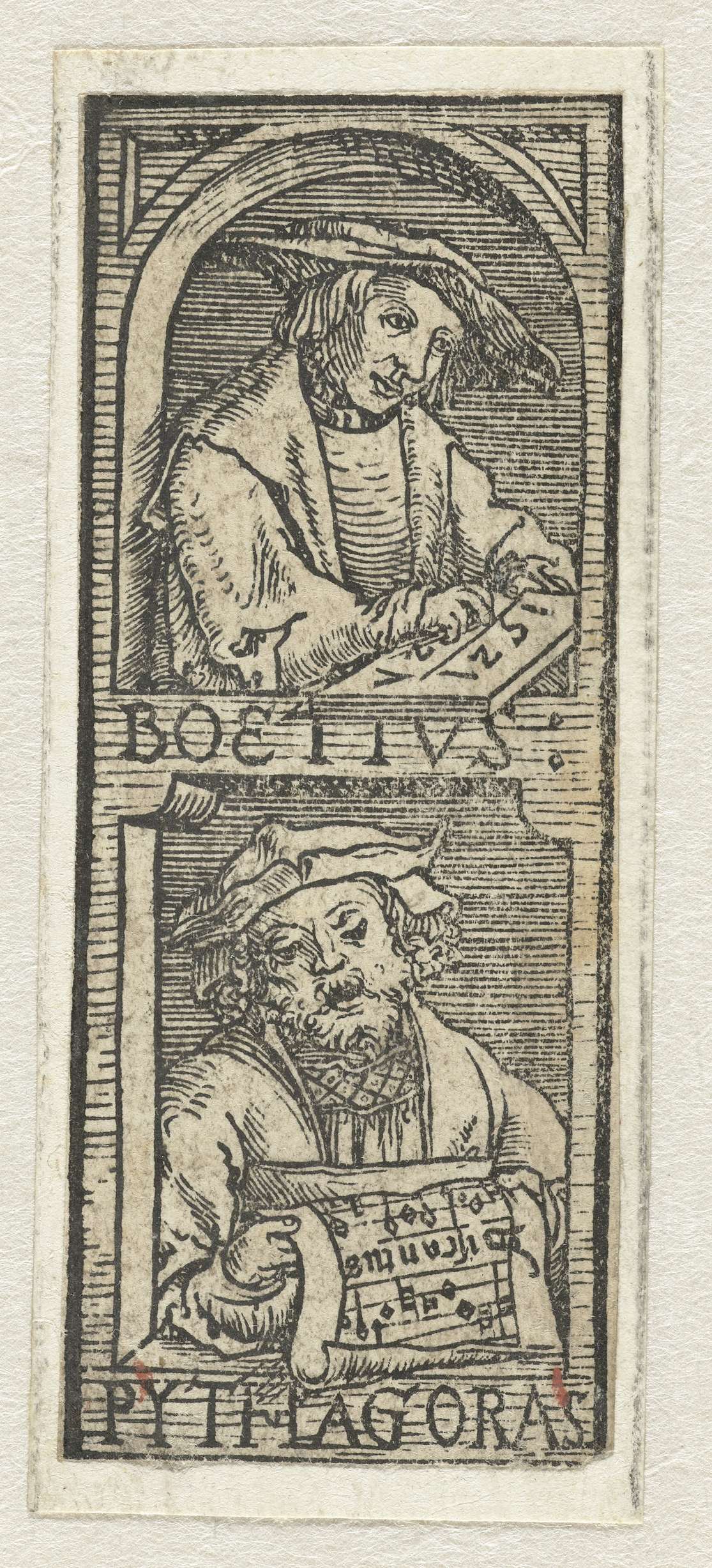
Boethius and Pythagoras
1521
Ready when you are
Start chatting with Pythagoras now.
20 messages free · No credit card · Available in 50+ languages.