


Secondary sourcePaintingc. 1220-1240
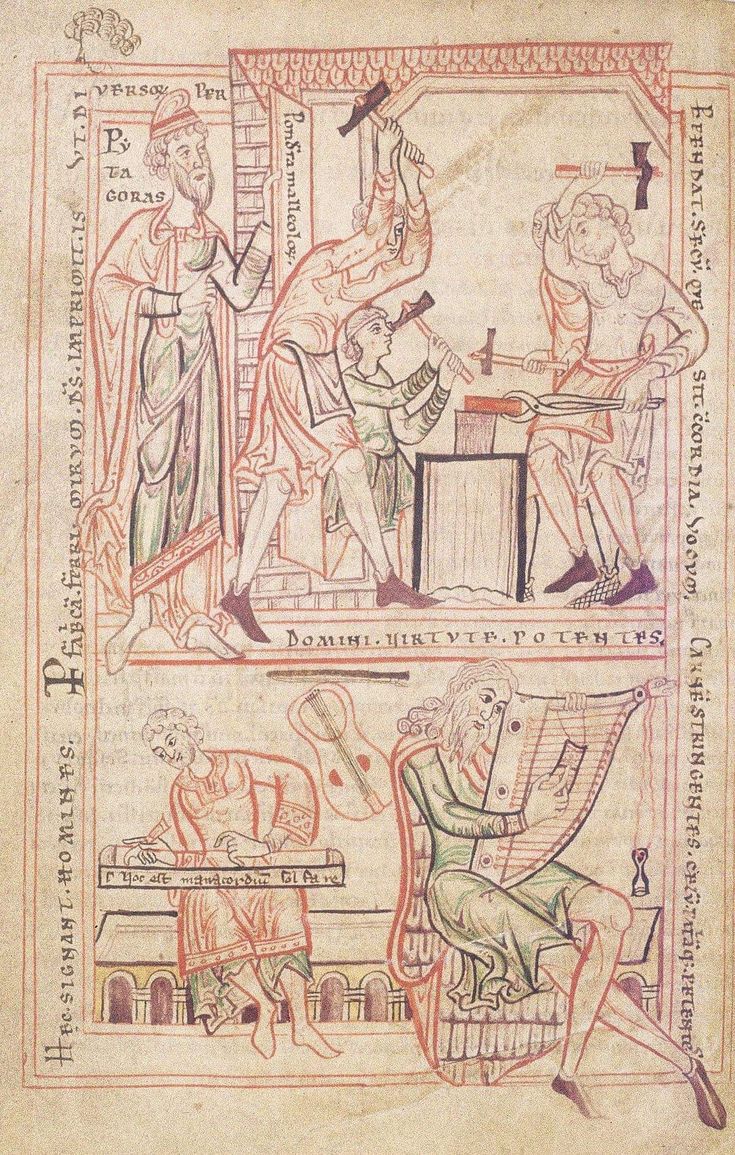
Pythagoras in the Forge
unknown artist · c. 1220-1240
A 13th-century manuscript illumination showing the legend of Pythagoras discovering musical ratios by listening to blacksmiths' hammers.
Illustrates the legend that Pythagoras discovered musical ratios by observing blacksmiths' hammers.
About this source
What it is
This illuminated manuscript page, made around 1220-1240 in a Cistercian abbey in Germany, illustrates a chapter of De musica cum tonario by Johannes Cotto, a text originally written around 1100. It shows four painted scenes: Pythagoras at a forge, a smith hammering an anvil, a musician with tuned bells, and a harpist.
Why it matters
The image illustrates the legend that Pythagoras discovered the mathematical ratios behind musical harmony by observing the sounds made by blacksmiths' hammers. This story, repeated for centuries, shows how later writers used Pythagoras to connect mathematics, music and natural observation.
Look closer
- What does the forge scene suggest about how people imagined scientific discovery happening?
- Why might a medieval monastery be interested in a story about Pythagoras and music?
- This legend was written over a thousand years after Pythagoras lived — what does that tell you about trusting it as fact?
This painting is part of the curated material that grounds the AI version of Pythagoras on Humy.ai — when students ask about related events, the AI can quote it and cite it.
More Pythagoras sources
Meet the AI Pythagoras → Book
Secondary source
Lives and Opinions of Eminent Philosophers, Book V (Life of Aristotle)
Diogenes Laërtius · c. 3rd century CE
 Book
Secondary source
Histories
Herodotus · c. 440 BCE
 Painting
Secondary source
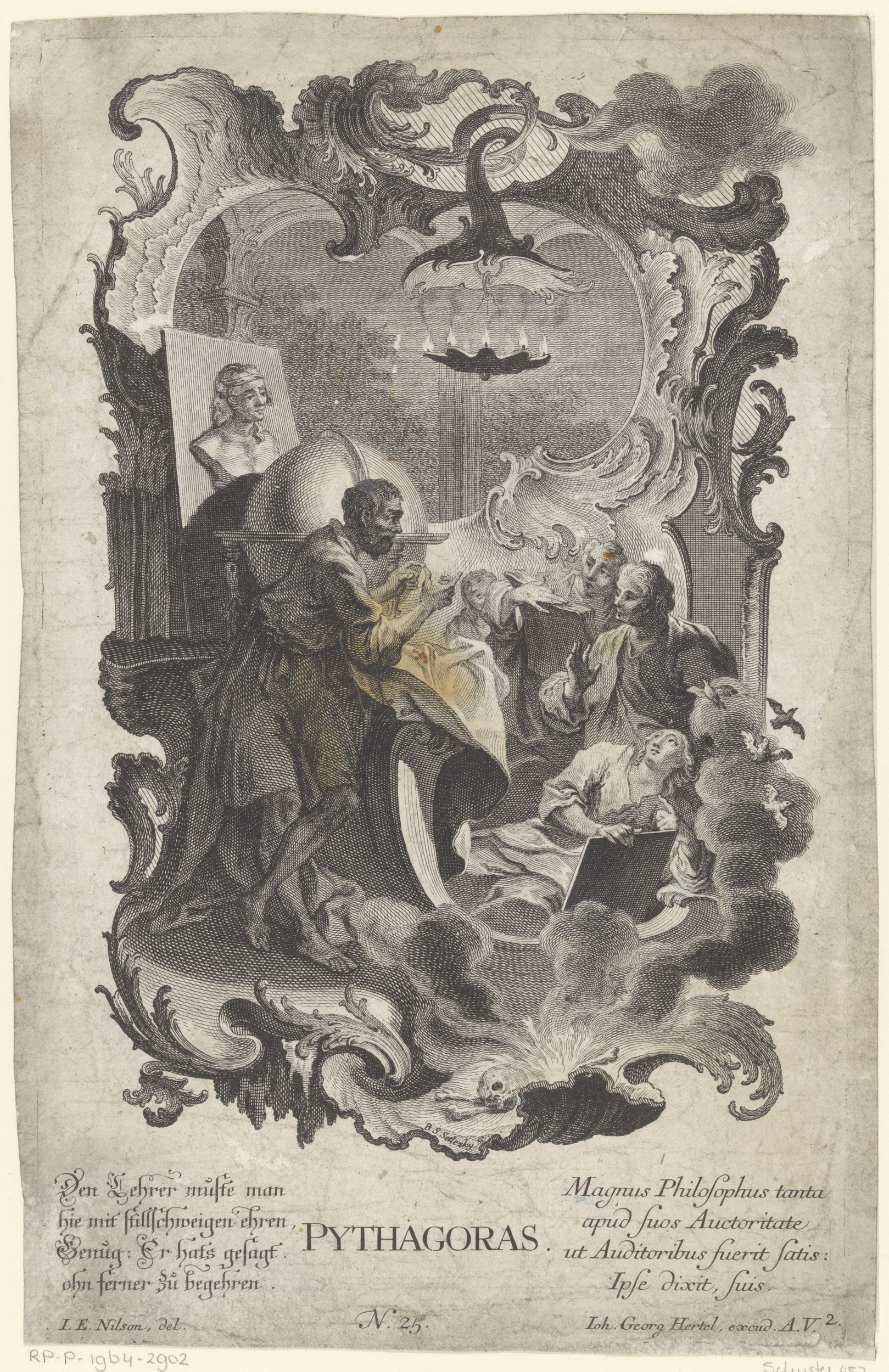
Pythagoras Leaning on a Globe with Four Listeners
 Book
Secondary source
Metaphysics
Aristotle · c. 400 BCE
 Painting
Secondary source
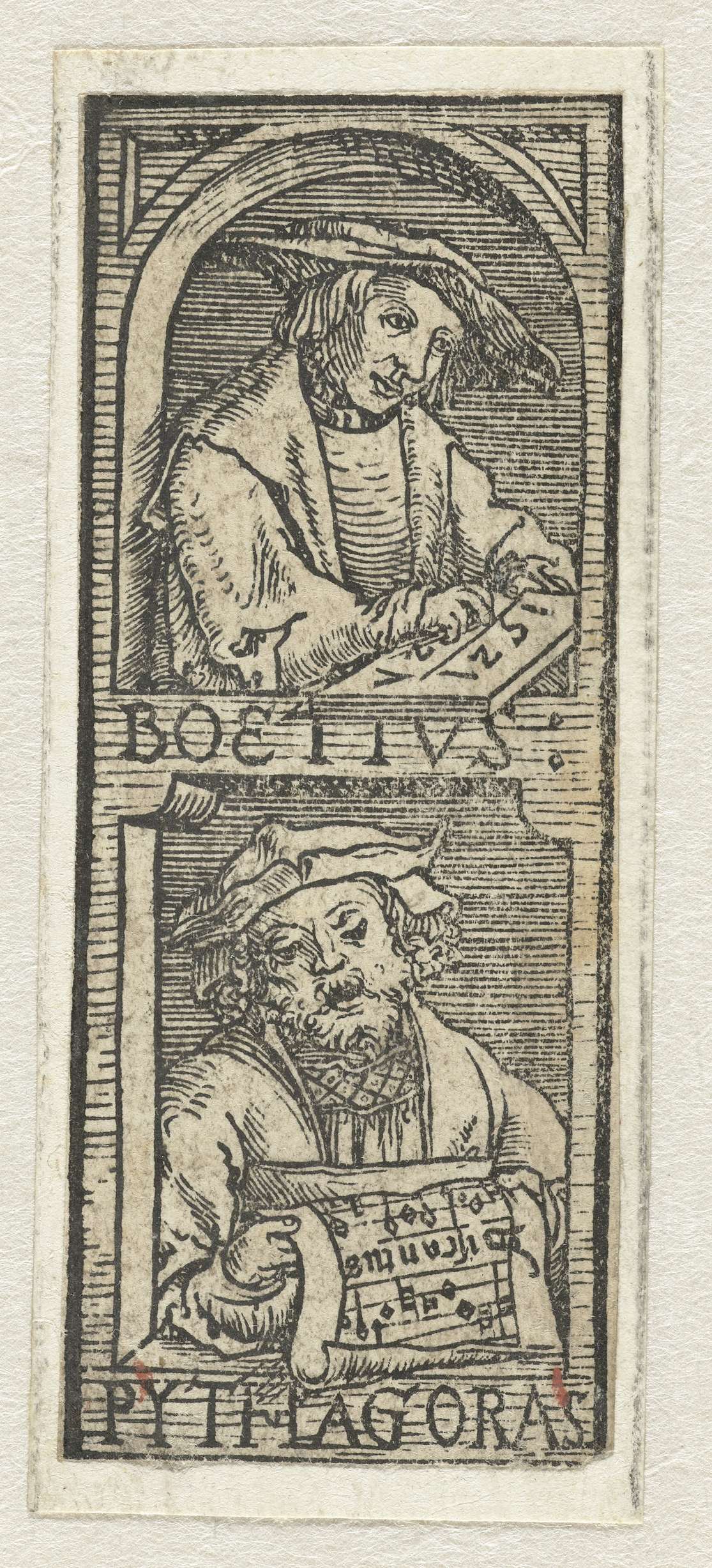
Boethius and Pythagoras
1521
Ready when you are
Start chatting with Pythagoras now.
20 messages free · No credit card · Available in 50+ languages.