


Secondary sourcePainting1655
Pythagoras in Thomas Stanley's History of Philosophy
Unknown author · 1655
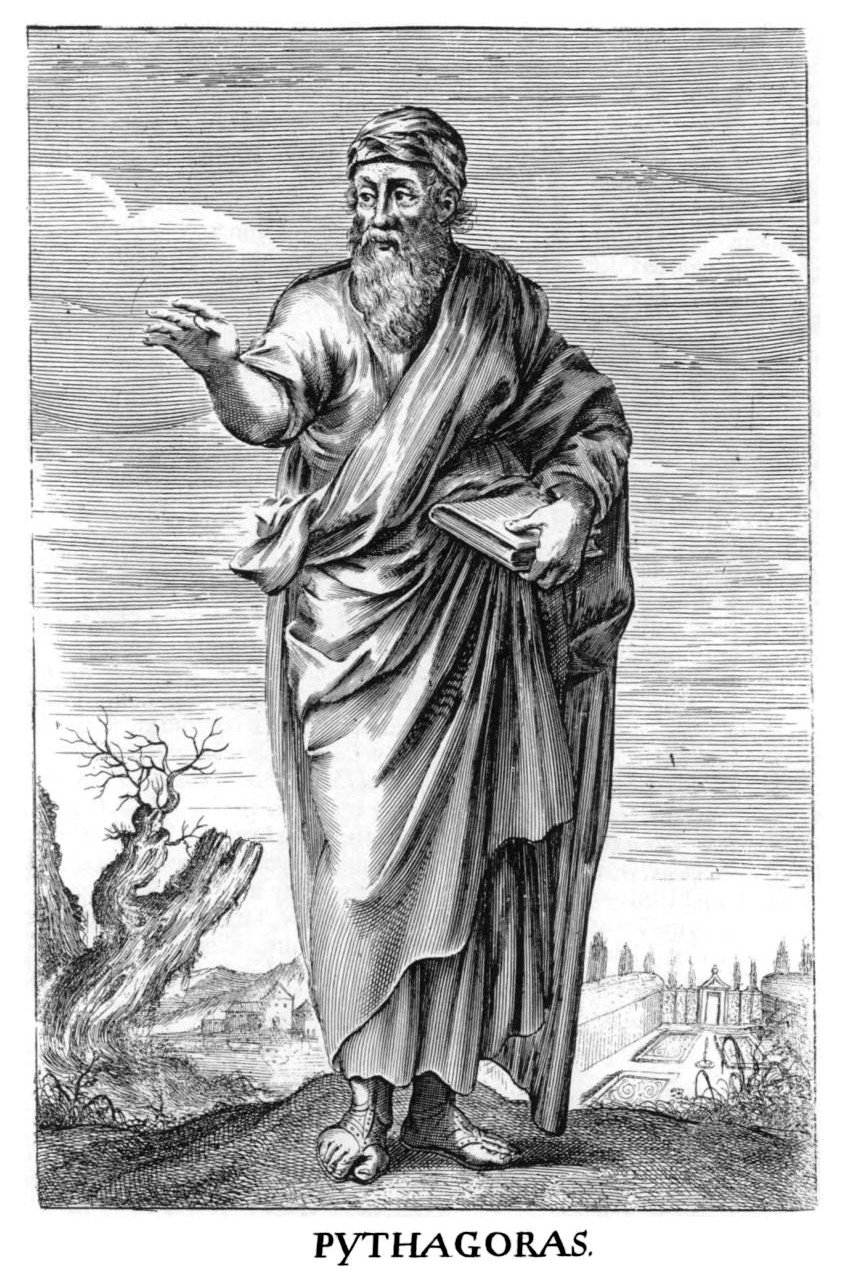
An engraved portrait of Pythagoras from the first English-language history of philosophy, published in 1655.
An imagined 17th-century portrait of Pythagoras used to illustrate his place in the English history of philosophy.
About this source
What it is
This is an engraved illustration of Pythagoras from Thomas Stanley's The History of Philosophy, printed in 1655. It shows a bearded man in a turban and robe, standing with one hand raised and a book under his arm, with a garden scene behind him.
Why it matters
Stanley's book was the first history of philosophy written in English, and it helped fix Pythagoras's reputation as one of the founding figures of Western philosophical thought for English readers. The imagined portrait reflects how 17th-century Europeans pictured ancient philosophers, not an actual likeness.
Look closer
- Why might the artist have dressed Pythagoras in a turban rather than ancient Greek clothing?
- What do the raised hand and book suggest the artist wanted viewers to think about Pythagoras?
- Since no real portrait of Pythagoras survives, what does this image actually tell us — about him, or about the 1600s?
This painting is part of the curated material that grounds the AI version of Pythagoras on Humy.ai — when students ask about related events, the AI can quote it and cite it.
More Pythagoras sources
Meet the AI Pythagoras → Book
Secondary source
Lives and Opinions of Eminent Philosophers, Book V (Life of Aristotle)
Diogenes Laërtius · c. 3rd century CE
 Book
Secondary source
Histories
Herodotus · c. 440 BCE
 Painting
Secondary source
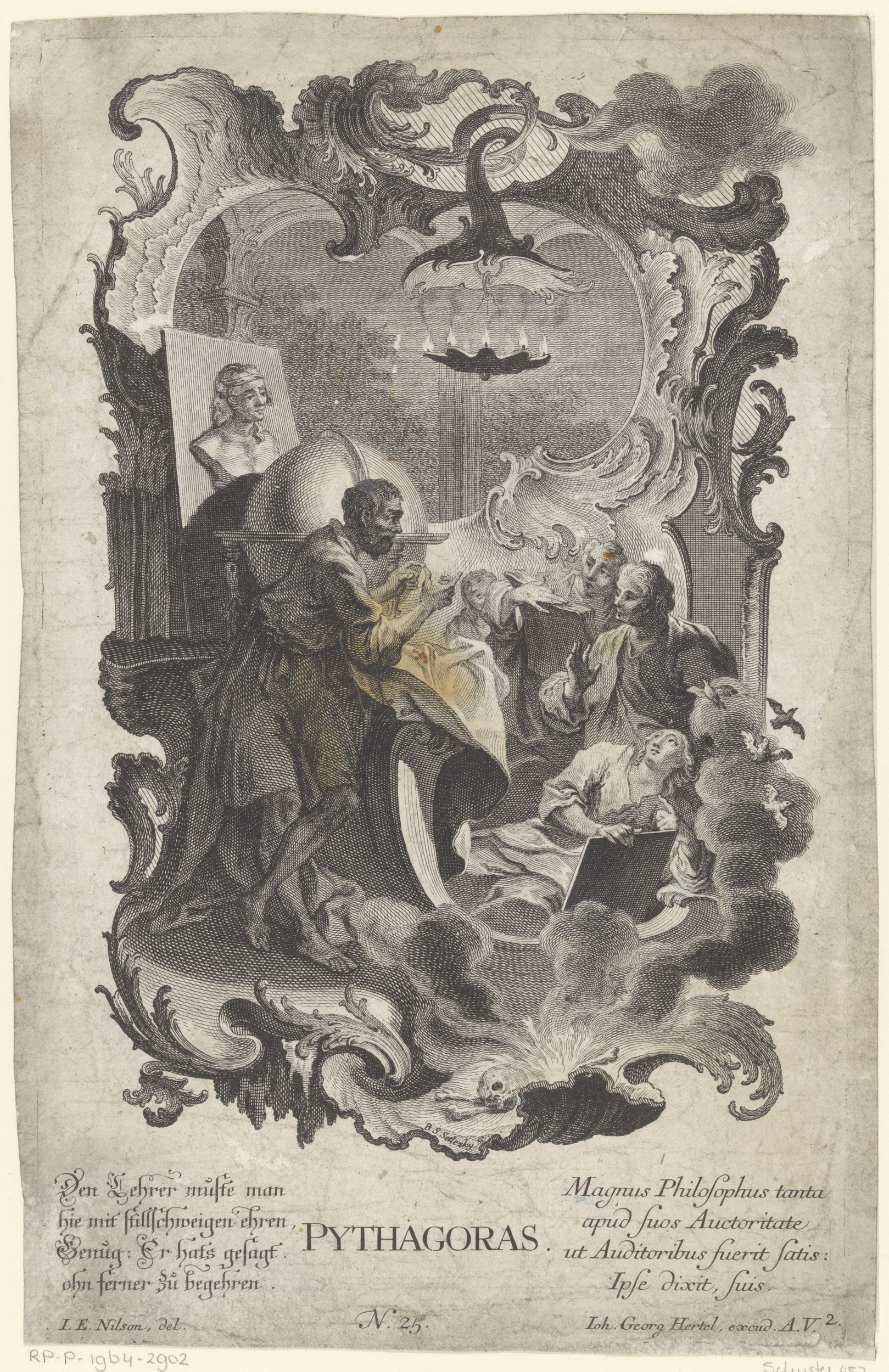
Pythagoras Leaning on a Globe with Four Listeners
 Book
Secondary source
Metaphysics
Aristotle · c. 400 BCE
 Painting
Secondary source
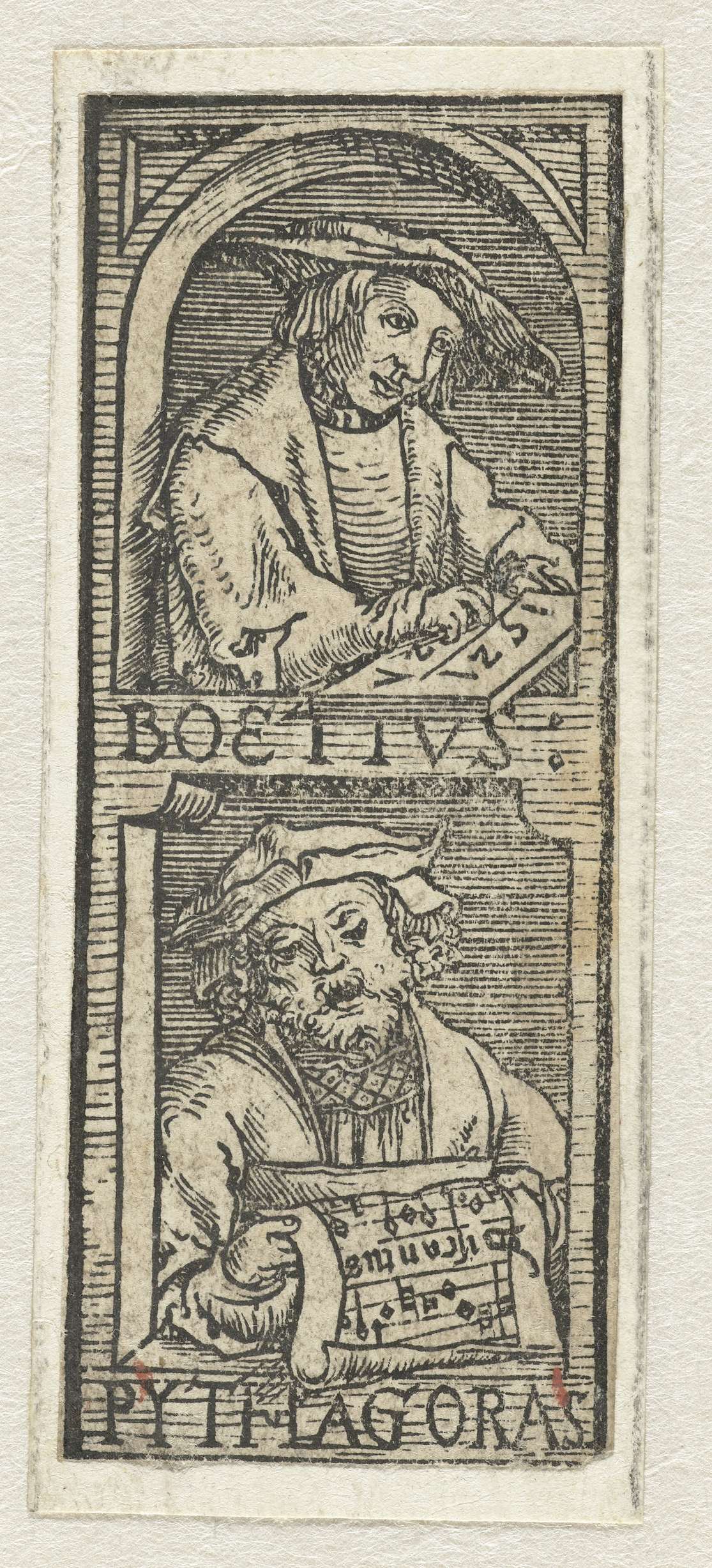
Boethius and Pythagoras
1521
Ready when you are
Start chatting with Pythagoras now.
20 messages free · No credit card · Available in 50+ languages.