


Secondary sourcePainting
Pythagoras Inventing Music, Nuremberg Chronicle
Michel Wolgemut; Wilhelm Pleydenwurff
A woodcut from the Nuremberg Chronicle, an early printed world history, showing Pythagoras discovering musical harmony through hammers and bells.
A legendary scene of Pythagoras discovering musical harmony, printed in an early world history centuries after his death.

About this source
What it is
This is a woodcut illustration from the Nuremberg Chronicle, a famous early printed world history. It was made by Michel Wolgemut and Wilhelm Pleydenwurff, with text by Hartmann Schedel. It shows a bearded man labelled 'Pythagoras' discovering music through experimenting with hammers and bells.
Why it matters
The legend of Pythagoras discovering musical ratios by listening to blacksmiths' hammers became one of the most repeated stories about him in medieval and Renaissance Europe. This image shows how Pythagoras was remembered centuries after his life, as a nearly mythical founder of music theory, included among other great figures of world history in one of the first mass-printed books.
Look closer
- Why might a printer in the 1400s choose to include Pythagoras in a history of the whole world?
- What does the clothing and setting tell you about when this was made, versus when Pythagoras actually lived?
- Is this a reliable record of what Pythagoras did, or a legend passed down?
This painting is part of the curated material that grounds the AI version of Pythagoras on Humy.ai — when students ask about related events, the AI can quote it and cite it.
More Pythagoras sources
Meet the AI Pythagoras → Book
Secondary source
Lives and Opinions of Eminent Philosophers, Book V (Life of Aristotle)
Diogenes Laërtius · c. 3rd century CE
 Book
Secondary source
Histories
Herodotus · c. 440 BCE
 Painting
Secondary source
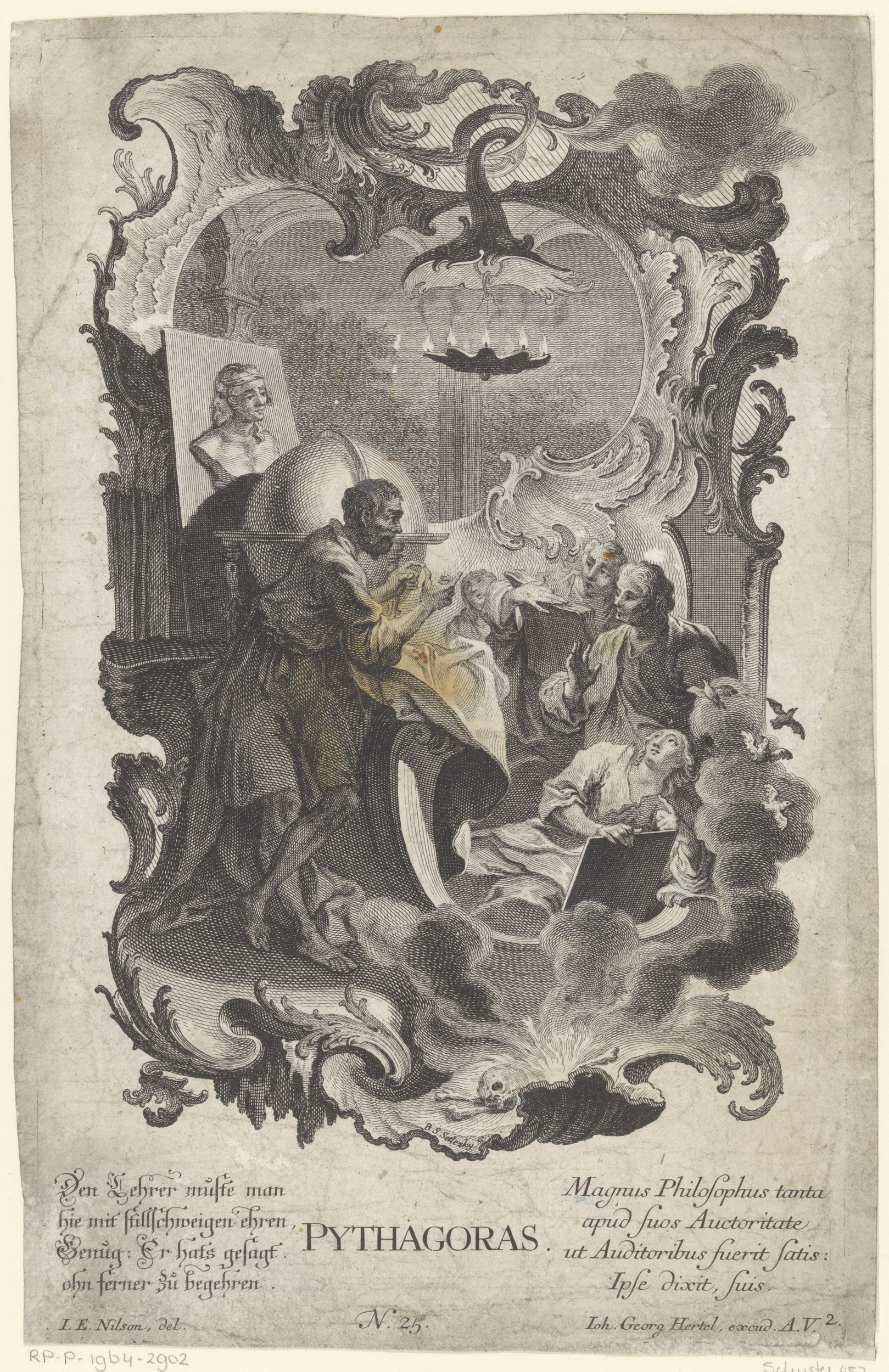
Pythagoras Leaning on a Globe with Four Listeners
 Book
Secondary source
Metaphysics
Aristotle · c. 400 BCE
 Painting
Secondary source
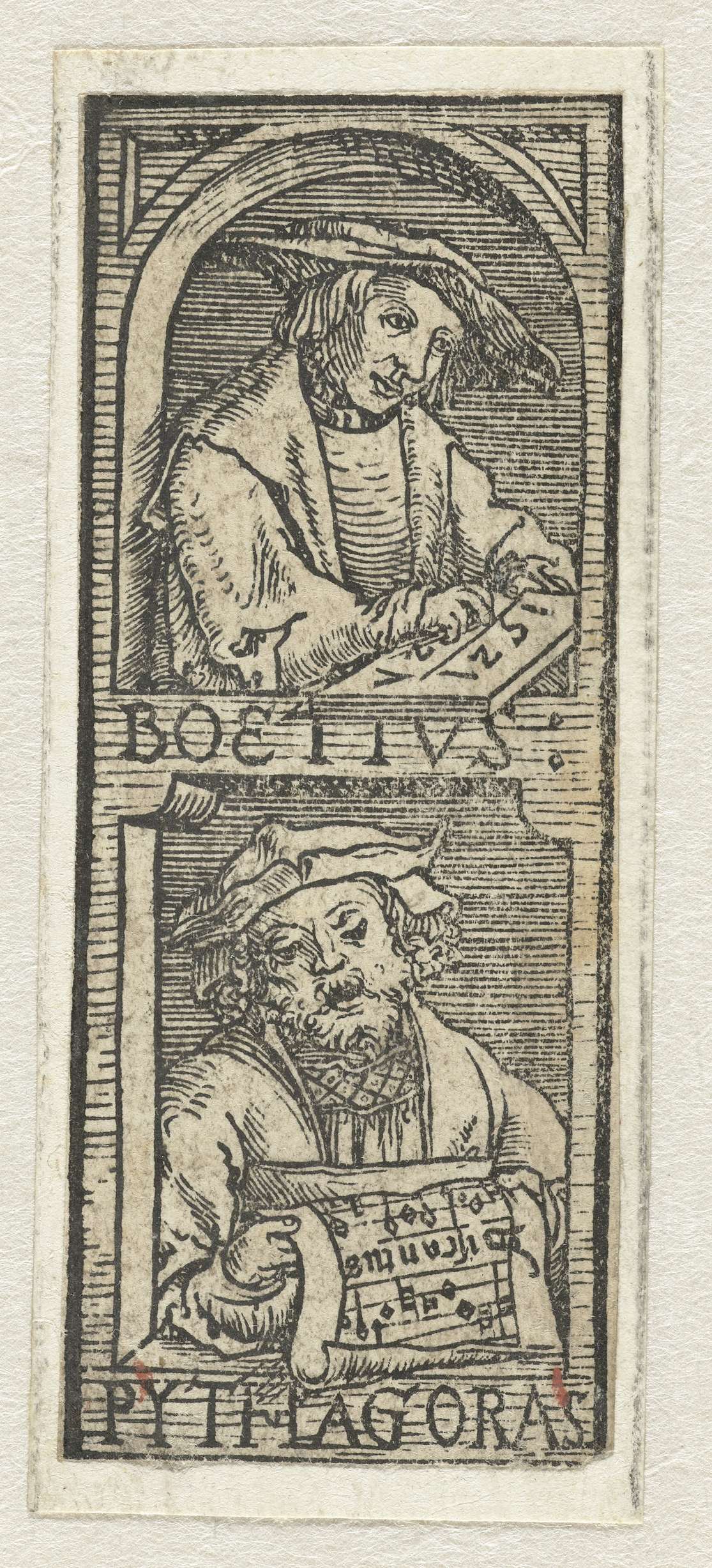
Boethius and Pythagoras
1521
Ready when you are
Start chatting with Pythagoras now.
20 messages free · No credit card · Available in 50+ languages.