


Secondary sourcePainting
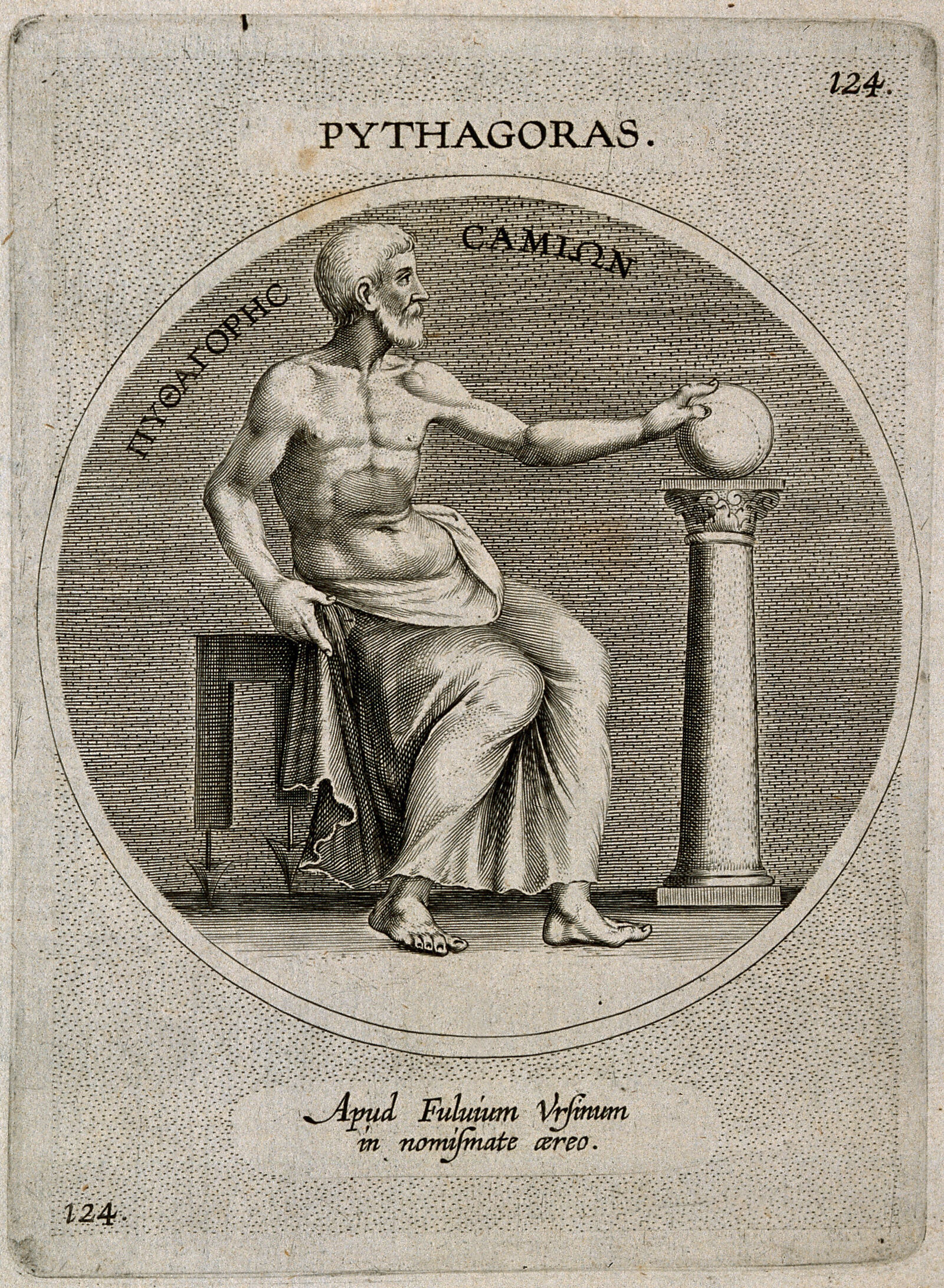
Pythagoras line engraving after brass coin
A later line engraving of Pythagoras, copied from a brass coin in the collection of Fulvio Orsini.
This engraving shows how collectors and later artists pictured Pythagoras, using an ancient coin as their model.
About this source
What it is
This is a line engraving held by the Wellcome Collection in London. It reproduces a brass coin from the collection of Fulvio Orsini. It shows a bearded, bare-chested seated man in draped robes, resting one hand on a sphere on top of a column in Corinthian style, with a stool at left. It is labeled PYTHAGORAS at the top, with Greek letters around the oval and a Latin caption below. The engraver and date are not recorded in the facts.
Why it matters
The engraving is a copy of a coin, so it shows how Pythagoras was pictured by people who collected ancient coins. Orsini was a collector whose coin was used as the model. The image gives a later artist's idea of how an ancient thinker looked, not a likeness made in his lifetime.
Look closer
- What objects around the seated man suggest learning or science?
- Why would a collector's coin be used to picture a philosopher?
- What does the image leave out, and how can we tell it is a later copy?
This painting is part of the curated material that grounds the AI version of Pythagoras on Humy.ai — when students ask about related events, the AI can quote it and cite it.
More Pythagoras sources
Meet the AI Pythagoras → Book
Secondary source
Lives and Opinions of Eminent Philosophers, Book V (Life of Aristotle)
Diogenes Laërtius · c. 3rd century CE
 Book
Secondary source
Histories
Herodotus · c. 440 BCE
 Painting
Secondary source
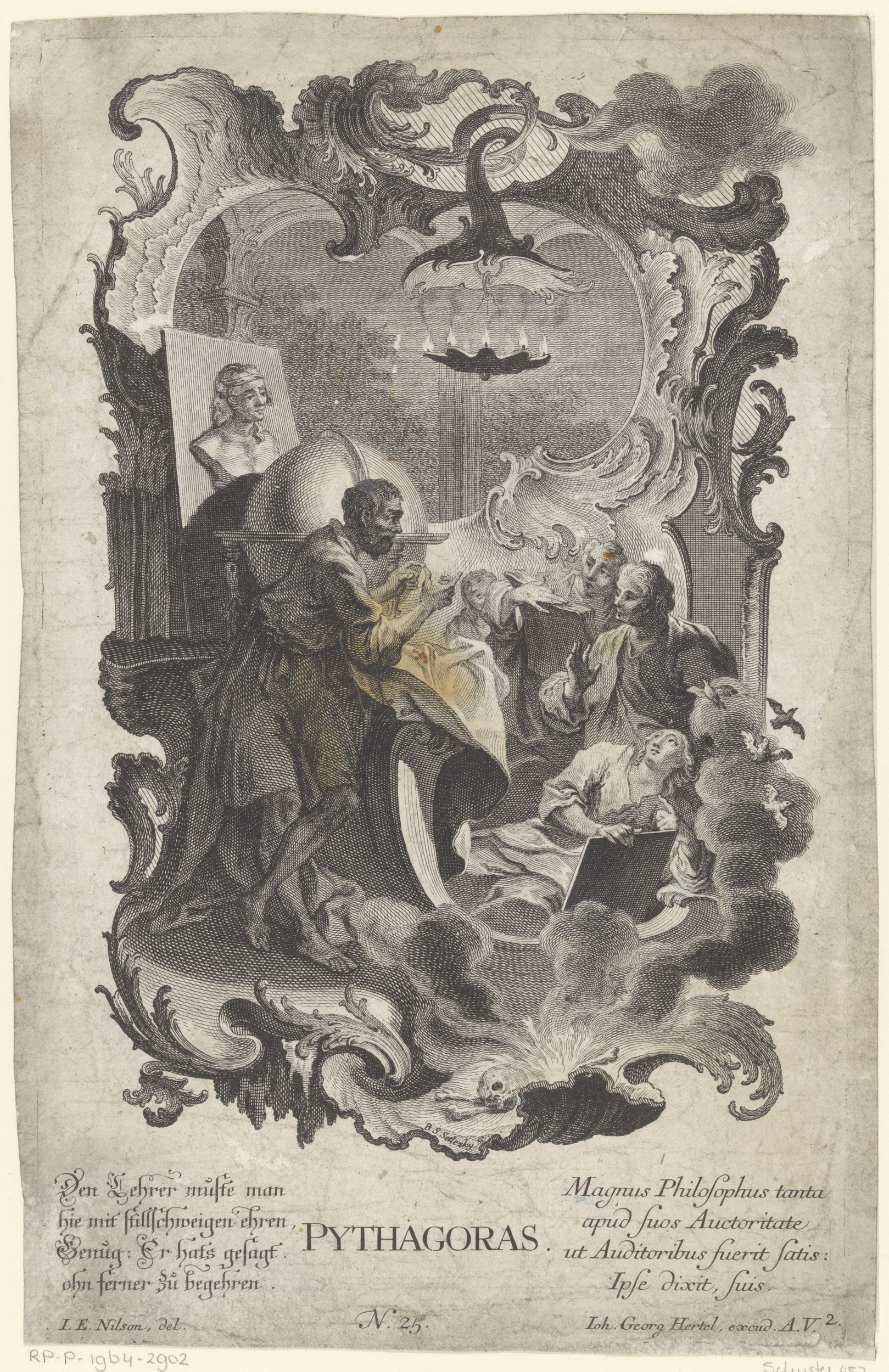
Pythagoras Leaning on a Globe with Four Listeners
 Book
Secondary source
Metaphysics
Aristotle · c. 400 BCE
 Painting
Secondary source
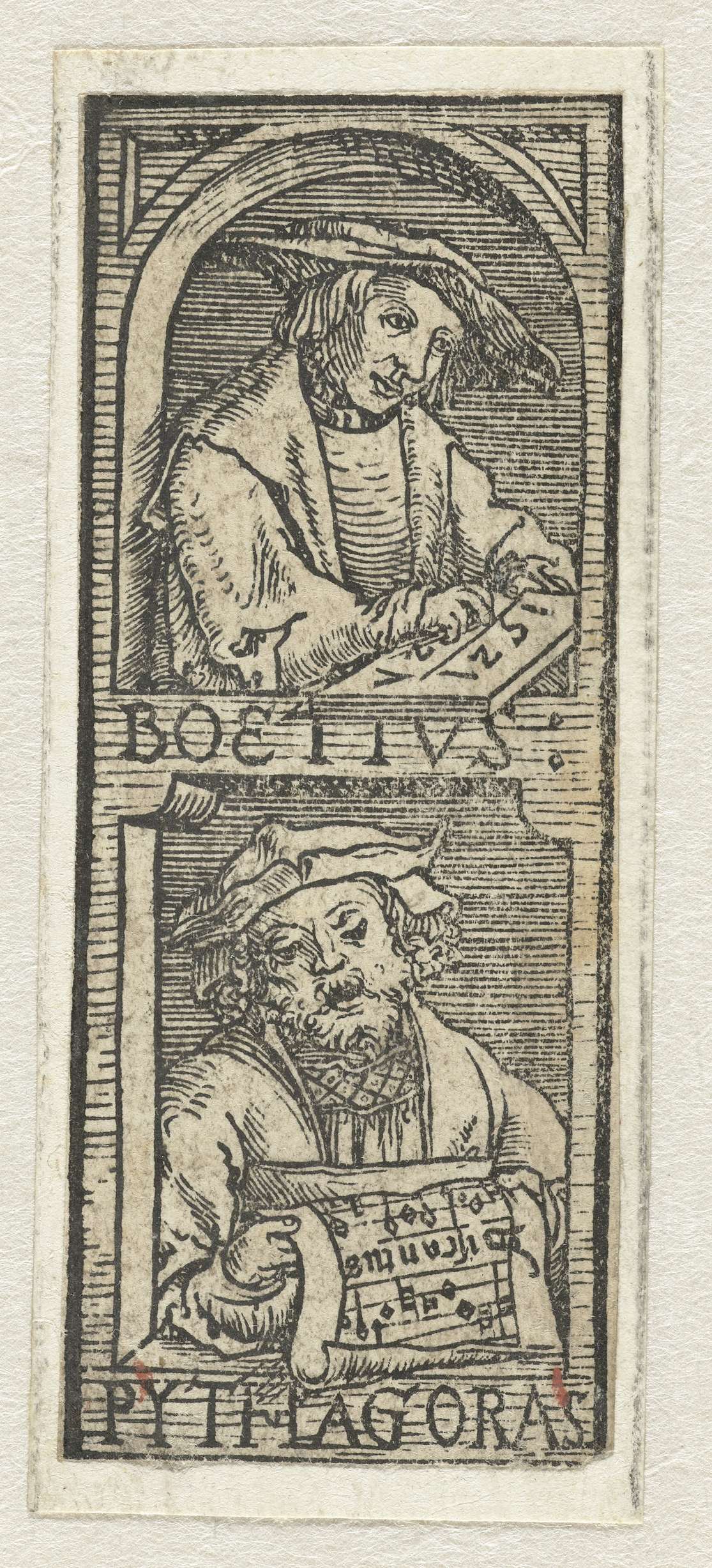
Boethius and Pythagoras
1521
Ready when you are
Start chatting with Pythagoras now.
20 messages free · No credit card · Available in 50+ languages.