


Secondary sourcePainting1782
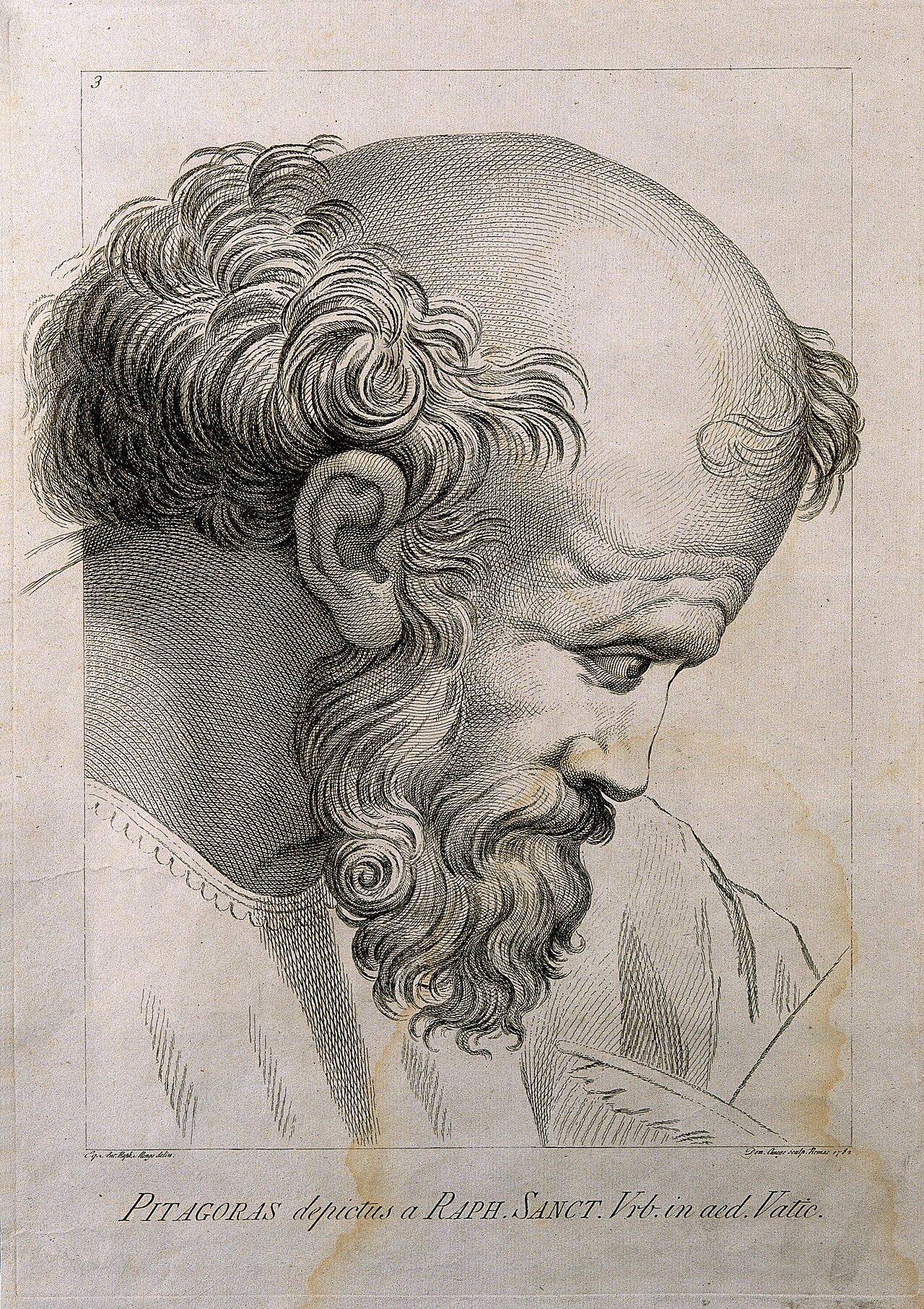
Pythagoras, line engraving by Cunego after Mengs
D. Cunego, after R. Mengs, after Raphael · 1782
An 18th-century engraving imagining Pythagoras's profile, copied from a composition by Raphael.
An imagined 18th-century engraved portrait of Pythagoras, part of a tradition of artistic images of him.
About this source
What it is
This is a line engraving made in 1782 by D. Cunego, copying a painting by R. Mengs, which was itself based on a figure from a composition by Raphael. It shows an imagined profile portrait of Pythagoras, bald and bearded, looking downward, with a Latin caption noting its connection to Raphael's work in the Vatican.
Why it matters
This print is part of a long chain of artists imagining Pythagoras's appearance for centuries after his death, each copying earlier images. It shows how Renaissance and later European artists, like Raphael, Mengs, and Cunego, used classical philosophers as symbols of wisdom in their art.
Look closer
- Why would an 18th-century artist copy a Renaissance painting instead of inventing a new image?
- What does the chain of copying (Raphael to Mengs to Cunego) tell us about how images of historical figures spread?
- What is missing from this portrait that we might want to know about the real Pythagoras?
This painting is part of the curated material that grounds the AI version of Pythagoras on Humy.ai — when students ask about related events, the AI can quote it and cite it.
More Pythagoras sources
Meet the AI Pythagoras → Book
Secondary source
Lives and Opinions of Eminent Philosophers, Book V (Life of Aristotle)
Diogenes Laërtius · c. 3rd century CE
 Book
Secondary source
Histories
Herodotus · c. 440 BCE
 Painting
Secondary source
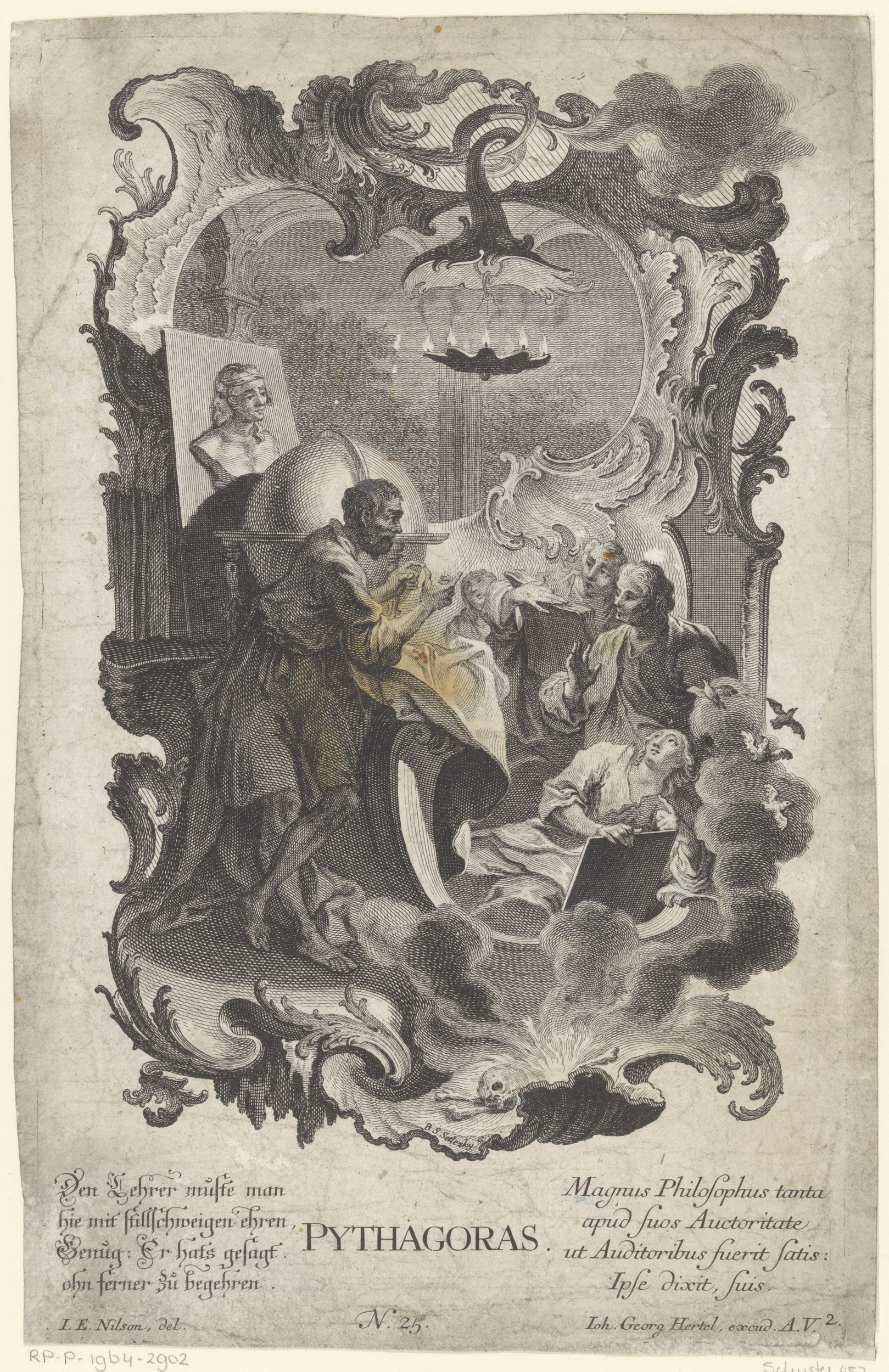
Pythagoras Leaning on a Globe with Four Listeners
 Book
Secondary source
Metaphysics
Aristotle · c. 400 BCE
 Painting
Secondary source
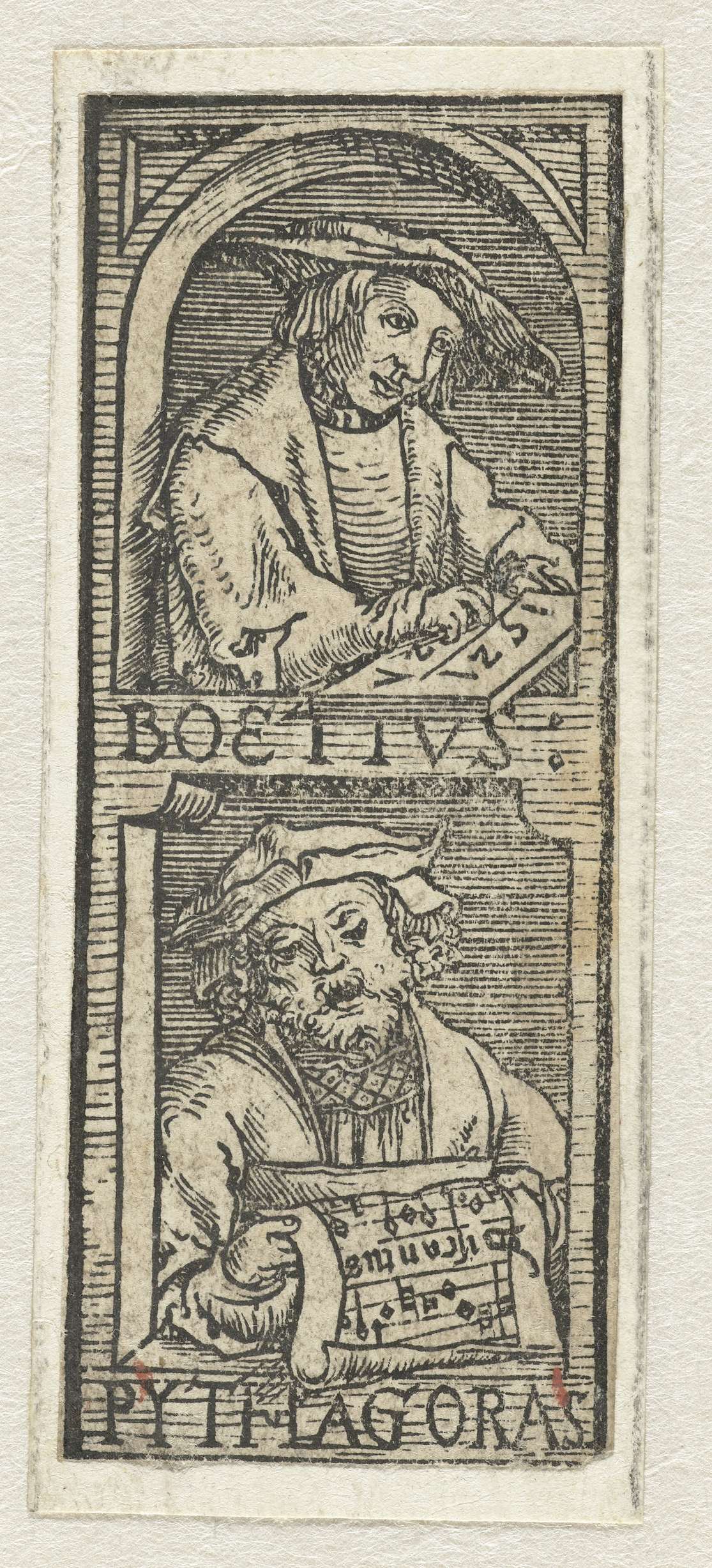
Boethius and Pythagoras
1521
Ready when you are
Start chatting with Pythagoras now.
20 messages free · No credit card · Available in 50+ languages.