


Secondary sourcePainting
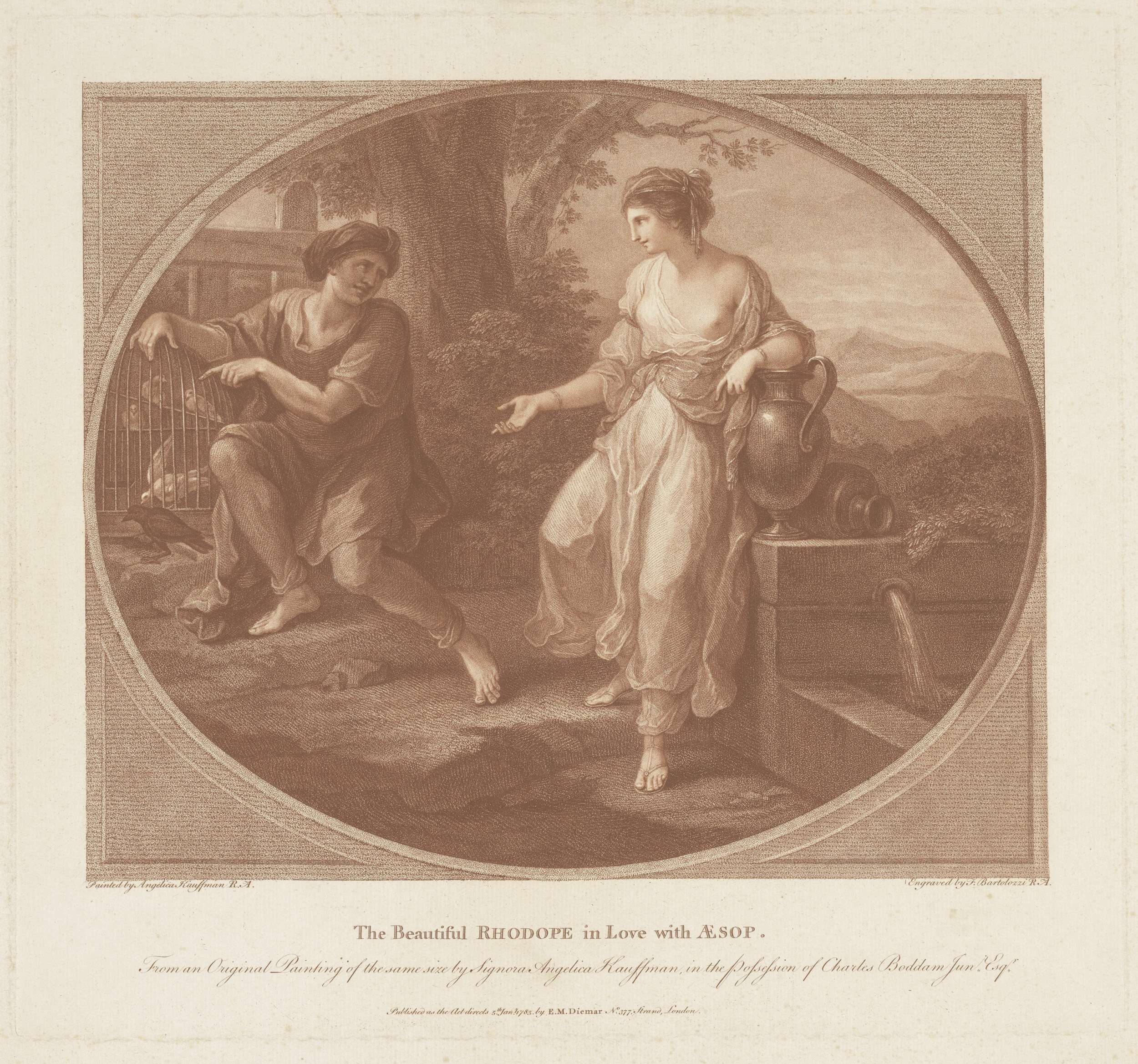
Rhodope in love with Aesopus
F. Bartolozzi (engraver), after Angelica Kauffman
A sepia engraving showing a later legend about Aesop and Rhodope beside a birdcage. It is a print after a painting by Angelica Kauffman, held by the Rijksmuseum.
Shows a later romance legend about Aesop, with Rhodope, which appears in retellings of his life rather than in the earliest accounts.
About this source
What it is
This is a sepia-toned engraving titled The Beautiful Rhodope in Love with Aesop. The caption says it is after Angelica Kauffman and engraved by F. Bartolozzi. A seated man in a turban and loose tunic points toward a standing woman with a headscarf and a loose white gown, who gestures back. A birdcage with birds is at left, and a classical urn stands at right. The Rijksmuseum in the Netherlands holds the print. Its date is not given in the record.
Why it matters
This print shows a romance legend about Aesop that appears in later retellings of his life. The legend is not part of the earliest sources about him. The engraving reveals how European artists of the 1700s and later recast ancient figures in romantic and classical settings. It also shows how a painting by one artist could be copied and spread by an engraver.
Look closer
- What do the birdcage, the urn and the landscape suggest about the setting?
- How do the gestures of the two figures show the relationship between them?
- Why might an engraver have chosen to show Rhodope partly undressed, and what does the print leave out?
This painting is part of the curated material that grounds the AI version of Aesop on Humy.ai — when students ask about related events, the AI can quote it and cite it.
More Aesop sources
Browse all 85 →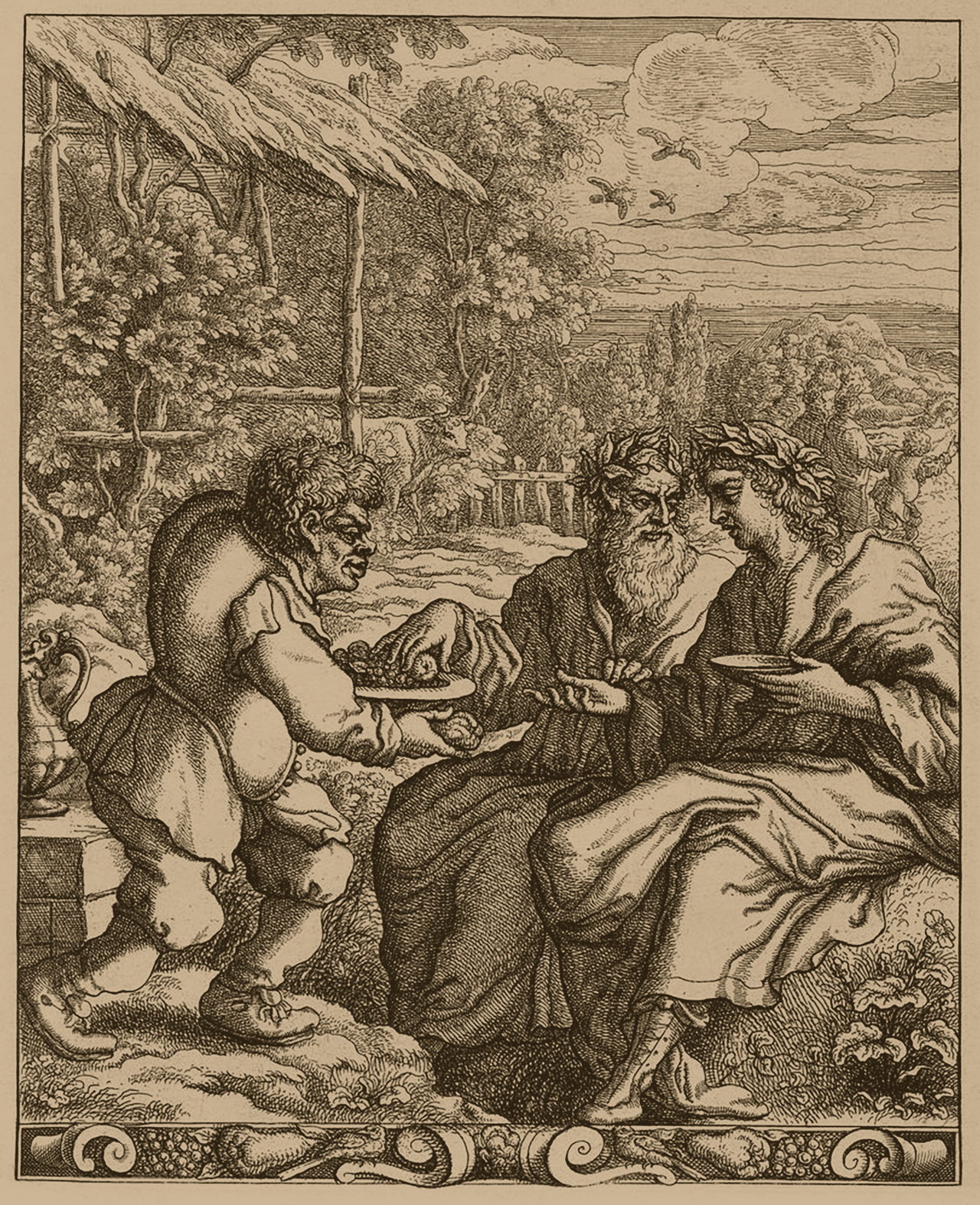 Book
Secondary source
Aesop's Fables
Aesop (attributed) · compiled from the 3rd century BCE onward
 Artifact
Secondary source
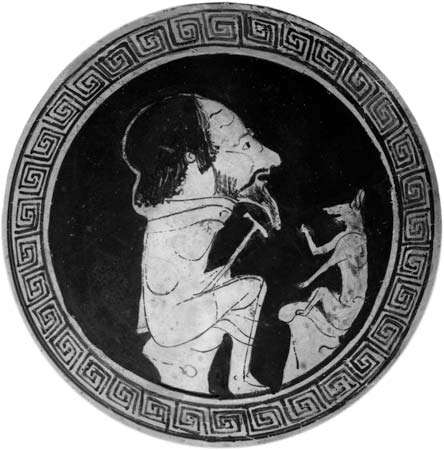
Aesop and the Fox (Red-Figure Kylix)
Unknown Greek artist · c. 450 BCE
 Book
Secondary source
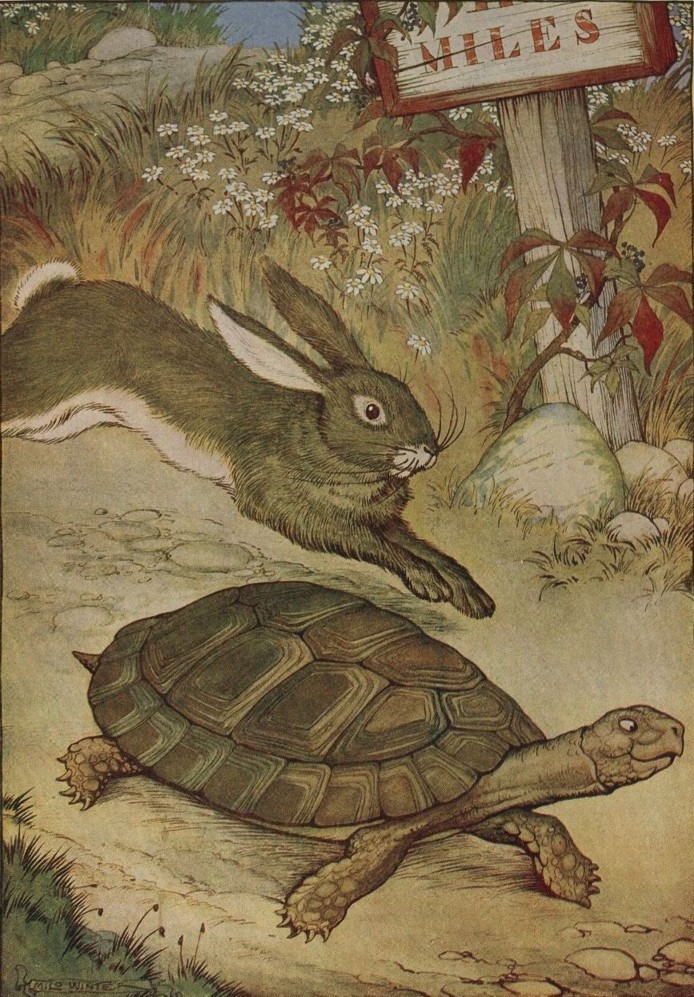
The Tortoise and the Hare
Aesop (attributed) · ancient Greek origin, no early Latin version; printed from 16th century
 Book
Secondary source
The Boy Who Cried Wolf
Aesop (attributed) · ancient Greek origin; translated into Latin in the 15th century
Free account
Read every Aesop source
Sign up free →
Ready when you are
Start chatting with Aesop now.
20 messages free · No credit card · Available in 50+ languages.