


Primary sourceBookc. 1592-1594; printed 1632
Richard III
William Shakespeare · c. 1592-1594; printed 1632
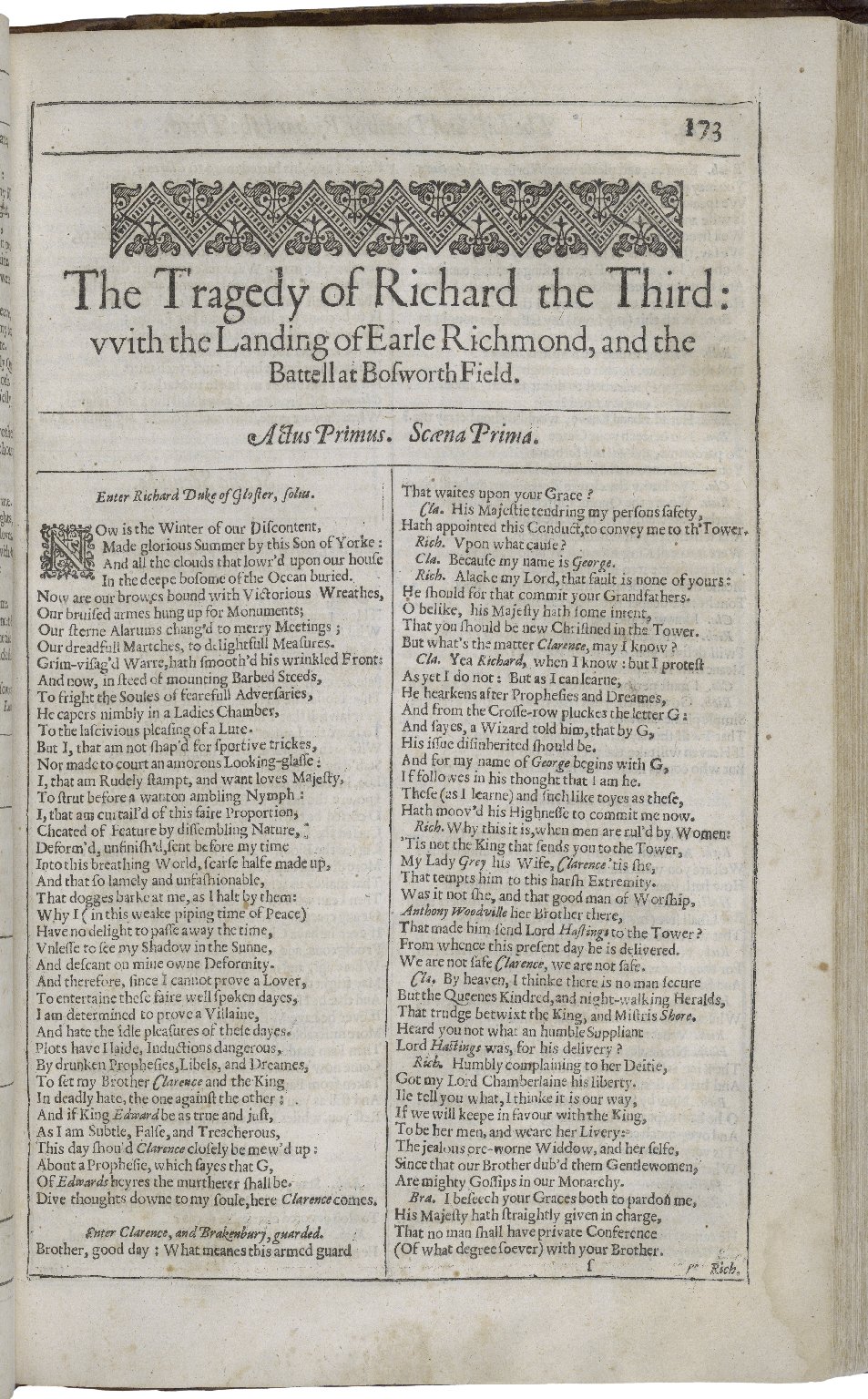
Shakespeare's early history play depicting the rise and fall of King Richard III, printed in the 1632 Second Folio.
Shakespeare's authorship of this villain-king drama helped make his name with Elizabethan London audiences.
About this source
What it is
Richard III is a play by William Shakespeare, probably written around 1592–1594. It tells of Richard of Gloucester's ruthless rise to the throne and his downfall at the Battle of Bosworth Field. It is the final part of Shakespeare's first tetralogy of history plays. The image shows a page from the 1632 Second Folio edition.
Why it matters
This early success helped establish Shakespeare's reputation in London theatre. The play also shaped how generations saw King Richard III, presenting him as a scheming villain — an image later historians have debated, since it reflects Tudor-era politics as much as historical fact.
Look closer
- Why might a playwright writing under a Tudor monarch portray the last Plantagenet king so negatively?
- What does the decorative border and layout of this page tell us about how books were made at the time?
- How does Shakespeare use Richard's own words to shape the audience's opinion of him?
This book is part of the curated material that grounds the AI version of William Shakespeare on Humy.ai — when students ask about related events, the AI can quote it and cite it.
More William Shakespeare sources
Meet the AI William Shakespeare →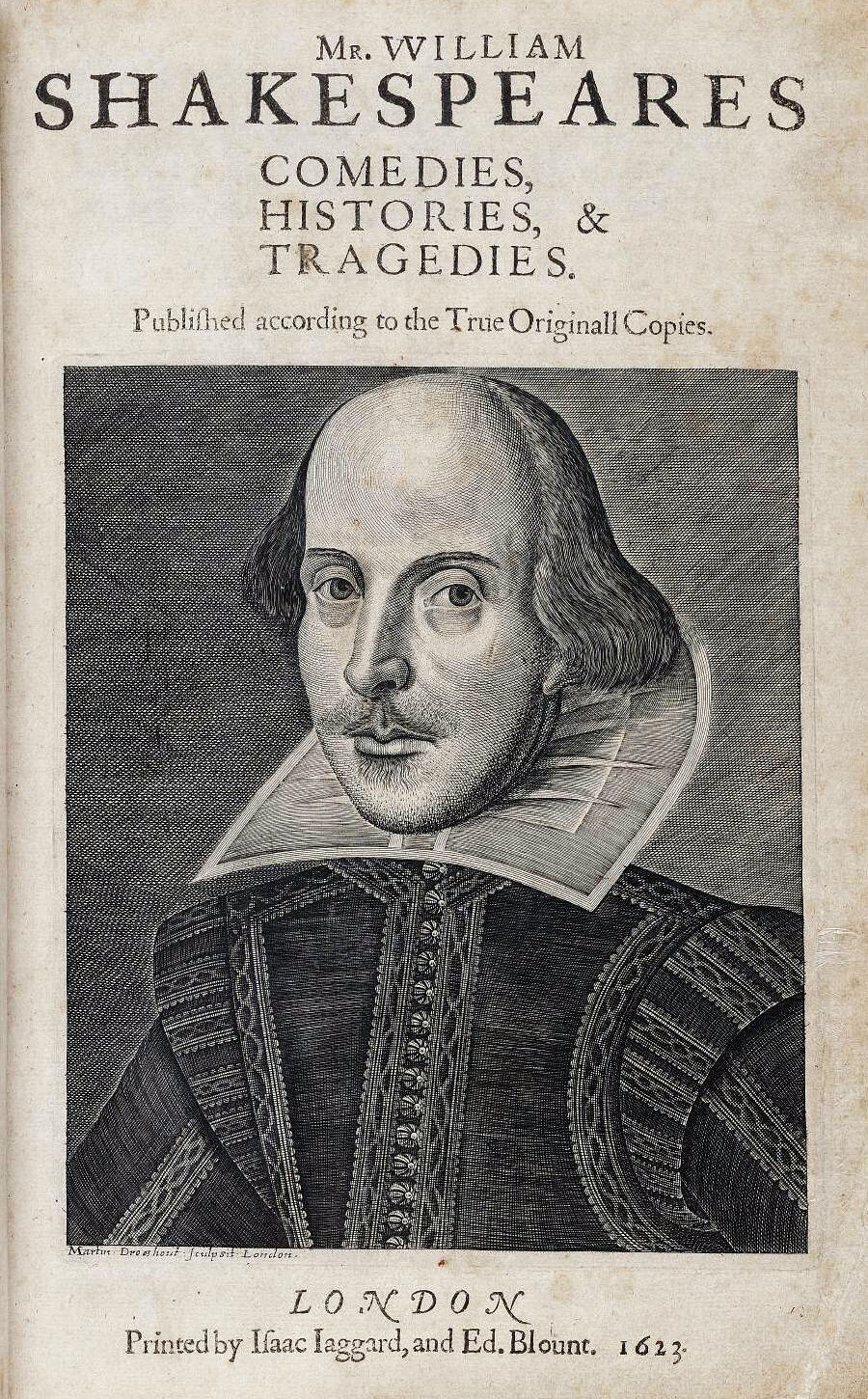 Book
Primary source
First Folio
William Shakespeare · 1623
 Painting
Secondary source
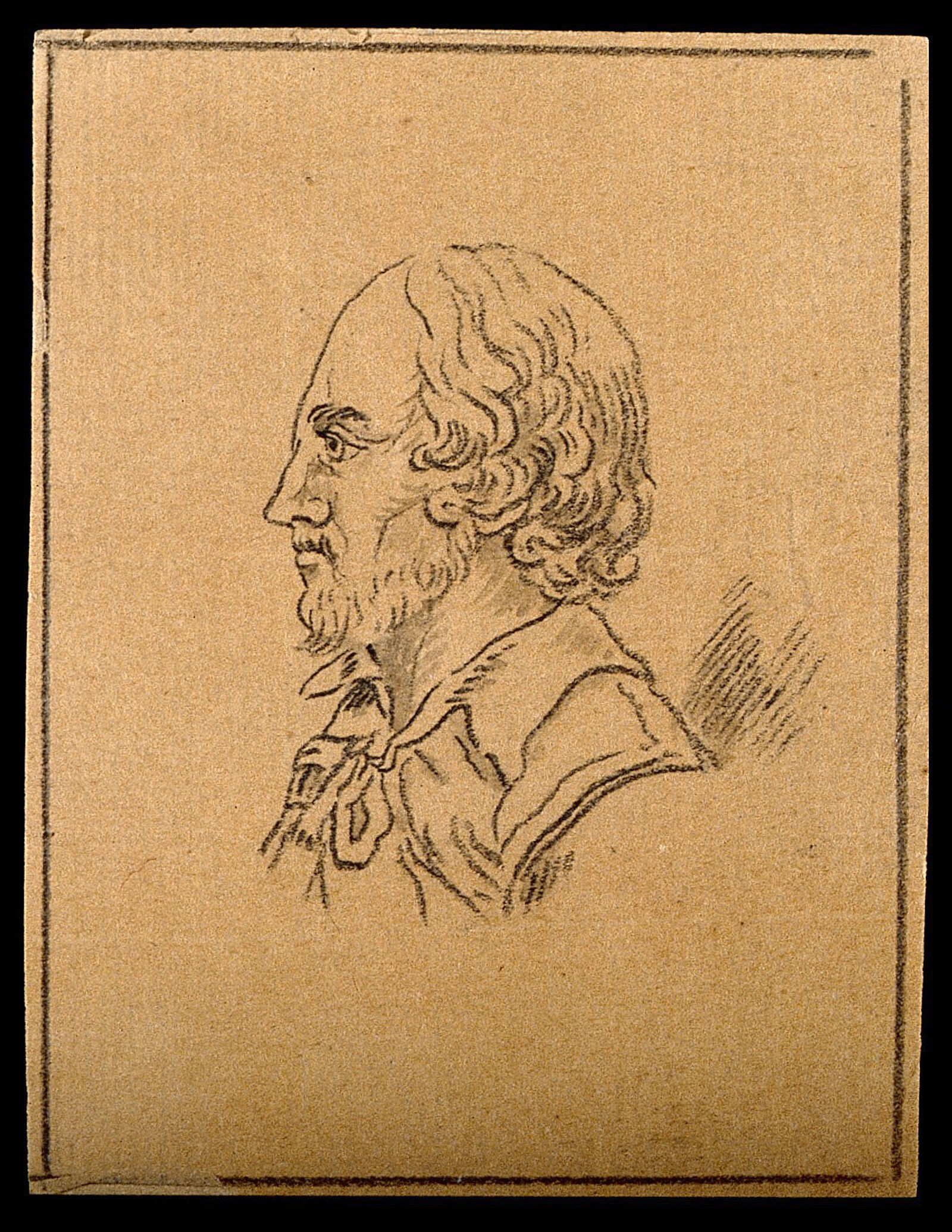
Profile Drawing of William Shakespeare
Johann Kaspar Lavater · c. 1793
 Painting
Secondary source
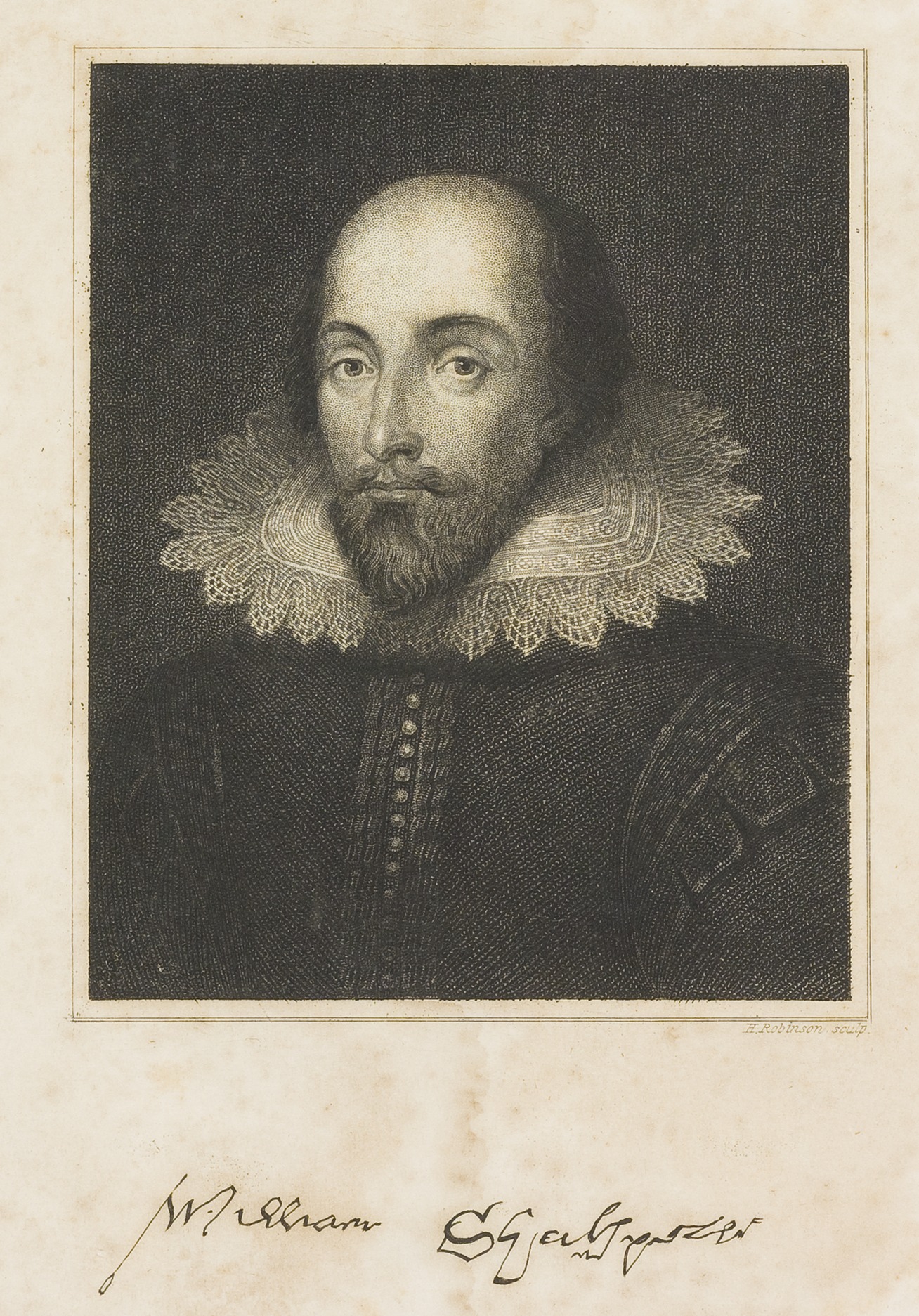
William Shakespeare engraving by John Henry Robinson
John Henry Robinson · 30 November 1827
 Document
Primary source
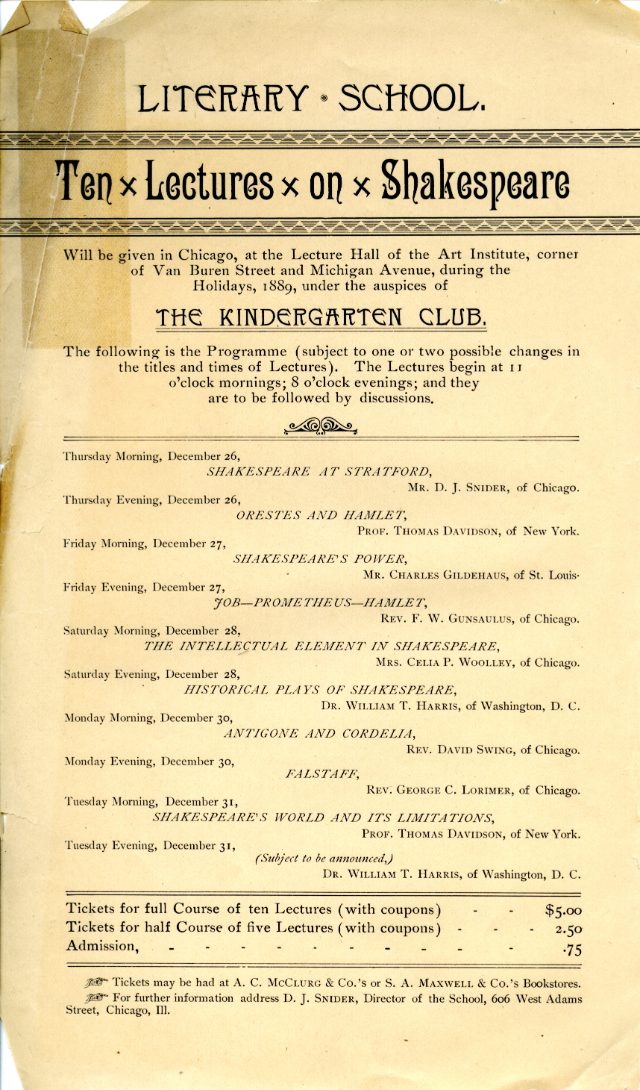
Ten Lectures on Shakespeare
Literary School · 1889
Primary source
Macbeth
William Shakespeare · c. 1606
Ready when you are
Start chatting with William Shakespeare now.
20 messages free · No credit card · Available in 50+ languages.