


Primary sourceArtifact1068 onward
Rougemont Castle
1068 onward
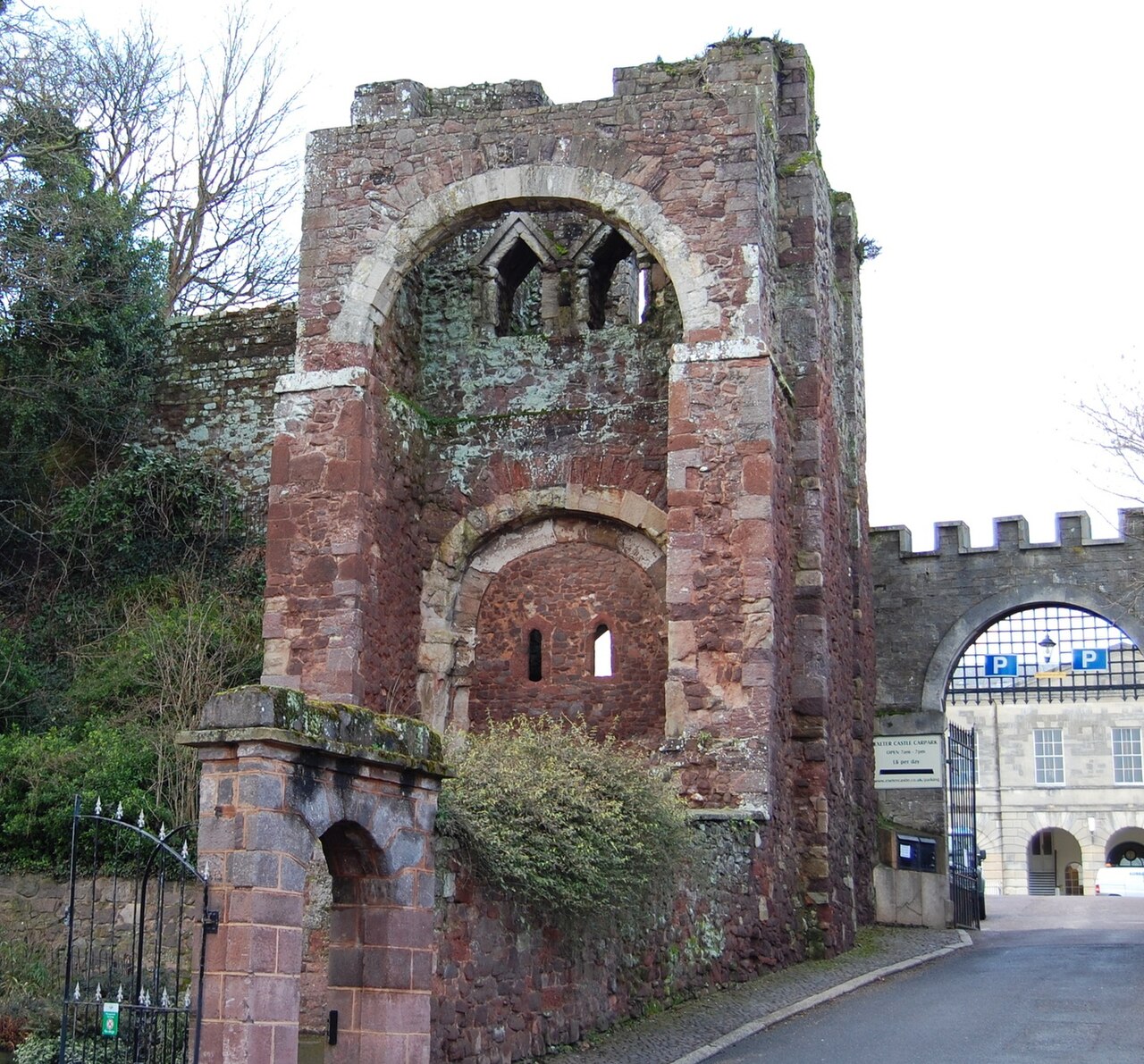
A castle William ordered built in Exeter after besieging the rebellious city in 1068, with one of the oldest surviving Norman gatehouses in England.
Built on William's orders after he besieged rebellious Exeter in 1068, showing how he enforced control after the Conquest.
About this source
What it is
Rougemont Castle, also called Exeter Castle, was built into the Roman city walls of Exeter starting shortly after 1068, following the city's rebellion against William the Conqueror. The castle-building was overseen by Baldwin FitzGilbert, appointed castellan. Its large stone gatehouse, built early by English masons under Norman orders, still survives and shows Anglo-Saxon architectural features.
Why it matters
The castle was a direct response to resistance against William's rule: Exeter's citizens had refused to swear loyalty to him and endured an 18-day siege before surrendering. Building a castle there was William's way of making sure the city stayed under control, a pattern he repeated across England after the Conquest.
Look closer
- Why might William have ordered a castle built specifically where a city had resisted him?
- What does it mean that English masons, not just Norman ones, built the gatehouse?
- What evidence mentioned here shows the castle itself was attacked before it was even finished?
This artifact is part of the curated material that grounds the AI version of William the Conqueror and Stephen, King of England on Humy.ai — when students ask about related events, the AI can quote it and cite it.
More William the Conqueror sources
Browse all 89 →
Ready when you are
Start chatting with William the Conqueror now.
20 messages free · No credit card · Available in 50+ languages.