


Secondary sourcePainting1360
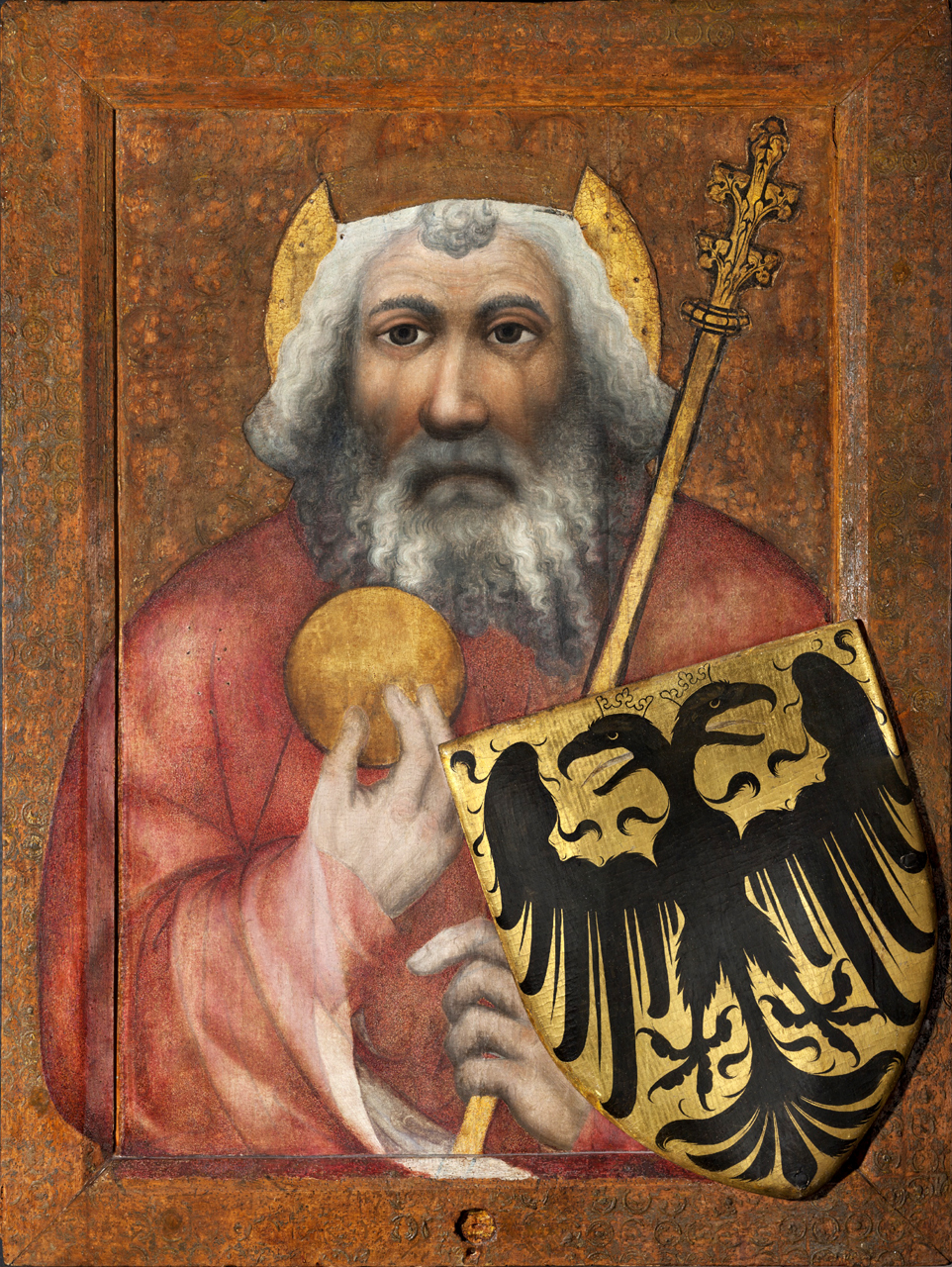
Saint Karel Veliký
Theodoric of Prague · 1360
A 14th-century panel painting by Theodoric of Prague depicting Charlemagne as a saint, part of a royal gallery honoring him as a model ruler.
This 1360 painting shows Charlemagne idealized as a saintly ruler, a model invoked by later Holy Roman Emperors.
About this source
What it is
This is a panel painting from 1360 by Theodoric of Prague, court painter to Emperor Charles IV. It shows Charlemagne depicted as a saint, with a crown, orb and scepter. The painting was made for the Chapel of the Holy Cross at Karlštejn Castle and is now held by the National Gallery in Prague.
Why it matters
Charles IV traced his lineage back to Charlemagne and saw him as a model of a just ruler. By placing Charlemagne among a row of rulers and treating him almost like a saint, Charles IV used Charlemagne's image to strengthen his own authority as Holy Roman Emperor. The painting shows how later rulers reshaped Charlemagne's memory for their own political purposes.
Look closer
- Why might a 14th-century emperor want to show Charlemagne as a saint rather than just a king?
- What symbols in the painting connect Charlemagne to imperial power?
- What does this tell us about how later generations used historical figures?
This painting is part of the curated material that grounds the AI version of Charlemagne on Humy.ai — when students ask about related events, the AI can quote it and cite it.
More Charlemagne sources
Meet the AI Charlemagne →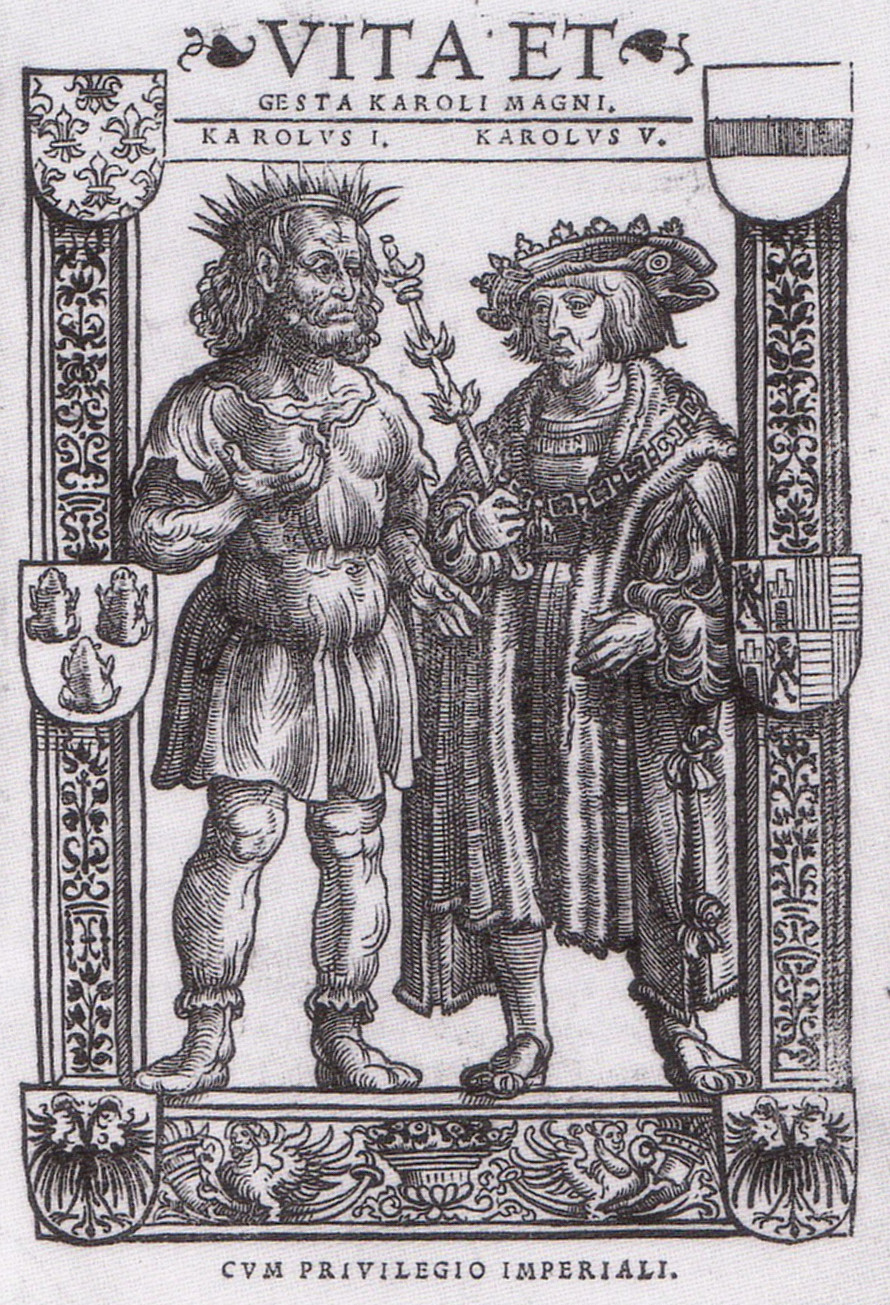 Book
Secondary source
Vita Karoli Magni
Einhard · c. 817-833
 Document
Primary source
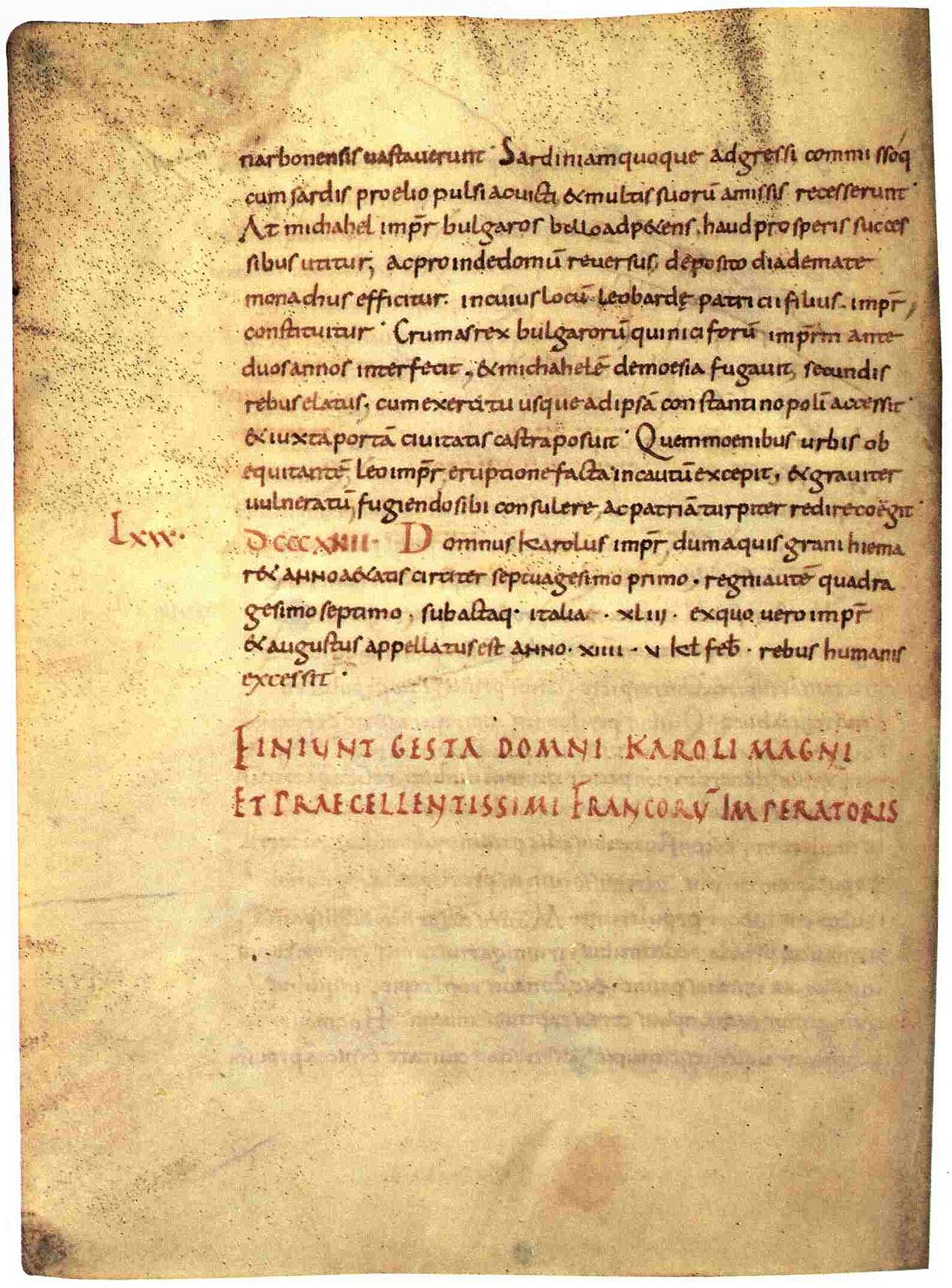
Royal Frankish Annals
741-829, this manuscript c. 900
Primary source
De litteris colendis
Charlemagne · late 780s-800s
 Document
Primary source
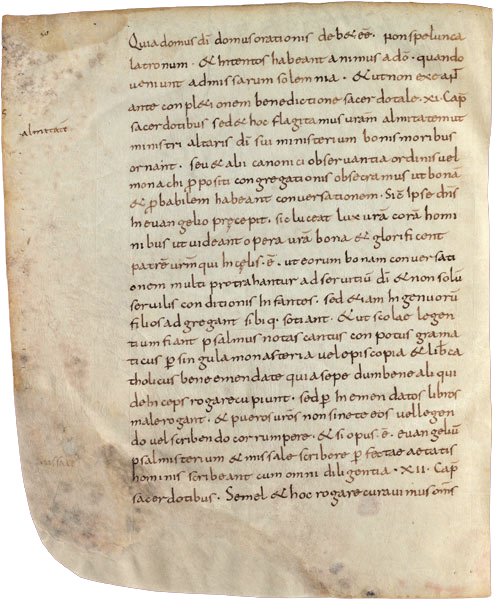
Admonitio generalis
Charlemagne · 23 March 789
 Document
Primary source
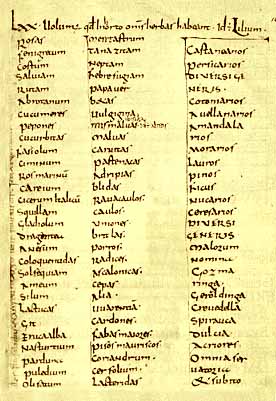
Capitulare de villis
c. 771-800
Ready when you are
Start chatting with Charlemagne now.
20 messages free · No credit card · Available in 50+ languages.