


Primary sourcePainting1602
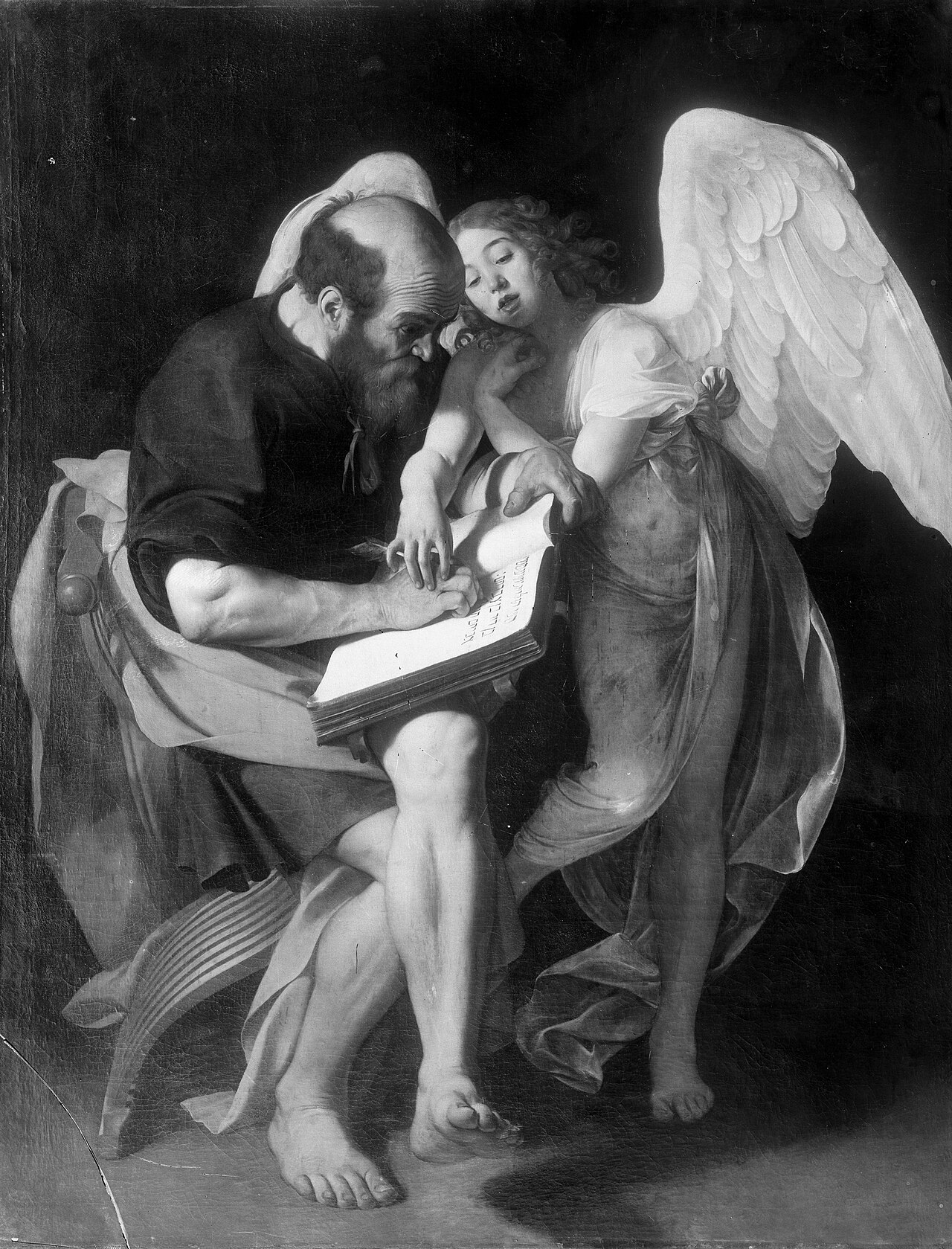
Saint Matthew and the Angel
Caravaggio · 1602
Caravaggio's rejected first version of an altarpiece for the Contarelli Chapel, destroyed in Berlin in 1945 and now known only from photographs.
Caravaggio's rejected first version of the Matthew altarpiece, revealing the realist style his patrons found too crude.
About this source
What it is
This painting was completed by Caravaggio in 1602 for the Contarelli Chapel in Rome. It showed Saint Matthew, depicted as an unlearned, poorly groomed peasant with dirty feet, being guided by a swooping angel as he wrote the Gospel. The original work was later destroyed by fire in Berlin at the end of World War II and survives only through black-and-white photographs.
Why it matters
The church and Caravaggio's patron, Cardinal del Monte, rejected this painting as too crude and irreverent for a sacred altarpiece, and Caravaggio had to paint a replacement, The Inspiration of Saint Matthew. The rejection reveals the tension between Caravaggio's realist style, which favoured ordinary, unidealized figures, and the decorum expected by religious patrons of the time.
Look closer
- Why do you think the church found this image of Saint Matthew disrespectful?
- What does it mean to study a painting only from old black-and-white photographs?
- How does comparing this rejected version with the accepted one help us understand what patrons valued?
This painting is part of the curated material that grounds the AI version of Caravaggio on Humy.ai — when students ask about related events, the AI can quote it and cite it.
More Caravaggio sources
Browse all 90 →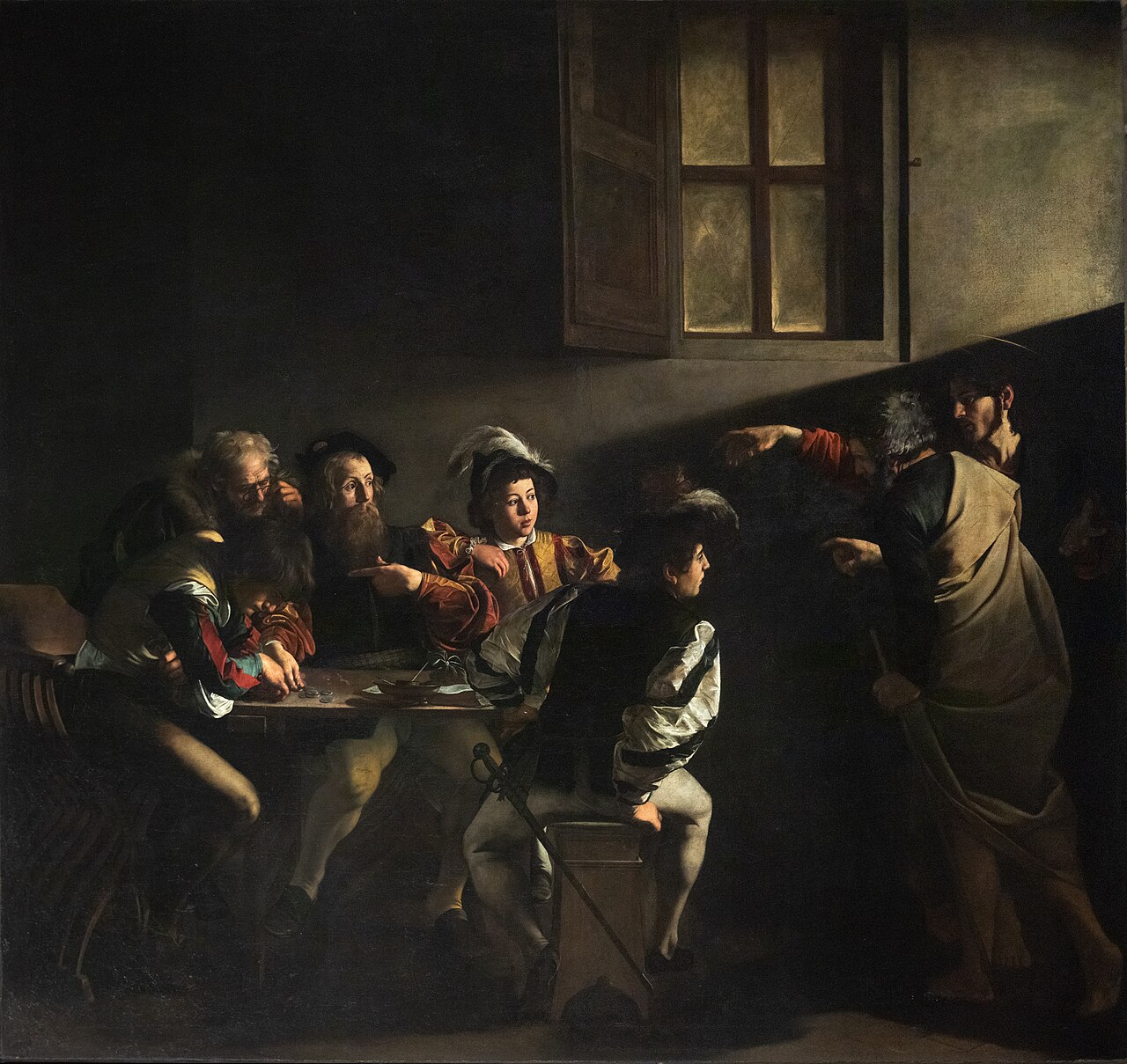 Painting
Secondary source
The Calling of Saint Matthew
Caravaggio · 1599–1600
 Artifact
Primary source
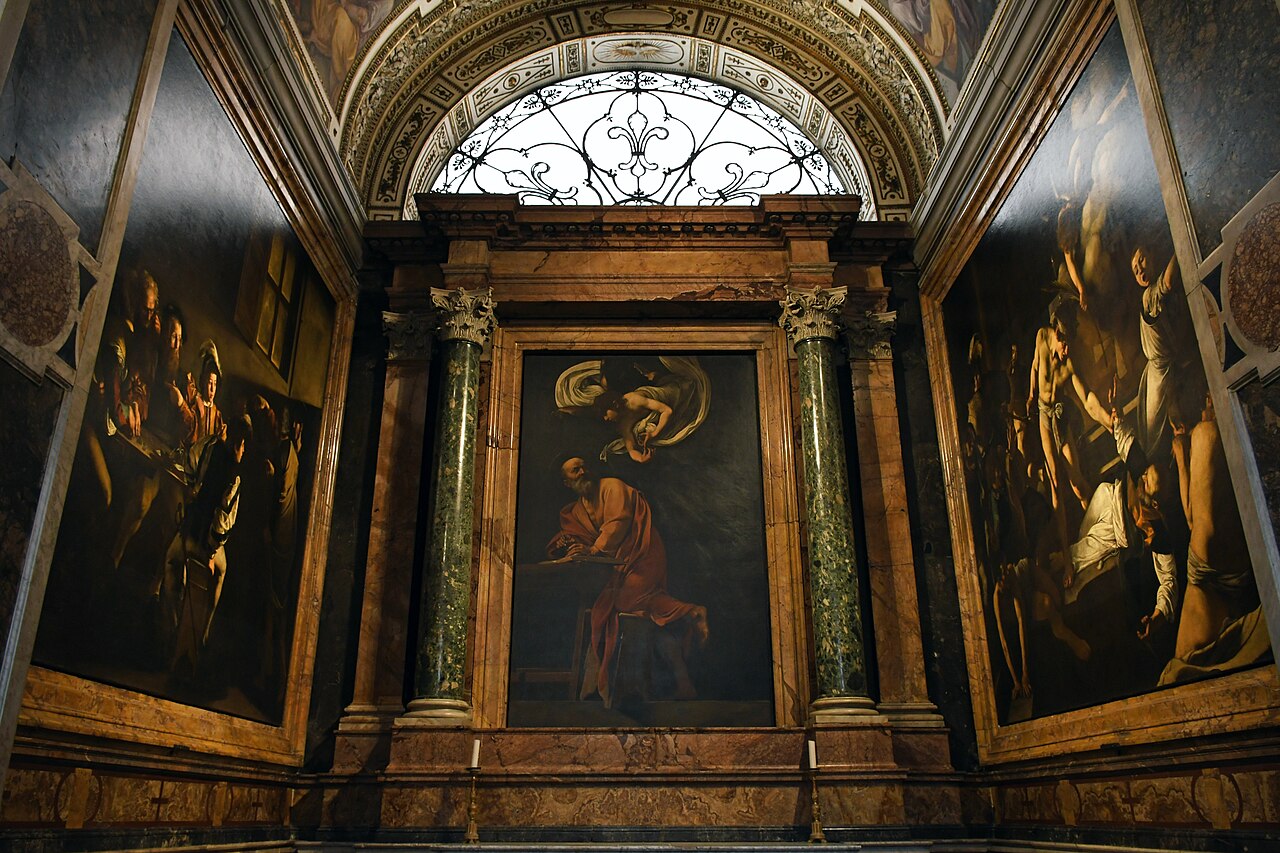
Contarelli Chapel
Caravaggio · 1600
 Painting
Secondary source
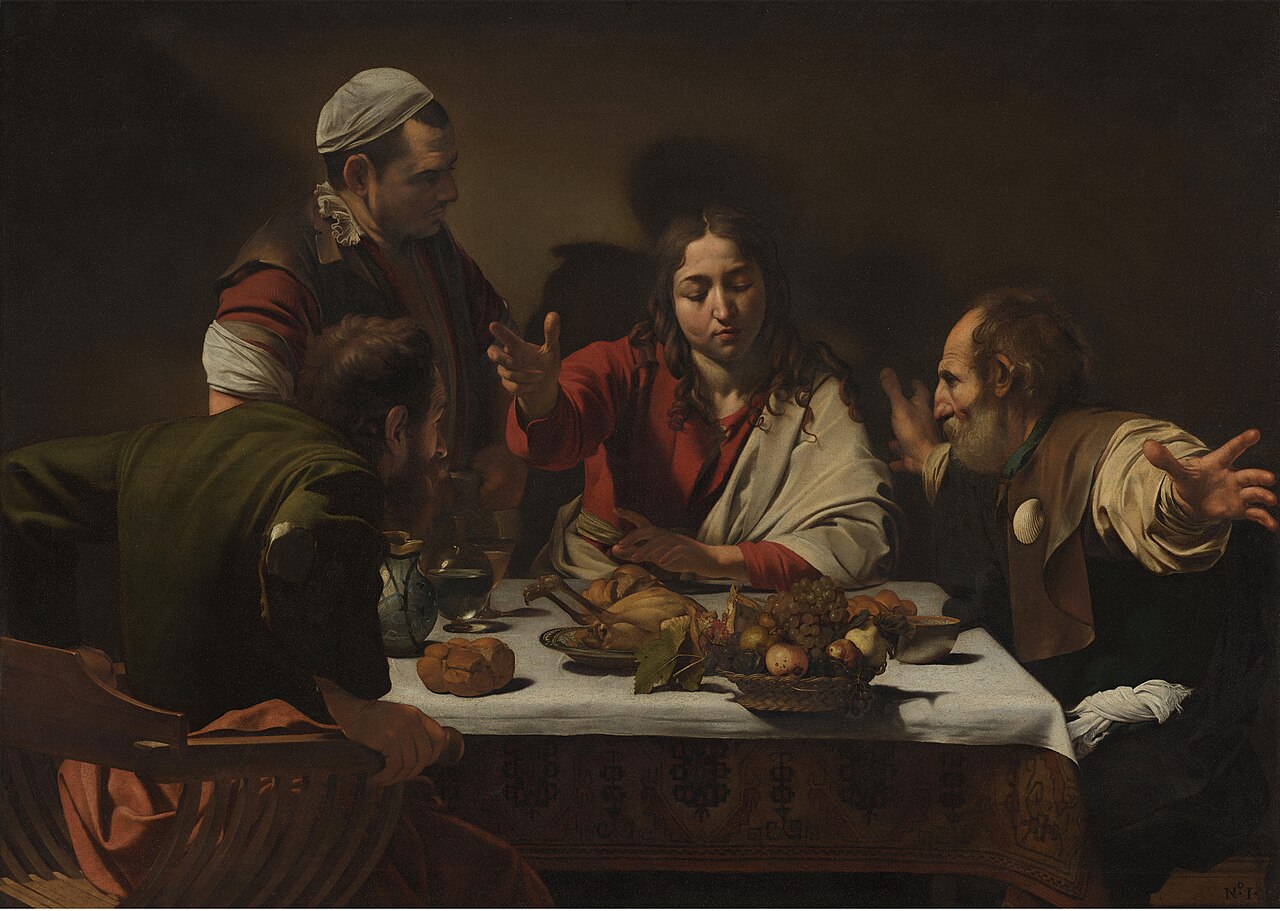
Supper at Emmaus
Caravaggio · 1601
 Painting
Secondary source
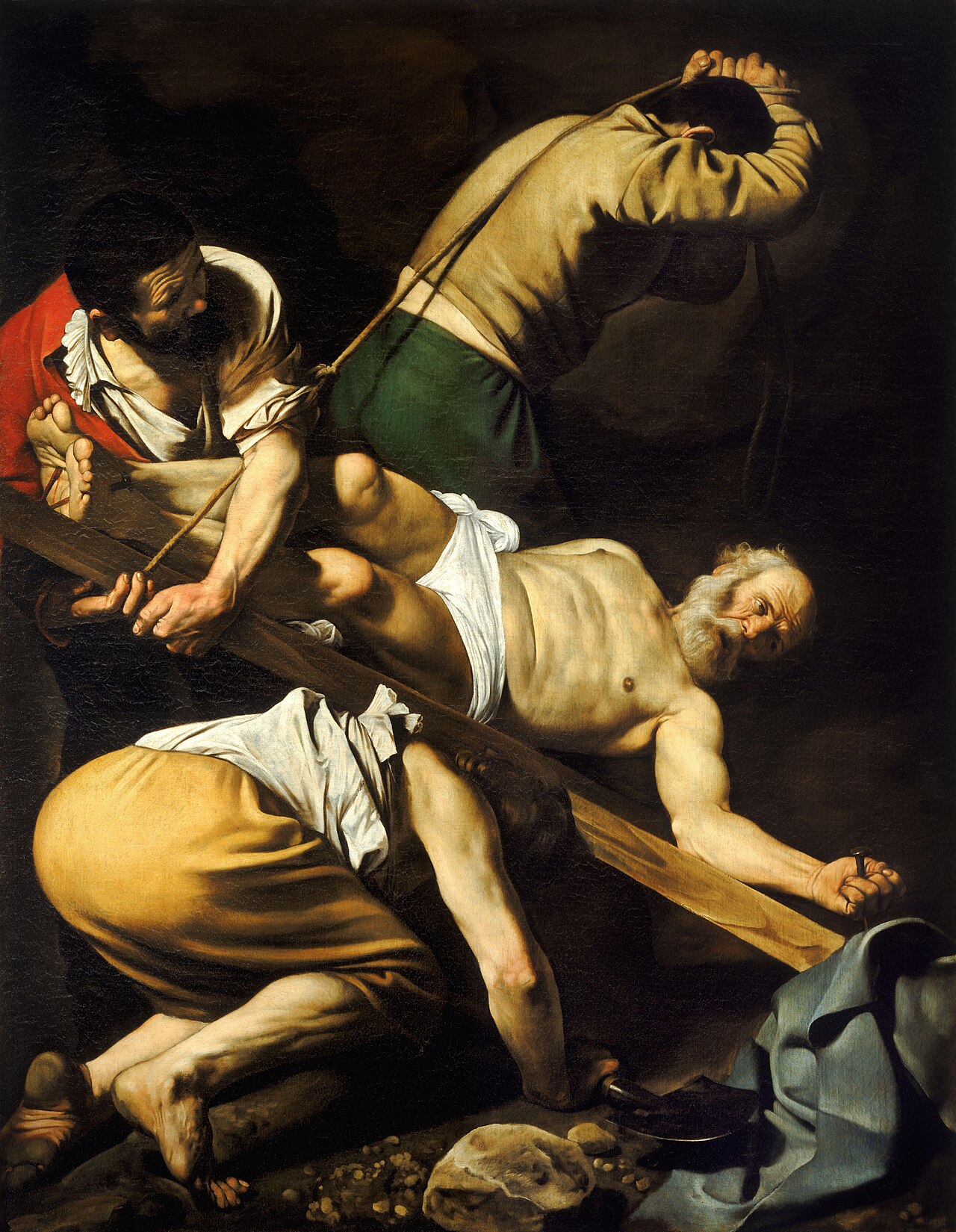
Crucifixion of Saint Peter
Caravaggio · 1600-1601

Free account
Read every Caravaggio source
Sign up free →
Ready when you are
Start chatting with Caravaggio now.
20 messages free · No credit card · Available in 50+ languages.