


Secondary sourcePainting1368–1644
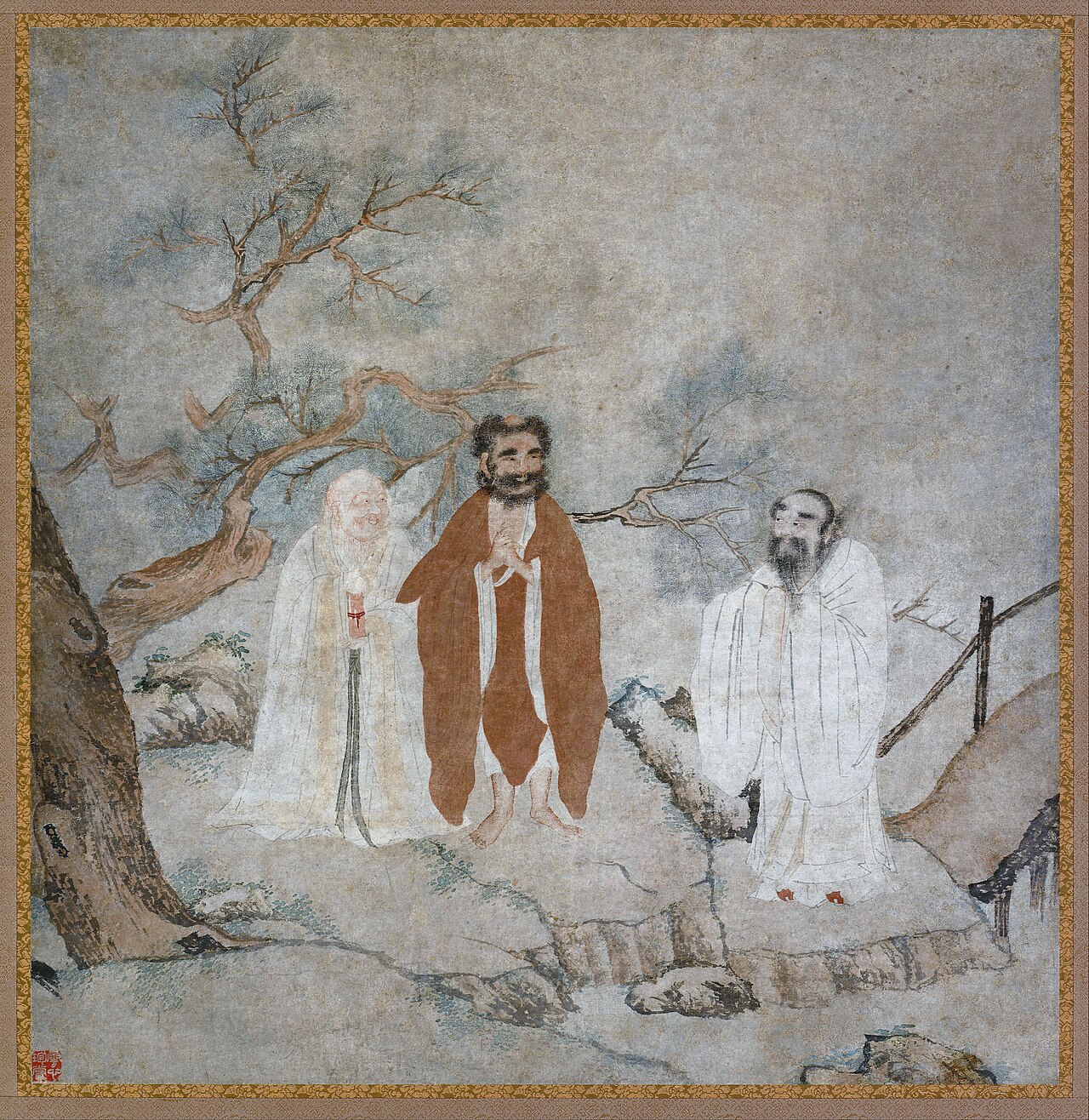
Sakyamuni, Lao Tzu and Confucius
Unknown · 1368–1644
A Ming-dynasty painting showing the Buddha, Laozi and Confucius together, symbolizing the 'three teachings' of Chinese thought.
Laozi appears here alongside the Buddha and Confucius, reflecting his later status as one of China's three great sages.
About this source
What it is
This is a painting made during the Ming dynasty, by an unknown artist. It shows three robed figures standing on rocks beside a bare pine tree: likely representations of the Buddha, Laozi and Confucius, the founders of Buddhism, Taoism and Confucianism.
Why it matters
The painting reflects a long Chinese tradition of showing these three teachers together, suggesting that their philosophies could be seen as complementary rather than rival. It tells us more about how later generations viewed Laozi and the other sages than about Laozi's own life, since it was painted many centuries after he supposedly lived.
Look closer
- How does the artist use clothing and posture to distinguish the three figures?
- Why might an artist want to paint these three teachers together in one scene?
- What does this painting suggest about how later Chinese society understood the relationship between different belief systems?
This painting is part of the curated material that grounds the AI version of Laozi on Humy.ai — when students ask about related events, the AI can quote it and cite it.
More Laozi sources
Meet the AI Laozi →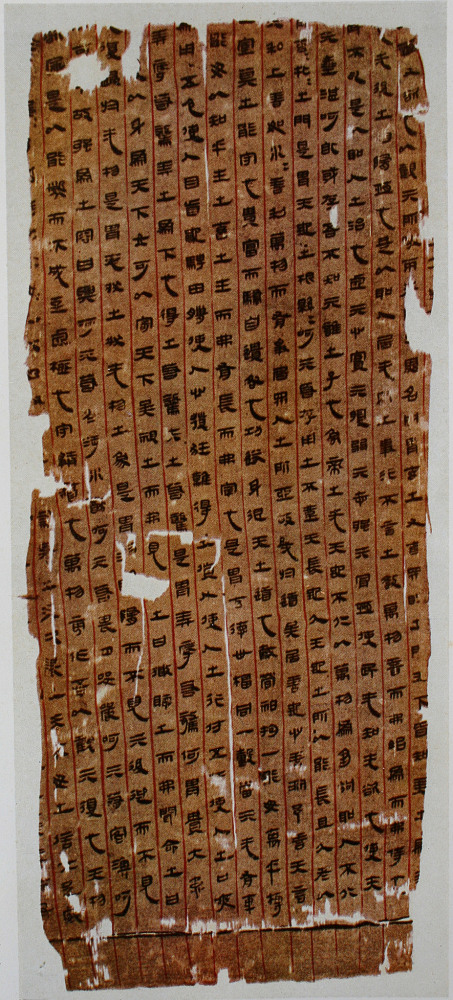 Book
Secondary source
Tao Te Ching
Laozi · c. 4th-3rd century BCE
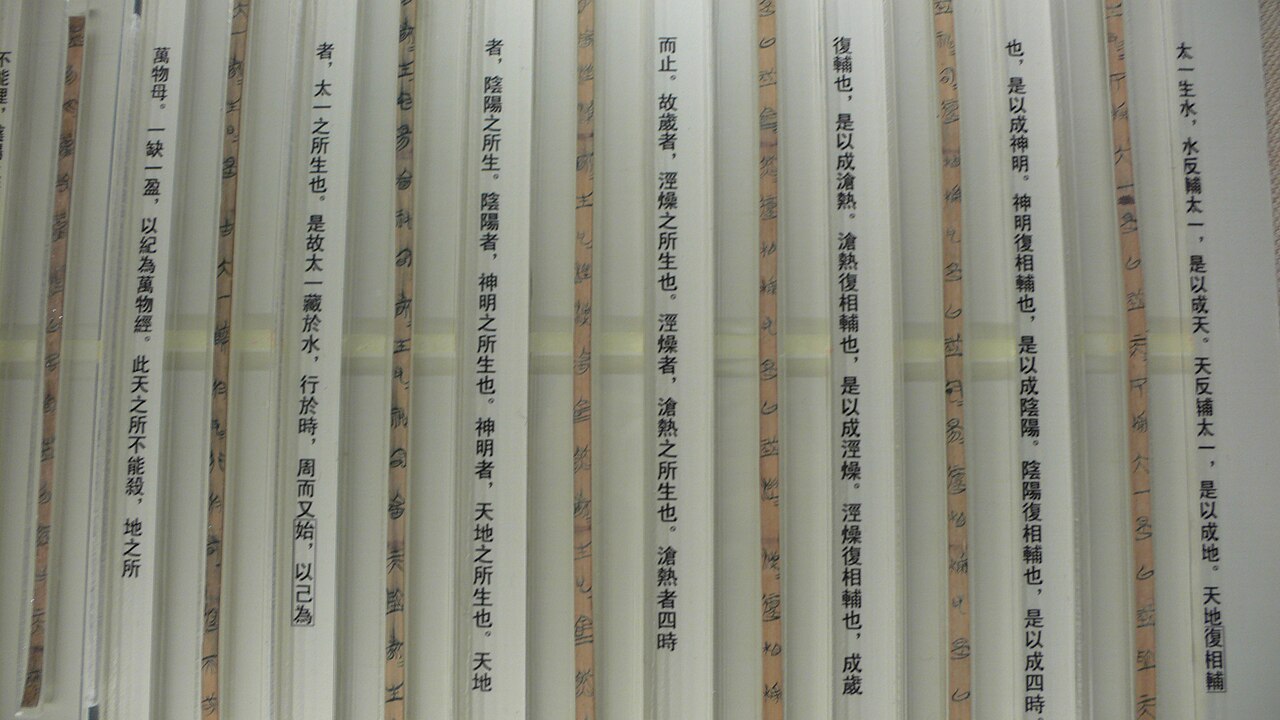 Artifact
Primary source
Bamboo Texts of Guodian
c. 300 BCE
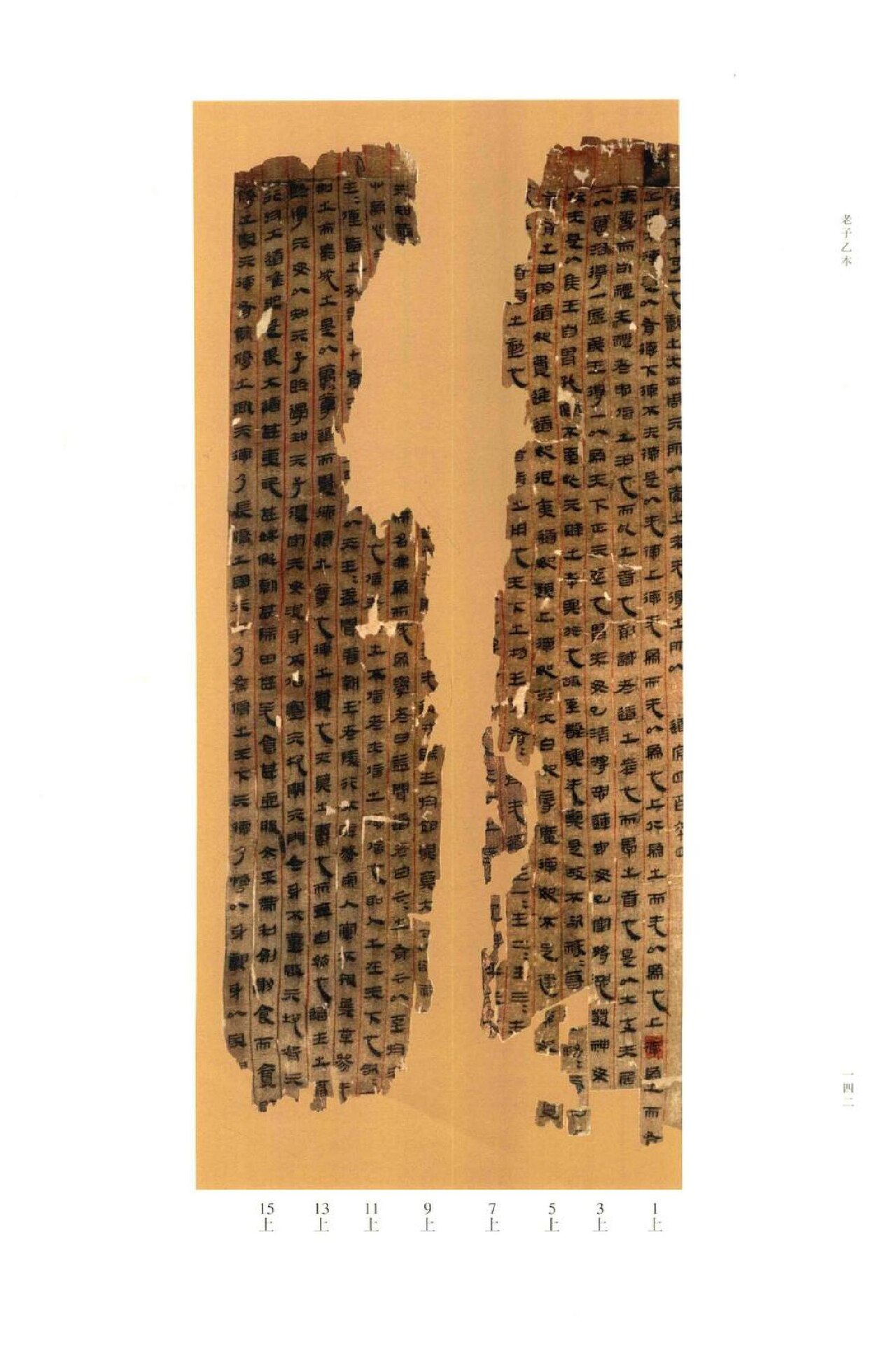 Book
Primary source
Mawangdui Silk Texts of the Laozi
Anonymous Han scribes · c. 200-168 BCE
 Book
Secondary source
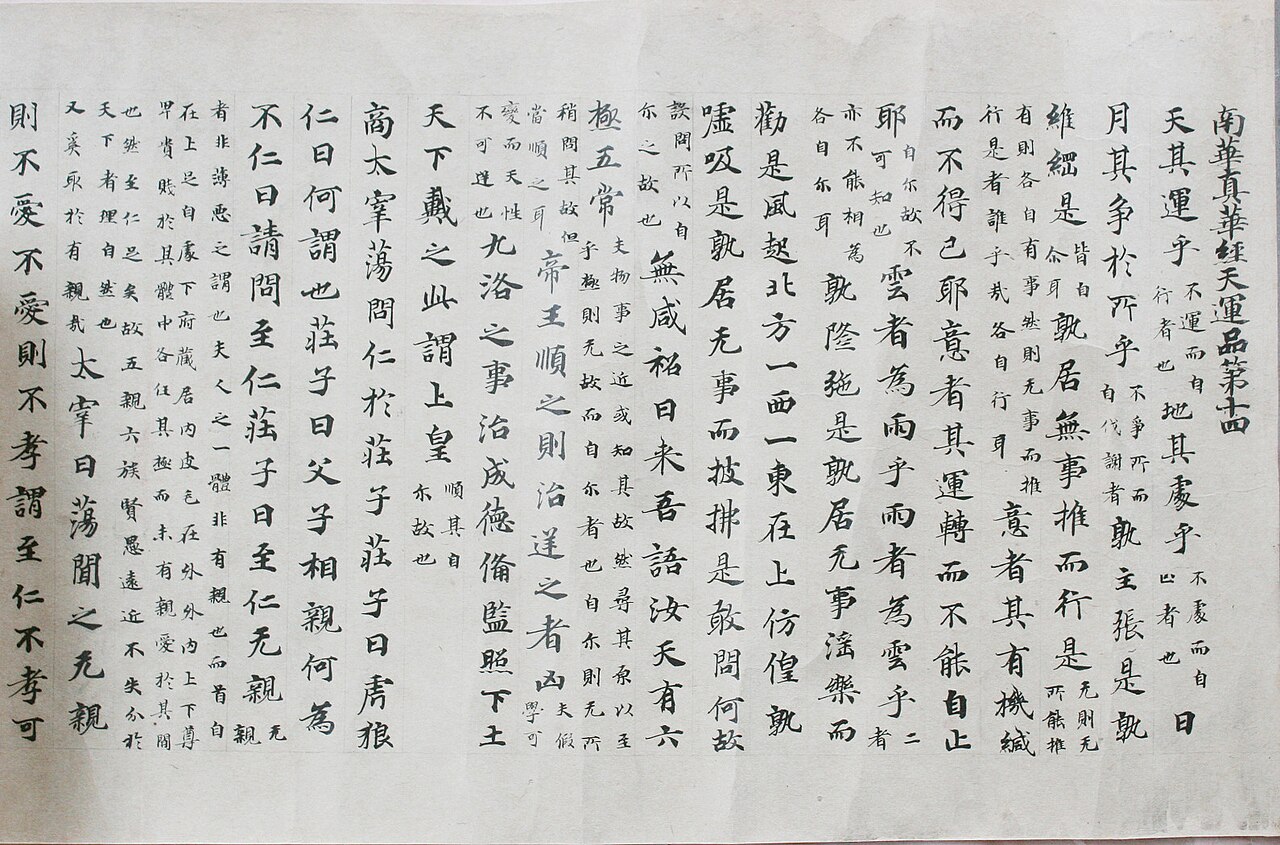
Zhuangzi
Zhuang Zhou · c. 300 BCE
 Painting
Secondary source
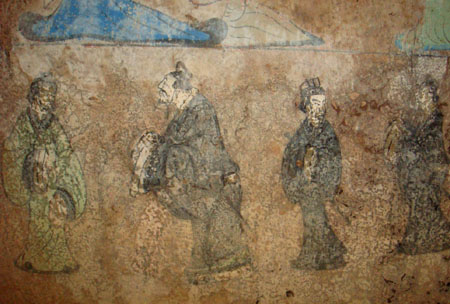
Confucius and Laozi fresco, Dongping tomb
Anonymous Chinese painter of the Western Han period · Western Han period, c. 2000 years old
Ready when you are
Start chatting with Laozi now.
20 messages free · No credit card · Available in 50+ languages.