


Secondary sourcePainting15th century
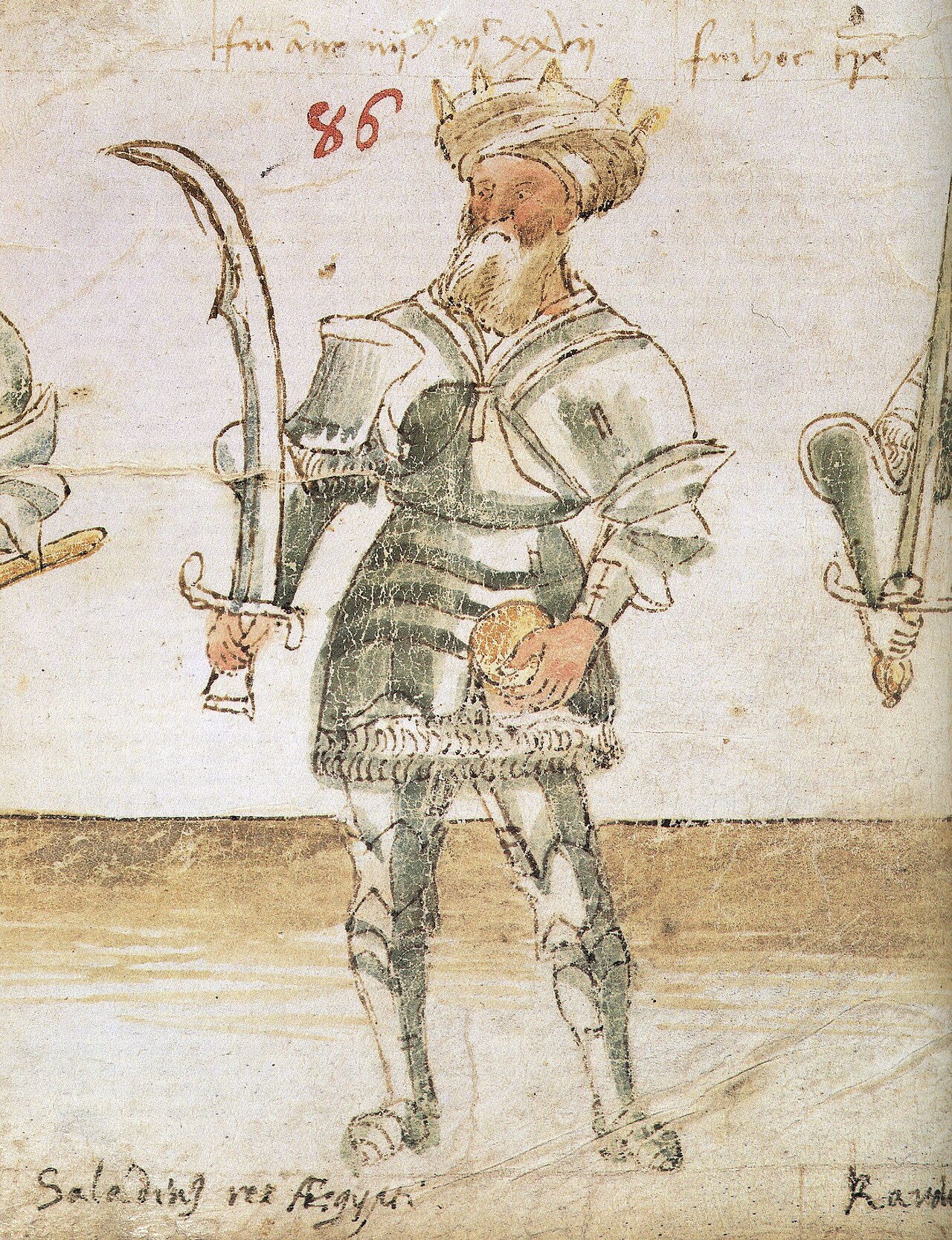
Saladinus Rex Aegypti
15th century
A 15th-century manuscript illustration labelled 'Saladin, king of Egypt', showing an imagined portrait of the sultan.
This imagined 15th-century portrait labels its subject as Saladin, king of Egypt, long after his lifetime.
About this source
What it is
This is a painted illustration from a 15th-century manuscript, showing a bearded man wearing a crown or turban and armor, holding a curved sword and a golden orb. A handwritten caption identifies him as 'Saladinus rex Aegypti' — Saladin, king of Egypt.
Why it matters
Made centuries after Saladin's death, this image reflects how later medieval Europeans imagined famous historical rulers, often dressing them in European-style armor and symbols of royal power rather than depicting their true appearance. It tells us more about medieval ideas of kingship than about Saladin himself.
Look closer
- What symbols of power can you spot in this picture, and what do they usually represent in European art?
- Does the armor and clothing look historically accurate for a 12th-century Muslim ruler? Why might that be?
- Why do you think artists kept recreating images of famous figures long after they died?
This painting is part of the curated material that grounds the AI version of Saladin on Humy.ai — when students ask about related events, the AI can quote it and cite it.
More Saladin sources
Meet the AI Saladin →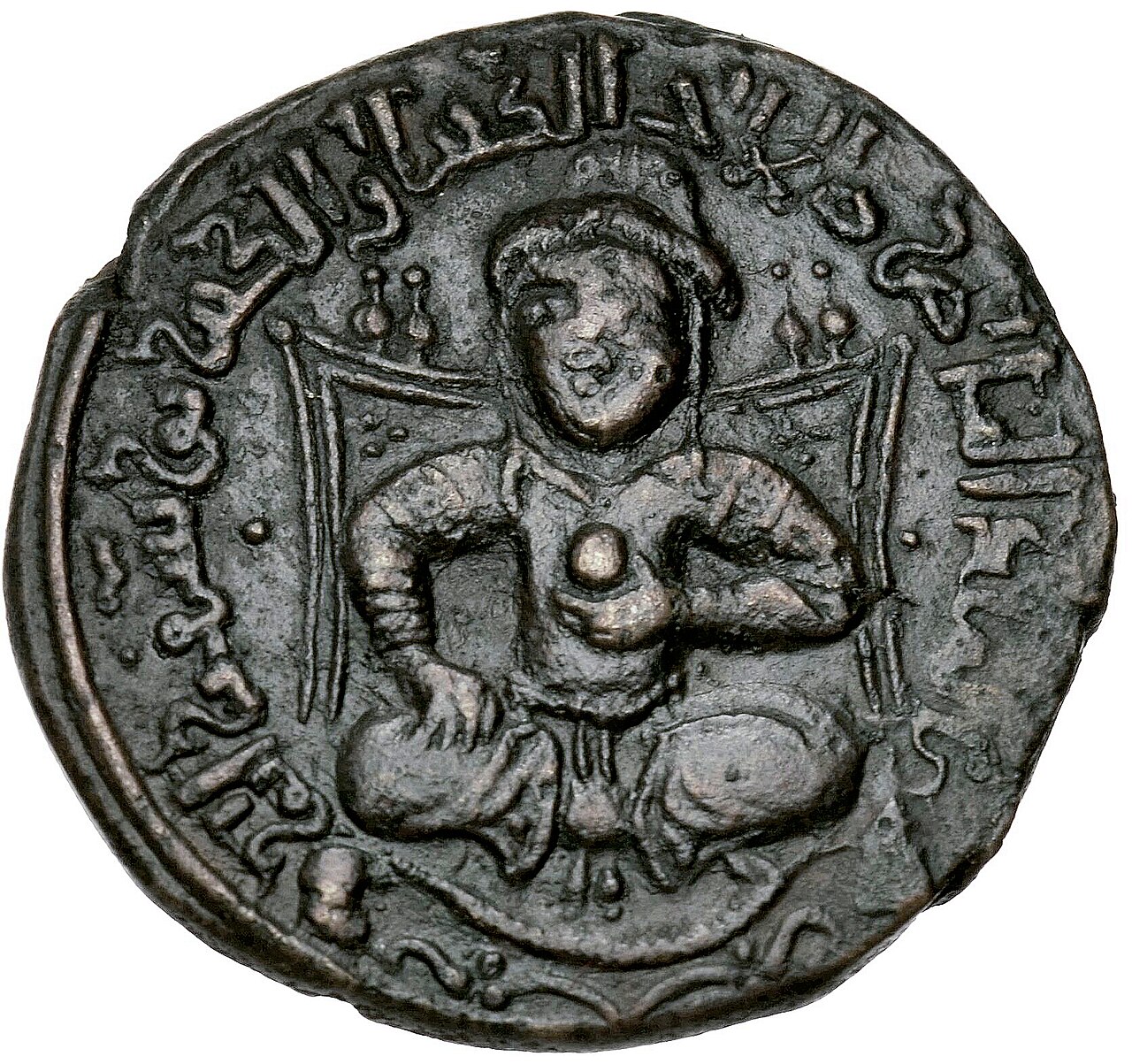 Artifact
Primary source
Dirham of Saladin
AH 586 (AD 1190-91)
 Painting
Secondary source
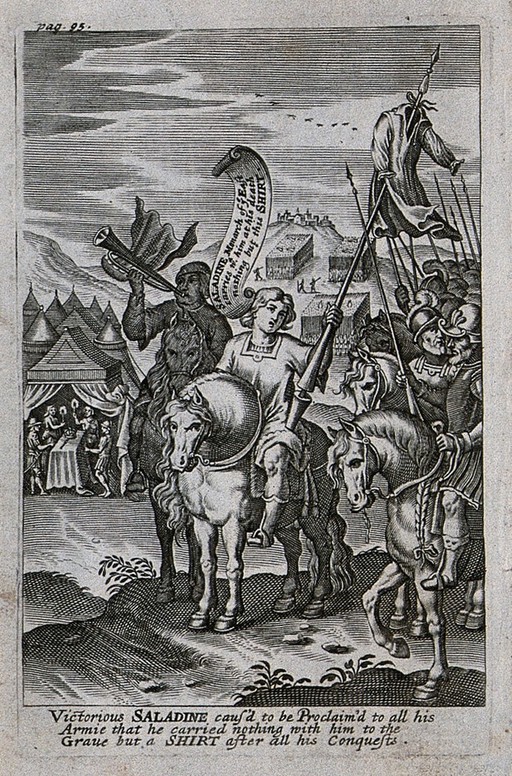
Saladin Proclaims He Will Take Only a Shirt to His Grave
John Payne · 1639
 Artifact
Primary source
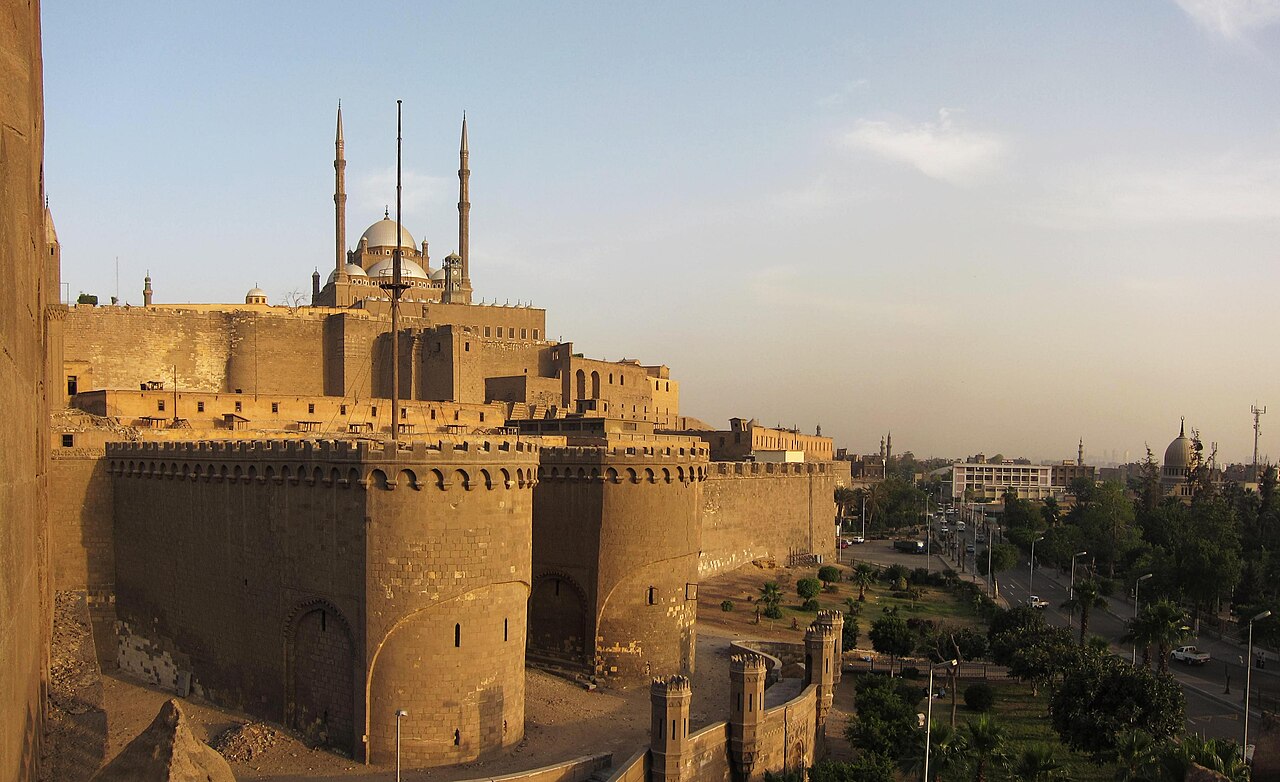
Cairo Citadel
Saladin · begun 1176
 Photograph
Secondary source
Tomb of Saladin, Damascus
 Painting
Secondary source
Saladin Seizing the True Cross from Guy of Lusignan
Matthew Paris
Ready when you are
Start chatting with Saladin now.
20 messages free · No credit card · Available in 50+ languages.