


Secondary sourceBooklate 13th century AD
Sayings of Pythagoras
Yaqut Al-Musta'simi and Mahmud b. Abi'l-Mahasin Al-Qashi · late 13th century AD
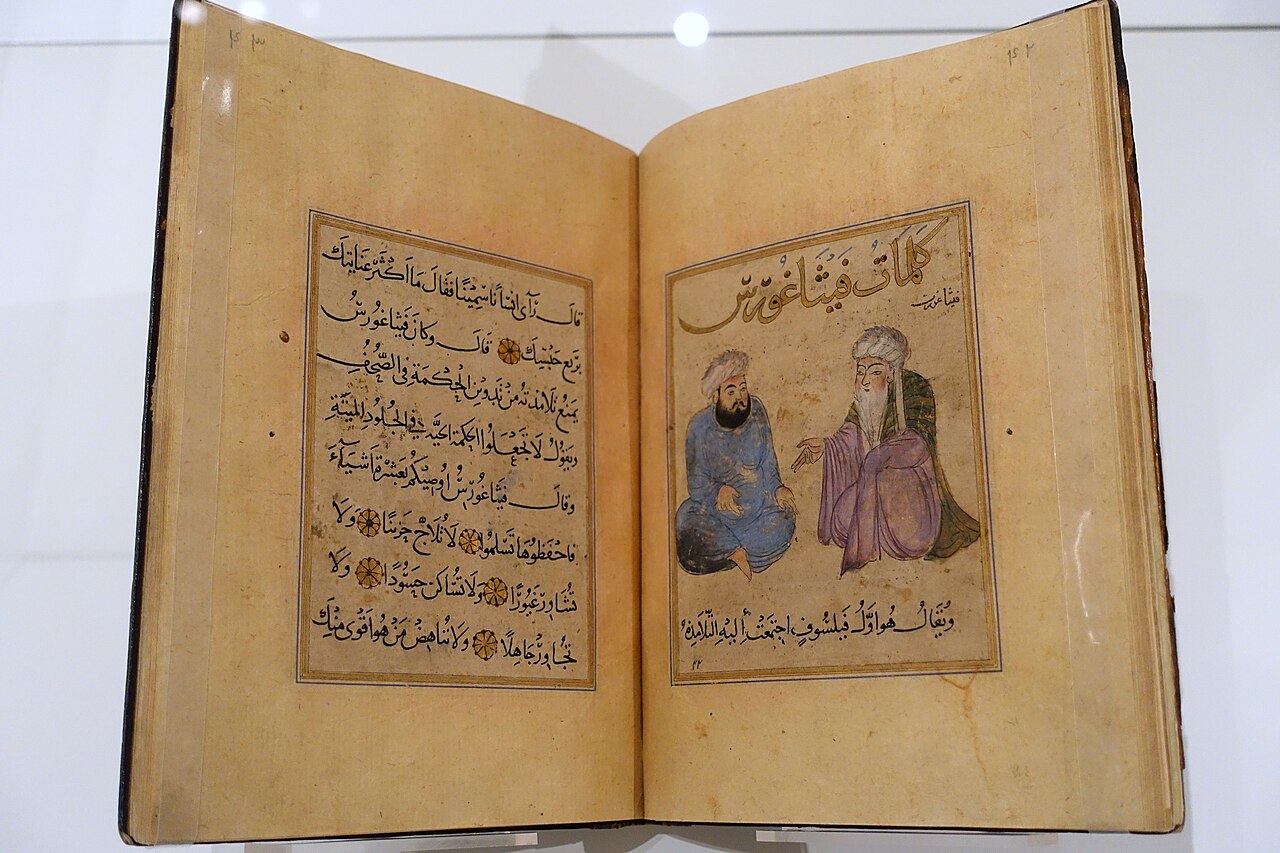
An illuminated 13th-century Arabic manuscript page recording sayings attributed to Pythagoras, showing his status as a sage in the Islamic world.
This manuscript page preserves sayings attributed to Pythagoras, showing his lasting reputation as a sage in the Islamic world.
About this source
What it is
This is a page from a late 13th-century Arabic manuscript recording sayings of Pythagoras. It was calligraphed by Yaqut Al-Musta'simi and painted by Mahmud b. Abi'l-Mahasin Al-Qashi, in Iraq. It is now held at the Aga Khan Museum in Toronto.
Why it matters
Pythagoras was remembered for centuries not only as a mathematician but as a wise sage whose sayings were collected and illustrated. This manuscript, made by Islamic scholars and artists long after his life, shows how his reputation for wisdom spread far beyond Greece.
Look closer
- What does the care put into the calligraphy and painting tell you about how Pythagoras was valued?
- Why might a culture far from ancient Greece preserve and illustrate his sayings?
- What is missing if we only know Pythagoras through sayings attributed to him centuries later?
This book is part of the curated material that grounds the AI version of Pythagoras on Humy.ai — when students ask about related events, the AI can quote it and cite it.
More Pythagoras sources
Meet the AI Pythagoras → Book
Secondary source
Lives and Opinions of Eminent Philosophers, Book V (Life of Aristotle)
Diogenes Laërtius · c. 3rd century CE
 Book
Secondary source
Histories
Herodotus · c. 440 BCE
 Painting
Secondary source
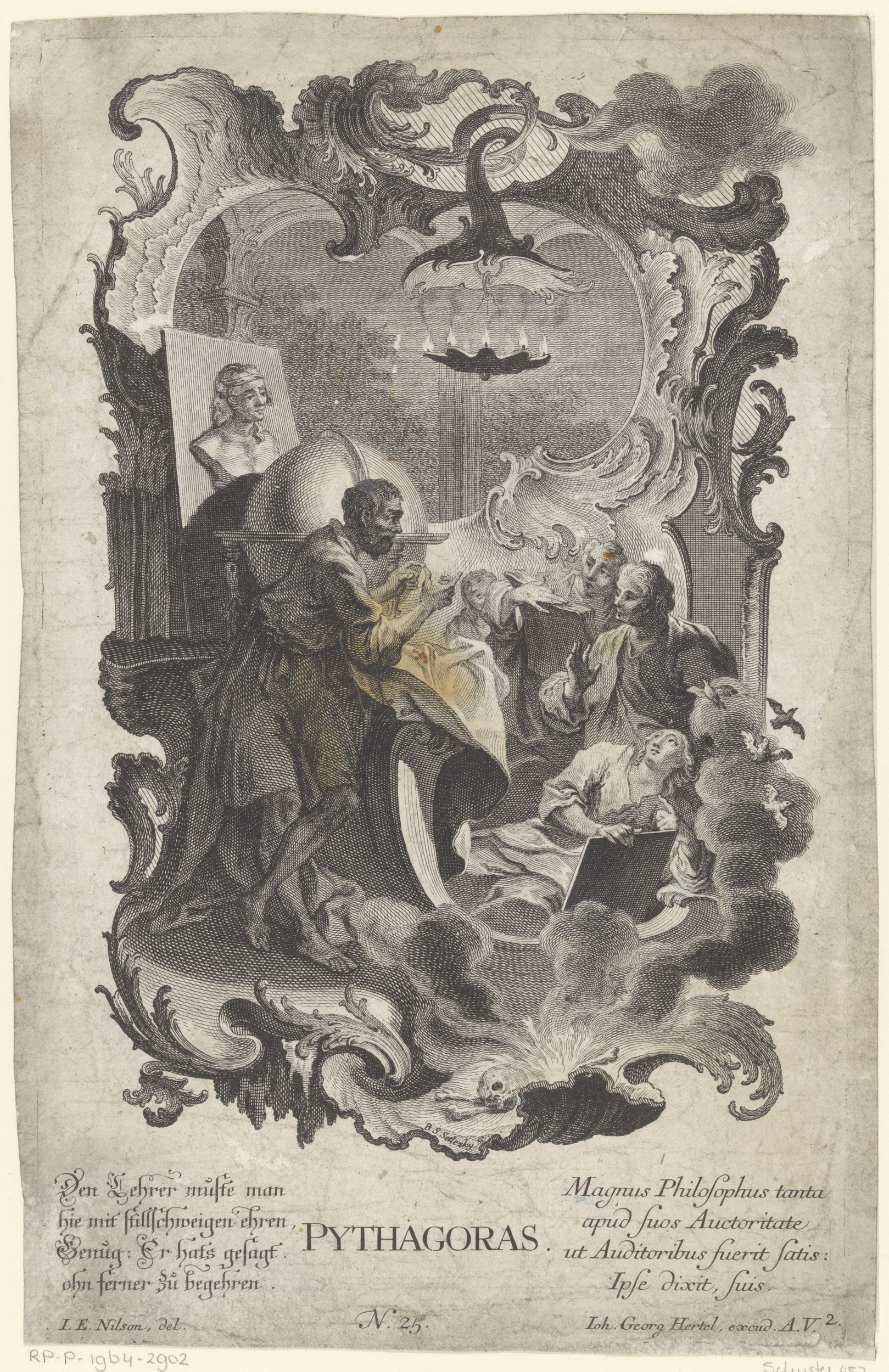
Pythagoras Leaning on a Globe with Four Listeners
 Book
Secondary source
Metaphysics
Aristotle · c. 400 BCE
 Painting
Secondary source
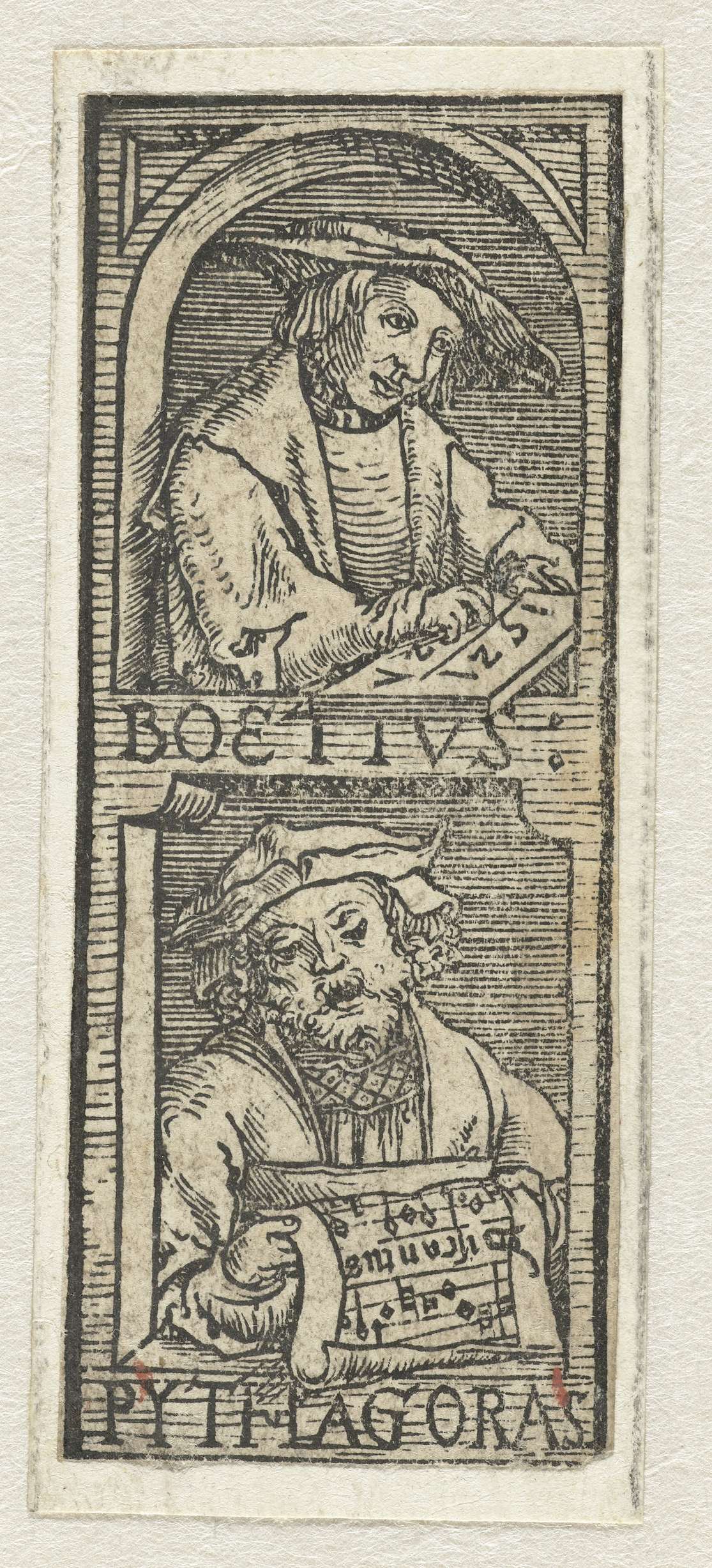
Boethius and Pythagoras
1521
Ready when you are
Start chatting with Pythagoras now.
20 messages free · No credit card · Available in 50+ languages.