


Primary sourceBook
Somnium Scipionis
Cicero
The visionary closing section of Cicero's De re publica, imagining a dream of the Roman general Scipio Aemilianus about the cosmos and the afterlife of statesmen.
Cicero wrote this philosophical dream-vision as the climax of his work on the Roman state.
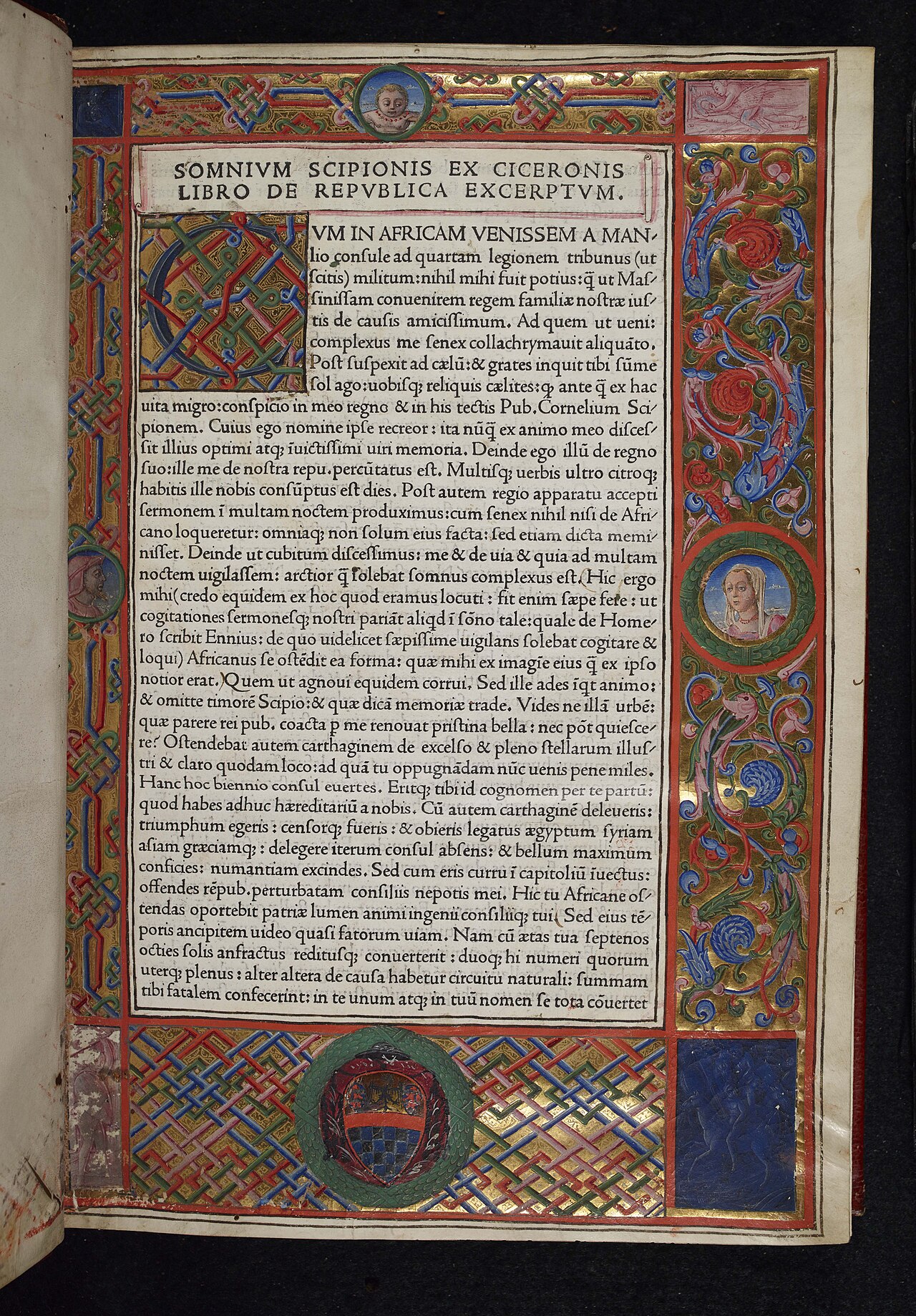
About this source
What it is
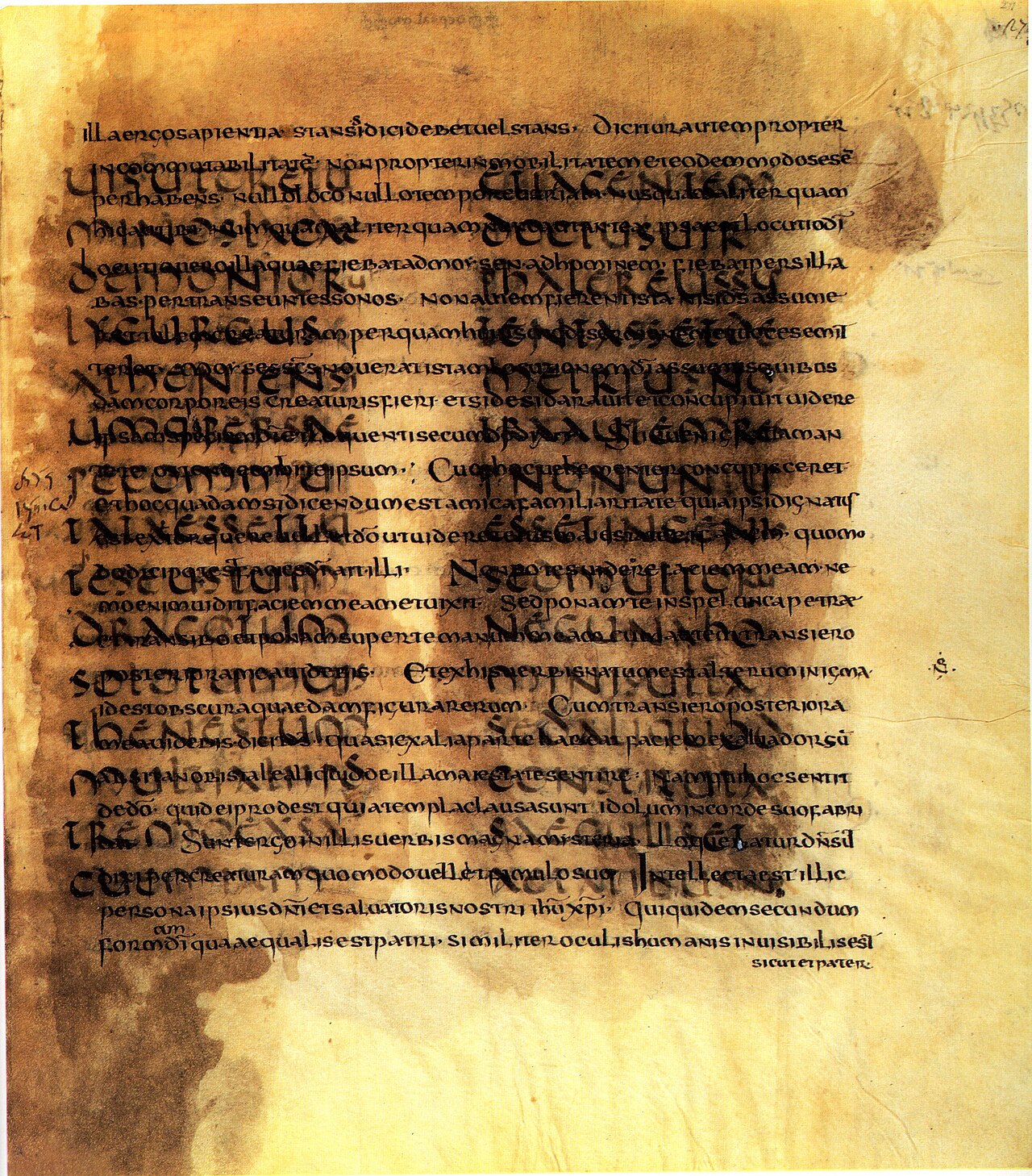
The Somnium Scipionis (Dream of Scipio) is the surviving final book of Cicero's dialogue De re publica, written by the Roman statesman Cicero. It survives mainly because the later writer Macrobius quoted long passages in his own commentary. The image here shows a page from a 12th-century manuscript of that commentary, copied centuries after Cicero's death.
Why it matters
The text describes a dream vision given to Scipio Aemilianus, revealing the structure of the universe and the reward awaiting loyal statesmen after death. It reflects Cicero's Stoic philosophy and his ideas about duty and the soul. Through Macrobius's commentary, the work deeply shaped medieval ideas about the cosmos, showing how Cicero's writing influenced thinkers long after Rome fell.
Look closer
- Why did later readers preserve this text through a commentary rather than directly?
- What does the decoration of the manuscript tell us about who valued this text, and why?
- How might a vision of the afterlife serve a political purpose for a Roman statesman?
This book is part of the curated material that grounds the AI version of Cicero on Humy.ai — when students ask about related events, the AI can quote it and cite it.
More Cicero sources
Meet the AI Cicero →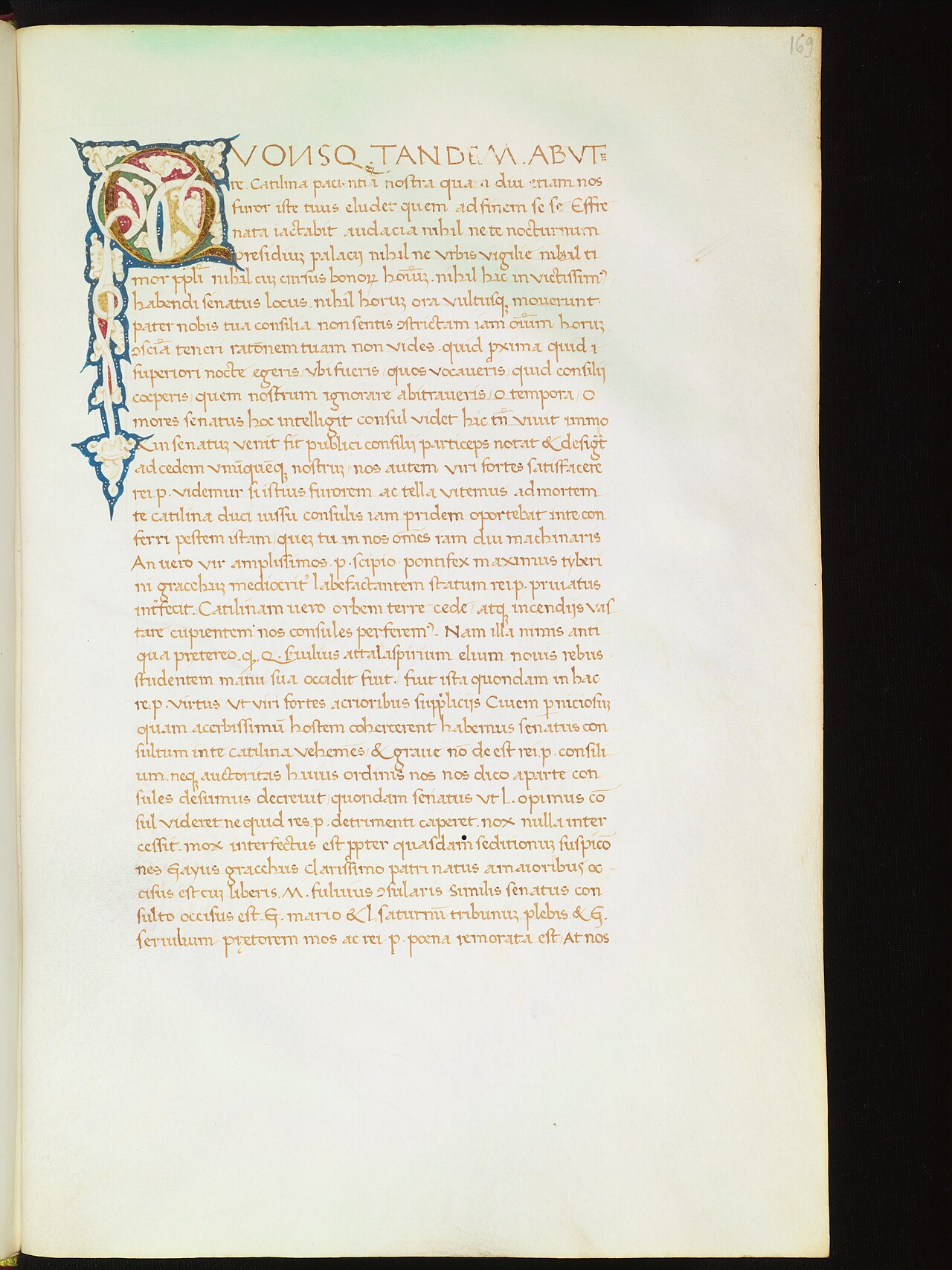 Speech
Primary source
Catiline Orations
Cicero · 63 BCE
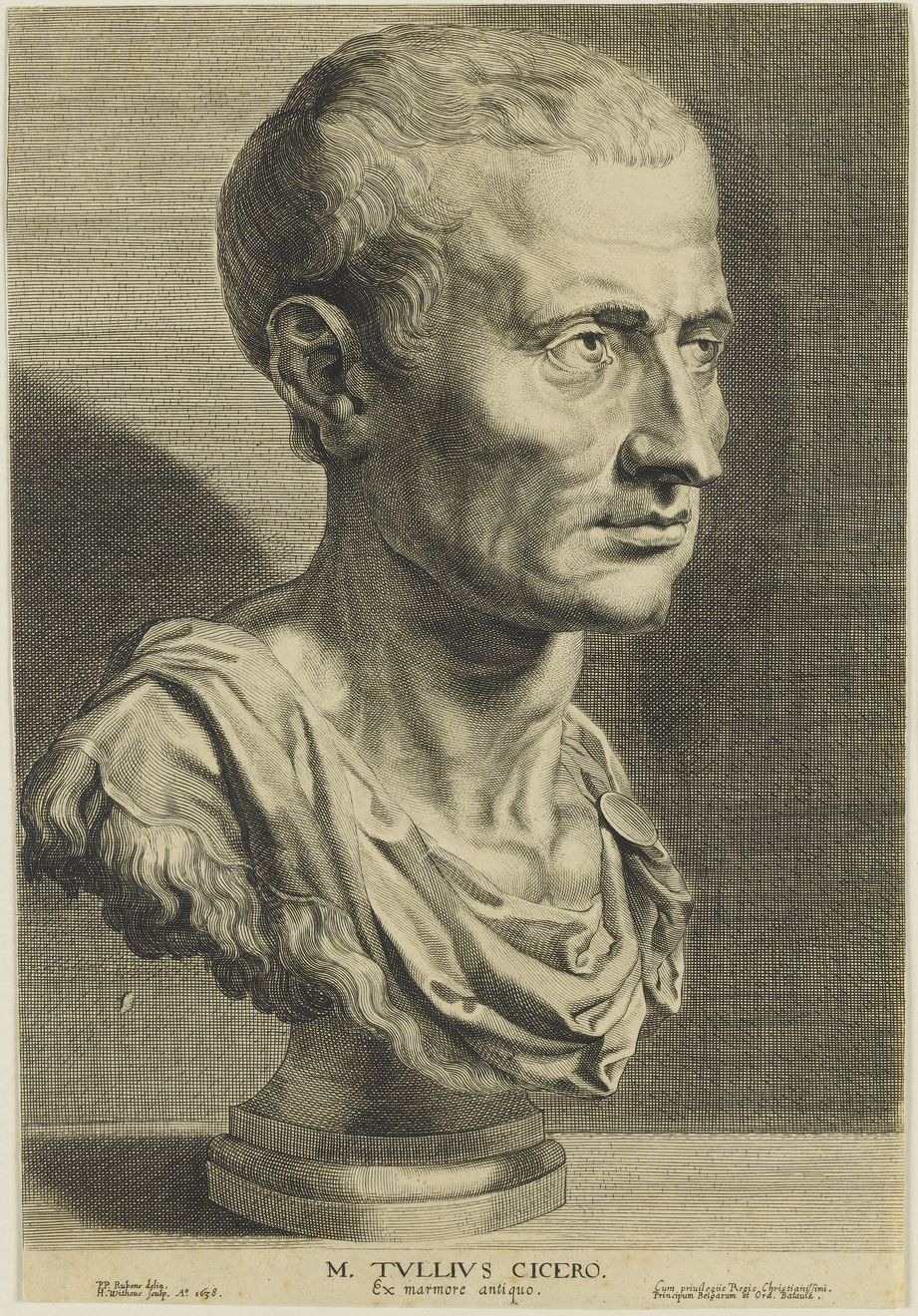 Painting
Secondary source
Marcus Tullius Cicero, engraved after antique marble busts
Jan Witdoeck
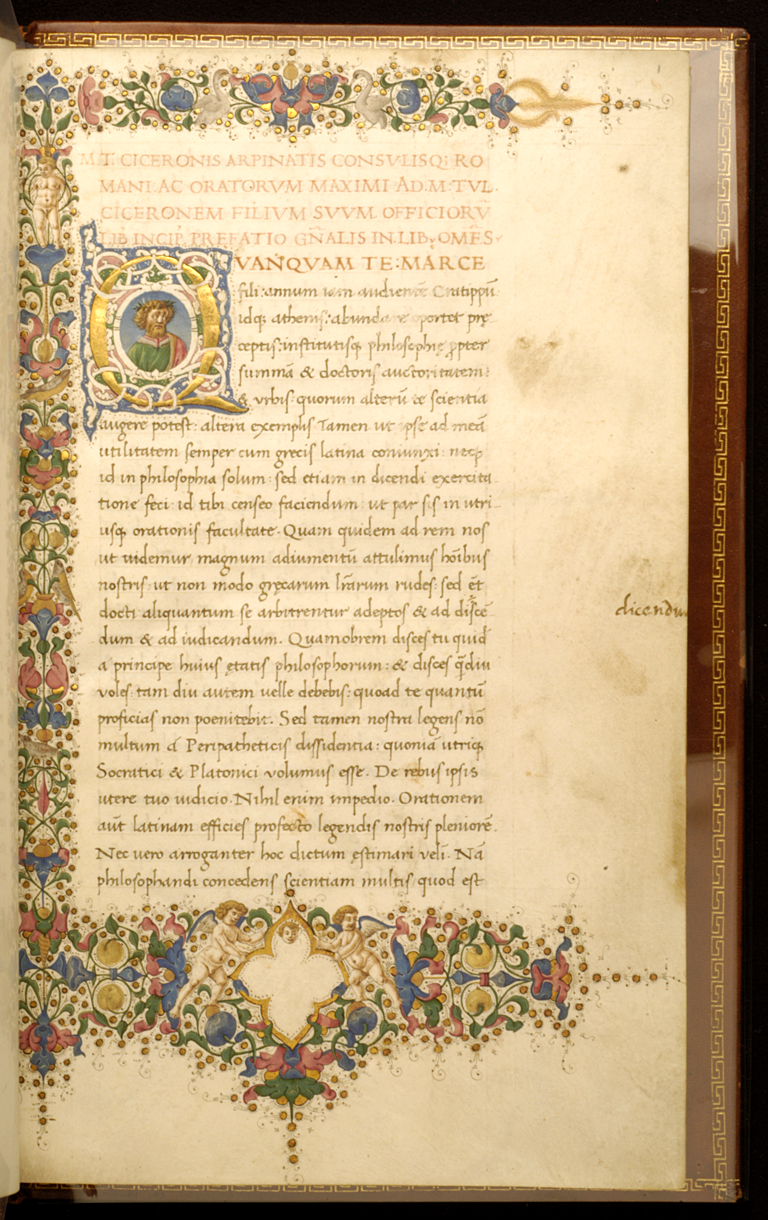 Book
Primary source
De Officiis
Cicero · 44 BC
 Painting
Secondary source
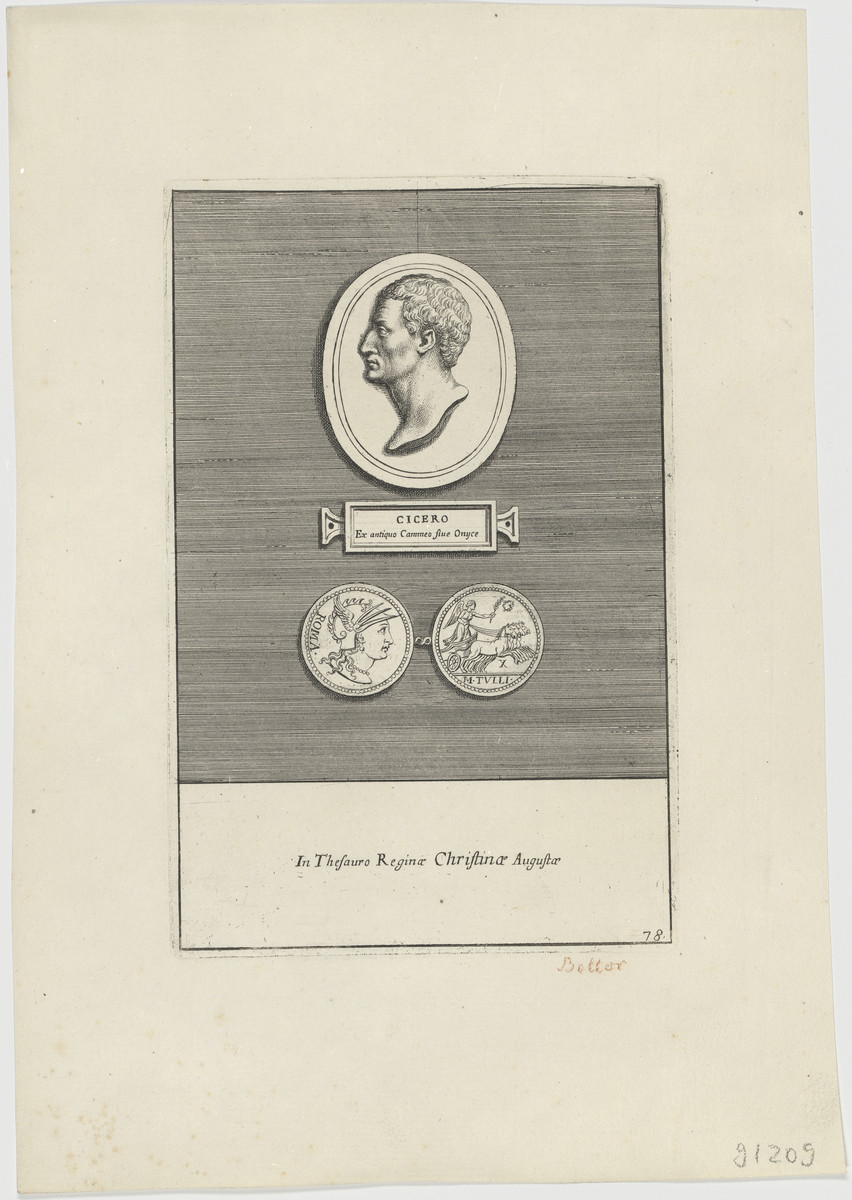
Portrait of Cicero (Bildnis des Cicero)
 Book
Primary source
De re publica
Cicero · c. 54–51 BC
Ready when you are
Start chatting with Cicero now.
20 messages free · No credit card · Available in 50+ languages.