


Secondary sourcePainting1746
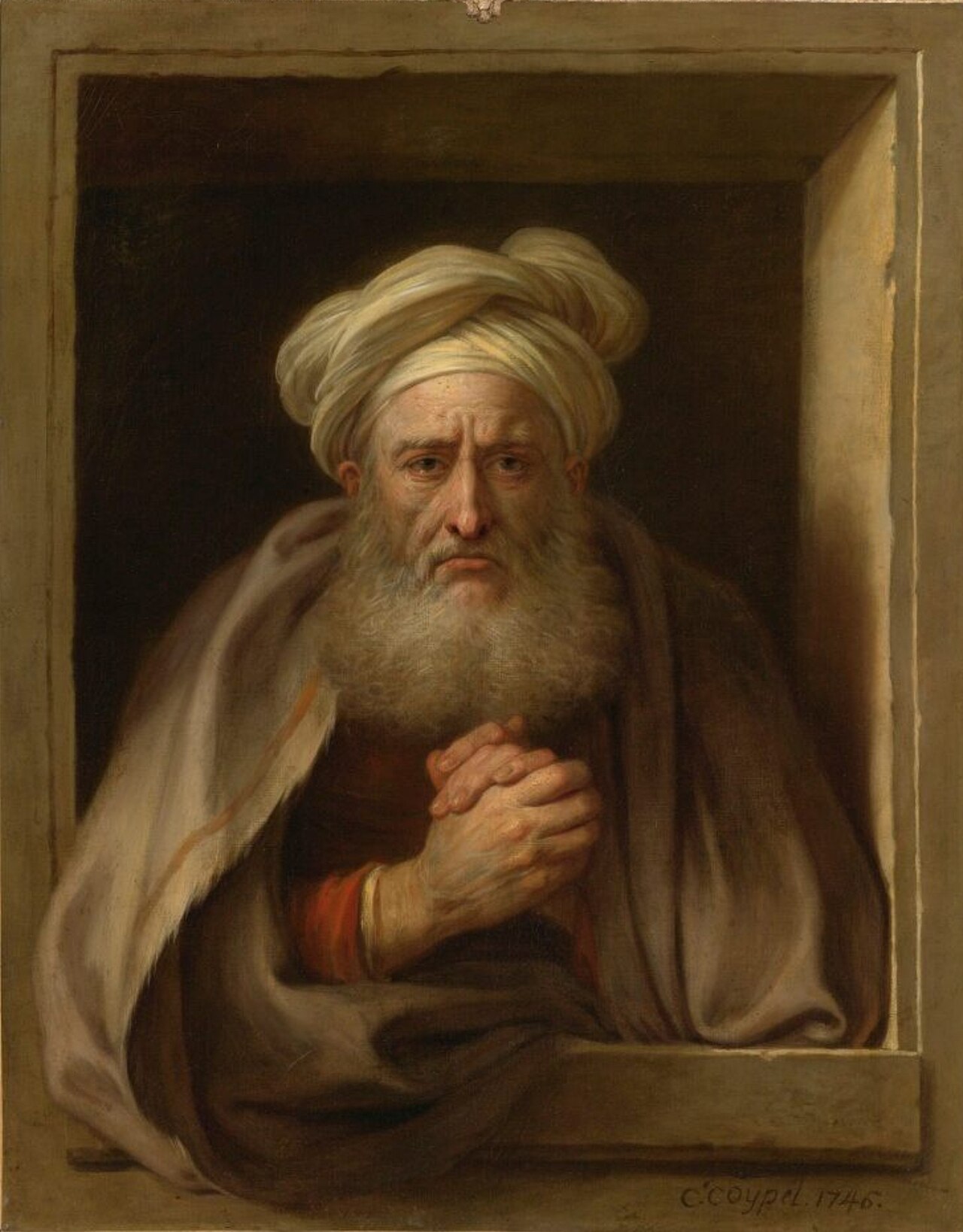
Sorrowful Heraclitus
Charles-Antoine Coypel · 1746
A painting by Charles-Antoine Coypel, signed and dated 1746, shows an elderly bearded Heraclitus in a white turban, leaning from a window ledge with a melancholic expression.
Shows Heraclitus as a melancholy figure in eighteenth-century French painting, part of the weeping-philosopher tradition.
About this source
What it is
This is a painting by Charles-Antoine Coypel, signed in the lower right corner and dated 1746. It shows an elderly bearded man in a white turban and draped cloak, with his hands clasped and leaning from a stone window ledge. His expression is melancholic, and the background is dark.
Why it matters
Heraclitus, a Greek philosopher who lived about 535 to 470 BCE, became known in later European art as the weeping philosopher. Coypel was a French painter, and this signed work from 1746 shows that the image of a sorrowful Heraclitus was still being painted in the eighteenth century. It reflects the taste and ideas of its own time rather than a record of the philosopher's life.
Look closer
- How does the painter show sadness through the pose, the hands and the expression?
- Why might the artist have placed the figure at a stone window ledge?
- What does the painting leave out about what Heraclitus actually believed?
This painting is part of the curated material that grounds the AI version of Heraclitus on Humy.ai — when students ask about related events, the AI can quote it and cite it.
More Heraclitus sources
Browse all 88 →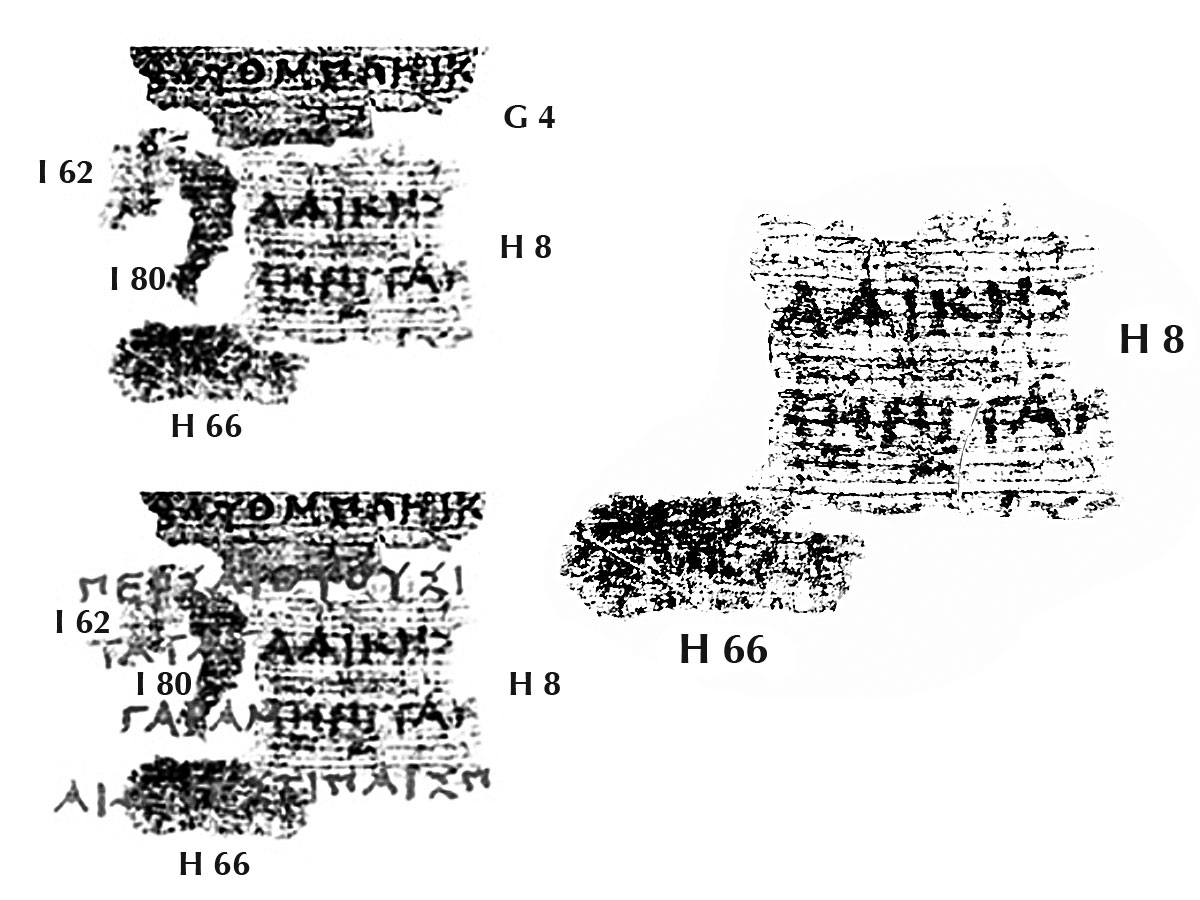 Document
Primary source
Derveni Papyrus, Column IV
Unknown author · 4th century BC
 Book
Secondary source
Lives and Opinions of Eminent Philosophers, Book V (Life of Aristotle)
Diogenes Laërtius · c. 3rd century CE
Primary source
Cratylus
Plato
 Book
Secondary source
Metaphysics
Aristotle · c. 400 BCE
Free account
Read every Heraclitus source
Sign up free →
Ready when you are
Start chatting with Heraclitus now.
20 messages free · No credit card · Available in 50+ languages.